Quick Answer
Japanese is difficult for most English speakers because it combines a new writing system (hiragana, katakana, and thousands of kanji) with fast, context-heavy conversation and politeness levels. The good news is that pronunciation is consistent, grammar is regular, and you can reach practical conversation sooner than you think if you study smart and listen daily.
Japanese is difficult for most English speakers, but it is not impossible, and it is not “hard in every way”. The real difficulty is concentrated in three areas: reading (kanji), understanding fast natural speech, and choosing the right politeness level. If you build listening and vocabulary early and treat kanji as a long-term project, Japanese becomes a steady, predictable climb.
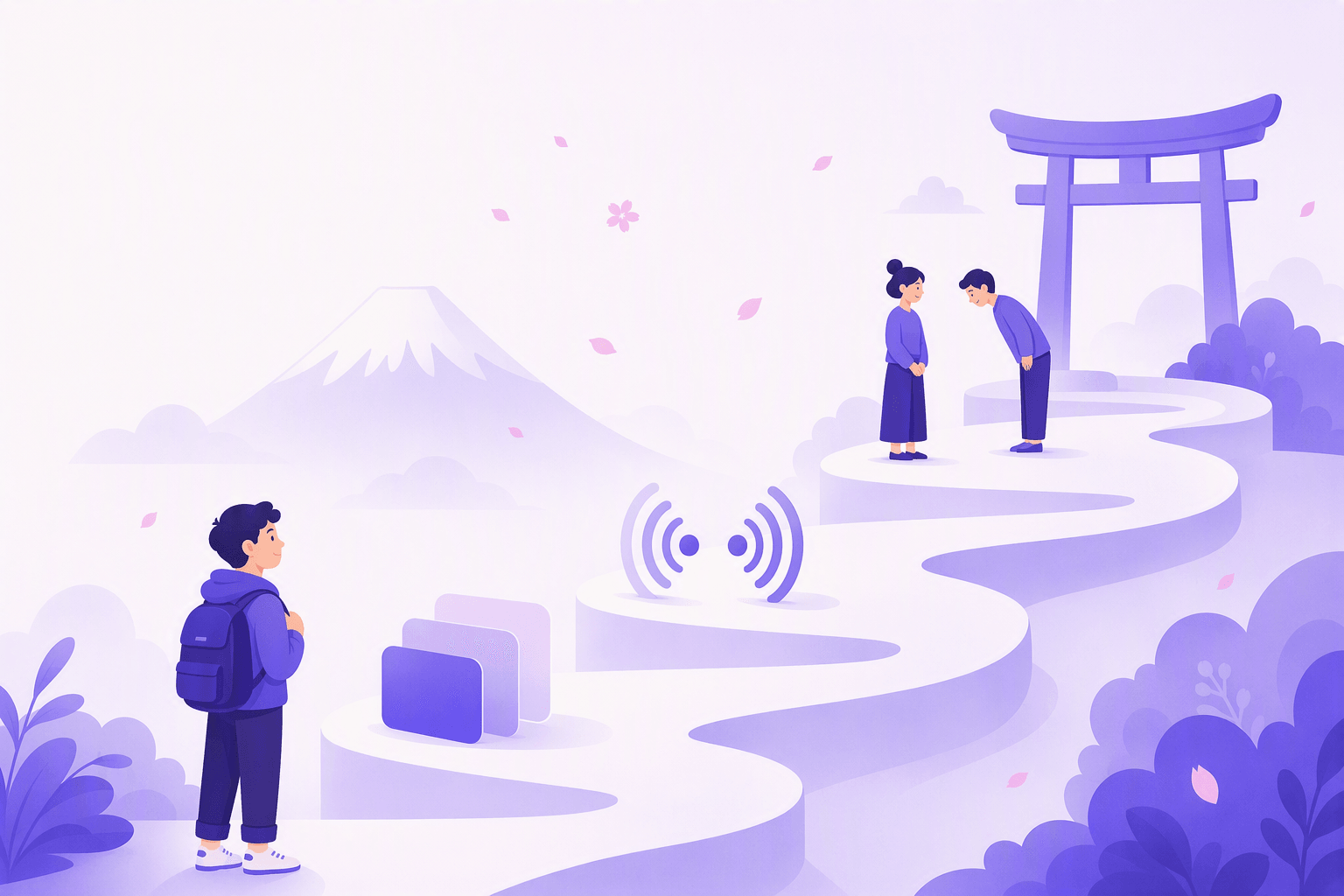
Why Japanese feels hard (and why it also feels learnable)
Japanese is often labeled “hard” because it is far from English in writing, word order, and social language. The U.S. Foreign Service Institute groups Japanese in its highest difficulty category for English-speaking learners (FSI, accessed 2026). That label is directionally useful, but it can hide an important truth: Japanese has several beginner-friendly features that reduce daily friction once you get momentum.
Ethnologue estimates about 123 million L1 speakers of Japanese (Ethnologue, 27th ed., 2024). That means there is a huge amount of native content, from news to anime to YouTube, which matters because listening volume is one of the strongest predictors of real-world comprehension.
The Japan Foundation’s overseas surveys also show Japanese is widely studied globally (Japan Foundation, accessed 2026). In practice, that translates into lots of graded readers, dictionaries, and learner communities, which makes self-study more realistic than it was a generation ago.
The three main difficulty drivers
The writing system is a marathon, not a unit
Japanese uses three scripts: ひらがな (hiragana), カタカナ (katakana), and 漢字 (kanji). Hiragana and katakana are small, learnable inventories, but kanji is open-ended and tied to vocabulary, not just “letters”.
A common beginner mistake is treating kanji as an isolated art project. The more efficient approach is to learn kanji through words you actually need, because kanji knowledge is only useful when it unlocks reading.
If you want a structured overview of the scripts and how they fit together, start with Japanese Alphabet: The Complete Guide, then use a daily reading habit to keep it alive.
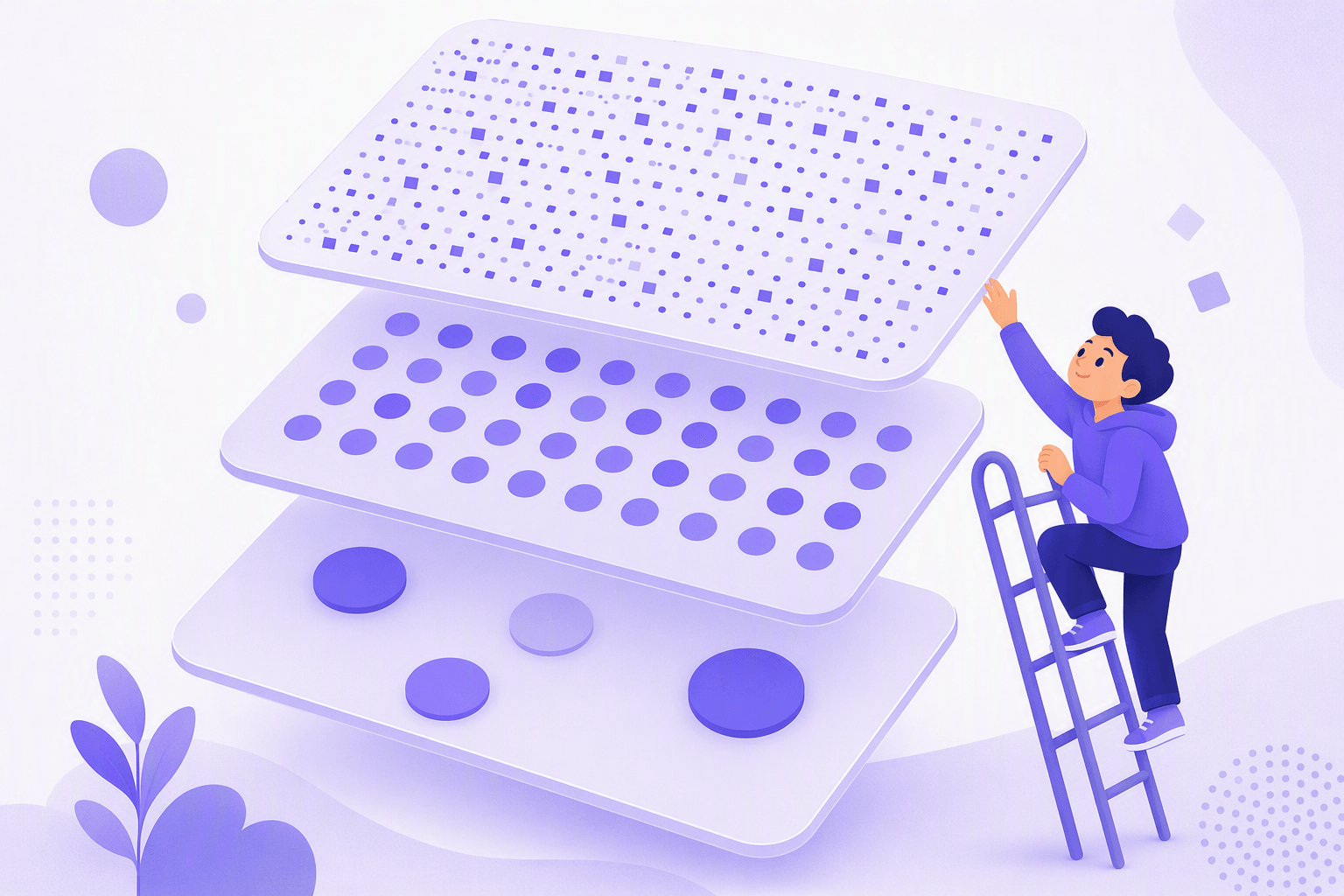
Natural speech is fast because Japanese compresses information
Japanese often omits subjects and objects when they are obvious from context. It also uses short grammatical endings that carry a lot of meaning. In a textbook, those endings look neat and separated. In real speech, they blur into the rhythm.
This is why learners can “know the grammar” and still feel lost in conversation. You are not failing, you are missing repetition with real audio.
A practical fix is to anchor your listening in short, repeatable scenes. Movie and TV clips work well because you can hear the same line with the same emotion and situation until it becomes automatic. That is also why clip-based practice pairs naturally with guides like How to Say Hello in Japanese and How to Say Goodbye in Japanese, where you can immediately recognize the phrases in context.
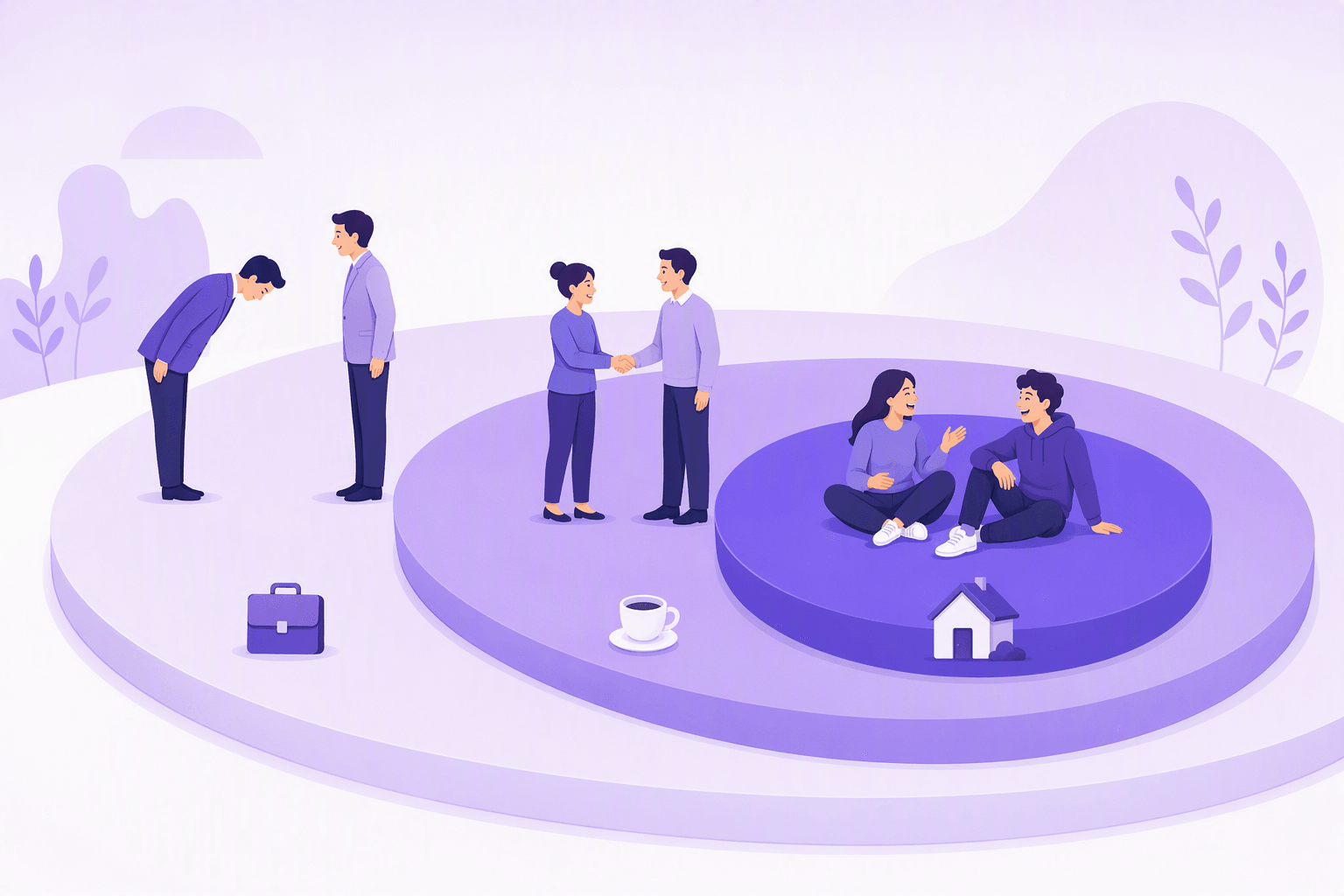
Politeness is not just vocabulary, it is relationship management
Japanese has clear politeness levels, and choosing them is part of sounding socially competent. This is where linguist Haru Yamada’s work on Japanese conversational style is useful: Japanese interaction often prioritizes harmony and indirectness, and learners need to notice how much is communicated without explicit wording.
You do not need to memorize every honorific form on day one. You do need to learn what “plain” vs “polite” feels like, and when switching is expected.
🌍 A realistic politeness goal
Aim to master polite です/ます speech first for daily life, then learn plain forms for friends, media, and inner thoughts in stories. Many learners do the reverse and end up sounding abrupt at work and overly formal with friends.
What is easier than people expect
Pronunciation is consistent (but rhythm matters)
Japanese pronunciation is usually approachable because spelling-to-sound is stable compared with English. You do not have to guess how a word is pronounced from its spelling as often.
The real challenge is mora timing. Long vowels, double consonants, and ん each count as a beat, and missing a beat can change what you said.
Here are a few “timing traps” to notice early:
- こんにちは is kohn-NEE-chee-wah (5 morae).
- 学生 (gakusei) is gahk-KOO-say, the “sei” is two morae.
- 待って (matte) is MAHT-teh, the small っ creates a beat.
- おばさん (oba-san) vs おばあさん (oba-a-san) differ by a long vowel.
If you want a deeper sound-and-rhythm breakdown, use Japanese Pronunciation Guide alongside daily listening.
Grammar is regular in the places that matter
Japanese word order is different (often SOV), but the system is consistent. Verbs do not conjugate for person, and there is no grammatical gender. Once you internalize core patterns, you can produce a lot of correct sentences with a small set of tools.
This is where Tae Kim’s grammar guide and similar resources help many learners: they present patterns compactly and encourage you to build sentences early. For more formal reference, Makino and Tsutsui’s A Dictionary of Basic Japanese Grammar is a reliable way to check nuance when two textbook explanations disagree.
You can be “useful” with Japanese earlier than you think
Even with limited grammar, Japanese has many set phrases that carry you through daily life. If you can greet, apologize, ask for help, and handle simple requests, you can function in many real situations.
That is why phrase-focused study is not “tourist Japanese”. It is a high-leverage foundation that makes later grammar and vocabulary stick.
The hidden difficulty: vocabulary and coverage
Japanese vocabulary growth is not only about memorizing words. It is about reaching enough coverage to follow real speech.
Applied linguistics research on lexical coverage (for example, work by Stuart Webb and Michael Rodgers on movies) shows you need a high percentage of known words to follow audio comfortably. You do not need to chase perfection, but you do need volume: thousands of words, not hundreds.
A practical target many learners feel strongly is around 2,000 to 3,000 word families for “basic media survival”, and higher for relaxed viewing. Your exact number depends on genre. Slice-of-life shows are easier than historical drama, and news is easier than comedy wordplay.
If you want a frequency-first approach, start with 100 Most Common Japanese Words, then expand into topic vocabulary you actually watch and talk about.
A realistic “difficulty map” by skill
Speaking
Speaking feels hard at first because you must choose politeness and particles while thinking of vocabulary. It gets easier quickly once you have a few sentence frames you can reuse.
A strong early speaking strategy is to memorize short, flexible frames:
- “I think X” with と思います (toh oh-MOH-ee-mahss).
- “It’s okay” with 大丈夫です (dye-JOH-boo dess).
- “Can I do X?” with てもいいですか (teh-moh EE dess-kah).
Then swap the nouns and verbs as you learn them.
Listening
Listening is usually the bottleneck. Japanese can feel fast because mora timing is steady and reductions happen in casual speech.
To fix this, you need repetition with the same audio, not just “more audio”. Short clips you replay are more efficient than long episodes you half-understand.
Reading
Reading becomes enjoyable once you know enough kanji to stop guessing every other word. Until then, it is slow.
A good milestone is being able to read simple subtitles and menus without panic. That often happens earlier than people expect if you learn kanji through common words and read a little every day.
Writing (handwriting)
Handwriting is optional for many modern goals. Typing Japanese is more relevant, and typing reinforces reading.
If you are moving to Japan or taking a test that requires writing, handwriting matters. Otherwise, treat it as a secondary skill.
💡 Typing is a kanji accelerator
When you type, you must choose the correct kanji from candidates. That forces recognition practice, and it is closer to how you will actually use Japanese in daily life.
Cultural factors that change what “hard” means
Indirectness and “reading the air”
Japanese conversation often relies on shared context. You will hear vague phrases like ちょっと (CHOHT-toh) used to soften refusals, or まあまあ (MAH-ah MAH-ah) to downplay.
This is not “mystical”. It is a social strategy. Linguist Sachiko Ide’s work on Japanese politeness is helpful here: politeness is not only about being nice, it is about choosing language that fits roles and expectations in a given setting.
If you learn Japanese only through direct translation, you will over-explain and sound heavy. Watching real scenes teaches you what gets left unsaid.
Set phrases are social glue
Japanese uses many fixed expressions that are less about literal meaning and more about doing a social job. Examples include:
- お疲れ様です (oh-TSOO-kah-reh-SAH-mah dess) at work.
- よろしくお願いします (yoh-roh-SHEE-koo oh-neh-GAH-ee-shee-mahss) when starting a relationship or asking a favor.
- すみません (soo-mee-mah-SEN) for “excuse me”, “sorry”, and even “thanks” in some contexts.
These phrases are why learning from real dialogue works so well. You see when they appear, what facial expression goes with them, and what response is expected.
What makes Japanese easier with movies and TV
Authentic media solves two Japanese-specific problems at once:
- You learn how sentences compress in real time.
- You learn politeness and set phrases as behavior, not as a chart.
If you are using anime, be selective. Some genres exaggerate speech styles, and some character types speak in ways you should not copy into real life. For a practical breakdown, use Learn Japanese With Anime and Anime Vocabulary: The Complete Guide to separate useful everyday Japanese from stylized tropes.
If you want curated viewing picks, start with Best Anime Movies to Learn Japanese. Movies are easier to rewatch than long series, which matters for repetition.
A practical plan that reduces the difficulty
Step 1: Learn kana fast, then stop “studying” it
Give yourself 7 to 14 days to learn hiragana and katakana, then move on. Keep them alive through reading, not endless drills.
Use How to Learn Hiragana and How to Learn Katakana if you want a paced plan.
Step 2: Build a core of high-frequency words with audio
Start with words you will hear constantly: greetings, basic verbs, time words, and common adjectives. Pair every word with audio and an example sentence.
Spaced repetition is useful here, but only if it is tied to listening. Flashcards without sound create “silent vocabulary” that you cannot recognize in speech.
Step 3: Treat kanji as vocabulary, not art
Learn kanji through words, and learn readings through examples. The goal is recognition in context.
A simple weekly structure works:
- 5 days: learn new words that include kanji.
- 2 days: read and review those words in subtitles, menus, or graded readers.
Step 4: Add daily listening you can repeat
Choose material you can replay. A single scene you understand deeply beats an hour of background noise.
If you want to practice with short, level-matched clips, Wordy is built for this style of learning. The key is not the app, it is the loop: listen, replay, read, shadow, then reuse the words.
Step 5: Start speaking with safe, polite defaults
Use です/ます as your default in public. Add plain forms gradually for friends and media.
If romance language is part of your goal, be careful with direct translations of “I love you”. Japanese often uses softer expressions, and context matters. This is why a focused guide like How to Say I Love You in Japanese is worth reading before you copy a dramatic line from a show.
How to measure progress without getting discouraged
Use milestones that match real life
Instead of “be fluent”, use milestones like:
- I can order food and handle follow-up questions.
- I can understand the main idea of a simple scene without subtitles.
- I can read a short message and reply politely.
These are concrete, motivating, and they map to skills you can train.
Expect plateaus, especially with kanji
Kanji progress is lumpy. You will feel stuck, then suddenly reading gets easier because you crossed a threshold of recognition.
This is normal. The fix is consistency, not intensity.
⚠️ A common trap
Do not postpone listening until “after I learn more vocabulary”. Listening is how vocabulary becomes real. Start early, even if you only understand 20%. Your brain needs the sound map.
Where Japanese is spoken (and why it matters for learning)
Japanese is primarily spoken in Japan, but the language has a global footprint through diaspora communities and media. Ethnologue’s estimate of about 123 million native speakers (Ethnologue, 27th ed., 2024) means you have a large base of native content and a stable standard variety (標準語) used in education and national media.
For learners, that stability is helpful. You can learn a “default Japanese” that works almost everywhere, then later pick up regional dialect features if you live in Kansai or spend time in a specific area.
Responsible note on “edgy” Japanese
Many learners meet Japanese through media that includes insults and taboo language. Understanding it can help comprehension, but using it can backfire socially.
If you are curious, use Japanese Swear Words as a recognition guide, not a speaking checklist. In Japanese, tone and relationship matter as much as the word itself.
Bottom line: is Japanese hard?
Japanese is hard in the ways that require time: kanji, listening, and social nuance. It is easier in the ways that reward consistency: pronunciation, regular grammar patterns, and predictable sentence building.
If you want the shortest path to “real Japanese”, combine three habits: daily listening, spaced repetition vocabulary with audio, and steady reading that includes kanji. Then use real scenes to learn what textbooks cannot show: how Japanese actually sounds when people are tired, excited, embarrassed, or trying to be polite.
If you want more learning strategies that fit busy schedules, browse the Wordy blog or start practicing Japanese listening directly on /learn/japanese.
Frequently Asked Questions
Is Japanese harder than Korean or Chinese for English speakers?
How long does it take to learn Japanese to a conversational level?
What is the hardest part of Japanese?
Do I need to learn kanji to speak Japanese?
Is Japanese pronunciation difficult?
Sources & References
- Ethnologue, 27th edition, 2024
- U.S. Foreign Service Institute, Language Difficulty Ranking (accessed 2026)
- Japan Foundation, Japanese-Language Education Overseas (accessed 2026)
- Agency for Cultural Affairs (文化庁), Japanese language and writing resources (accessed 2026)
- Makino, S. & Tsutsui, M., A Dictionary of Basic Japanese Grammar, The Japan Times
Start learning with Wordy
Watch real movie clips and build your vocabulary as you go. Free to download.


