Quick Answer
The most common Japanese last names are Satō (佐藤), Suzuki (鈴木), Takahashi (高橋), Tanaka (田中), and Itō (伊藤). Most Japanese surnames come from nature and geography — rice fields, mountains, rivers, forests — because most families only registered a surname after an 1875 law made family names compulsory.
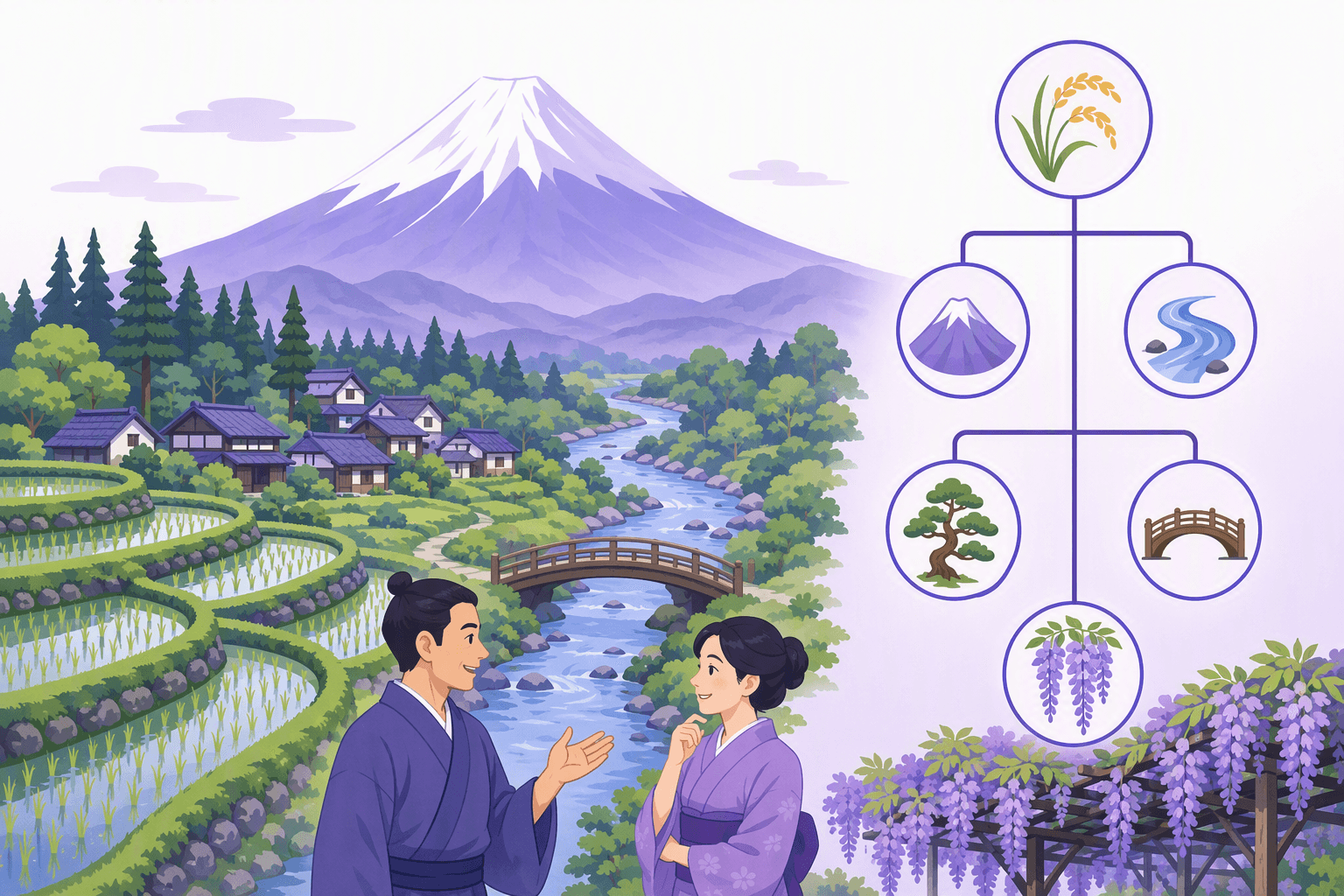
The most common Japanese last names are 佐藤 (Satō), 鈴木 (Suzuki), 高橋 (Takahashi), 田中 (Tanaka), 伊藤 (Itō), 渡辺 (Watanabe), 山本 (Yamamoto), 中村 (Nakamura), 小林 (Kobayashi), and 加藤 (Katō). Almost all of them are built from nature and landscape kanji — rice fields, mountains, rivers, bridges, forests — and that is no accident: most Japanese families only registered an official surname after an 1875 law made family names compulsory, and they often chose names describing where they lived. This guide is a deep dive into surnames only: the full top 30, what the kanji mean, regional and rare names, and samurai family names. For given names, name readings, and honorifics, see our companion guide to common Japanese names.
The 10 most common Japanese last names
Japan has a population of about 124 million (Statistics Bureau of Japan, 2024), and national surname surveys consistently put the same ten names at the top. The leader, Satō, is carried by roughly 1.8 to 1.9 million people — about 1.5% of the country (Meiji Yasuda Life Insurance, 2018). Together, the top ten cover approximately 10% of the population.
That concentration is actually low by world standards. Japan has an enormous stock of surnames, so even the "big" names are far less dominant than the top surnames in neighboring countries.
| English | Japanese | Pronunciation | Note |
|---|---|---|---|
| Satō | 佐藤 | /satoː/ | Assist + wisteria; tied to the Fujiwara clan. Japan's no. 1 surname. |
| Suzuki | 鈴木 | /sɯzɯki/ | Bell + tree; linked to Shinto shrine traditions of the Kii region. |
| Takahashi | 高橋 | /takahaɕi/ | Tall bridge. |
| Tanaka | 田中 | /tanaka/ | In the middle of the rice fields. |
| Itō | 伊藤 | /itoː/ | Fujiwara of Ise; 伊 points to the old Ise Province. |
| Watanabe | 渡辺 | /watanabe/ | Near the river crossing; also written 渡邊 or 渡邉. |
| Yamamoto | 山本 | /jamamoto/ | Base of the mountain. |
| Nakamura | 中村 | /nakamɯɾa/ | Middle village. |
| Kobayashi | 小林 | /kobajaɕi/ | Small forest. |
| Katō | 加藤 | /katoː/ | Fujiwara of Kaga; 加 points to the old Kaga Province. |
佐藤
佐藤 combines 佐 (assist) and 藤 (wisteria). The wisteria character signals descent from — or historical service to — the Fujiwara (藤原) clan, the aristocratic family that dominated Japan's Heian-period court. The 佐 element is usually traced to official titles or place names held by Fujiwara-descended branches. Satō is especially concentrated in the Tōhoku region of northern Japan, where surname maps show it as the clear number one.
鈴木
鈴木 reads as "bell tree", but its origin is more specific: it is linked to shrine families of the Kii Peninsula, where a sacred pole placed in stacked rice sheaves was called suzuki in the local dialect. The name spread with the Kumano shrine network and is today densest in Shizuoka and Aichi prefectures, where it outranks even Satō.
渡辺
渡辺 means roughly "near the crossing" — 渡 is "to cross" and 辺 is "vicinity". The name is tied to Watanabe-no-tsu, a historical ferry crossing in old Settsu Province (around modern Osaka). Watch for spelling variants: 渡邊 and 渡邉 use older forms of the second character but are the same name, so one classroom can contain two "different" Watanabes.
Top 30 Japanese surnames by frequency
Here is the standard top 30, based on large-scale surname surveys (Meiji Yasuda Life Insurance, 2018). Treat the ranks as approximate: different datasets shuffle neighboring positions slightly, and names written with variant kanji (like 斎藤 vs 斉藤) can be counted together or separately.
| Rank | Surname | Kanji | Meaning |
|---|---|---|---|
| 1 | Satō | 佐藤 | assist + wisteria (Fujiwara lineage) |
| 2 | Suzuki | 鈴木 | bell + tree |
| 3 | Takahashi | 高橋 | tall bridge |
| 4 | Tanaka | 田中 | middle of the rice fields |
| 5 | Itō | 伊藤 | Fujiwara of Ise |
| 6 | Watanabe | 渡辺 | near the river crossing |
| 7 | Yamamoto | 山本 | base of the mountain |
| 8 | Nakamura | 中村 | middle village |
| 9 | Kobayashi | 小林 | small forest |
| 10 | Katō | 加藤 | Fujiwara of Kaga |
| 11 | Yoshida | 吉田 | lucky rice field |
| 12 | Yamada | 山田 | mountain rice field |
| 13 | Sasaki | 佐々木 | from the Sasaki area of old Ōmi Province |
| 14 | Yamaguchi | 山口 | mountain entrance |
| 15 | Saitō | 斎藤 | purification rite + wisteria (Fujiwara at Ise) |
| 16 | Matsumoto | 松本 | base of the pine |
| 17 | Inoue | 井上 | above the well |
| 18 | Kimura | 木村 | tree village |
| 19 | Hayashi | 林 | woods |
| 20 | Shimizu | 清水 | clear spring water |
| 21 | Yamazaki | 山崎 | mountain promontory |
| 22 | Mori | 森 | forest |
| 23 | Abe | 阿部 | ancient clan name (Abe clan) |
| 24 | Ikeda | 池田 | pond rice field |
| 25 | Hashimoto | 橋本 | base of the bridge |
| 26 | Yamashita | 山下 | below the mountain |
| 27 | Ishikawa | 石川 | stone river |
| 28 | Nakajima | 中島 | middle island |
| 29 | Maeda | 前田 | field in front |
| 30 | Fujita | 藤田 | wisteria field |
Notice how repetitive the building blocks are. Learn a dozen kanji and you can decode most of this list — and thousands of other surnames besides.
What Japanese last names actually mean
Japanese surnames overwhelmingly describe landscape and place. When millions of farming families registered names in the 1870s, they typically took the name of their village, a local landmark, or their position in it: in the fields, under the mountain, by the bridge.
These are the highest-frequency building blocks:
| Kanji | Reading | Meaning | Example surnames |
|---|---|---|---|
| 田 | ta / da | rice field | 田中, 山田, 田村, 太田, 内田, 上田, 島田, 福田, 村田, 岡田, 原田, 成田 |
| 山 | yama | mountain | 山本, 山口, 山中, 大山, 杉山, 秋山, 青山, 横山 |
| 川 | kawa / gawa | river | 石川, 小川, 川口, 川崎, 川村, 中川, 西川 |
| 藤 | tō / fuji | wisteria (Fujiwara) | 佐藤, 伊藤, 加藤, 斎藤, 近藤, 遠藤, 後藤, 工藤, 安藤, 藤井, 藤本, 藤原 |
| 木・林・森 | ki / hayashi / mori | tree, woods, forest | 鈴木, 木村, 高木, 青木, 小林, 森田, 森本 |
| 村 | mura | village | 中村, 村上, 西村, 北村 |
| 本 | moto | base, origin | 山本, 松本, 橋本, 森本 |
| 井 | i | well | 井上, 石井, 今井, 酒井, 藤井 |
| 野 | no | field, plain | 野田, 野口, 中野 |
A surname like 中村 (Nakamura) is simply 中 (middle) + 村 (village): the family from the middle hamlet. 井上 (Inoue) lived above the well; 森 (Mori) lived by the forest. Once you see the pattern, Japanese credits, class rosters, and drama casts stop being a wall of syllables and start reading like a map of the countryside.
藤
The wisteria character deserves its own explanation, because it produced a whole family of top-100 surnames. 藤 is read fuji on its own and -tō in compounds, and it points back to the Fujiwara (藤原), the clan that effectively ran the Heian court for centuries. Regional branches and retainer families combined 藤 with a place or title: 伊藤 (Ise + wisteria), 加藤 (Kaga + wisteria), 近藤 (Ōmi + wisteria), 遠藤 (Tōtōmi + wisteria), 後藤 and 工藤 from official posts. Satō, Itō, Katō, and Saitō are therefore different names with different histories — not spelling variants of one name.
A short history: why most families got surnames in 1875
For most of Japanese history, hereditary surnames were a privilege. During the Edo period, the right to a registered surname (and to carry a sword) was formally reserved for the samurai class and nobility; farmers, artisans, and merchants — the vast majority of the population — might use informal local names, but could not register them.
That changed fast after the Meiji Restoration. In 1870 the new government permitted commoners to take surnames, and on 13 February 1875 the 平民苗字必称義務令 (Family Name Obligation Ordinance) made surnames compulsory for everyone (National Diet Library). February 13 is still commemorated in Japan as 苗字制定記念日, "Surname Establishment Day". Millions of families registered names within a single generation, most of them drawn from geography — which is exactly why the top 30 list is full of fields, mountains, and rivers rather than occupations.
The result is one of the largest surname stocks on Earth.
"Japan has well over 100,000 surnames in use — one of the largest inventories of family names in the world — while Korea, next door, manages with only about 250."
John Power, "Japanese Names", The Indexer, vol. 26, no. 2 (2008)
Estimates for the total count range from about 100,000 to 300,000 depending on how variant kanji and rare readings are counted, but every serious estimate dwarfs the surname inventories of China, Korea, or Vietnam. This is why two random Japanese people usually do not share a surname, even though Satō alone accounts for nearly two million people.
Regional surnames: Okinawa, Hokkaido, and surname maps
Surname frequency in Japan is strongly regional, and surname maps are a favorite topic of Japanese TV trivia shows. Satō dominates the Tōhoku north, along with 佐々木 (Sasaki) and 阿部 (Abe). Suzuki is densest along the Pacific coast from Shizuoka through Aichi. In western Japan, Tanaka and Yamamoto take over — Tanaka is the top name around Osaka, and Yamamoto leads in parts of Kansai and Hokuriku. Hokkaido, colonized by mainland settlers only after 1869, mirrors the Tōhoku and Hokuriku names those settlers brought with them.
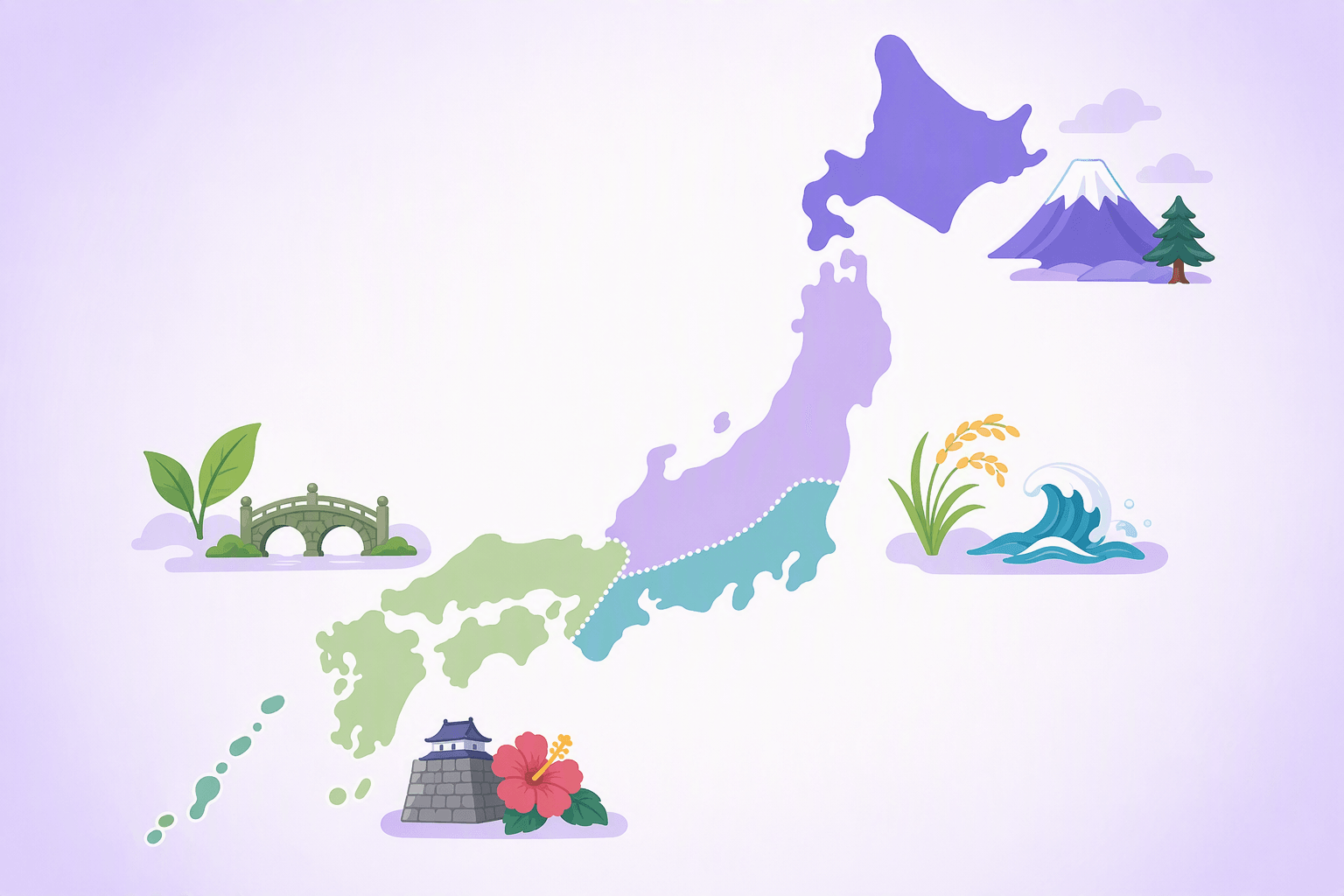
Okinawa is the great exception. The islands were the independent Ryukyu Kingdom until 1879, and its surnames form a distinct set almost never seen on the mainland:
| English | Japanese | Pronunciation | Note |
|---|---|---|---|
| Higa | 比嘉 | /çiɡa/ | The most common surname in Okinawa Prefecture. |
| Kinjō | 金城 | /kiɲdʑoː/ | Gold + castle; also read Kanagusuku in Ryukyuan fashion. |
| Ōshiro | 大城 | /oːɕiɾo/ | Great castle. |
| Miyagi | 宮城 | /mijaɡi/ | Shrine + castle; unrelated to Miyagi Prefecture's name origin as a surname. |
| Aragaki | 新垣 | /aɾaɡaki/ | New wall or enclosure; also read Shingaki or Arakaki. |
| Shimabukuro | 島袋 | /ɕimabɯkɯɾo/ | Island + bag; unmistakably Okinawan. |
| Tamaki | 玉城 | /tamaki/ | Jewel + castle; also read Tamashiro or Tamagusuku. |
| Chinen | 知念 | /tɕineɴ/ | From a place name in southern Okinawa. |
🌍 Why Okinawan surnames love the castle kanji
The character 城 appears constantly in Okinawan surnames — Kinjō, Ōshiro, Tamaki, Miyagi. In the Ryukyuan languages it was read gusuku, referring to the stone fortresses that dotted the islands. Many of these names still carry two readings: a mainland-style one (Kinjō) and a Ryukyuan one (Kanagusuku). Hearing which reading a person uses can tell you something about family history and identity.
Rare and cool Japanese last names
Japan's huge surname inventory has a long tail of names carried by only a few hundred — or a few dozen — people. The most famous rare surnames are beloved precisely because the kanji are a puzzle: the writing and the reading connect through a riddle rather than through pronunciation. Every name below is attested in Japanese surname databases; the rarest are marked.
| English | Japanese | Pronunciation | Note |
|---|---|---|---|
| Shinonome | 東雲 | /ɕinonome/ | Daybreak, dawn clouds. Rare and poetic; also a Tokyo place name. |
| Kujō | 九条 | /kɯdʑoː/ | Ninth Avenue of the old Kyoto grid; one of the five Fujiwara regent houses. Rare today. |
| Ichijō | 一条 | /itɕidʑoː/ | First Avenue; another regent house name. Uncommon but real. |
| Ayanokōji | 綾小路 | /ajanokoːdʑi/ | A Kyoto lane name carried by court nobility. Very rare. |
| Yamanashi | 月見里 | /jamanaɕi/ | Written 'moon-viewing village': no mountain (yama nashi) blocks the moon. Famous riddle name, very rare. |
| Takanashi | 小鳥遊 | /takanaɕi/ | Written 'little birds at play': they can play because there are no hawks (taka nashi). Very rare. |
| Watanuki | 四月一日 | /watanɯki/ | Written 'April 1st', the day to remove cotton (wata) padding from winter kimono. Very rare. |
| Teshigawara | 勅使河原 | /teɕiɡawaɾa/ | Riverbank of the imperial messenger. Long, rare, and real. |
| Tsukishiro | 月城 | /tsɯkiɕiɾo/ | Moon castle. Attested but vanishingly rare — a few hundred bearers at most. |
⚠️ Not every 'cool Japanese surname' online is real
Lists of "cool Japanese last names" on the internet freely mix real rare surnames with invented anime names. 宇随, 五条悟-style combinations, and many fantasy names do not exist in any family registry. The names in the table above are documented in Japanese surname references; if you are researching a name for a story, check whether it is attested before treating it as authentic.
Samurai and historical surnames
Before the Meiji reforms, surnames belonged mainly to the warrior class and aristocracy, and the famous ones read like a history of Japan. The four great ancient clan names — 源 (Minamoto), 平 (Taira), 藤原 (Fujiwara), and 橘 (Tachibana) — sat at the top of the old order, and the great warlord houses of the Sengoku period are still household names:
| English | Japanese | Pronunciation | Note |
|---|---|---|---|
| Oda | 織田 | /oda/ | Weave + rice field. Oda Nobunaga began Japan's 16th-century unification. |
| Toyotomi | 豊臣 | /tojotomi/ | Abundant retainer; a clan name granted by the imperial court to Hideyoshi. |
| Tokugawa | 徳川 | /tokɯɡawa/ | Virtue + river. The shogunal house that ruled from 1603 to 1868. |
| Takeda | 武田 | /takeda/ | Military + rice field. Takeda Shingen's cavalry was legendary. |
| Uesugi | 上杉 | /ɯesɯɡi/ | Upper cedar. Uesugi Kenshin, Shingen's great rival. |
| Date | 伊達 | /date/ | From the Date district of old Mutsu Province. Date Masamune, the one-eyed dragon. |
| Sanada | 真田 | /sanada/ | True rice field. Sanada Yukimura is a perennial drama hero. |
| Shimazu | 島津 | /ɕimadzɯ/ | From the Shimazu estate in Kyushu; the clan that ruled Satsuma. |
| Hōjō | 北条 | /hoːdʑoː/ | North avenue. Regents of the Kamakura shogunate. |
| Akechi | 明智 | /aketɕi/ | Bright wisdom. Akechi Mitsuhide, Nobunaga's betrayer. |
People with these surnames exist today — there are living Tokugawas — but most are rare in the modern population. Meeting a 田中 is an everyday event; meeting a 織田 is a conversation starter.
How last names work in daily life
Knowing the names is half the job; using them correctly is the other half. Three rules cover most situations.
Family name comes first. 山田太郎 is Yamada Tarō: Yamada is the surname. Since a 2019 government decision, official romanized documents also put the surname first, so you will increasingly see "Yamada Taro" rather than "Taro Yamada" in international contexts.
Default to surname + さん. Colleagues, classmates, neighbors, and new acquaintances are 田中さん, 鈴木さん, 高橋さん. Given names are reserved for close relationships. The full etiquette of さん, さま, くん, and ちゃん is covered in our guide to common Japanese names, but the safe rule fits in one line: surname + さん until invited otherwise.
One family, one legal surname. Article 750 of the Civil Code requires a married couple to register a single shared surname, and in practice about 95% of couples take the husband's name. There are no hyphenated double surnames in the family registry, though many people continue using their pre-marriage surname professionally, and the question of allowing separate surnames (選択的夫婦別姓) is a live political issue.
💡 Reading a business card
On a Japanese business card, the surname is the first block of kanji, top or right. If the reading is unusual, furigana or romanization is often printed — because even native speakers cannot reliably guess readings like 月見里 or 小鳥遊.
Japanese surnames you'll hear in anime and dramas
Fiction is a surprisingly good surname classroom, because writers choose names deliberately. Everyday characters get everyday names: the Yamadas, Takagis (高木), and Tanakas of school comedies signal "ordinary person" to a Japanese audience. Distinctive characters get real but marked names: 轟 (Todoroki, "roar") is a genuine surname that sounds as forceful in Japanese as the character it belongs to; 五条 (Gojō) is a real Kyoto avenue name with aristocratic overtones; 竈門 (Kamado, "hearth gate") is a rare, real surname connected to shrines in Fukuoka — which is why fans now pilgrimage to Kamado Shrine in Dazaifu.
Because characters constantly address each other by surname plus honorific, watching Japanese shows trains your ear for exactly the naming patterns this article describes. Wordy's clip-based learning leans into that: you hear 佐藤さん or 轟くん in a real scene, with context, instead of memorizing a list. Start with our picks for the best anime movies to learn Japanese and listen for how often a surname — not a given name — carries the scene.
Final takeaway
Japanese last names are a readable system, not a memorization chore. A handful of landscape kanji — 田, 山, 川, 木, 村, 本, 藤 — generate most of the 100+ names in this guide; the 1875 surname law explains why farmers' geography, not nobles' titles, dominates the modern top 30; and regional sets like Okinawa's castle names or Tōhoku's wall of Satōs tell you where a family is from before they say a word. Learn the top 30 and the building blocks, and every cast list, business card, and classroom roster in Japan becomes legible. To hear these names used naturally — with the honorifics that always ride along — keep learning with real clips at /learn/japanese.
Frequently Asked Questions
What is the most common Japanese last name?
Do Japanese say their last name first?
What are rare Japanese surnames?
What does Satō mean?
Can Japanese people have two surnames?
Sources & References
- Meiji Yasuda Life Insurance, 全国同姓調査 (National Surname Survey), 2018
- National Diet Library, 平民苗字必称義務令 (Grand Council of State Proclamation No. 22, 13 February 1875)
- Power, John, "Japanese Names", The Indexer, vol. 26, no. 2, 2008
- Ministry of Justice (Japan), Civil Code, Article 750 (surname of husband and wife)
- Statistics Bureau of Japan, Statistical Handbook of Japan 2024
Start learning with Wordy
Watch real movie clips and build your vocabulary as you go. Free to download.


