Quick Answer
Common Japanese names usually follow this pattern: family name first, given name second, often written in kanji with multiple possible readings. In everyday life, people typically address others by family name plus an honorific like -san, and switch to given names only with closeness or when invited.
Japanese names are most commonly built from a family name (surname) plus a given name, usually written in kanji and read with specific pronunciations that are not always obvious from the characters. If you want to understand "common Japanese names", the key is learning typical surnames and given names, how name order works, and when Japanese people actually use given names vs family names in real life.
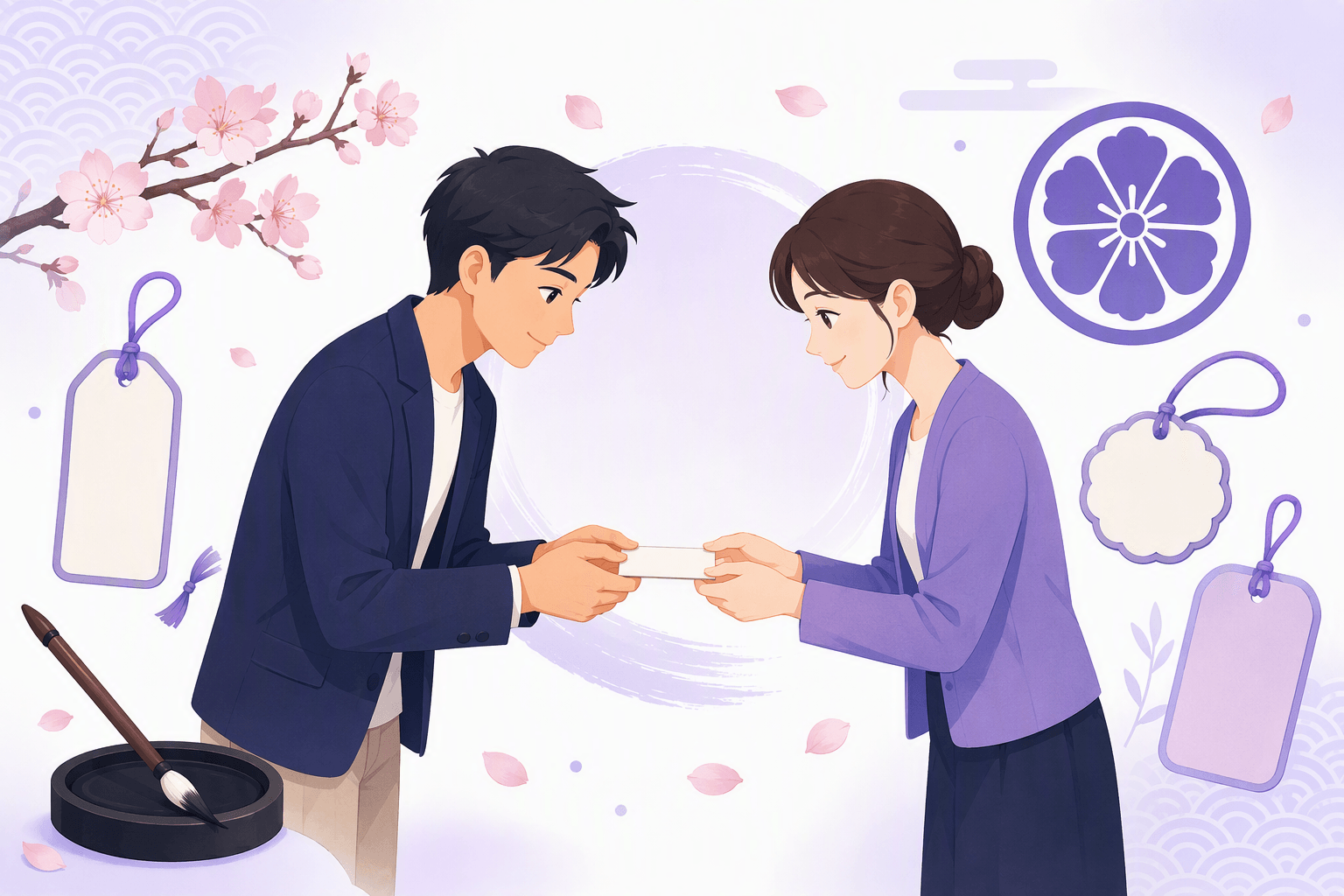
| English | Japanese | Pronunciation | Formality |
|---|---|---|---|
| Name order (Japanese) | 名字 + 名前 | MYOH-jee + NAH-mah-eh | formal |
| My name is (family name) | 田中です | tah-NAH-kah dess | polite |
| Nice to meet you | はじめまして | hah-jee-meh-MAH-sheh-teh | polite |
| Please treat me well | よろしくお願いします | yoh-ROH-shee-koo oh-neh-GUY-shee-mahss | formal |
| Mr/Ms (family name) | 田中さん | tah-NAH-kah-sahn | polite |
| Given name + -chan (cute) | 花子ちゃん | hah-NAH-koh-chahn | slang |
Why Japanese names feel "hard" for learners
Japanese is spoken by roughly 123 million people, overwhelmingly in Japan, which means naming conventions are relatively shared nationwide compared with languages spread across dozens of countries (Ethnologue, 2024). Still, Japanese names can surprise learners because kanji are flexible, and social rules around address are strict in formal settings.
There are three common pain points: name order, kanji readings, and honorifics. Once you understand those, common names start to feel predictable.
"Names are not just labels, they are social actions. The form you choose signals distance, respect, and group membership."
Professor Shigeru Miyagawa, linguist (MIT), in public lectures and interviews on Japanese language and society
Japanese name order: family name first
In Japanese, the default order is family name first, given name second. You will see it in school rosters, business cards, official forms, and introductions.
For example, 田中 花子 is "Tanaka Hanako" in Japanese order. In English contexts, you might see "Hanako Tanaka", but Japan's Ministry of Foreign Affairs has explicitly discussed using family-name-first in international contexts to match Japanese usage (MOFA, 2019).
名字
名字 is read MYOH-jee. It means family name, often translated as "surname" or "last name" in English.
You will also hear 苗字, also read MYOH-jee, written with a different first character. In everyday life, both appear, and many people do not treat them as meaningfully different.
名前
名前 is read NAH-mah-eh. It means given name, often translated as "first name".
In Japanese settings, people often avoid using 名前 directly unless they are close. Instead, they use the family name plus an honorific.
Honorifics: the real key to sounding natural
If you learn only one rule, make it this: default to family name + さん (-san). It is the safest, most widely acceptable choice in most everyday situations.
Honorifics are not "extra". They are part of how names function socially.
Here is a practical guide:
| Form | Pronunciation | Typical use | Notes |
|---|---|---|---|
| さん | sahn | neutral polite | safest default |
| さま | SAH-mah | very formal | customers, letters, ceremonies |
| くん | koon | casual | often for boys/men, juniors, teammates |
| ちゃん | chahn | affectionate | kids, close friends, pets, cute vibe |
| せんせい | sen-SEH | title | teachers, doctors, some professionals |
💡 Fast rule for foreigners in Japan
Use "family name + -san" until someone clearly tells you otherwise. Switching to a given name too early can feel pushy, even if your intention is friendly.
If you want greeting phrases that match this level of politeness, pair this article with how to say hello in Japanese and how to say goodbye in Japanese.
Common Japanese surnames (family names)
Japanese surnames often come from geography and nature: fields, mountains, rivers, wisteria, islands. You will notice recurring kanji like 田 (rice field), 山 (mountain), 川 (river), and 藤 (wisteria).
Below are widely recognized, very common surnames you will see constantly in media, schools, and workplaces. Pronunciations are English approximations.
| English | Japanese | Pronunciation | Note |
|---|---|---|---|
| Satō | 佐藤 | sah-TOH | Very common; 藤 (tō) appears in many surnames. |
| Suzuki | 鈴木 | soo-ZOO-kee | Classic, nationwide. |
| Takahashi | 高橋 | tah-kah-HAH-shee | Literally 'tall bridge'. |
| Tanaka | 田中 | tah-NAH-kah | Literally 'in the rice fields'. |
| Itō | 伊藤 | ee-TOH | Another 藤 surname. |
| Watanabe | 渡辺 | wah-tah-NAH-beh | Often written 渡邊 or 渡部 too. |
| Yamamoto | 山本 | yah-mah-MOH-toh | Literally 'base of the mountain'. |
| Nakamura | 中村 | nah-kah-MOO-rah | Literally 'middle village'. |
| Kobayashi | 小林 | koh-bah-YAH-shee | Literally 'small woods'. |
| Saitō | 斎藤 | sigh-TOH | Yet another 藤 surname, different first kanji. |
| Kato | 加藤 | kah-TOH | Also a 藤 surname. |
| Yoshida | 吉田 | yoh-shee-DAH | Often seen in sports and TV. |
Why so many surnames end in 藤
The kanji 藤 is read TOH in many surnames. Historically, it is associated with the Fujiwara clan, and it became a productive element in family names over time.
You do not need the full history to use it correctly. Just recognize that Satō, Itō, Katō, and Saitō are different names, not spelling variants.
Common Japanese given names: trends and patterns
Given names change faster than surnames. They reflect fashion, pop culture, and parents' preferences for sound, meaning, and kanji aesthetics.
Japan has a population of about 124 million people (Statistics Bureau of Japan, 2024), and even within one country you will hear generational differences: older names, Heisei-era names, and modern short names that look simple but can have multiple readings.
A note on kanji readings (why you should not guess)
Many given names are written with kanji that allow multiple readings. Parents can choose a reading that is not the most common dictionary reading.
That is why Japanese people often ask: お名前は何とお読みしますか (oh-NAH-mah-eh wah NAHN toh oh-YOH-mee shee-mahss-kah), meaning "How do you read your name?"
Common girls' given names (with typical kanji)
These are common-sounding examples that appear frequently in dramas, anime, and real life. The same pronunciation can be written with different kanji.
| English | Japanese | Pronunciation | Note |
|---|---|---|---|
| Yui | 結衣 | YOO-ee | Also written 唯, 由依, 結依, etc. |
| Hina | 陽菜 | HEE-nah | Often uses kanji for 'sun' and 'greens/vegetables' or '菜'. |
| Sakura | 桜 | sah-KOO-rah | Cherry blossom; iconic and easy to read. |
| Aoi | 葵 | ah-OH-ee | Unisex in modern Japan. |
| Rin | 凛 | reen | Short, modern-feeling, 'dignified' nuance. |
| Mei | 芽衣 | MAY | Also written 明, 愛, 萌, and more. |
| Yuna | 優奈 | YOO-nah | Many kanji options; 優 suggests 'gentle/superior'. |
| Akari | 明里 | ah-kah-REE | Often associated with 'light'. |
| Haruka | 遥 | hah-ROO-kah | Also written 遥香, 春香, etc. |
| Nanami | 七海 | NAH-nah-mee | Literally 'seven seas', very common in fiction too. |
| Mio | 美緒 | MEE-oh | Also written 澪, 美央, etc. |
| Aya | 彩 | AH-yah | Short and classic, many kanji variants. |
花子
花子 is read HAH-nah-koh. It is a classic "example name" in Japanese, like "Jane Doe" in some English explanations.
It can sound old-fashioned as a real baby name today, but you will still meet adults named Hanako. In media, it often signals a straightforward, traditional character.
Common boys' given names (with typical kanji)
Boys' names often feature kanji suggesting bigness, flying, light, or virtue. Many modern names are short in sound but complex in kanji options.
| English | Japanese | Pronunciation | Note |
|---|---|---|---|
| Haruto | 陽翔 | hah-ROO-toh | Very popular pattern; many kanji combos exist. |
| Sōta | 蒼太 | SOH-tah | Long vowel: Sō, often written そうた in kana too. |
| Yūto | 悠斗 | YOO-toh | Also written 優斗, 佑斗, and more. |
| Ren | 蓮 | ren | Lotus; short and easy to read. |
| Daiki | 大輝 | DIE-kee | Often suggests 'big' + 'shine'. |
| Kaito | 海斗 | KAI-toh | Sea imagery; multiple kanji choices. |
| Sōma | 颯真 | SOH-mah | Modern-feeling; readings can vary. |
| Takumi | 匠 | tah-KOO-mee | Means 'artisan', also a regular word. |
| Ryō | 涼 | RYOH | Short; often 'cool' nuance. |
| Shō | 翔 | SHOH | Often used alone or in longer names. |
| Keita | 慶太 | KAY-tah | Common across generations. |
| Tsubasa | 翼 | tsoo-BAH-sah | Means 'wing', memorable and used in fiction. |
太郎
太郎 is read TAH-roh. Like Hanako, it is a classic, traditional name, and it is also used as a placeholder, like "Tarō" in textbooks.
You will still see it in older generations and in set phrases like 桃太郎 (Momotarō). For modern babies, it is less common than it used to be.
Unisex and modern short names
Modern Japanese naming trends include short, two-mora names (like Rin, Ren, Aoi) that work across genders. The kanji choice often carries the gendered nuance more than the sound does.
| English | Japanese | Pronunciation | Note |
|---|---|---|---|
| Aoi | 葵 | ah-OH-ee | Common for any gender. |
| Hikaru | 光 | HEE-kah-roo | Means 'light', also a regular noun. |
| Makoto | 誠 | mah-KOH-toh | Means 'sincerity', classic unisex. |
| Kaoru | 薫 | KAH-oh-roo | Often associated with fragrance. |
| Sora | 空 | SOH-rah | Means 'sky', popular in fiction and real life. |
| Rei | 玲 | RAY | Many kanji options; can be any gender. |
🌍 A subtle media effect: why some names feel 'anime'
Names like 空 (Sora) or 翔 (Shō) are real, but heavy repetition in anime and games can make them feel stylized to learners. In Japan, the "anime feeling" often comes from unusual kanji readings, not from the sound itself.
If you are learning Japanese through shows, you will notice that characters switch between family name, given name, and nicknames to show relationship changes. Wordy-style clip learning makes this easy to catch because you hear the same name used differently across scenes. For more media-focused study, browse the Wordy blog and compare how greetings and names co-occur.
How to address someone correctly (work, school, dating)
Names are etiquette. In Japan, the "correct" choice depends on context more than personal preference.

Workplace and formal settings
Use: family name + さん (or a title like 部長, manager). If you are speaking Japanese at work, this is non-negotiable in many companies.
If you are unsure, mirror what colleagues do. If everyone says 高橋さん (tah-kah-HAH-shee-sahn), do that.
School and clubs
Teachers often use family name + さん for girls and family name + くん for boys, but practices vary. Among students, nicknames are common, especially with ちゃん.
Friends and close relationships
Given names become normal once closeness is established. Sometimes the shift is explicit: 下の名前で呼んでいいよ (shtah-noh NAH-mah-eh deh YON-deh EE-yoh), "You can call me by my given name."
Dating and couples
Couples often use given names, nicknames, or affectionate forms like ちゃん. If you are curious how Japanese expresses affection beyond names, see how to say I love you in Japanese.
⚠️ Avoid dropping honorifics too early
Calling someone "Tanaka" with no -san can sound blunt or confrontational unless you are in a context where it is normal (sports teams, close male friends, certain workplaces). When in doubt, keep -san.
Romanization and spelling: Satō vs Sato
You will see long vowels written different ways in English: Satō, Sato, Satoh. All can refer to 佐藤.
In Japanese, the pronunciation is what matters. If you want to be precise in learning materials, macrons (ō, ū) help, but they are not required in daily life.
Long vowels you will hear a lot
- ō, like in Satō (sah-TOH)
- ū, like in Yūto (YOO-toh)
If you are typing without macrons, writing "Sato" and "Yuto" is normal. Just keep the long vowel in your pronunciation.
What Japanese people actually do when names are ambiguous
Because kanji readings vary, Japanese people routinely confirm name readings. This is not awkward in Japan, it is considerate.
Useful polite question:
- お名前は何とお読みしますか (oh-NAH-mah-eh wah NAHN toh oh-YOH-mee shee-mahss-kah)
A simpler casual version:
- なんて読むの (NAHN-teh YOH-moo-noh)
This habit connects to literacy norms too. The Agency for Cultural Affairs regularly surveys language use and attitudes, and name reading is one of those everyday points where written Japanese and spoken Japanese meet (文化庁, 2023).
Learning names through movies and TV: what to listen for
If you learn from real dialogue, do not just memorize lists. Listen for the social cues attached to names.
In clips, pay attention to:
- The honorific used (さん, くん, ちゃん, さま)
- Whether a character switches from family name to given name
- Whether someone uses a title instead of a name (先生, 部長)
- Whether someone avoids names entirely (very common in Japanese)
A quick practice routine:
- Watch a short scene and write down every way a character is addressed.
- Label each as formal, polite, casual, or affectionate.
- Rewatch and shadow the line with the same rhythm.
If you want a contrast with language that is intentionally rude or aggressive, see Japanese swear words. It is a useful reminder that "politeness" and "impoliteness" in Japanese are often encoded in address forms, not only in vocabulary.
A realistic "common name" shortlist for learners
If your goal is comprehension, not naming a baby, focus on names you will hear constantly across genres.
Here is a compact set that covers many real-world encounters:
- Surnames: 佐藤 (Satō), 鈴木 (Suzuki), 田中 (Tanaka), 高橋 (Takahashi), 渡辺 (Watanabe)
- Given names: さくら (Sakura), ゆい (Yui), あおい (Aoi), はると (Haruto), れん (Ren), ゆうと (Yūto)
These are also easy to pronounce and recognize at speed.
Common mistakes foreigners make with Japanese names
Mistake 1: Using first names immediately
In many English-speaking cultures, first-name basis is friendly. In Japan, it can be too familiar.
Start with family name + -san. Let the relationship earn the shift.
Mistake 2: Guessing kanji readings confidently
Even Japanese people do not always guess correctly. Ask politely, or look for furigana.
Mistake 3: Thinking one spelling equals one name
Two people named "Kaito" might write it as 海斗, 快斗, or 凱斗. Treat the pronunciation and the written form as separate pieces of information.
Mistake 4: Mixing up name order in introductions
In Japanese, "Tanaka desu" implies Tanaka is the family name. If you want to give both names, you can say:
- 田中花子です (tah-NAH-kah hah-NAH-koh dess)
Then, if needed in English contexts, clarify order explicitly.
Final takeaway: what "common Japanese names" really means
Common Japanese names are not just a list of popular sounds. They are a system: family-name-first, kanji with flexible readings, and social address rules that matter in daily interaction.
If you learn the system, you will understand names in dramas, introductions, and workplaces far faster than by memorizing rankings.
For more practical Japanese you can use immediately, continue with how to say hello in Japanese and how to say goodbye in Japanese, then practice in context on /learn/japanese.
Frequently Asked Questions
What are the most common Japanese surnames?
Do Japanese people put their family name first?
Why can one Japanese name have different pronunciations?
Is it rude to call someone by their first name in Japan?
How do I introduce myself with a Japanese name?
Sources & References
- Agency for Cultural Affairs (文化庁), 国語に関する世論調査 (Public Opinion Survey on the Japanese Language), 2023
- Ministry of Foreign Affairs of Japan, Handling of Personal Names (Family Name, Given Name), 2019
- Statistics Bureau of Japan, Statistical Handbook of Japan 2024
- Ethnologue, Japanese (jpn), Ethnologue: Languages of the World, 27th ed., 2024
- National Institute for Japanese Language and Linguistics (国立国語研究所, NINJAL), Japanese language resources and research publications, accessed 2026
Start learning with Wordy
Watch real movie clips and build your vocabulary as you go. Free to download.


