How Difficult Is German to Learn? A Realistic Timeline (and What Actually Makes It Hard)
Quick Answer
German is moderately difficult for English speakers: it is easier than many languages because of shared vocabulary and consistent spelling, but harder than Spanish or French because of cases, grammatical gender, and verb-final word order in subordinate clauses. With steady practice, many learners reach A2 in 3-6 months, B1 in 9-15 months, and B2 in 18-30 months, depending on input and speaking time.
German is moderately difficult for English speakers: it is not a “nightmare language,” but you will feel real friction from cases, gender, and verb placement, especially once you leave beginner materials. The upside is that German pronunciation and spelling are comparatively learnable, and shared Germanic vocabulary gives you many “free” words once you start noticing patterns.
If you are building your plan, pair this article with a practical greeting routine like how to say hello in German and how to say goodbye in German, then add one “real speech” habit so your grammar study connects to actual listening.

How hard is German, really?
German sits in a “medium-hard” zone for English speakers. The U.S. Foreign Service Institute groups German with languages that typically require substantial classroom hours to reach professional working proficiency, but it is still far more approachable than languages with new writing systems or very different grammar (FSI, accessed 2026).
A useful reality check is scale. German has roughly 90 million native speakers and is used across multiple European countries and institutions, so you are learning a major language with a lot of media, education, and standardized testing support (Ethnologue, 27th ed., 2024).
What feels easy early
German rewards beginners quickly in three areas.
First, spelling is relatively consistent. Once you learn letter-sound rules, you can often pronounce new words from the page more reliably than in English.
Second, vocabulary overlap is real. Words like Haus, Wasser, Name, Hand, and Winter are not identical to English, but the family resemblance helps memory.
Third, basic sentence building is straightforward. “Ich bin …” and “Ich habe …” get you communicating fast, even before you master endings.
What feels hard later
German gets harder when sentences get longer.
Subordinate clauses push the main verb to the end, separable verbs split apart, and case endings start carrying meaning that English often expresses with word order. This is the stage where many learners can “read okay” but struggle to follow fast conversation.
In the background, gender and declension create a lot of small decisions. Those decisions are learnable, but they demand repetition in context.
A realistic timeline to A2, B1, and B2
Timelines depend on hours, not motivation. The CEFR levels (A1 to C2) are widely used in Europe to describe functional ability (Council of Europe CEFR Companion Volume, accessed 2026).
Below is a realistic range for many adult learners who study consistently and get regular listening practice.
A1 to A2: 3 to 6 months for basic independence
At A1, you can handle greetings, introductions, and survival needs. At A2, you can do simple everyday tasks and understand very common phrases.
If you can already read English well, you can often build A2 reading faster than A2 listening. German speech uses reductions, regional accents, and fast linking that textbooks underrepresent.
B1: 9 to 15 months for “real life, with gaps”
B1 is where German starts to feel like a real tool. You can handle travel, basic work interactions, and social talk, but you still miss details and need rephrasing.
This is also where grammar starts paying off. Case recognition improves comprehension, and verb placement becomes less “math” and more pattern.
B2: 18 to 30 months for confident conversation
B2 is a strong target. You can follow many TV plots, participate in meetings, and express opinions with nuance, even if you still make errors.
Reaching B2 usually requires a lot of input. If you only do exercises, you can “know rules” without being able to process them at speed.
💡 A practical benchmark
If you can watch a German scene with subtitles, then rewatch it without subtitles and still track the relationships between people, you are building the exact skill B-level German demands: fast parsing of word order and endings.
The real difficulty drivers (and how to neutralize them)
German is not hard because it is “logical” or “illogical.” It is hard because it asks you to pay attention to signals English often ignores.
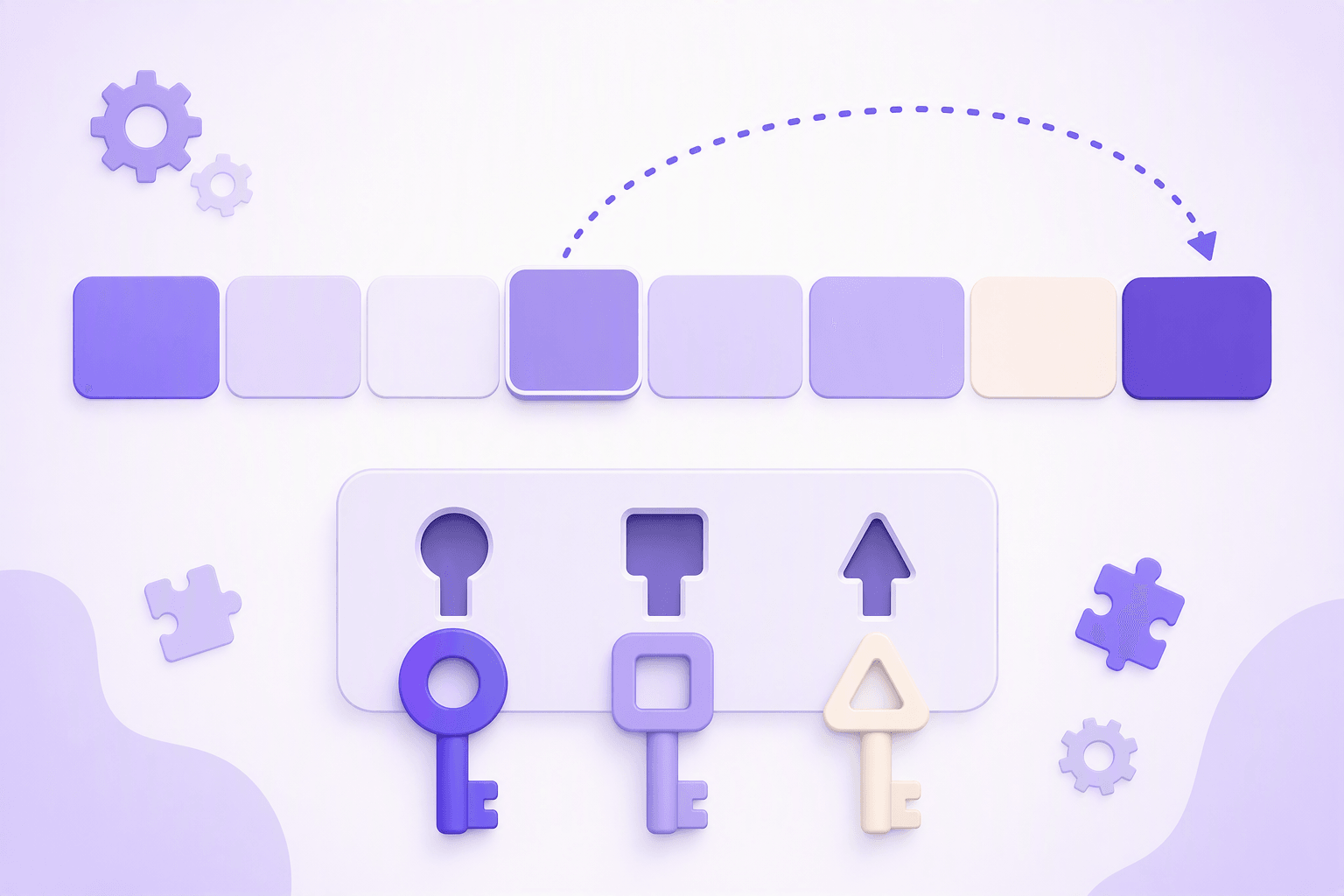
Cases: meaning hidden in small words
German cases are mostly carried by articles and adjective endings, not by the noun itself. That is why learners feel like they are memorizing “extra stuff.”
But cases are not decorative. They help you identify who is doing what to whom when word order changes.
Start with the high-frequency core: der, die, das, den, dem. Then add the most common prepositions that “force” a case, like mit (dative) and für (accusative). Use a high-volume exposure method so you see them hundreds of times, not ten.
For a deeper, structured explanation, the German cases guide is the next step once you can form basic sentences.
Grammatical gender: the hidden system you cannot skip
German gender feels arbitrary because it often is not semantically predictable. You cannot reliably guess gender from meaning, and many nouns have no obvious “rule.”
The trick is to stop learning nouns alone. Learn noun plus article as one unit, like der Tisch, die Tür, das Problem. This is also consistent with how memory works in usage-based approaches to language learning, where frequent chunks become automatic.
The IDS (Institut für Deutsche Sprache) publishes resources on German usage and grammar that reflect how the language behaves in real contexts, which is exactly what you need when “rules” feel too abstract (IDS, accessed 2026).
Word order: verb-second, then verb-final
German main clauses often follow the verb-second rule: one “slot” before the finite verb, then the verb, then the rest. The slot can be the subject, but it can also be time, place, or an object.
Subordinate clauses are the shock: the finite verb often goes to the end. This is where English speakers lose the thread, because you must hold meaning in memory until the verb arrives.
A helpful way to practice is “verb hunting.” When you listen, train yourself to locate the verb first, then reconstruct the sentence.
If word order is your main pain point, German word order and German sentence structure will save you months of confusion.
Separable verbs: one verb, two locations
Separable verbs like aufstehen split in main clauses: Ich stehe um sieben Uhr auf. Learners often understand each word but miss that auf belongs to the verb.
Treat separable verbs as vocabulary items, not as grammar trivia. When you learn aufstehen, learn it with a full sentence and a time phrase, because that is how it appears in life.
Pronunciation: mostly friendly, with a few traps
German pronunciation is usually learnable, but a few features matter a lot for being understood.
The two "ch" sounds
German has an “ich” sound and an “ach” sound. You do not need perfection on day one, but you should be able to hear the difference so you can map words correctly.
Umlauts: ä, ö, ü
Umlauts are not decoration. They can change meaning and grammar, like schon vs schön.
A simple physical cue: for ü, shape your mouth like “oo” but keep the tongue position closer to “ee.” The style guide in our German alphabet special characters article breaks this down clearly.
Final devoicing
Many voiced consonants become voiceless at the end of a word. That is why Tag is often pronounced like “tahk” in careful speech. This is a listening issue as much as a speaking issue.
German vs other languages for English speakers
If you are choosing a language, difficulty is not only grammar. It is also access to input, motivation, and how quickly you can start using it.
German has a strong advantage: it is a high-resource language. There are standardized exams, graded readers, public broadcasters, and a huge amount of subtitled content.
Compared with French, German often feels easier to pronounce from spelling, but harder in grammar mechanics. Compared with Spanish, German usually feels harder overall for English speakers because of case and word order.
If you want a broader comparison, see hardest languages to learn for English speakers and easiest languages to learn for English speakers.
Cultural friction that affects learning (and how to use it)
Difficulty is not only linguistic. It is also social.
Directness and “efficiency talk”
German everyday interaction can feel more direct than what some English speakers expect. That does not mean rude, it often means less small talk padding.
This matters because learners sometimes overuse softeners like “maybe” and “kind of,” or they avoid clear requests. Learning a few clean, polite frames helps you sound natural without overthinking.
Formal vs informal address still matters
Sie vs du is not just a textbook topic. It affects verbs, possessives, and the emotional tone of a conversation.
In many workplaces, people switch to du after an explicit agreement. In other contexts, Sie remains standard longer than learners expect.
If you want to avoid awkwardness, build a default: start with Sie in formal situations, then switch when invited.
Dialects are real, but Standard German is your anchor
German is used across Germany, Austria, Switzerland, and beyond, and dialects can be strong. The good news is that Standard German is the shared reference point, especially in education, news, and most learner materials.
If you learn with media, you will naturally pick up accent flexibility. Do not delay learning because you fear dialects.
The fastest way to make German feel easier: change your input mix
Many learners make German harder than it needs to be by staying in “exercise mode” too long.
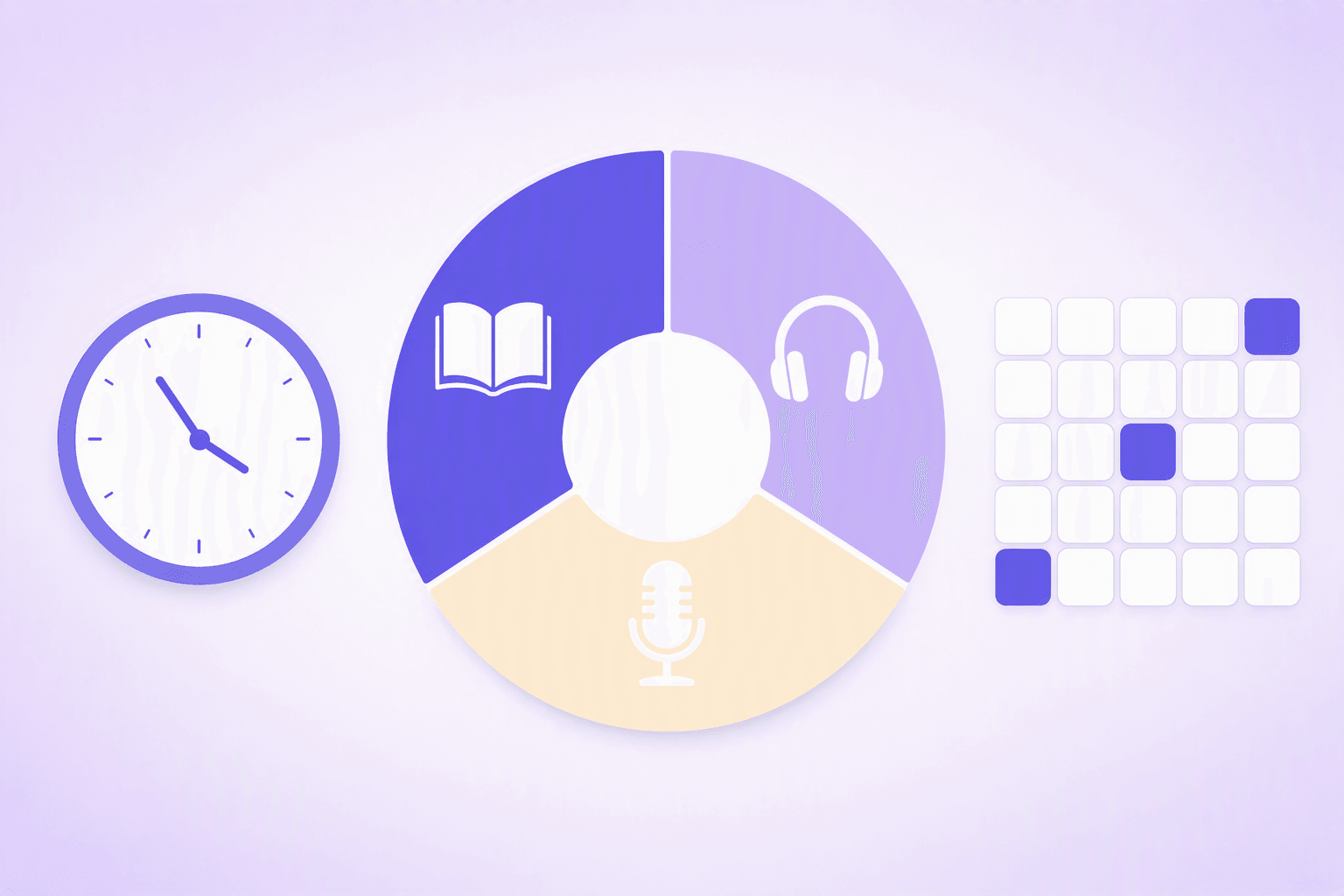
Use a 3-part weekly mix
A stable plan looks like this:
- Grammar and structure: 2 to 3 focused sessions per week
- Listening input: short daily exposure, even 10 to 20 minutes
- Speaking output: at least 1 to 2 sessions per week, even if short
This mix aligns with what applied linguists like Paul Nation emphasize in balancing meaning-focused input, meaning-focused output, language-focused learning, and fluency development (Nation, Learning Vocabulary in Another Language, Cambridge University Press).
Make word order a listening skill, not a worksheet skill
German word order becomes manageable when your brain can parse it in real time. That only happens through repeated exposure to real sentences.
Use short scenes, repeat them, and focus on one thing per rewatch: first gist, then verbs, then case cues.
If you like flashcards, pair them with real sentences. Our Anki for language learning guide explains how to avoid the common trap of memorizing isolated words that never become usable.
⚠️ The common German plateau
If you only read and do exercises, you can reach a “false B1” where you recognize many forms but cannot follow normal speed speech. The fix is not more rules, it is more controlled listening with repetition.
What to learn first (a priority list that reduces pain)
German feels hardest when you learn topics in an order that hides the payoff. This order keeps motivation high because each step unlocks real comprehension.
1) High-frequency verbs and sentence frames
Start with verbs that build your daily life: sein, haben, gehen, kommen, machen, brauchen, wollen, können, müssen. Learn them in short sentences you can reuse.
2) Articles as part of vocabulary
From day one: der/die/das with every noun. This is boring, but it is the cheapest long-term investment you can make.
3) The “case triggers” you meet constantly
Learn prepositions as case packages: mit plus dative, für plus accusative, in plus two-way meaning depending on motion vs location.
4) Subordinate clauses for real comprehension
As soon as you can handle basic conversation, add weil, dass, wenn. These appear constantly, and they train verb-final processing.
5) Pronunciation cleanup: ch, umlauts, rhythm
German rhythm and stress are less chaotic than English, but you still need to hear syllable boundaries clearly. Fixing a few sounds improves listening dramatically.
A practical “difficulty-proof” study plan (30 minutes a day)
If you want German to feel easier in 4 weeks, focus on consistency and repetition, not variety.
Week 1: Build the core loop
- 10 minutes: one grammar micro-topic (articles, present tense, basic word order)
- 10 minutes: listen to a short clip twice, first with subtitles, then without
- 10 minutes: speak out loud, shadowing the clip or doing a short monologue
Week 2: Add case awareness
Keep the same loop, but add one constraint: every time you see den or dem, pause and label it in your head as “accusative” or “dative.” Do not overanalyze, just notice.
Week 3: Train verb-final comprehension
Choose clips that include weil and dass. Rewatch and predict the verb before it arrives. This turns a frustrating feature into a game your brain can win.
Week 4: Make it social
Add one live conversation per week. Even 20 minutes counts. German feels difficult when it stays abstract.
If you want a movie-based approach, how to learn a language with movies explains how to pick scenes and repeat them without wasting time.
Motivation reality check: why German is worth the effort
German is one of the most influential languages in Europe for education, engineering, philosophy, and research, and it is widely taught with strong institutional support. The Goethe-Institut’s global network and materials make it easier to find structured learning paths than for many languages (Goethe-Institut, accessed 2026).
Also, German rewards precision. Once you internalize the signals, long sentences become easier to decode than they look, because the grammar is doing real work.
As a fun side note, learners often discover emotional range through idioms and strong language. If you are curious, keep it responsible and contextual with our German swear words guide.
A quick next step you can do today
Pick three everyday situations and learn one natural line for each: greeting, leaving, and affection. Use these as anchors while you build grammar.
Start here:
Then commit to one week of short daily listening. German becomes “easy” when your brain stops translating and starts predicting.
Frequently Asked Questions
Is German harder than French for English speakers?
How long does it take to reach B1 in German?
What is the hardest part of German grammar?
Do I need to memorize all four German cases to speak?
Is German pronunciation difficult?
Sources & References
- Ethnologue, German language profile (27th edition, 2024)
- Goethe-Institut, German language learning resources (accessed 2026)
- Council of Europe, Common European Framework of Reference for Languages (CEFR), Companion Volume (accessed 2026)
- FSI, Language Difficulty Ranking (accessed 2026)
- Institut für Deutsche Sprache (IDS), resources on German grammar and usage (accessed 2026)
Start learning with Wordy
Watch real movie clips and build your vocabulary as you go. Free to download.


