Anki for Language Learning: A Practical Guide to Flashcards That Actually Stick
Quick Answer
Anki is one of the most effective tools for language learning when you use it for high-value memory tasks: vocabulary, short phrases, and sentence patterns you repeatedly meet in real input. The key is not making more cards, but making better cards, keeping reviews short, and feeding your deck from movies, TV, and conversations so you remember words in context.
Anki is a powerful language-learning tool when you use it to remember what you repeatedly meet in real input, and when you keep your daily reviews small enough to finish every day. The fastest path is simple: capture words and short phrases from movies, TV, reading, and conversations, turn them into clean recognition cards with audio, and review them consistently.
Why Anki works (and why it sometimes fails)
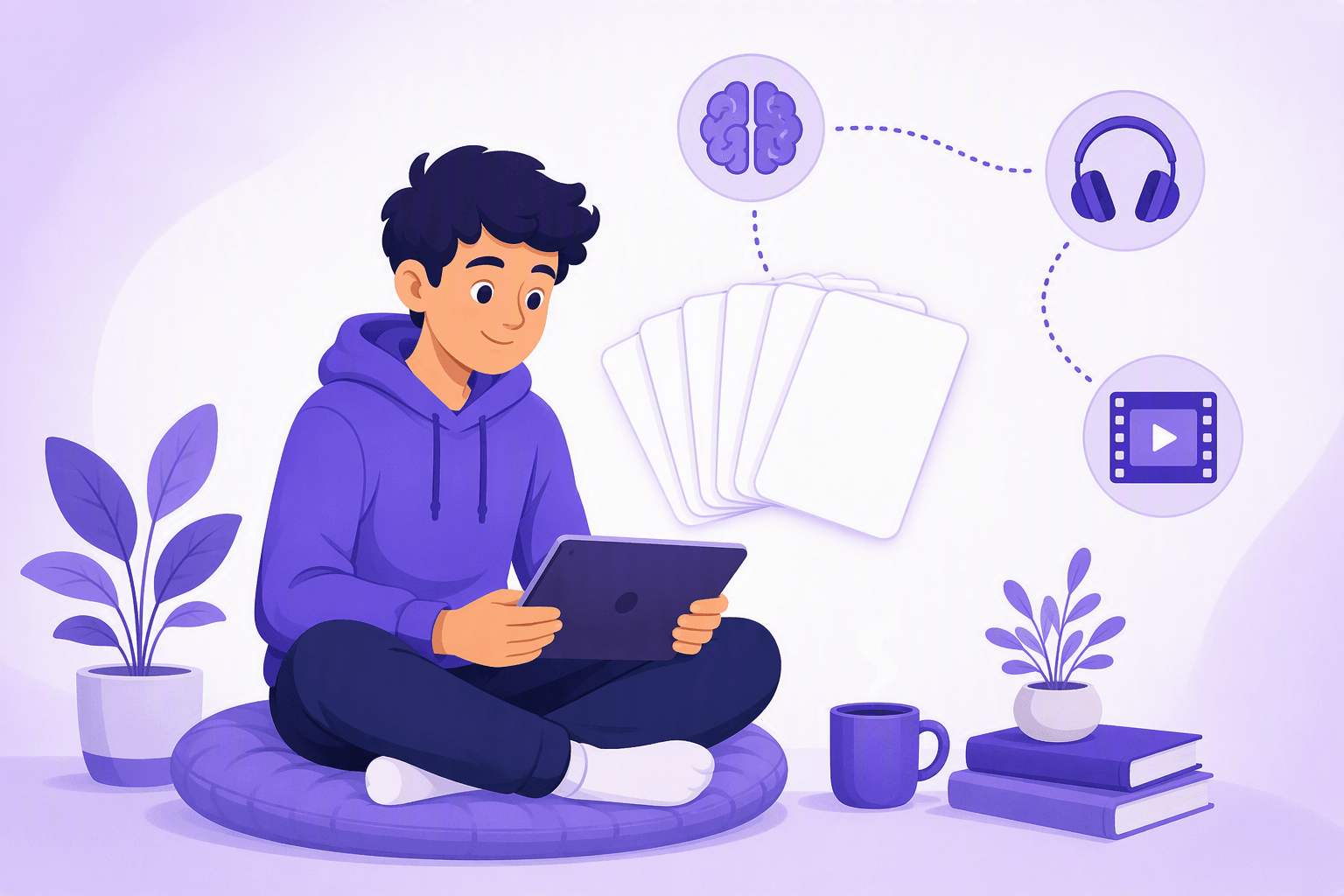
Anki is built on spaced repetition: you see an item, forget it over time, then review it right before it would be lost. That basic idea goes back to Hermann Ebbinghaus’s work on memory and forgetting, and it was later refined into “optimal interval” thinking in applied learning research like Paul Pimsleur’s memory schedule.
Modern research syntheses on distributed practice, including the large review by Cepeda and colleagues in Psychological Bulletin, consistently find that spacing beats cramming for long-term retention. Anki is basically a spacing engine you can control.
But Anki fails for language learners for predictable reasons: cards are too hard, decks are too big, and the learner is trying to “learn the language” inside Anki instead of using Anki to support real-world input.
💡 The core rule
Use Anki to remember what you already understand, not to understand what you do not yet know.
A realistic goal: what Anki should do for you
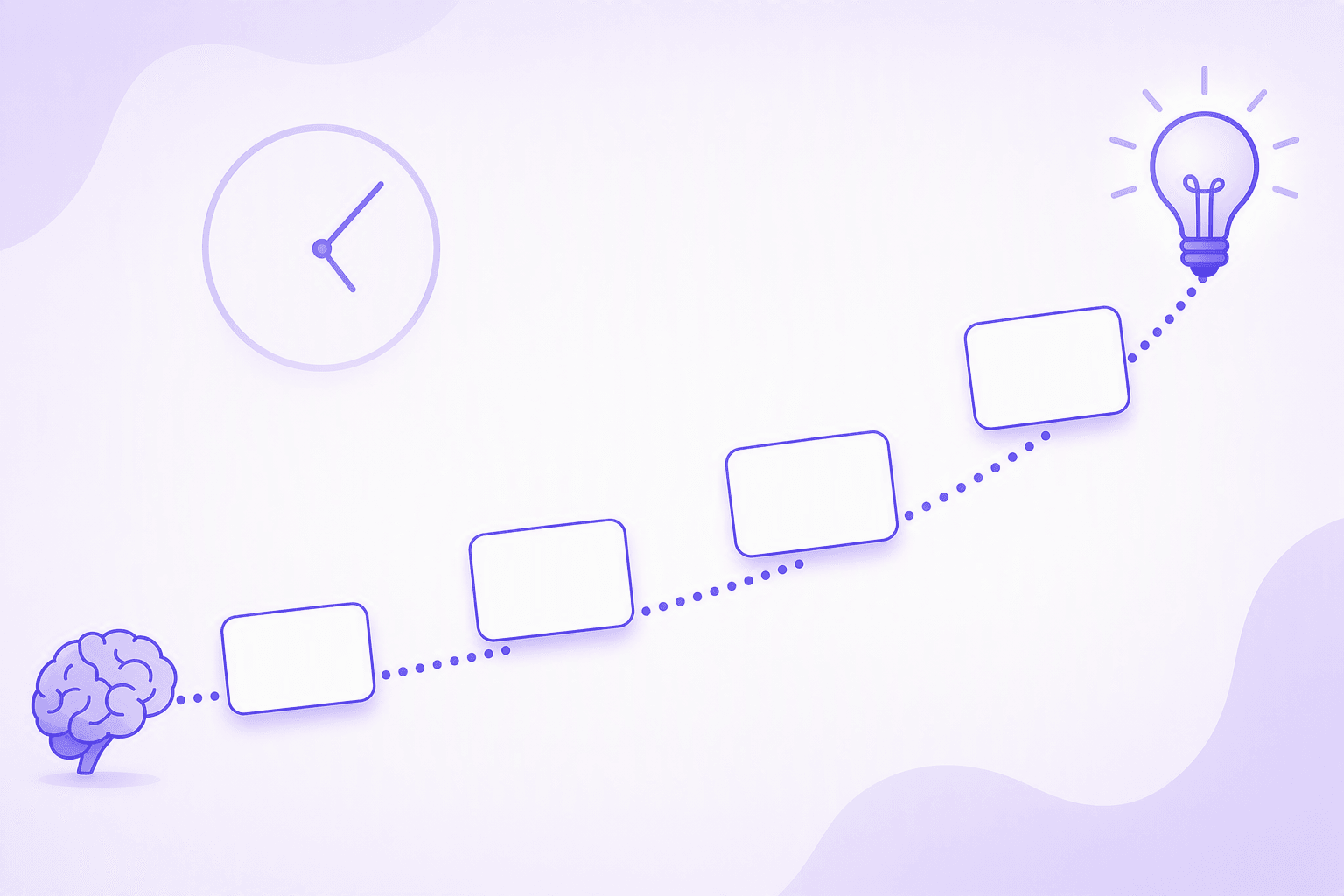
Anki is best at one job: making sure high-value items stay available in your memory so you recognize them quickly in real speech and writing.
For English learners, that often means:
- Common words that carry many meanings (get, take, run)
- Collocations (make a decision, heavy rain)
- Short social phrases (No worries, My bad)
- Pronunciation-sensitive items (though/through, ship/sheep)
- Numbers and time expressions (useful if you are also practicing English numbers)
English is the most widely learned second language in the world, and it is also the most widely used international language in business, science, and online content. Ethnologue (27th edition, 2024) estimates roughly 1.5 billion total English speakers when you combine native and second-language speakers. That scale is exactly why “real input” is easy to find, and why Anki works best when it is fed by real English you actually encounter.
The Anki mindset that prevents burnout
Keep reviews finishable
If you cannot finish reviews daily, Anki turns from helpful to stressful. The stress is not moral failure, it is math: overdue cards pile up.
A good daily target for most people is 10 to 30 minutes. If you have more time, spend it on listening and reading, not on adding 200 new cards.
Prefer “easy cards” over “hard cards”
Easy cards are not “too easy.” Easy cards are the ones that create speed and confidence, and they compound.
Hard cards often hide a design problem:
- Too much information on one card
- A word you do not actually meet
- A sentence you cannot parse yet
- A definition that is unclear or too abstract
Use Anki to support identity, not just memory
A practical cultural insight: many learners quit Anki because it feels like school. If your deck is built from your favorite shows, your work emails, your hobbies, and the jokes you want to understand, it stops feeling like homework and starts feeling like “my English.”
If you are learning through media, pair this guide with our picks for the best movies to learn English. Movies and TV give you repeatable scenes, voices, and emotions, which makes memory stronger.
The best card types for language learning
Recognition cards (recommended default)
Recognition cards train comprehension: you see the target language and you understand it.
Front: target word or short phrase
Back: meaning, a short example, and audio if possible
Recognition is the foundation because it matches how you meet language in real life: you hear or read it first.
Production cards (use selectively)
Production cards train recall: you see the meaning and you produce the target language.
These can help, but they are slower and more frustrating, especially early. Use them for:
- Very common phrases you want to say automatically
- Confusions you keep making (say vs tell, lend vs borrow)
- High-stakes work phrases you must produce accurately
Minimal pairs and pronunciation cards (English-specific)
English has many close sound contrasts that matter for comprehension. If you struggle with them, Anki can help, but only if you attach audio and keep the prompt simple.
Examples of useful contrasts:
- ship vs sheep
- live (verb) vs leave
- though vs thought
If pronunciation is a major goal, use Anki alongside a focused resource like our English pronunciation guide, and keep Anki cards short.
How to make “good” cards (the design rules)
The most useful design principles are not mysterious. They are the same principles you see in expert learning materials: clarity, minimal load, and context.
One fact per card
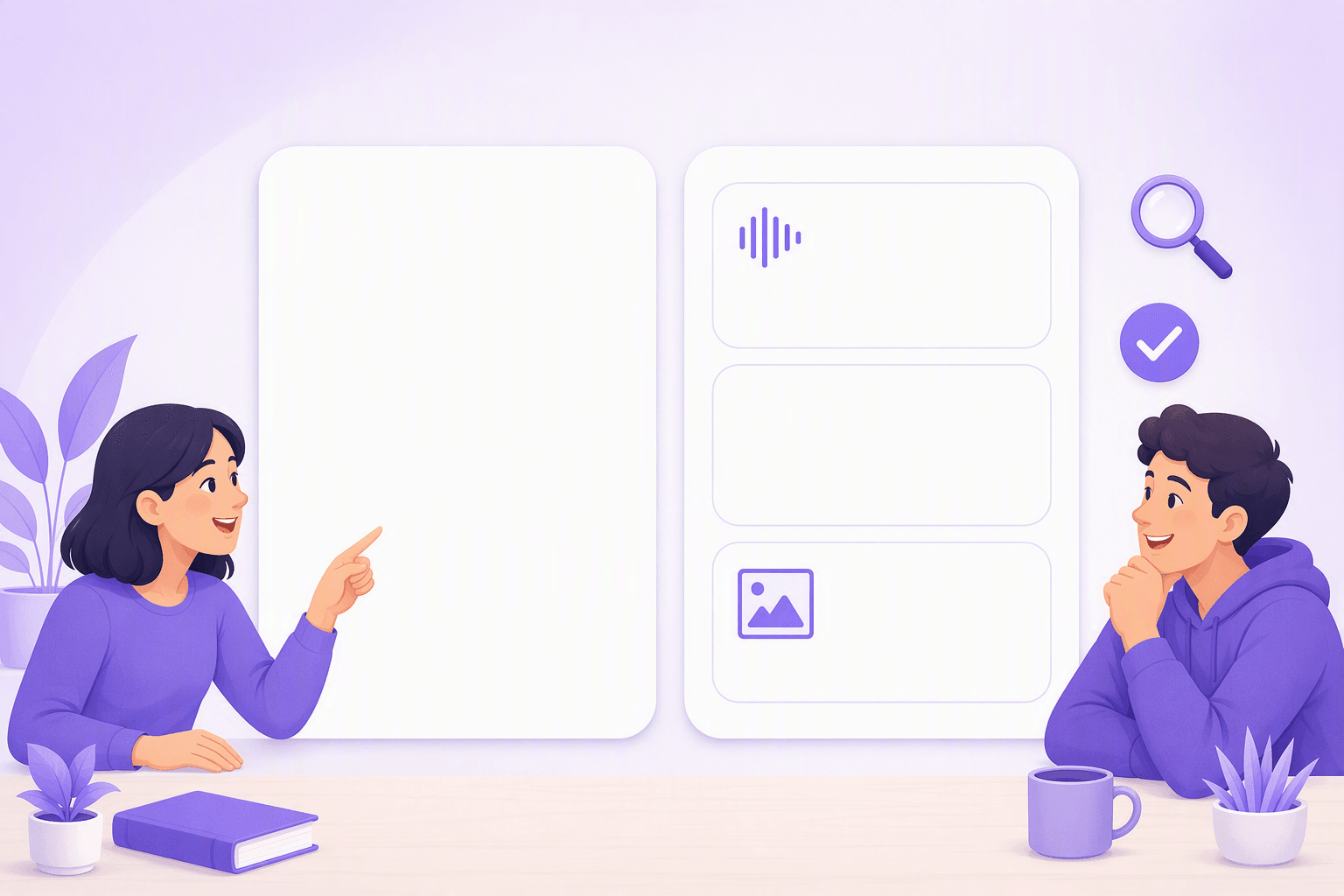
If a card tests three things, you will fail it more often and learn less. Split it.
Bad: a full paragraph definition plus three example sentences.
Better: one meaning plus one example you actually understand.
Use real context, but keep it short
A single sentence is usually enough. If you want more context, add it as a note, not as something you must recall.
Prefer meaning over translation when possible
Translations are fine, especially early. But as your level grows, you can shift to:
- Simple English definitions
- A synonym you already know
- A picture (for concrete nouns)
- A situation label (formal email, casual chat)
This aligns with how lexicographers think about meaning as usage, not as one-to-one equivalence. If you want a reference point for how English meaning is organized, the Oxford English Dictionary and Merriam-Webster both show how one word maps to multiple senses. Your cards should reflect that reality: one card per sense you actually meet.
Add audio whenever you can
Audio reduces the gap between “I know this word” and “I can recognize it at speed.” It also helps you store the word as sound, not just as spelling.
If you learn from clips, capture the line audio. If you learn from podcasts, clip the sentence. If you learn from a dictionary, use the dictionary’s audio.
⚠️ Avoid fake audio
Text-to-speech can be useful, but it can also teach unnatural rhythm. For English, prioritize real human audio when you can.
Recommended Anki settings (simple, safe defaults)
Anki settings can become a hobby. You do not need that.
Use these as a stable starting point:
- New cards per day: 5 to 20
- Maximum reviews per day: keep it high enough to finish, but do not use it to “hide” reviews
- Learning steps: short steps like 10 minutes and 1 day are fine for most people
- Leech action: suspend (so hard cards do not poison your daily workload)
The most important “setting” is behavioral: do reviews every day. If you miss days, reduce new cards until you are stable again.
A practical workflow: from real life to Anki
Step 1: Choose your input stream
Pick one or two sources you can stick with:
- A TV series you enjoy
- A podcast at your level
- A graded reader
- Work emails and meetings
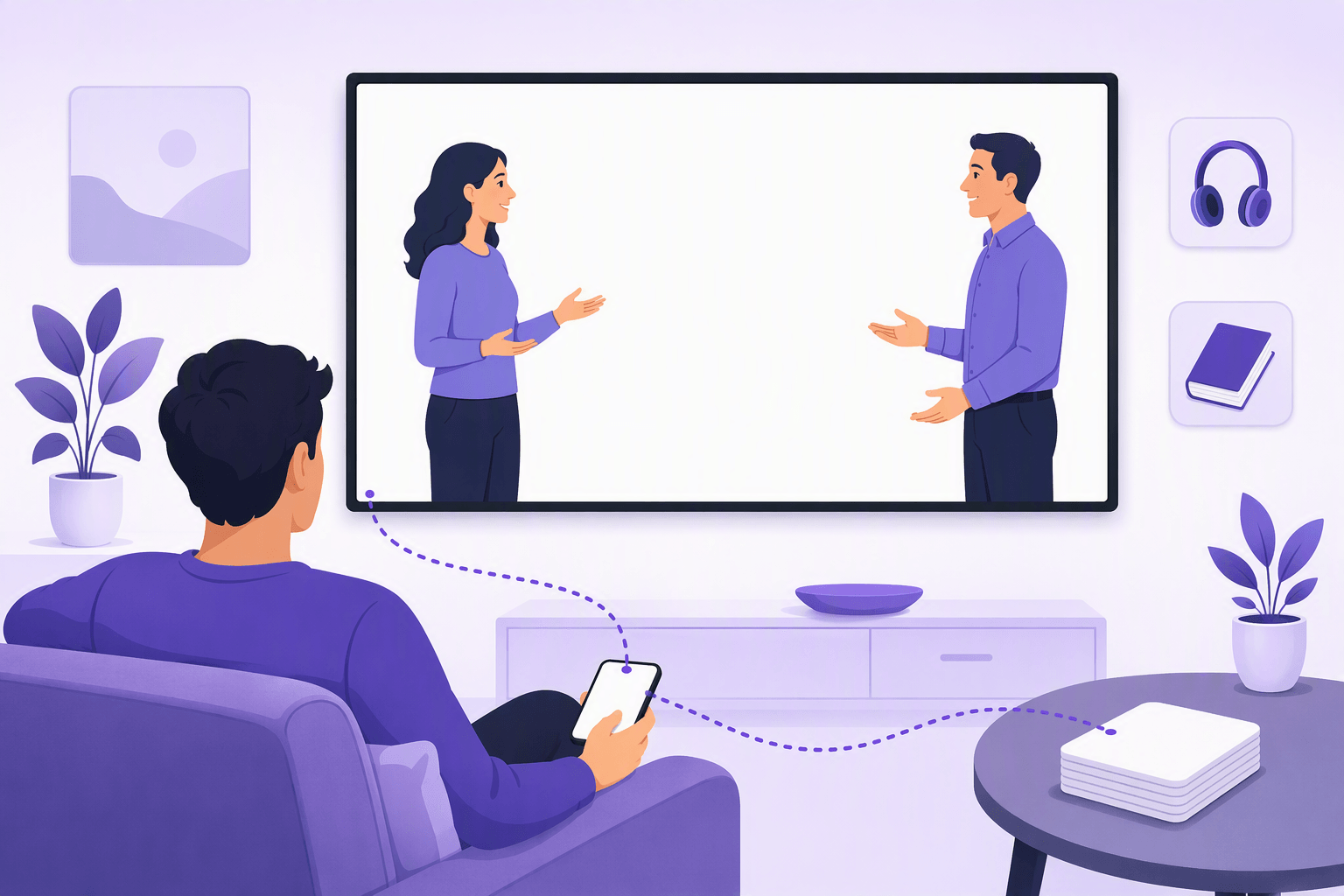
If you want a media-first approach, Wordy’s core idea is that you learn from real movie and TV clips, then recycle the vocabulary with review tools. That “input first, memory second” structure is exactly how to make Anki feel useful instead of endless.
Step 2: Capture only “repeat” items
Do not add every unknown word. Add words you expect to meet again:
- Common verbs and adjectives
- Phrases that fit your life
- Words that block comprehension repeatedly
A good filter question: “Will I be annoyed if I forget this again next week?”
Step 3: Make the card immediately, or not at all
If you save 200 screenshots and never process them, you are not building a deck, you are building guilt.
A sustainable habit is:
- Add 5 to 10 cards right after watching or reading
- Or schedule one short “card-making session” per week
Step 4: Review daily, then stop
Finish reviews first. Add new cards second. If you have time left, go back to input.
What to put on the front and back (templates you can copy)
Vocabulary card template
Front: target word
Back: short meaning, one example sentence, audio
Example (English learner):
- Front: “to figure out”
- Back: “to understand or solve” + “I can’t figure out this problem.” + audio
Phrase card template (better than single words)
Phrases carry grammar and natural rhythm.
Example:
- Front: “That works for me.”
- Back: “I agree with that plan.” + “Tuesday? That works for me.” + audio
Slang and informal English (handle with care)
Slang is high-frequency in entertainment, but it is also high-risk socially. If you are building slang cards, label them clearly: “slang,” “rude,” “online,” “US,” “UK,” and so on.
If slang is a goal, use our English slang guide as a sanity check for meaning and tone. If you are learning taboo language, keep it separate and be deliberate, our English swear words guide explains severity and context.
🌍 A real-world English problem: register mismatch
Many learners sound “too formal” because textbooks avoid casual speech, then they overcorrect and sound “too casual” by copying slang from TikTok. Anki can prevent both mistakes if you tag cards by situation: work, friends, customer service, dating, online. In English, sounding natural is often about choosing the right register, not using advanced words.
Common mistakes (and how to fix them fast)
Mistake 1: Using Anki as your main learning activity
Fix: make input the main activity. Anki is the support system.
A useful ratio for many learners is 70% input, 20% Anki, 10% speaking or writing. The exact split depends on your goals, but if Anki is more than your input time, you are likely overbuilding.
Mistake 2: Making cards for words you never meet
Fix: only add from your actual life. If you do not see it again in two weeks, suspend it.
Mistake 3: Adding definitions you do not understand
Fix: rewrite the meaning in simpler English, or use a translation. Clarity beats elegance.
Mistake 4: Too many cloze deletions
Cloze cards can be great, but they can also become “fill in the blank trivia.” Use them for patterns you want to internalize, not for random gaps.
Good cloze:
- “I’m looking forward to ___ you.” (seeing)
Bad cloze:
- A long sentence with five blanks and a rare word
Mistake 5: Ignoring multi-meaning words
English words often have multiple senses. If you add one translation and treat it as “the meaning,” you will get confused later.
Fix: one card per sense you actually meet, each with its own example.
How Anki fits with movies and TV (the memory advantage)
Movies and TV are not just fun input. They create strong memory cues: faces, emotions, stakes, and repeated catchphrases.
When you turn a line from a scene into an Anki card, you are not memorizing a random sentence. You are attaching language to a moment. That is a powerful retrieval cue, and it is one reason clip-based learning can feel “sticky.”
If you want to build this habit, start with one show and one character voice you like. Add only lines you can imagine yourself saying.
Tracking progress without obsessing
Anki gives you numbers, but numbers can become noise.
Track only:
- Daily review completion rate (did you finish?)
- Average time per review (is it creeping up?)
- New cards per day (is it sustainable?)
If your daily time is rising, the fix is usually:
- Fewer new cards
- Simpler cards
- Suspending low-value items
A simple 30-day plan (beginner-friendly)
Week 1: Build the habit
- New cards: 5/day
- Reviews: finish daily, even if it is only 8 minutes
- Input: 20 minutes/day of easy content
Week 2: Improve card quality
- Replace unclear definitions
- Add audio to your top 20 cards
- Suspend cards you keep failing
Week 3: Add phrases
- Add 10 phrase cards from real dialogue
- Tag by situation (work, friends, service)
Week 4: Stabilize
- Adjust new cards so reviews stay under 30 minutes
- Keep input as the main activity
- Do one speaking session using phrases you reviewed
💡 If you miss a week
Do not “catch up” by brute force. Drop new cards to zero for a few days, clear reviews, then restart slowly. Anki rewards stability, not heroics.
When Anki is not the right tool
Anki is not ideal for:
- Learning pronunciation from scratch without audio feedback
- Free conversation practice
- Understanding grammar you have never seen before
For those, use:
- Listening and shadowing for pronunciation
- Tutors or language exchanges for speaking
- A structured grammar guide for explanations, then reinforce patterns with Anki
If your goal is English conversation, Anki should make you faster at recognizing and retrieving useful phrases, but your fluency comes from using English with people.
The bottom line
Anki works for language learning when you keep the deck small, the cards simple, and the source material real. Build recognition first, add production later, and treat daily reviews like brushing your teeth: short, consistent, and non-negotiable.
If you want an easier way to collect real lines and recycle them, start with a movie-based routine and use Anki as the memory layer. Browse more learning strategies on our blog, and pair this with the best movies to learn English to keep your deck connected to real speech.
Frequently Asked Questions
Is Anki good for language learning?
How many Anki cards should I do per day for a language?
Should I use premade Anki decks or make my own?
What is the best Anki card type for languages?
Can Anki make you fluent?
Sources & References
- Ebbinghaus, H., Memory: A Contribution to Experimental Psychology, Dover Publications
- Cepeda, N. J. et al., Distributed Practice in Verbal Recall Tasks: A Review and Quantitative Synthesis, Psychological Bulletin
- Pimsleur, P., A Memory Schedule, The Modern Language Journal
- Ethnologue, 27th edition, 2024
- Duolingo Blog, How we use spaced repetition, accessed 2026
Start learning with Wordy
Watch real movie clips and build your vocabulary as you go. Free to download.


