Quick Answer
The best movies and TV shows to learn English are Friends and The Office (US) for beginners, Brooklyn Nine-Nine and Ted Lasso for intermediate learners, and The Crown and 12 Angry Men for advanced students. Research by Webb & Rodgers (2009) found that learners can acquire up to 95% of the vocabulary needed for everyday conversation through watching TV series with subtitles.
Watching movies and TV shows in English is one of the most enjoyable ways to improve your listening skills, pick up natural vocabulary, and get used to how native speakers actually talk. A 2009 study published in Applied Linguistics found that popular TV series provide exposure to 95% of the most frequent English word families, making them one of the most efficient vocabulary-building tools available. Textbooks teach you grammar rules, but shows teach you how people really communicate: the slang, the rhythm, the jokes that don't translate. The trick is picking the right content for your level. A beginner jumping straight into a fast-paced legal drama is going to have a bad time. So here are 10 picks across different levels, each with a specific reason it works for language learners.
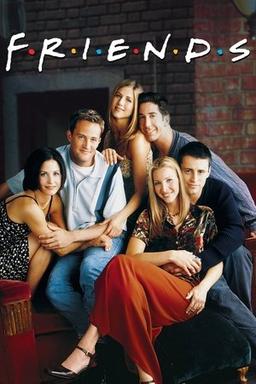
Friends
There's a reason every English teacher on the planet recommends this show. The vocabulary is simple and everyday, the dialogue is slow enough to follow, and the storylines are easy to understand even if you miss a few words. Most conversations happen in the same two locations (the apartment and the coffee shop), so the context clues are always strong. The humor is physical and exaggerated enough that you'll get the joke even when you miss the punchline.
Learning tip: Start with subtitles in your native language, then switch to English subtitles after a few episodes. Try to repeat catchphrases like "Could this BE any more..." to practice intonation.
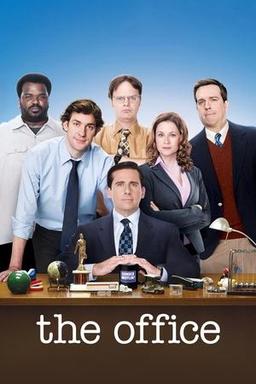
The Office (US)
The mockumentary format means characters often speak directly to the camera in short, clear sentences. Michael Scott's humor relies on misusing words and idioms, which is actually a brilliant way to learn what those expressions really mean. The office setting also gives you tons of workplace vocabulary you'll use in real life.
Learning tip: Pay attention to the difference between what characters say to each other and what they say in their talking-head interviews. It's a great exercise in understanding tone and subtext.
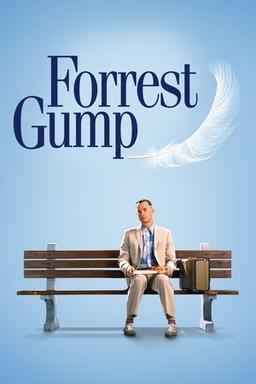
Forrest Gump
Forrest speaks in short, grammatically simple sentences. That's literally the character. He narrates the entire movie in plain, direct English, making it one of the easiest Hollywood films to follow. You also get a crash course in American history and cultural references that come up constantly in everyday conversation.
Learning tip: Listen for how Forrest uses simple grammar to describe complex events. Try retelling a scene from the movie using his straightforward style.
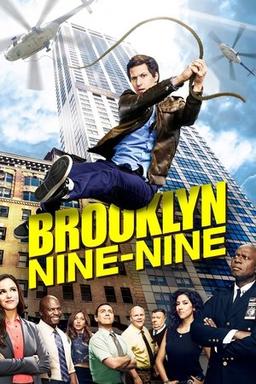
Brooklyn Nine-Nine
The dialogue is faster than Friends and packed with wordplay, pop culture references, and sarcasm. It's a good step up once you're comfortable with basic conversational English. The characters have distinct speech patterns: Jake is casual and reference-heavy, Holt is formal and deadpan, Rosa barely talks at all. This variety trains your ear to handle different registers.
Learning tip: When you hear a joke you don't get, pause and look it up. Most of the humor comes from wordplay or cultural references, and understanding them will seriously expand your vocabulary.
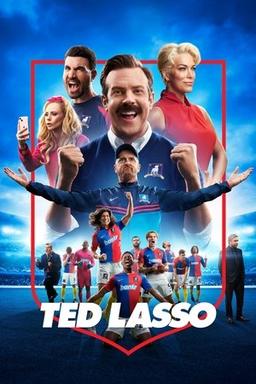
Ted Lasso
This show is a goldmine for learning the differences between American and British English. Ted is an American in London, and a lot of the comedy comes from misunderstandings between the two dialects. You'll hear both accents constantly and pick up on vocabulary differences (elevator vs. lift, soccer vs. football) in a natural, funny context.
Learning tip: Make a list of British vs. American English differences you notice. Ted often gets confused by British slang, and the show usually explains it through the dialogue itself.

The Social Network
Aaron Sorkin's script is famous for its rapid-fire dialogue. Characters talk fast, interrupt each other, and use technical and legal vocabulary. It's challenging but incredibly useful if you want to get comfortable with how educated Americans actually speak in professional settings. The story is also familiar enough (the founding of Facebook) that you can follow along even when the dialogue gets dense.
Learning tip: Watch it once with subtitles, then again without. Focus on the deposition scenes, where characters repeat and rephrase information. That repetition helps reinforce vocabulary naturally.
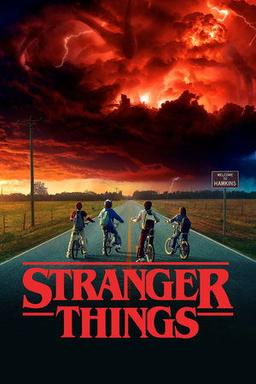
Stranger Things
The kids speak in casual, everyday American English, which makes most of the dialogue approachable. But you also get a range of adult characters, some with regional accents, plus 1980s slang that's fun to learn. The plot is gripping enough to keep you watching, which matters more than people think for language learning. If you're bored, you stop watching. Nobody stops watching Stranger Things.
Learning tip: The younger characters use a lot of current slang mixed with 80s references. Focus on how they express emotions like fear and excitement, as these scenes teach you expressive, natural English.
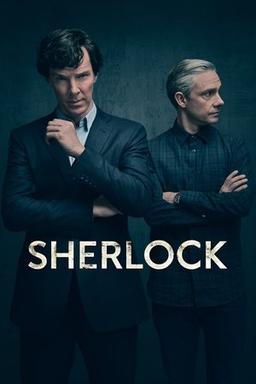
Sherlock
Benedict Cumberbatch's Sherlock speaks in dense, rapid British English full of complex vocabulary and scientific terminology. The deduction scenes are essentially monologues packed with advanced words delivered at high speed. If you can follow Sherlock's reasoning out loud, your English comprehension is in great shape.
Learning tip: Sherlock's deduction scenes are perfect for shadowing practice. Pause after each deduction and try to explain his reasoning in your own words.

The Crown
This is formal British English at its most polished. The dialogue is full of political vocabulary, diplomatic language, and the kind of restrained, indirect communication that's central to British culture. Characters rarely say what they mean directly, which teaches you to read between the lines. If you're aiming for a more formal or academic English register, this is your show.
Learning tip: Notice how characters use understatement and implication. When the Queen says something is "rather disappointing," she means she's furious. This kind of indirect speech is a huge part of advanced English fluency.

The Grand Budapest Hotel
Wes Anderson's dialogue is unusually precise and literary. Every word feels chosen with care, and characters speak in a stylized, almost theatrical way. Ralph Fiennes delivers elaborate sentences at breakneck speed with perfect diction. It's not how real people talk, but it's an incredible workout for your vocabulary and listening skills. You'll encounter words you'd normally only find in novels.
Learning tip: Keep a notebook handy. This movie throws out advanced vocabulary at a relentless pace. Look up words after the scene ends, not during, so you don't lose the flow.
Tips for Learning English with Movies and TV Shows
Don't pause every 10 seconds to look up words. Watch in longer stretches and jot down words you want to look up later. Constant pausing kills the enjoyment, and enjoyment is what keeps you coming back.
Use the subtitle ladder: start with subtitles in your language, move to English subtitles, then try watching without any. Each step is a real upgrade in your listening ability.
Rewatch episodes you already know. The second time around, you catch words and phrases you missed. Plus, you already know the plot, so your brain can focus entirely on the language.
Pick one character whose voice you like and try to imitate them. This isn't weird, it's a technique actors use. It helps with pronunciation, rhythm, and intonation all at once.
Set your phone, apps, and social media to English. The more English surrounds you outside of your study sessions, the faster your brain adapts.
Frequently Asked Questions
Can I really learn English just by watching movies and TV shows?
Should I watch with subtitles on or off?
Is British English or American English better to learn?
How many hours of watching does it take to improve my English?
Sources & References
- Webb, S. & Rodgers, M.P.H. (2009). "The Lexical Coverage of Movies." Applied Linguistics, 30(3), 407–427.
- Krashen, S. (1985). "The Input Hypothesis: Issues and Implications." Longman.
- Lindgren, E. & Muñoz, C. (2013). "The influence of exposure, parents, and linguistic distance on young European learners' English." International Journal of Multilingualism, 10(1), 105–129.
Start learning with Wordy
Watch real movie clips and build your vocabulary as you go. Free to download.


