Quick Answer
The best movies and TV shows to learn Spanish are La Casa de Papel and Extra en Español for beginners, Roma and Narcos for intermediate learners, and El Secreto de Sus Ojos for advanced students. Spanish is the second most spoken native language worldwide with 475 million native speakers (Instituto Cervantes, 2024), and the FSI classifies it as a Category I language requiring approximately 600–750 hours to reach proficiency.
Spanish is spoken by 475 million native speakers across over 20 countries (Instituto Cervantes, 2024), and it sounds different in every single one. A show from Madrid won't prepare you for a conversation in Mexico City, and neither will help much in Buenos Aires. That's actually great news for learners, because it means there's an enormous library of movies and TV shows to choose from. Research by Peters & Webb (2018) showed that learners who watched L2 television picked up vocabulary at nearly double the rate of traditional study methods. The key is knowing which dialect you're hearing and picking content that matches your goals. Here are 10 excellent picks across different levels and regions, each chosen for a specific reason it helps with language learning.

Coco
Pixar's film about Día de los Muertos uses simple, family-oriented Mexican Spanish. The dialogue is clear and slow-paced because it's aimed at kids, but the vocabulary is genuinely useful: family terms, emotions, music, food. The story is so emotionally engaging that you'll want to rewatch it, which is exactly what language learners need. The Mexican Spanish here is neutral and easy to understand.
Learning tip: Watch in Spanish with Spanish subtitles. The songs are particularly good for learning because music helps with memorization. Try singing along to "Recuérdame" to practice pronunciation.

Club de Cuervos
Netflix's first Spanish-language original series follows a wealthy family fighting over a soccer team. The dialogue is surprisingly accessible because the comedy relies on clear delivery and repeated catchphrases. You'll pick up lots of Mexican slang and informal speech in a fun context. The episodes are short (around 30 minutes), making them perfect for daily practice sessions.
Learning tip: Focus on how the characters switch between formal and informal speech depending on who they're talking to. This formal/informal distinction (tú vs. usted) is one of the trickiest parts of Spanish, and this show demonstrates it constantly.

Las Chicas del Cable
Set in 1920s Madrid, this show features Spain's Castilian Spanish spoken at a measured, dramatic pace. Period dramas tend to use clearer enunciation than modern shows, which helps beginners. The vocabulary covers everyday life, work, and relationships. Because it's a drama, characters repeat emotional phrases and key plot points often, giving you natural built-in review.
Learning tip: Listen for the Castilian "th" sound (the "c" before "e" or "i" pronounced like "th" in "think"). This is the most recognizable feature of Spain's Spanish, and this show is full of it.

La Casa de Papel (Money Heist)
The Professor's explanations of heist plans are delivered in clear, methodical Castilian Spanish, almost like a lecture. That makes his scenes great for listening comprehension. Other characters bring in accents from across Spain and Latin America (Nairobi, Denver, Bogotá), exposing you to dialect variety within a single show. The suspense keeps you hooked, which means you keep watching, which means you keep learning.
Learning tip: The Professor uses a lot of conditional and future tenses when explaining plans ("Si hacemos esto, entonces pasará..."). Pay attention to these structures, as they're among the hardest for Spanish learners to master.

Pan's Labyrinth (El laberinto del fauno)
Guillermo del Toro's dark fairy tale is set in post-Civil War Spain. The dialogue is relatively sparse, so when characters do speak, every word carries weight. The young protagonist Ofelia uses simple Spanish, while the military characters use formal, commanding language. This contrast gives you exposure to different registers in the same film. The visual storytelling also helps you follow the plot even when you miss dialogue.
Learning tip: Watch for how Captain Vidal gives orders using the imperative mood. Military commands are a concentrated dose of imperative verb forms, which are essential for intermediate learners to recognize.
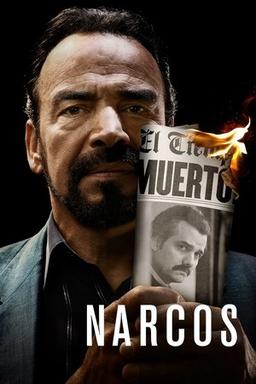
Narcos
This show is a workout because it mixes Colombian Spanish, Mexican Spanish, and American English, sometimes in the same scene. The Colombian characters speak with a distinct paisa accent, which is different from what you'll hear in most Spanish courses. The narration by the American DEA agent is in English, giving your brain natural rest periods between Spanish segments. It's intense but incredibly effective for training your ear to handle multiple accents.
Learning tip: Pay close attention to Colombian expressions like "parcero" (buddy) and the heavy use of "vos" instead of "tú." These regional features are rarely taught in textbooks but are essential if you ever interact with Colombian speakers.

Elite
Set in a fictional elite high school in Spain, this show gives you modern Castilian Spanish as spoken by young people. The slang is current, the speech patterns are fast and natural, and the teenage drama format means the vocabulary centers on emotions, relationships, and social dynamics. It's a big step up from beginner shows but very rewarding for building conversational fluency.
Learning tip: Spanish teenagers drop the "d" in past participles ("cansao" instead of "cansado"). Listen for these informal contractions. You don't need to copy them, but you need to understand them.

Y Tu Mamá También
Alfonso Cuarón's road trip film features raw, unfiltered Mexican Spanish full of slang, profanity, and rapid-fire dialogue between two teenage boys. The narrator speaks in a more formal, literary style, creating a fascinating contrast. This is real spoken Mexican Spanish with nothing cleaned up for international audiences. If you can follow the conversations between Julio and Tenoch, you can handle casual Mexican Spanish in real life.
Learning tip: The narrator uses the past tense almost exclusively while the characters speak in present and informal future. Notice this contrast. It's a masterclass in how written and spoken Spanish differ.

Volver
Pedro Almodóvar's film showcases working-class Spanish from La Mancha and Madrid. The women in this film talk fast, talk over each other, and use regional expressions that standard Spanish courses never cover. Penélope Cruz's character navigates complex family dynamics with dialogue that's emotionally dense and culturally specific. Great for learners who want to understand real Spanish conversations, not textbook Spanish.
Learning tip: Almodóvar's characters often speak in double meanings and cultural references. When something sounds odd, it probably has a second layer of meaning. Look up "refranes" (Spanish proverbs) that appear in the dialogue.

Roma
Cuarón's autobiographical film features two distinct registers of Mexican Spanish: the indigenous-influenced Spanish of the domestic worker Cleo and the upper-middle-class Spanish of the family she works for. This class and racial dimension of language is rarely shown so clearly. The film is quiet, with long stretches of ambient sound, so when dialogue happens, you can focus on it completely. It also includes some Mixtec language, showing Mexico's linguistic diversity.
Learning tip: Compare how Cleo speaks with how her employers speak. Notice differences in vocabulary, pronunciation, and sentence structure. This awareness of social registers is what separates intermediate learners from truly advanced ones.
Tips for Learning Spanish with Movies and TV Shows
Decide early if you want to focus on Latin American or European Spanish. They're mutually intelligible, but the pronunciation, vocabulary, and even grammar differ. Spain uses "vosotros" for informal plural "you," while Latin America uses "ustedes" for everything.
Don't be afraid of shows with accents you're not studying. Exposure to multiple dialects builds flexible listening skills. You'll eventually need to understand Spanish speakers from everywhere, not just one country.
Telenovelas get a bad reputation, but they can be useful for beginners. The acting is dramatic, the plots are predictable, and characters repeat key emotional phrases constantly. Not the most sophisticated option, but effective.
Keep a dialect journal. When you hear a word or expression that seems regional, write it down with the country of origin. Over time, you'll build an awareness of how Spanish shifts across the Spanish-speaking world.
Use a language app like Wordy alongside your watching. When you encounter new vocabulary in a show, add it to your practice sessions so you actually retain it instead of just recognizing it once.
Frequently Asked Questions
Should I learn Spain Spanish or Latin American Spanish from movies?
Why do some Spanish shows sound so different from each other?
Are Netflix Spanish dubs good for learning?
How do I handle Spanish that is spoken very fast in movies?
Sources & References
- Instituto Cervantes (2024). "El español: una lengua viva." Informe 2024.
- Foreign Service Institute (FSI). "Language Difficulty Rankings." U.S. Department of State.
- Peters, E. & Webb, S. (2018). "Incidental Vocabulary Acquisition Through Viewing L2 Television." Studies in Second Language Acquisition, 40(3), 551–577.
Start learning with Wordy
Watch real movie clips and build your vocabulary as you go. Free to download.


