worldwide rating
Apps We Love
Learn German with Movies & TV Shows
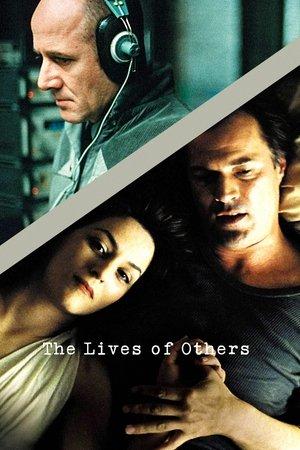
German has a reputation for being hard, but hearing it in movies changes everything. Word order and cases finally make sense when you hear them in context.


German has a reputation for being hard, but hearing it in movies changes everything. Word order and cases finally make sense when you hear them in context.
Germany has the largest economy in Europe and the fourth largest in the world. German is the most widely spoken native language in the EU, ahead of French, Italian, and Spanish.
German public universities charge almost no tuition, even for international students. Many programs are taught in German, making language skills a ticket to a world-class education at minimal cost.
German is the second most used language in science. Goethe, Kafka, Nietzsche, and Einstein all wrote in German. Many key academic works remain untranslated.
Learn German from 15,000+ clips from movies and shows you actually want to watch.
Hear something new? You'll never miss a word again.
Quick challenges using the scenes you just watched.
Every clip is a mini lesson. The more you watch, the more you know.
Most language apps drill you with artificial sentences. Wordy teaches German from real movies and TV shows: you hear native speakers at natural speed, learn the words they actually use, and lock them in with quizzes built from the scenes you just watched. With 9,000+ words organized from beginner to advanced, spaced repetition, and a free tier, it is the most enjoyable way to make German stick.
10 Best Movies and TV Shows to Learn German
Read our movie and TV guide →
German builds long words by stacking shorter ones. "Handschuh" (hand + shoe) means glove. Once you spot the components, these words become easy to decode. Wordy gives you context clues in movie scenes that make the meanings click.
In German, the verb jumps to the end in subordinate clauses. This sounds confusing on paper, but in movie dialogue it becomes a natural rhythm. Pay attention to how sentences build and where the verb lands.
German has four grammatical cases, and they change articles and adjective endings. Instead of memorizing tables, listen for phrases like "mit dem," "fuer den," and "in der" in movies. Pattern recognition beats rote memorization every time.
German has three grammatical genders (masculine, feminine, neuter), and the gender of a noun is often unpredictable. A girl ("das Mädchen") is grammatically neuter (Duden).
The longest German word ever used in law was "Rindfleischetikettierungsüberwachungsaufgabenübertragungsgesetz" (63 letters), a beef labeling regulation law that was repealed in 2013 (Der Spiegel).
German and English are closely related Germanic languages. About 40% of German and English vocabulary is similar, including words like "Wasser/water," "Haus/house," and "Buch/book" (Goethe-Institut).