Quick Answer
Advanced Japanese slang is the set of casual, youth, and internet expressions that show up in real speech, texts, and memes, but rarely in textbooks. The safest approach is to learn what each term signals socially (age, closeness, tone) and use it only with people who already speak that way. This guide teaches 25+ common slang items with mora-accurate pronunciation and practical usage notes.
Japanese slang is how you sound natural in casual talk and group chats, but it is also one of the fastest ways to sound awkward or rude if you use it with the wrong person. This guide teaches 25+ advanced, real-world Japanese slang expressions with mora-accurate pronunciations and clear notes on tone, risk, and when native speakers actually say them.
Japanese is spoken by roughly 120 million people, primarily in Japan, and it is one of the most learned languages globally, which is why slang spreads quickly through anime, variety TV, and social media (Ethnologue, 27th edition, 2024). If you want a safer on-ramp before slang, start with standard greetings in our how to say hello in Japanese and how to say goodbye in Japanese.
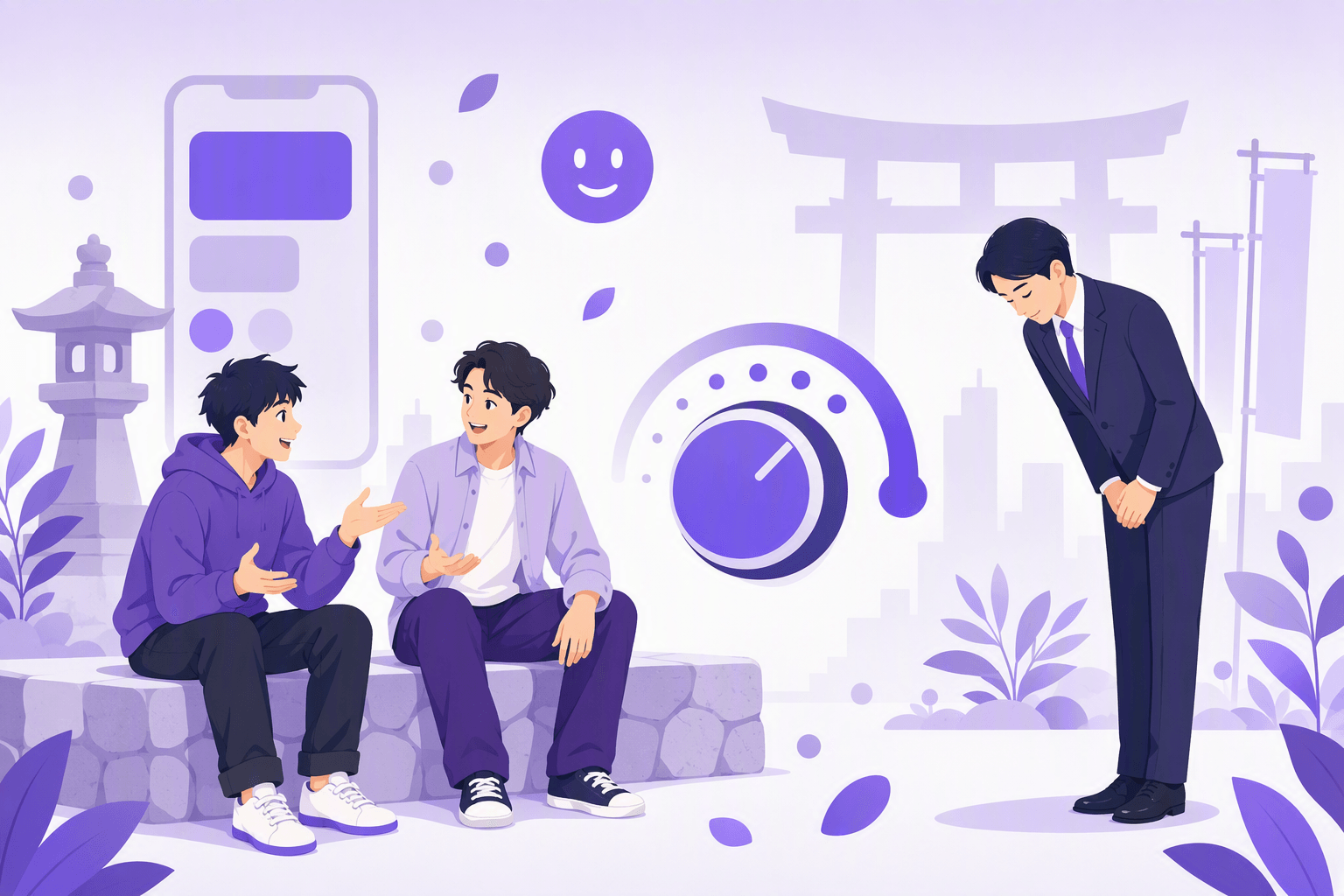
How advanced Japanese slang actually works
Slang is not just vocabulary, it is social positioning.
In Japanese, switching from polite to casual already changes the relationship, and slang adds another layer: age, group identity, and attitude. That is why a term can be “common” and still be a bad choice for you in a given moment.
Three “channels” where slang lives
1) Spoken casual slang (friends, classmates, coworkers after hours).
This is where words like まじ and やばい live.
2) Text and internet slang (group chats, comments).
This is where you see w, 草, and abbreviations like り.
3) Character slang (anime, manga, games).
Some of it is real, some is stylized. If you learned it from a character, treat it as “suspect” until you hear it from real people too.
⚠️ A practical safety rule
If someone is using です/ます with you, do not answer with slang. Mirror their politeness level first, then gradually loosen up only if they do.
Why “meaning” is not enough
Two words can mean the same thing but signal different identities.
Linguist Shigeko Okamoto’s research on Japanese language, gender, and style is useful here: speakers choose forms to project a persona, not just to transmit information. Slang is one of the strongest persona signals you can use, so treat it like a volume knob, not a dictionary entry.
25+ advanced Japanese slang terms you will actually see
Below are common items you will hear in casual speech or see in messages. Pronunciations are mora-accurate, so you can map them cleanly onto Japanese rhythm.
まじ
Pronunciation: MAH-jee
Meaning: “seriously?”, “for real”, “no way” (depending on intonation).
It is one of the most common casual intensifiers.
Use it as a reaction: まじで? (MAH-jee deh) “Seriously?”
Avoid it in formal settings, it can sound too blunt.
まじで
Pronunciation: MAH-jee deh
Meaning: “seriously”, “really”.
Often used to emphasize: まじで無理 (MAH-jee deh moo-ree) “I seriously can’t.”
This is stronger than just まじ because it commits you more.
やばい
Pronunciation: ya-BAH-ee
Meaning: “bad”, “dangerous”, “oh no”, or “amazing”, depending on context.
It is a flexible emotional alarm bell.
If you are unsure, use it only for “oh no” situations, because “amazing” やばい needs the right vibe.
えぐい
Pronunciation: eh-GOO-ee
Meaning: “brutal”, “insane”, “that’s nasty”, “that’s intense”.
You hear it in sports, gaming, and youth talk.
It can be praise or disgust. If you say えぐい to someone’s face about their work, it can sound like you are judging it harshly unless your tone is clearly positive.
うざい
Pronunciation: oo-ZAH-ee
Meaning: “annoying”, “so irritating”.
This is sharper than English “annoying” in many contexts.
Use it carefully, it can be rude if aimed at a person. It is safer when complaining about a situation: うざい広告 (oo-ZAH-ee koh-koh-koo) “annoying ads.”
だるい
Pronunciation: dah-ROO-ee
Meaning: “I can’t be bothered”, “tired”, “such a drag”.
It often expresses low energy rather than anger.
It is common among friends, but it can sound unmotivated or disrespectful at work.
きつい
Pronunciation: kee-TSOO-ee
Meaning: “tough”, “harsh”, “that’s rough”.
It can be physical (a workout) or emotional (a situation).
As a reaction to someone’s story, it can show empathy: それきついね (so-reh kee-TSOO-ee neh) “That’s rough.”
それな
Pronunciation: so-REH-nah
Meaning: “exactly”, “that’s so true”.
It is a quick agreement marker, common in casual talk and texting.
It is best used when you genuinely share the feeling, not as a filler.
わかる
Pronunciation: wah-KAH-roo
Meaning: “I get it”, “same”, “I know what you mean”.
This is not slang by itself, but it is a core casual response that pairs with slang.
You will often hear: わかるわ (wah-KAH-roo wah) or わかりみ (see below).
わかりみ
Pronunciation: wah-kah-ree-MEE
Meaning: “I totally get it” (internet-y, playful).
It is a slangy nominalized form of わかる.
It is mostly used in text and among people who enjoy internet style. In speech, it can sound performative unless your friend group says it out loud.
うける
Pronunciation: oo-KEH-roo
Meaning: “that’s funny”, “I’m dying (laughing)”.
It can be a reaction to something amusing or absurd.
Be careful: if someone is sharing something serious, うける can sound like you are laughing at them.
しんどい
Pronunciation: sheen-DOH-ee
Meaning: “exhausting”, “painful”, “I’m struggling”.
Common in Kansai too, and widely understood.
It is often used for emotional fatigue: 今日しんどい (kyoh sheen-DOH-ee) “Today is rough.”
ガチ
Pronunciation: gah-CHEE
Meaning: “for real”, “serious”, “legit”.
Often used as an adjective-like modifier: ガチ勢 (gah-CHEE-zeh) “hardcore person”.
You can also say ガチで (gah-CHEE deh) similar to まじで, but it has a slightly more “committed” vibe.
ガチ勢
Pronunciation: gah-CHEE-zeh
Meaning: “hardcore fan”, “serious player”.
Used in games, fandoms, and hobbies.
It is neutral to positive, but it can tease someone for taking things too seriously.
ぴえん
Pronunciation: pee-EHN
Meaning: a cute “crying” reaction, like “I’m sad” in a meme-y way.
It peaked as a youth trend and is now often used ironically.
Use it only if your friend group uses it, otherwise it can sound dated.
きまる
Pronunciation: kee-MAH-roo
Meaning: “to look good”, “to be on point”, “to be decided”, depending on context.
In slangy compliments: 今日の服きまってる (kyoh noh fkoo kee-MAH-tteh-roo) “Your outfit is on point today.”
This is a nice alternative to overusing かわいい.
〜み
Pronunciation: MEE (as a suffix)
Meaning: a slang suffix that turns something into “the vibe/feeling of”.
Example: つらみ (tsoo-rah-MEE) “the pain of it”, “this is painful.”
It is internet-influenced and playful. Use sparingly, it can sound like you are performing “online Japanese” in real life.
り
Pronunciation: ree
Meaning: shorthand for 了解 (ryoh-kah-ee), like “roger” or “got it” in text.
You might see it as: りょ (ryoh) or り (ree).
This is text-native. Saying り out loud is rare and can sound like you are quoting chat.
w
Pronunciation: (usually not read out loud)
Meaning: laughter marker, from 笑う (wah-rah-oo).
Multiple w’s increase intensity: www.
In speech, people just laugh or say 笑 (wah-rah-ee) sometimes, but w is mainly for typing.
草
Pronunciation: kah-SAH
Meaning: “lol”, “that’s hilarious” (internet).
It came from the visual idea of w’s looking like grass.
This is common online, but saying 草 in real conversation is niche. Use it in chats first.
〜しか勝たん
Pronunciation: shee-kah kah-TAHN
Meaning: “nothing beats X”, “X is the best”.
Example: これしか勝たん (koh-reh shee-kah kah-TAHN) “This is the best, nothing beats it.”
It is meme-like and can be playful. It can also sound childish if used too often.
〜しか勝たん (with a noun)
Pronunciation: shee-kah kah-TAHN
Example: 推ししか勝たん (oh-shee shee-kah kah-TAHN) “My fave is the best.”
This is common in idol and anime fandom spaces.
If you are learning Japanese through pop culture, pair this with our how to say I love you in Japanese to avoid overusing heavy romantic language when you just mean “I’m a fan.”
メンヘラ
Pronunciation: men-HEH-rah
Meaning: slang for someone seen as emotionally unstable or mentally unwell, often used casually online.
It can be stigmatizing.
Avoid using it to label real people. If you see it, understand the tone, but do not copy it lightly.
⚠️ Slang can carry stigma
Some popular internet labels reduce real mental health issues to a joke. As a learner, it is smarter to recognize these terms than to use them.
陰キャ
Pronunciation: een-KYAH
Meaning: “introvert type”, “socially quiet”, often contrasted with 陽キャ.
It can be self-deprecating or insulting depending on who says it.
If you call someone 陰キャ directly, it can sting. It is safer as self-description among friends.
陽キャ
Pronunciation: yoh-KYAH
Meaning: “extrovert type”, “social butterfly”.
Often used in school and youth contexts.
It can be teasing. Tone matters more than the word.
リア充
Pronunciation: ree-AH-joo
Meaning: someone with a fulfilling “real life”, especially social and romantic life.
It is often used jokingly, sometimes with envy.
It is common online. In face-to-face talk, it depends on the group.
推し
Pronunciation: OH-shee
Meaning: “my fave”, the person or character you support.
This is now mainstream, not just slang.
You will hear it in everyday conversations about idols, actors, anime characters, and even sports.
しぬ (as slang)
Pronunciation: shee-NOO
Meaning: “I’m dead” as exaggeration, like “I’m dying (laughing)” or “this is killing me”.
Example: 笑いすぎてしぬ (wah-rah-ee soo-gee-teh shee-NOO) “I’m dying laughing.”
Be careful because the literal meaning is heavy. Use it only in clearly joking contexts.
What not to copy from anime and dramas
Anime and dramas are great listening practice, but character speech is often stylized.
A tough character might use rough pronouns or sentence endings that are rare in real life. A cute character might use exaggerated “girly” endings. Linguist Haruko Minegishi Cook’s work on Japanese conversation and interaction is a reminder that naturalness comes from turn-taking, timing, and shared context, not from copying a character’s catchphrase.
If you want media-based learning that stays grounded, use clips and repeatable scenes, not one-off punchlines. For more on learning through real speech, see can you learn a language by watching TV.
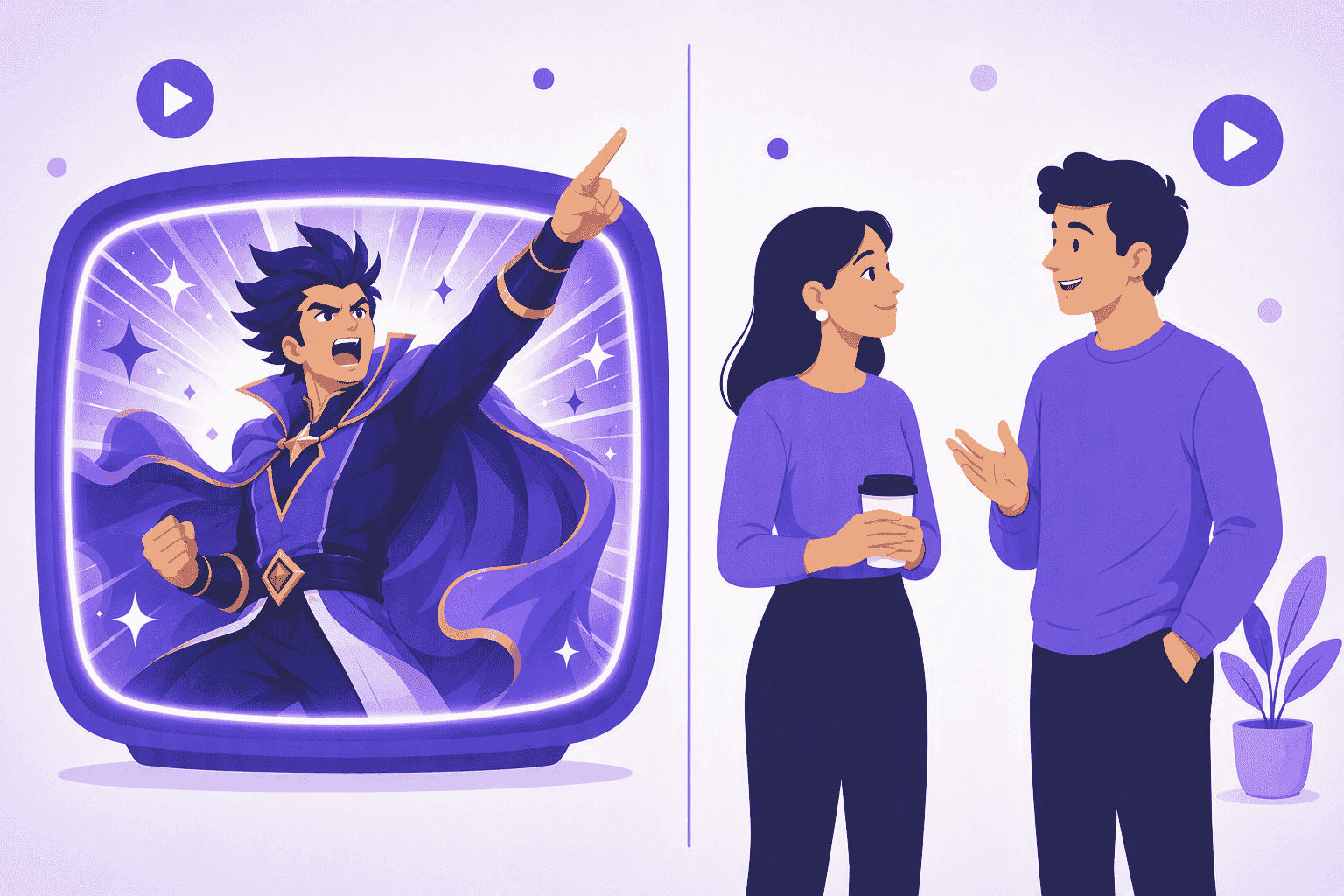
Slang vs swearing in Japanese
Learners often confuse “slangy” with “rude”.
Many slang words are not swear words at all, they are just informal. But some slang overlaps with insults or harsh judgments, especially when aimed at a person (うざい, メンヘラ, 陰キャ used as a label).
If you specifically want profanity and severity, use our guide to Japanese swear words. Keep slang for bonding, not for attacking.
How to practice slang without sounding forced
Start with reactions, not labels
Reactions like それな, わかる, まじ are easier to place naturally than labels like 陰キャ or メンヘラ. Labels can sound like you are categorizing people, which is socially risky.
Use the “one slang per sentence” rule
If you stack slang, you can sound like you are doing an impression.
Try: まじで?それな。
Avoid: まじやばいそれなガチで草.
Learn the rhythm from real clips
Japanese is mora-timed, so getting the beats right matters as much as the consonants.
If you are training with video, focus on repeating one short line until your timing matches. Then swap one word and keep the same rhythm, which is how native speakers actually build fluency. For a practical setup, see our dual subtitles guide.
💡 A fast test for 'can I say this?'
If you would not say it in your own language to a stranger, do not say it in Japanese to a stranger. Slang is intimacy-coded.
Cultural notes that make slang click
“Cool” is often about not overcommitting
Japanese casual speech often avoids heavy, direct claims. Slang reactions can be short and slightly vague, which keeps the mood light. That is why やばい can work as a whole emotional summary.
Online Japanese has its own etiquette
Japanese internet spaces have strong norms, and some platforms favor different styles. NHK’s language and media research regularly highlights how language use shifts across media contexts (NHK Broadcasting Culture Research Institute, accessed 2026). Treat comment sections as their own dialect.
Politeness is still the default with new people
Even young speakers often start politely with strangers, then relax into casual speech. The Agency for Cultural Affairs (文化庁) materials on Japanese language education also emphasize appropriate register choice as a core competency (Agency for Cultural Affairs, accessed 2026).
A simple 7-day plan to add slang safely
Day 1: Pick 3 low-risk reactions: まじ, それな, わかる.
Day 2: Listen for them in real audio, note intonation.
Day 3: Use them in text with a friend or tutor, once each.
Day 4: Add one intensity word: やばい or きつい.
Day 5: Practice one “fandom” word if relevant: 推し.
Day 6: Learn one text-only marker to recognize: w or 草, but do not say it out loud.
Day 7: Record yourself repeating two lines, compare mora timing.
If you need a broader base first, build your core vocabulary with 100 most common Japanese words, then come back to slang.
Where Wordy fits (and where it does not)
Slang is learned best through repeated exposure to real speech, not through memorizing lists.
Wordy’s movie and TV clips are useful because you can replay a single casual line until the rhythm and reaction timing feel automatic. But slang also needs social calibration, so combine clip practice with a real conversation partner who can tell you when something sounds too strong.
If you want more structured casual speech, pair this guide with Japanese casual speech guide.
Final takeaways
Advanced Japanese slang is worth learning because it unlocks real conversations, but it is not “free vocabulary”, it is social signaling. Start with low-risk reactions, keep text-native slang in text, and avoid labels that can insult or stigmatize. When in doubt, stay polite, and let the other person set the register first.
Frequently Asked Questions
Is Japanese slang the same in Tokyo and Osaka?
Can I use Japanese slang with my teacher or boss?
What is the safest Japanese slang to use as a learner?
Does Japanese internet slang work in real conversation?
Why do Japanese slang words change so fast?
Sources & References
- Ethnologue, 27th edition, 2024
- National Institute for Japanese Language and Linguistics (NINJAL), accessed 2026
- NHK Broadcasting Culture Research Institute, accessed 2026
- Agency for Cultural Affairs (文化庁), accessed 2026
Start learning with Wordy
Watch real movie clips and build your vocabulary as you go. Free to download.


