Japanese Idioms and Expressions: 25 Phrases You Actually Hear (With Pronunciation)
Quick Answer
Japanese idioms and expressions are fixed phrases that pack cultural meaning into a few words, like 空気を読む (koo-kee oh YOH-moo), 'read the room.' This guide teaches 25 expressions you will actually hear, with mora-accurate pronunciation, usage notes, and examples so you can recognize them in anime, dramas, and real conversations.
Japanese idioms and expressions are set phrases that Japanese speakers use to communicate quickly, politely, and indirectly, and learning a few high-frequency ones like しょうがない (shoh-GAH-nai) and 空気を読む (koo-kee oh YOH-moo) will make your listening and speaking sound dramatically more natural.
Japanese is spoken by roughly 123 million people worldwide (Ethnologue, 27th ed., 2024), and you will hear these expressions across Japan, from casual friend talk to workplace small talk. If you are also building your basics, pair this with how to say hello in Japanese and how to say goodbye in Japanese so your openings and closings match your new idioms.

How this guide works (so you do not memorize blindly)
Each entry includes kana, common kanji, a mora-accurate pronunciation approximation, and a realistic example. Japanese is mora-timed, so sounds like ou and ei take two beats, and small っ adds a beat.
I am prioritizing expressions you will actually hear in modern speech, TV, and movies, not rare four-character compounds you only see in essays. For deeper cultural framing, linguist Harumi Befu’s work on Japanese social interaction and identity is a useful lens for why indirectness and group harmony show up in so many everyday phrases.
💡 A quick listening trick
When you learn an expression, also learn the typical response. For example, なるほど often triggers たしかに (tah-SHEE-kah-nee) or そうだね (SOH-dah-neh). Idioms live in pairs and patterns, not in isolation.
25 Japanese idioms and expressions you will actually hear
しょうがない
Kana: しょうがない
Kanji: 仕様がない (often written in kana)
Pronunciation: shoh-GAH-nai
Meaning: It cannot be helped, it is what it is.
You use this when something is out of your control, often with a resigned but calm tone. It can sound mature and practical, or dismissive if you say it too fast.
Example: しょうがないね。明日やり直そう。
Pronunciation: shoh-GAH-nai neh. ah-SHEE-tah yah-ree-NAH-soh
Translation: It cannot be helped. Let’s redo it tomorrow.
なるほど
Kana: なるほど
Pronunciation: nah-roo-HOH-doh
Meaning: I see, that makes sense.
This is one of the most useful conversation tools in Japanese because it signals active listening without interrupting. NHK’s communication guidance often emphasizes listener responses (相づち), and なるほど is a core one.
Example: なるほど、そういうことか。
Pronunciation: nah-roo-HOH-doh, SOH-yoo koh-toh kah
Translation: I see, so that’s how it is.
お疲れ様
Kana: おつかれさま
Kanji: お疲れ様
Pronunciation: oh-TSOO-kah-reh-SAH-mah
Meaning: Thanks for your hard work, good job, you must be tired.
This is workplace glue in Japan, but it is not limited to work. You can say it after practice, a long day, or even after someone finishes a task in front of you.
Example: 今日もお疲れ様。
Pronunciation: KYOH-oh moh oh-TSOO-kah-reh-SAH-mah
Translation: Thanks for today, good work.
空気を読む
Kana: くうきをよむ
Kanji: 空気を読む
Pronunciation: koo-kee oh YOH-moo
Meaning: Read the room, sense the atmosphere.
This phrase is modern-feeling and extremely cultural. It points to the expectation that you notice what the group wants without explicit instructions, a theme that also appears in sociolinguist Sachiko Ide’s work on Japanese politeness and discernment.
Example: ここは空気を読んで黙ろう。
Pronunciation: koh-koh hah koo-kee oh YOHN-deh dah-MAH-roh
Translation: Let’s read the room and stay quiet here.
空気が読めない
Kana: くうきがよめない
Kanji: 空気が読めない
Pronunciation: koo-kee gah yoh-MEH-nai
Meaning: Cannot read the room.
This is often used as criticism, sometimes jokingly among friends, sometimes harshly. Use it carefully, especially at work.
Example: あの人、空気が読めないよね。
Pronunciation: ah-noh HEE-toh, koo-kee gah yoh-MEH-nai yoh neh
Translation: That person really can’t read the room, huh.
猫の手も借りたい
Kana: ねこのてもかりたい
Kanji: 猫の手も借りたい
Pronunciation: neh-koh noh TEH moh kah-ree-TAI
Meaning: I am so busy I would even borrow a cat’s paw.
It is a classic idiom that still shows up in real speech, especially when someone is overwhelmed at work or during an event.
Example: 今週は猫の手も借りたいくらい忙しい。
Pronunciation: kohn-SHOO hah neh-koh noh TEH moh kah-ree-TAI koo-rai ee-soh-GAH-shee
Translation: This week I’m so busy I’d borrow even a cat’s paw.
口が滑る
Kana: くちがすべる
Kanji: 口が滑る
Pronunciation: koo-chee gah SOO-beh-roo
Meaning: Let something slip, say it by accident.
This is useful for apologies and gossip situations. It is softer than saying you intentionally revealed something.
Example: ごめん、口が滑った。
Pronunciation: goh-MEHN, koo-chee gah SOO-beh-tta
Translation: Sorry, I let it slip.
顔が広い
Kana: かおがひろい
Kanji: 顔が広い
Pronunciation: kah-oh gah hee-ROH-ee
Meaning: Well-connected, knows lots of people.
This is a compliment and often used when asking for introductions. It can also imply social power.
Example: 彼は顔が広いから、紹介してもらえるよ。
Pronunciation: kah-reh wah kah-oh gah hee-ROH-ee kah-rah, shoh-KAI sheh-teh moh-rah-EH-roo yoh
Translation: He’s well-connected, so he can introduce you.
腹が立つ
Kana: はらがたつ
Kanji: 腹が立つ
Pronunciation: hah-rah gah TAH-tsoo
Meaning: To get angry.
Japanese often locates emotions in the body, and 腹 (belly) is a common seat of feelings. If you want more emotion vocabulary, see Japanese emotions vocabulary.
Example: それ、ちょっと腹が立つな。
Pronunciation: soh-reh, CHOHT-toh hah-rah gah TAH-tsoo nah
Translation: That kind of makes me mad.
腹を割って話す
Kana: はらをわってはなす
Kanji: 腹を割って話す
Pronunciation: hah-rah oh WAHT-teh hah-nah-SOO
Meaning: Talk frankly, open up.
This is common in relationship talk and serious workplace conversations. It signals you want honesty, not surface politeness.
Example: 一回、腹を割って話そう。
Pronunciation: ee-KAI, hah-rah oh WAHT-teh hah-nah-SOH
Translation: Let’s talk honestly once.
手を貸す
Kana: てをかす
Kanji: 手を貸す
Pronunciation: teh oh KAH-soo
Meaning: Lend a hand, help.
This is straightforward and very usable. It is less dramatic than 助ける and fits daily situations.
Example: ちょっと手を貸して。
Pronunciation: CHOHT-toh teh oh KAH-shee-teh
Translation: Give me a hand for a second.
手が離せない
Kana: てがはなせない
Kanji: 手が離せない
Pronunciation: teh gah hah-nah-SEH-nai
Meaning: I can’t step away, I’m tied up.
This is perfect for calls and messages. It sounds more natural than a direct no.
Example: 今、手が離せないから後でね。
Pronunciation: ee-MAH, teh gah hah-nah-SEH-nai kah-rah ah-TOH-deh neh
Translation: I can’t step away right now, later.
目がない
Kana: めがない
Kanji: 目がない
Pronunciation: meh gah NAI
Meaning: Has a weakness for, cannot resist.
You can use it for food, hobbies, cute things, bargains. It is friendly and common.
Example: 私、抹茶に目がないんだ。
Pronunciation: wah-tah-SHEE, MAHT-chah nee meh gah NAI-n dah
Translation: I can’t resist matcha.
目に入る
Kana: めにはいる
Kanji: 目に入る
Pronunciation: meh nee hah-ee-ROO
Meaning: Catch one’s eye, come into view.
This is useful for describing noticing something without sounding too intentional.
Example: 駅で面白いポスターが目に入った。
Pronunciation: EH-kee deh oh-moh-SHEE-roh-ee poh-SOO-tah gah meh nee hah-ee-RAHT-tah
Translation: An interesting poster caught my eye at the station.
目を通す
Kana: めをとおす
Kanji: 目を通す
Pronunciation: meh oh toh-OH-soo
Meaning: Look over, skim, review.
This is a work and school staple. It is polite and efficient.
Example: その資料、あとで目を通しておくね。
Pronunciation: soh-noh shee-RYOH, ah-TOH-deh meh oh toh-OH-shee-teh OH-koo neh
Translation: I’ll look over those materials later.
口が堅い
Kana: くちがかたい
Kanji: 口が堅い
Pronunciation: koo-chee gah kah-TAI
Meaning: Can keep a secret.
This is a strong compliment in a culture where trust and discretion matter. It is also a useful self-description.
Example: 大丈夫、私、口が堅いよ。
Pronunciation: dai-JOH-boo, wah-tah-SHEE, koo-chee gah kah-TAI yoh
Translation: It’s fine, I can keep a secret.
口が軽い
Kana: くちがかるい
Kanji: 口が軽い
Pronunciation: koo-chee gah kah-ROO-ee
Meaning: Loose-lipped, talks too much.
This is negative and can be harsh. Use it carefully, or soften it with ちょっと.
Example: 彼、ちょっと口が軽いかも。
Pronunciation: kah-reh, CHOHT-toh koo-chee gah kah-ROO-ee kah moh
Translation: He might be a bit loose-lipped.
二度手間
Kana: にどてま
Kanji: 二度手間
Pronunciation: nee-doh TEH-mah
Meaning: Doing the same work twice, extra hassle.
You hear this in offices and daily life when a process is inefficient. It is short, punchy, and very Japanese.
Example: それだと二度手間になるよ。
Pronunciation: soh-reh dah-toh nee-doh TEH-mah nee nah-ROO yoh
Translation: If you do it that way, it becomes double work.
念のため
Kana: ねんのため
Kanji: 念のため
Pronunciation: NEHN noh tah-meh
Meaning: Just in case, to be safe.
This is common in careful planning, travel, and work. It is polite and neutral.
Example: 念のため、もう一回確認するね。
Pronunciation: NEHN noh tah-meh, moh-oo ee-KAI kah-koo-NEHN soo-roo neh
Translation: Just in case, I’ll check one more time.
もったいない
Kana: もったいない
Pronunciation: moht-TAI-nai
Meaning: What a waste, too good to waste.
This is both practical and value-driven. It can refer to food waste, money, time, or even wasted talent.
Example: まだ食べられるのに、もったいない。
Pronunciation: MAH-dah tah-BEH-rah-reh-roo noh nee, moht-TAI-nai
Translation: You can still eat it, what a waste.
しょうがないけど
Kana: しょうがないけど
Pronunciation: shoh-GAH-nai keh-doh
Meaning: It can’t be helped, but…
Adding けど softens the resignation and often introduces a compromise. It is a realistic conversational upgrade.
Example: しょうがないけど、次は早めに言ってね。
Pronunciation: shoh-GAH-nai keh-doh, TSOO-gee wah hah-yoh-MEH nee EET-teh neh
Translation: It can’t be helped, but tell me earlier next time.
仕方がない
Kana: しかたがない
Kanji: 仕方がない
Pronunciation: shee-KAH-tah gah NAI
Meaning: It can’t be helped (more formal than しょうがない).
You will hear both. 仕方がない is slightly more adult and can fit formal contexts, while しょうがない is more casual.
Example: 事故なら仕方がないですね。
Pronunciation: jee-koh nah-rah shee-KAH-tah gah NAI deh-SOO neh
Translation: If it was an accident, it can’t be helped.
ありがたい
Kana: ありがたい
Pronunciation: ah-ree-GAH-tai
Meaning: I’m grateful, that’s helpful.
This is a useful alternative to ありがとう when you want to sound a bit more reflective. It is common in workplaces and polite conversations.
Example: 手伝ってくれて、ありがたい。
Pronunciation: teh-tsoo-DAHT-teh koo-reh-teh, ah-ree-GAH-tai
Translation: I’m grateful you helped.
さすが
Kana: さすが
Pronunciation: sah-SOO-gah
Meaning: As expected, that’s impressive.
This is praise, but it can also be playful sarcasm depending on tone. In dramas, you will hear it constantly.
Example: さすが先輩、仕事が早い。
Pronunciation: sah-SOO-gah sehn-PAI, shee-GOH-toh gah hah-YAI
Translation: As expected of you, senpai, you work fast.
いい加減
Kana: いいかげん
Kanji: いい加減
Pronunciation: ee-ee kah-GEHN
Meaning: Enough already, irresponsible, or moderate, depending on context.
This is a high-risk, high-reward phrase because it has multiple common meanings. In complaints, it means “get it together” or “stop it.”
Example: いい加減にして。
Pronunciation: ee-ee kah-GEHN nee SHEE-teh
Translation: Cut it out.
なんとかなる
Kana: なんとかなる
Pronunciation: nahn-toh-kah nah-ROO
Meaning: It’ll work out somehow.
This is optimistic and very common among friends. It can be comforting, or it can sound careless if used in serious planning.
Example: 大丈夫、なんとかなるよ。
Pronunciation: dai-JOH-boo, nahn-toh-kah nah-ROO yoh
Translation: It’s fine, it’ll work out.
それな
Kana: それな
Pronunciation: soh-reh-NAH
Meaning: Exactly, so true (casual agreement).
This is modern, casual, and common in youth speech and online. Use it with friends, not with your boss.
Example: それな。マジで眠い。
Pronunciation: soh-reh-NAH. mah-JEE deh neh-MOO-ee
Translation: Exactly. I’m seriously sleepy.
When idioms sound natural vs awkward
Idioms are not seasoning you sprinkle everywhere. They sound natural when they match the social purpose of the moment: soften a refusal, show empathy, praise someone, or signal you are listening.
Japanese politeness is not only about honorific verb forms, it is also about choosing indirect, face-saving phrasing. This aligns with classic pragmatics research by Penelope Brown and Stephen Levinson on face and politeness, even though Japanese has its own distinctive system and norms.
⚠️ Do not overuse 'cool' idioms
If you drop a dramatic idiom every sentence, it can sound like you are performing Japanese rather than speaking it. Start with listener responses (なるほど, そうなんだ) and practical phrases (念のため, 手が離せない), then add colorful idioms gradually.
Pronunciation: the mora details that change how you sound
Japanese rhythm is built from morae, not English-style stress. If you compress morae, you will be understood, but you will sound less native and you may miss words in fast speech.
Here are three common traps from this article:
- もう一回 (moh-oo ee-KAI): moh-oo is two morae, not one.
- 確認 (kah-koo-NEHN): the ん is its own beat.
- もったいない (moht-TAI-nai): the small っ creates a pause, moht-tai-nai.
If you want a structured approach to hearing rhythm and pitch, pair this with the Japanese pronunciation guide. For everyday greetings that also rely on rhythm, revisit how to say hello in Japanese.
How to learn these expressions with real TV and movie dialogue
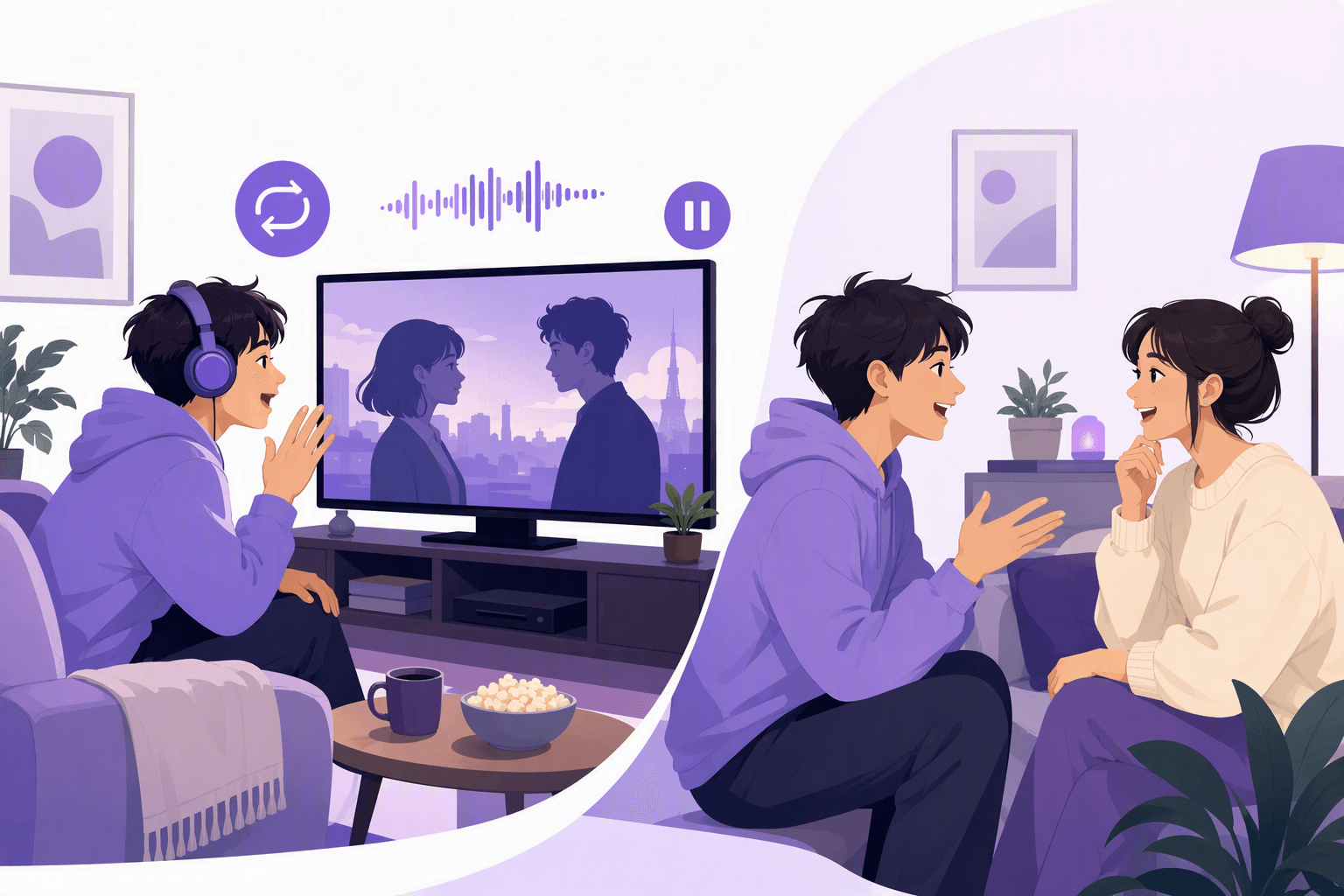
Idioms stick when you attach them to a scene. In a workplace drama, お疲れ様 and 念のため show up in realistic repetition, and you start predicting them before they appear.
A practical method is: watch a short clip, replay it until you can shadow the line, then swap one noun or time phrase while keeping the idiom fixed. This is close to what Paul Nation’s work on vocabulary learning emphasizes: repeated, meaningful encounters beat one-time memorization.
If you are learning through anime, be selective. Some expressions are natural, others are character speech. For context on what anime language does to your Japanese, see learn Japanese with anime.
Cultural notes: why these phrases point to Japanese social habits
Many of these expressions manage friction without direct confrontation. 手が離せない avoids a blunt no, 念のため frames caution as responsibility, and 空気を読む encodes a group-first expectation.
That does not mean Japanese speakers never speak directly. It means directness is often reserved for clear roles and close relationships, while public or mixed settings favor smoother, less imposing phrasing. If you are also curious about the opposite end of the spectrum, see Japanese swear words for how intensity and rudeness are expressed when politeness drops.
A simple practice plan (10 minutes a day)
Pick 3 expressions for one week. Listen for them in media, then use them in one message or short voice note daily.
Suggested starter set:
- なるほど (nah-roo-HOH-doh)
- 念のため (NEHN noh tah-meh)
- 手が離せない (teh gah hah-nah-SEH-nai)
After that, add one “color” idiom like 猫の手も借りたい, but keep your core set practical.
Keep going with high-frequency Japanese
If you want more high-coverage building blocks, combine this guide with the 100 most common Japanese words. If your goal is relationship talk, how to say I love you in Japanese will give you the phrases that show up in romance scenes, plus the cultural caution around saying 愛してる too casually.
At Wordy, the fastest way to make idioms feel automatic is to learn them inside real scenes, then review them with spaced repetition until you can say them without translating in your head.
Frequently Asked Questions
What is the difference between a Japanese idiom and an expression?
Are Japanese idioms used in daily conversation, or only in writing?
How can I learn Japanese expressions without sounding unnatural?
What does 空気を読む mean, and is it rude?
Do I need to memorize kanji to learn these idioms?
Sources & References
- Ethnologue, Japanese, 27th edition, 2024
- Agency for Cultural Affairs (Japan), Japanese Language resources, accessed 2026
- NHK Broadcasting Culture Research Institute, language and communication resources, accessed 2026
- Kenkyusha, Japanese-English Dictionary and usage notes, accessed 2026
Start learning with Wordy
Watch real movie clips and build your vocabulary as you go. Free to download.


