Lingopie Review (2026): Honest Take on the TV-Show Method
Quick Answer
Lingopie is a strong pick for intermediate Spanish, French, and Italian learners who want to immerse in full TV episodes with clickable dual subtitles, but its full-episode format is overwhelming for beginners and its Asian language catalog is thinner than its Romance language one. Pricing sits in the mid-tier at roughly $12 per month annually. The best Lingopie alternative for beginners and Asian-language learners is a clip-based approach like Wordy, which keeps the movie-method but in shorter, curated scenes.
Lingopie is a streaming-based language learning platform that turns full TV shows and movies into language lessons through clickable dual subtitles, flashcards, and an AI grammar coach. It is genuinely good for intermediate learners of Romance languages who want immersion. It is less suited to absolute beginners or to learners of Japanese, Korean, and Chinese, where a shorter clip-based tool like Wordy is usually a better fit.
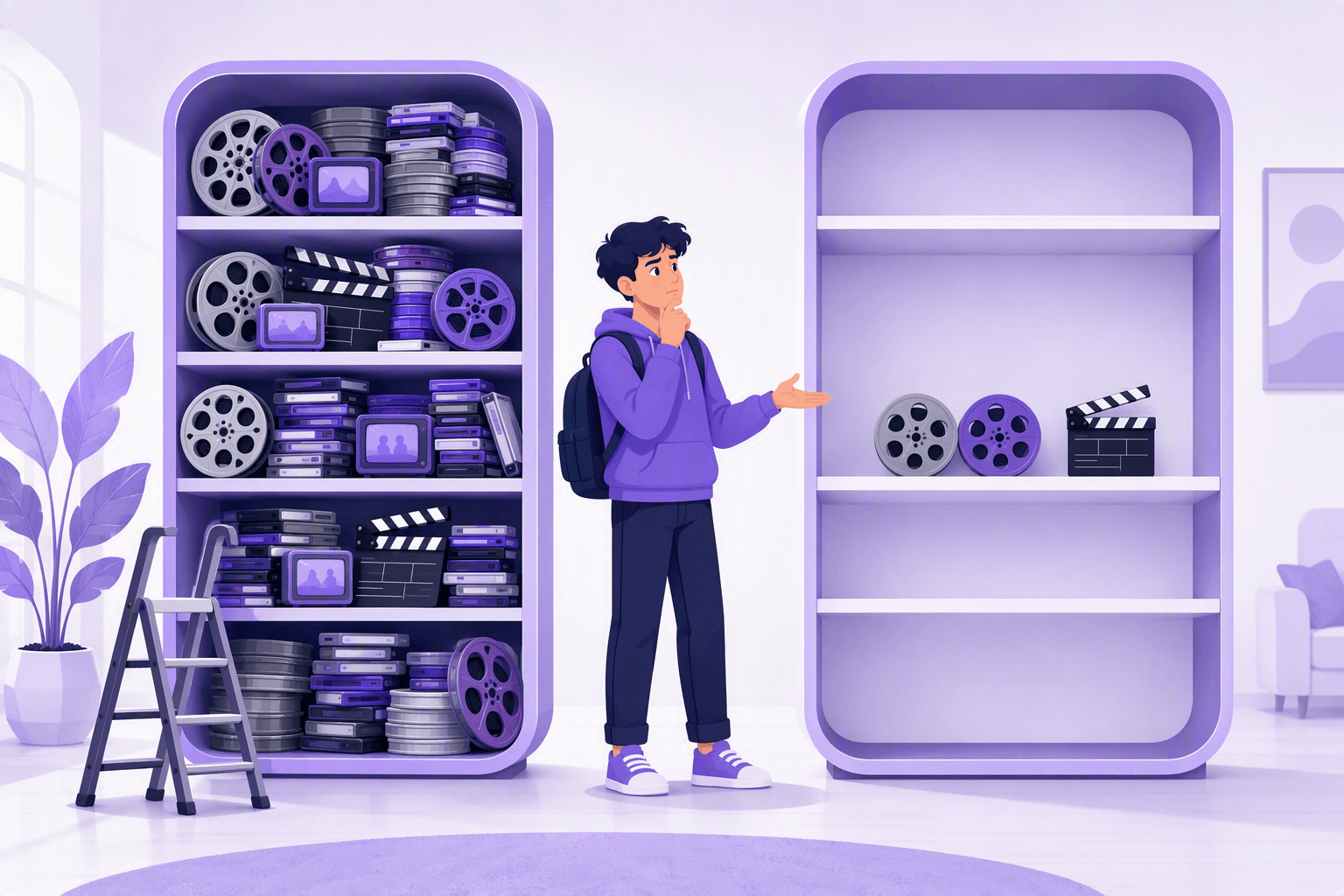
Lingopie advertises a catalog of over 5,000 TV shows, movies, and music videos across roughly 15 languages, but the depth varies dramatically by language. Spanish, French, Italian, German, and Portuguese learners get the deepest libraries. Japanese, Korean, and Chinese learners get a noticeably thinner shelf, which matters because variety is what makes the TV-show method work in the first place.
For a wider comparison across the category, see our best language learning apps overview. If you want to know how Lingopie stacks up against the most popular gamified competitor, our Duolingo review covers the trade-offs.
What Lingopie is and how it works
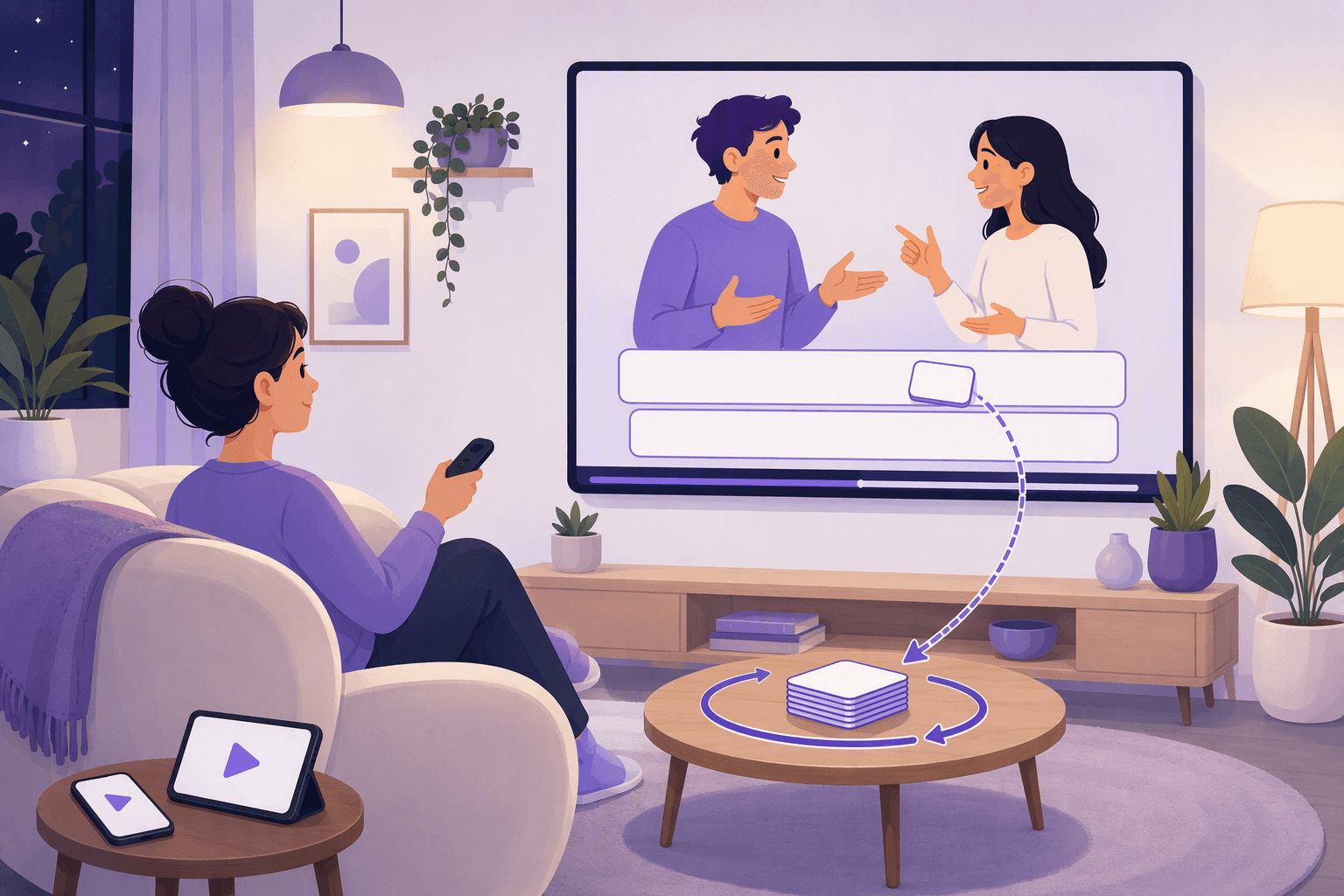
Lingopie launched in 2018 and is headquartered in New York. The product is a streaming app for web, iOS, Android, and several smart TV platforms including Roku, Fire TV, Apple TV, and Google TV. Once you sign in, you pick a language, browse a Netflix-style catalog of shows organized by level and genre, and press play.
The interactive layer is where Lingopie becomes a learning tool rather than a streaming service. While the video plays, you see two subtitle tracks at once, one in the target language and one in your native language. You can tap any word in the target-language line to get an instant translation and a quick grammar note. Tapping a word also saves it to a flashcard deck tied to that show, and Lingopie reviews those flashcards with spaced repetition afterward.
The platform also includes an AI grammar coach that explains why a sentence has a certain conjugation or word order, a small set of speaking exercises, kids content, and challenge playlists. The core experience, however, is still: watch a real TV show, tap words you do not know, review them later.
This design rests on a serious idea from second-language acquisition research. Stephen Krashen argued for decades that learners acquire language primarily by understanding messages, not by memorizing rules:
"Comprehensible input is the single most important condition for second language acquisition."
Stephen Krashen, The Input Hypothesis (1985)
Lingopie is essentially a delivery system for comprehensible input at scale, paired with retrieval practice on the words you actually encountered.
Where Lingopie genuinely shines
For the right learner, Lingopie does several things very well, and it is worth being specific about which ones.
Volume of authentic input. The 5,000+ catalog (Lingopie, accessed 2026) is meaningfully larger than what most competitors offer, and it is real content, not learner-facing dialog. That matters because Paul Nation, in Learning Vocabulary in Another Language, argues that learners need to encounter words across many contexts to truly own them. A TV show provides that breadth naturally.
Dual subtitles that are actually clickable. Many learners try to replicate the Lingopie experience with Netflix and a browser extension, but the experience is clunky. Lingopie's clickable subtitles are smooth, the saved words sync across devices, and the flashcards inherit the original sentence as context, which helps memory.
Smart TV apps. If you watch most of your TV on a real television, Lingopie is one of the few language tools that runs on Apple TV, Fire TV, Roku, and Google TV. That is a real differentiator. It changes the daily ritual from "I should study" into "I'll watch an episode."
Genuinely strong Romance language libraries. Spanish, French, and Italian get the deepest catalogs. There is enough variety to find shows you actually enjoy, which is the single biggest predictor of whether you will keep going.
Kids content. The kids catalog is unusually well-developed for early learners and for parents trying to raise bilingual children. It is also useful for adults, because animated shows speak more slowly and use simpler vocabulary.
If your goal is to bridge from textbook Spanish to "I can understand a Mexican telenovela," Lingopie is built exactly for that.
💡 The Lingopie sweet spot
Lingopie works best when you are at roughly CEFR A2 to B2, meaning you know maybe 1,500 to 5,000 words and can follow a slow conversation if the topic is familiar. Below that level, full episodes become an exercise in tapping every other word, which is exhausting and slow.
Where Lingopie falls short
A fair review has to be honest about the limitations, and Lingopie has a few real ones.
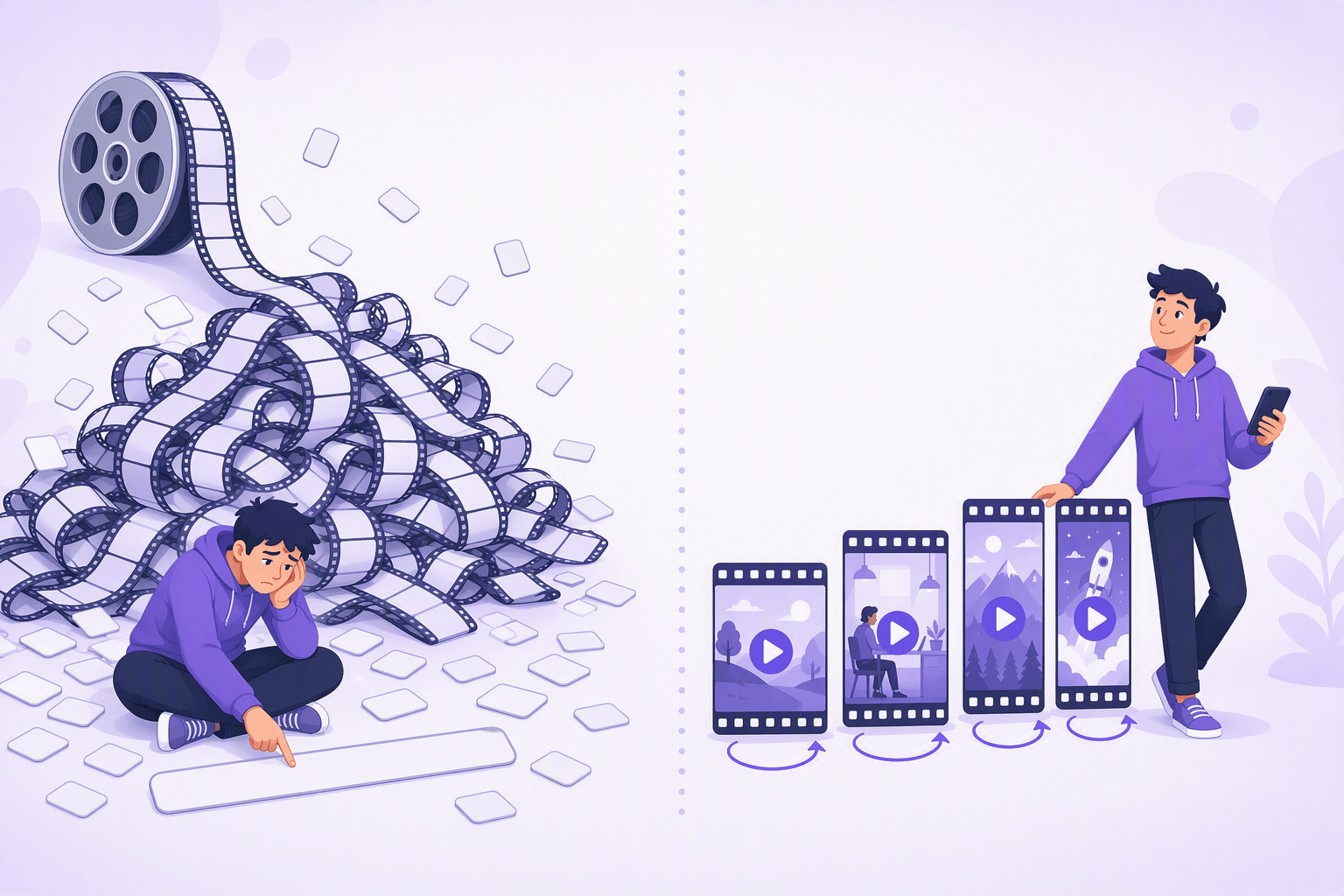
Full-episode format is overwhelming for beginners. A 25-minute Spanish episode contains roughly 3,000 to 4,000 spoken words. If you only recognize 300 of them, you spend the episode tapping subtitles instead of watching. That is not learning, it is dictionary lookup with a screensaver. Beginners need scene-sized content where one situation, say ordering coffee, is mastered before the next one begins.
The Asian language catalog is thin. Lingopie's Japanese, Korean, and Chinese catalogs are noticeably smaller than the Romance language ones, and the variety inside each is more limited. For learners of those languages, the "browse Netflix-style catalog" promise underdelivers. With over 125 million speakers of Japanese and roughly 80 million of Korean (Ethnologue, 27th edition, 2024), there is real demand here, and Lingopie is not yet at parity.
It is not a grammar curriculum. The AI grammar coach is a nice addition, but it explains grammar as it appears in the show you are watching, not as a structured path from A1 to B2. If you have no grammar foundation, you can watch hundreds of hours and still be unsure how the Spanish subjunctive works.
Speaking is undertrained. There are some pronunciation exercises, but the core loop is receptive. You are reading, listening, and clicking. You are not producing. To actually speak, you will need to add tutoring, a language exchange, or structured self-practice.
Mid-tier price for a single-method tool. At roughly $12 per month on annual, Lingopie is not cheap compared to the price-per-feature of broader alternatives. You are paying for the curated catalog and the interactive subtitle layer, both of which are real, but it is worth knowing what you are buying.
If you are learning Japanese or Korean specifically, our guides on learning Japanese and learning Korean cover what actually moves the needle, and movie-based options like Wordy tend to be a stronger fit at the beginner stage.
Lingopie pricing in 2026 (what you actually get)
Lingopie uses a standard streaming-style subscription model with a 7-day free trial.
- Monthly plan: roughly $18 per month, billed monthly.
- Annual plan: roughly $144 per year, which works out to about $12 per month. This is the option most users pick.
- Lifetime plan: appears periodically on sale, typically between $120 and $180, billed once.
All plans give you access to the full catalog in every supported language, which is a real strength. You are not locked into one language per subscription, so you can dabble in French while focusing on Spanish.
The 7-day free trial is enough to evaluate whether the method works for you, but only if you actively watch and tap during those days. Passive scrolling through the catalog will not give you a useful read on the product.
⚠️ Watch the auto-renewal
Like most subscription products, Lingopie auto-renews after the trial. If you want to test it without commitment, set a calendar reminder for day six. The app's own subscription management is fine, but the app stores sometimes process cancellations slowly, so do not wait until the last hour.
Who should use Lingopie?
Lingopie is a strong choice if:
- You are at CEFR A2 to B2 in Spanish, French, Italian, German, or Portuguese.
- You already enjoy watching foreign-language TV and want to make it productive.
- You watch most of your TV on an actual television and want a smart TV app.
- You like the idea of building vocabulary inside real shows, not from word lists.
- You are willing to add speaking practice from a tutor or exchange partner.
Lingopie is a weaker choice if:
- You are an absolute beginner with under 500 words of vocabulary.
- You are learning Japanese, Korean, or Chinese as your main language.
- You want a structured grammar curriculum that takes you from A1 to B2.
- You mainly want to practice speaking.
- You travel often and want short, mobile-friendly study sessions.
For a side-by-side comparison with one of the most structured grammar-first alternatives, see our Babbel review. For the gamified habit-builder, our Duolingo review explains where Duolingo wins and where it stalls. And our can Duolingo make you fluent breakdown is useful context if you are weighing methods.
🌍 The full-episode immersion debate
There is a long-running debate in language learning between "narrow input" and "wide input." Narrow input means watching the same show repeatedly so vocabulary accumulates naturally. Wide input means watching many different shows for variety. Lingopie is built for both, but the platform leans toward variety. Krashen and Nation both argue narrow input is more efficient for vocabulary growth, especially at the intermediate stage. If you use Lingopie, try sticking with one show for at least five episodes before switching. You will be surprised how fast your tapping drops off.
Best Lingopie alternatives in 2026
If Lingopie is not quite the right fit, here are the alternatives most learners actually consider, and the cases each one fits.
Wordy
Wordy uses the same core insight as Lingopie, that real video is the best teacher, but breaks it down into 30 to 90 second curated film and TV clips instead of full episodes. You watch a scene, tap any unfamiliar word for an instant translation, the word saves to your deck attached to that exact scene, and you review later with spaced repetition that replays the same clips. There is also speech recognition for pronunciation.
This format solves Lingopie's two biggest weaknesses in one move. Beginners can finish a scene before getting overwhelmed, and the catalog is structured around more than 20 languages with stronger Japanese, Korean, and Chinese support than Lingopie offers. The free tier with a daily time limit makes it easy to test the method, and the lifetime option removes the subscription anxiety entirely.
Wordy launched in 2024 in Budapest, was featured in TechCrunch in September 2024, and now serves over 500,000 users with a 4.7 to 4.8 star average across 13,000+ reviews. If you liked the idea of Lingopie but the full-episode format scared you off, download Wordy on iOS or Android and see the clip-based version of the method.
Babbel
Babbel is a structured grammar-first course that takes you from A1 toward B1 with 15-minute lessons. It is the opposite of Lingopie in philosophy. Where Lingopie throws you into real content, Babbel rebuilds the language brick by brick. Best for learners who want a clear path and explicit grammar.
Duolingo
Duolingo is the habit-builder. It will not get you to fluency on its own, but it is excellent at making you study every day. Many learners pair Duolingo for daily drills with Lingopie or Wordy for input. See our Duolingo review for the full breakdown.
Rosetta Stone
The classic image-association method. Best for learners who want to avoid translation entirely and learn by association. Our Rosetta Stone review covers when this approach actually pays off and when it stalls.
Netflix plus a subtitle extension
The cheapest alternative if you are disciplined. Free Chrome extensions like Language Reactor offer clickable dual subtitles on Netflix and YouTube. You give up the curated catalog, the level grading, the flashcard sync, and the smart TV apps, but if those features are not worth $12 a month to you, this is a real option.
If you want to keep building real-world Spanish or French outside the app, our best movies to learn Spanish, best movies to learn French, and best movies to learn English lists are good starting points for what to watch first.
Final verdict
Lingopie is a well-built product with a clear philosophy and a real audience. For intermediate learners of Spanish, French, Italian, German, or Portuguese who want to immerse in full TV episodes with smart interactive subtitles, it is one of the best tools on the market. The smart TV apps are a genuine differentiator, the dual subtitle experience is polished, and the catalog is large enough to find shows you will actually finish.
It is not the right tool for everyone. Absolute beginners will feel overwhelmed by full-episode pacing. Japanese, Korean, and Chinese learners will hit the limits of the catalog faster than Romance language learners will. Anyone who needs structured grammar or active speaking will have to add another tool.
If you are in the Lingopie sweet spot, the 7-day free trial is the right test. If you are a beginner, or learning an Asian language, or want shorter sessions you can finish on a phone, start with a clip-based approach like Wordy, build to roughly A2, and then graduate to Lingopie for the full-episode stage. That sequence tends to produce faster overall progress than starting with full episodes from day one.
The best language learning is the one you keep doing. Both approaches work, the question is which one matches the level you are at right now.
Frequently Asked Questions
Is Lingopie worth it in 2026?
Can you become fluent with Lingopie alone?
Is Lingopie good for beginners?
How is Lingopie different from Netflix with subtitles?
What's a cheaper Lingopie alternative?
Sources & References
- Lingopie, official website (lingopie.com), accessed 2026
- App Store, Lingopie listing, accessed 2026
- Krashen, S., The Input Hypothesis: Issues and Implications, Longman, 1985
- Nation, P., Learning Vocabulary in Another Language, Cambridge University Press, 2nd edition, 2013
- Ethnologue: Languages of the World, 27th edition, 2024
- Council of Europe, Common European Framework of Reference for Languages (CEFR)
Start learning with Wordy
Watch real movie clips and build your vocabulary as you go. Free to download.


