Quick Answer
Kanji, hiragana, and katakana are three Japanese writing systems used together: kanji carries core meaning, hiragana marks grammar and native words, and katakana writes loanwords, emphasis, and many names. If you can recognize what each script signals, Japanese text becomes dramatically easier to parse, even before you know every word.
Kanji, hiragana, and katakana are three scripts that Japanese uses together: kanji mainly carries meaning (roots of words), hiragana mainly marks grammar and native spellings, and katakana mainly marks loanwords, foreign names, and visual emphasis. If you learn what each script signals, you can start parsing real Japanese text quickly, even when you do not know every character.
| What it signals | Japanese | Pronunciation | Formality |
|---|---|---|---|
| Meaning-bearing characters (word roots) | 漢字 | KAN-jee | formal |
| Grammar endings, particles, native spellings | ひらがな | hee-rah-GAH-nah | formal |
| Loanwords, foreign names, emphasis, many sound effects | カタカナ | kah-tah-KAH-nah | formal |
| Small reading aid printed by kanji | ふりがな | foo-ree-GAH-nah | polite |
The big picture: Japanese is designed to be mixed-script
Japanese is spoken by about 123 million people, mainly in Japan, and it is one of the world’s major languages by speaker population. Ethnologue lists Japanese as a language with national-level use and a large L1 base, which is why the writing system has to work at scale across education, media, and technology.
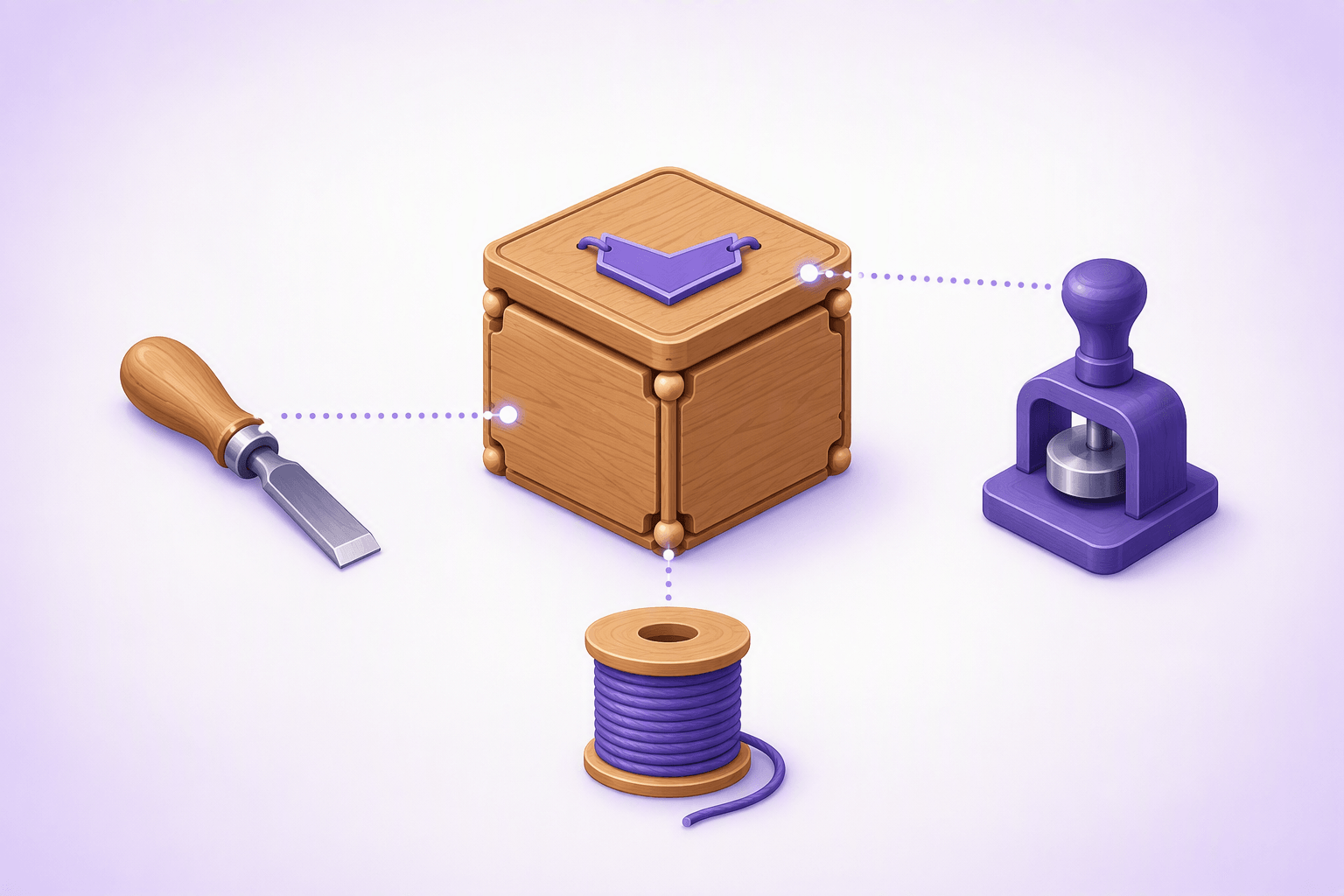
The key idea is division of labor. Each script does a job, and Japanese readers rely on that job assignment to read fast.
If you are learning through real dialogue, you will see this mix constantly in subtitles and on-screen text. Wordy’s clip-based approach makes the mix feel less abstract because you repeatedly meet the same words in context, like greetings from how to say hello in Japanese and farewells from how to say goodbye in Japanese.
Kanji: meaning first, pronunciation second
Kanji (漢字, KAN-jee) are characters of Chinese origin used to write core content words. In practice, kanji helps you see meaning chunks at a glance, especially in long sentences where many words would otherwise look similar in hiragana.
A single kanji often has multiple readings. That is normal, not a flaw.
"The Japanese writing system is not redundant, it is functional: different scripts carry different kinds of information for the reader."
David Crystal, The Cambridge Encyclopedia of Language (3rd ed.)
漢字
Pronunciation: KAN-jee.
Kanji is most common for nouns, the stems of verbs and adjectives, and many name elements. It is also common in formal writing because it compresses information.
A practical example you will see early is the verb "to eat":
- 食べる is "taberu" (tah-BEH-roo), "to eat"
- 食 is the kanji carrying the core meaning "eat/food"
- べる is hiragana showing the verb ending
This is the pattern to train your eyes for: kanji chunk plus hiragana ending.
Why kanji exists in Japanese at all
Japanese has many homophones, words that sound the same but mean different things. Kanji separates them visually.
For example, こうしょう (KOH-shoh) could map to multiple words depending on context. Kanji disambiguates quickly in print.
Kanji also makes scanning easier. On a menu, a sign, or a news headline, kanji gives you anchors.
The literacy benchmark: Jōyō kanji
Japan’s Agency for Cultural Affairs maintains the Jōyō kanji list, a set of 2,136 characters used for general literacy. You do not need all 2,136 to start reading, but the list is a useful long-term target and a reason kanji study is so structured in Japan.
💡 A learner rule that works
When you meet a new word, learn it as a whole unit, not as a kanji reading list. For 食べる, learn "たべる = to eat" and recognize 食 as the meaning anchor. Readings become easier after you have seen the word in multiple contexts.
Hiragana: the grammar engine of Japanese
Hiragana (ひらがな, hee-rah-GAH-nah) is a phonetic syllabary. Each character represents a mora, a rhythmic unit similar to a syllable but not identical.
Hiragana is the script that makes Japanese sentences function: particles, endings, and many common words appear in hiragana even when kanji exists.
ひらがな
Pronunciation: hee-rah-GAH-nah.
You will see hiragana used for:
- Particles: は, が, を, に, で, と, も
- Verb and adjective endings: 食べる, 高い
- Function words: これ, それ, ここ, そして
- Furigana readings next to kanji
If you want a fast win, master hiragana first. It unlocks pronunciation, dictionary lookup, and furigana.
Why some words stay in hiragana
Some words have kanji, but in everyday writing they are often in hiragana because the kanji feels stiff, rare, or visually heavy. This is partly convention and partly style.
You will also see hiragana used to soften tone. In ads, children’s products, and casual notes, hiragana can feel friendlier.
🌍 Hiragana can signal 'softness'
In Japanese design, script choice is part of tone. A cafe might write ありがとう (ah-ree-GAH-toh, "thank you") in hiragana on a sign because it feels warm and approachable, even though 有難う exists. Script is a mood choice, not only a spelling choice.
Katakana: loanwords, names, and visual punch
Katakana (カタカナ, kah-tah-KAH-nah) is also a phonetic syllabary. It represents the same sound inventory as hiragana, but it is used for different categories of words.
If hiragana is the default grammar script, katakana is the marked script. It tells you, "this word is special in some way."
カタカナ
Pronunciation: kah-tah-KAH-nah.
You will see katakana used for:
- Loanwords: コーヒー (KOH-hee, coffee)
- Foreign names: マイケル (MY-kel, Michael)
- Countries and places in some contexts: アメリカ (ah-MEH-ree-kah, America)
- Onomatopoeia: ドキドキ (DOH-kee DOH-kee, heart pounding)
- Emphasis like italics in English: スゴイ (soo-GOY, amazing)
Katakana is everywhere in modern Japanese because modern life is full of borrowed terms, brands, and global references.
Katakana is not "English mode"
Many loanwords come from English, but not all. Japanese borrows from Portuguese, Dutch, German, French, and more, depending on the domain and historical period.
Even when a word is from English, katakana pronunciation follows Japanese phonology. That is why "coffee" becomes コーヒー (KOH-hee), and "love" often becomes ラブ (RAH-boo) in casual contexts.
⚠️ A common katakana trap
Do not assume a katakana word means exactly what the English-looking source means. Some loanwords shift meaning in Japanese. Treat katakana as "a Japanese word that happens to be written in katakana," then confirm meaning with examples.
Furigana: the bridge between kanji and reading
Furigana (ふりがな, foo-ree-GAH-nah) is small kana printed next to kanji to show pronunciation. It is usually hiragana, but can be katakana for foreign names.
You will see furigana heavily in manga, children’s books, and learning materials. You also see it in newspapers when a rare kanji or a name might slow readers down.
ふりがな
Pronunciation: foo-ree-GAH-nah.
For learners, furigana is a gift. It lets you read above your kanji level, which is exactly how many learners build vocabulary quickly through real media.
If you are learning romantic phrases like in how to say I love you in Japanese, furigana in subtitles and captions can help you connect the spoken phrase to the written form without stopping every line.
What each script looks like in real sentences
Here is what mixed-script Japanese is doing when you read it. Consider a simple sentence:
- 私はコーヒーを飲みます。
- わたしはコーヒーをのみます。
Both are readable, but the first is easier for most adult readers because kanji creates visual landmarks. 私 (I) and 飲 (drink) pop out, while particles and endings remain in hiragana.
Katakana flags コーヒー as a loanword. Even if you have never learned it, the script tells you it is likely a borrowed noun.
When to use each script when you write
If your goal is reading, you can postpone writing. If your goal is texting, journaling, or class assignments, you need practical rules.
Use kanji for content words when it is standard
If a word is commonly written with kanji, use it. This is especially true for high-frequency nouns and verb stems.
If you are unsure, write it in hiragana. Native readers will still understand you, and it is better than choosing the wrong kanji.
Use hiragana for grammar, particles, and endings
Particles and endings are almost always hiragana. This is one of the most reliable rules in Japanese.
It is also why hiragana mastery pays off early: it is the glue holding sentences together.
Use katakana for loanwords, foreign names, and emphasis
Loanwords and many foreign names are katakana. When you see a long string of katakana, slow down and sound it out.
In entertainment media, katakana can also signal attitude. A character might use katakana in a text message to look blunt or dramatic.
🌍 Katakana as 'loud font' in pop culture
In manga and TV captions, katakana often functions like bold or all-caps. A reaction like マジ (MAH-jee, "seriously") can be written in katakana to feel sharper. This is one reason learning katakana helps you read tone, not just vocabulary.
Why Japanese kept three scripts: a readability argument
From a learner perspective, three scripts can feel like unnecessary difficulty. From a reader perspective, it is a speed system.
Kanji reduces ambiguity and compresses meaning. Hiragana keeps grammar transparent. Katakana labels borrowed and stylistically marked words.
NINJAL’s research focus on Japanese language resources reflects how central script choice is to vocabulary, readability, and education. The system is not random, it is optimized for fluent adult reading.
Learning order that works in 2026
You can learn the scripts in a way that matches how you will actually use Japanese.
Step 1: Hiragana (1 to 2 weeks)
Hiragana unlocks pronunciation and furigana. It also unlocks beginner grammar because particles are everywhere.
If you want a structured plan, pair this article with how to learn hiragana.
Step 2: Katakana (1 week, then ongoing)
Katakana is shorter than it looks. The hard part is speed, not memorization.
A good next step is how to learn katakana, then practice by reading menus, product labels, and subtitles.
Step 3: Kanji (ongoing, in layers)
Kanji is a long game. The Japan Foundation’s JLPT framework is a useful reference point for pacing, but you do not need to treat it like a religion.
A realistic approach is:
- Learn kanji through words you actually meet
- Review with spaced repetition
- Read with furigana to keep input high
If you want the bigger map of writing systems and how they fit together, see Japanese alphabet: hiragana, katakana, and kanji.
Practical examples you will see in movies and TV
Movie and TV dialogue is a great place to internalize script roles because the same phrases repeat across settings.
Names and titles
- 田中さん (tah-NAH-kah sahn): kanji for the surname, hiragana for the honorific reading in speech, written as さん
- マリアさん (mah-REE-ah sahn): katakana for a foreign given name
If you want to go deeper on name patterns, common Japanese names helps you recognize frequent kanji in surnames.
Everyday greetings
A greeting might appear as:
- こんにちは (kohn-nee-CHEE-wah)
- 今日は (kohn-nee-CHEE-wah, literally "today is")
Both can be correct depending on context and style. In many everyday contexts, こんにちは is the standard spelling, even though the phrase historically relates to "today."
This is a good reminder: spelling conventions are not always literal.
Strong language and censorship patterns
In subtitles, strong language can be written in kana to avoid visually harsh kanji, or partially masked for broadcast standards. If you are curious about how Japanese handles taboo language and euphemism, see Japanese swear words, but treat it as cultural literacy, not a script study plan.
⚠️ Responsible use
Script choice can change how aggressive a phrase feels on screen. Copying slang or insults from entertainment media without context can backfire socially. Learn what you hear, but practice neutral, polite forms first.
Common learner mistakes (and how to fix them)
Mixing up hiragana and katakana shapes
Some pairs are visually similar, like さ (sa) vs サ (sa), or り (ri) vs リ (ri). The fix is not more flashcards, it is reading.
Read short katakana-heavy texts daily: menus, brand names, and product packaging.
Overusing hiragana and underusing kanji
Beginners often write everything in hiragana because it is safe. That is fine early, but it becomes hard to read.
Start converting the most common content words to kanji: 私, 人, 日, 大, 小, 行, 見, 食. You will feel the readability jump quickly.
Treating kanji as isolated art
Kanji learned alone is fragile. Kanji learned inside words sticks.
If you learn 見る (MEE-roo, "to see") and 見せる (mee-SEH-roo, "to show"), you are learning a family, not a symbol.
A simple mental model for reading mixed-script Japanese
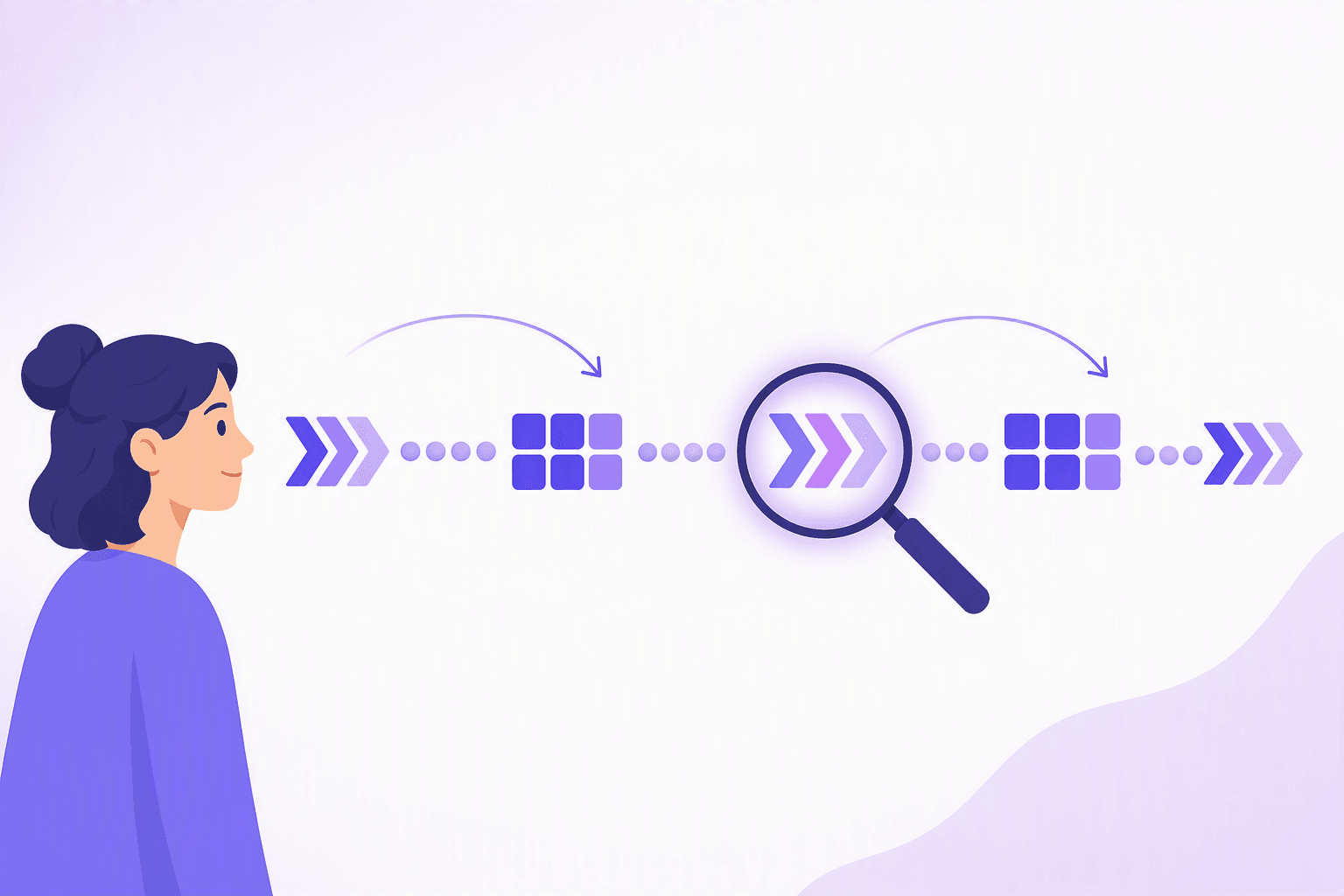
When your eyes hit a Japanese sentence, do this:
- Identify katakana chunks first, they are often nouns you can sound out.
- Identify kanji chunks next, they are meaning anchors.
- Use hiragana to read the grammar and connect the chunks.
This is how native readers process quickly, and it is a skill you can train.
How Wordy fits this problem: scripts through repetition, not theory
Script confusion usually comes from studying in isolation. Real clips force your brain to map sound, meaning, and spelling together.
If you practice greetings and everyday lines, you will repeatedly see the same patterns: kanji stems plus hiragana endings, katakana for borrowed nouns, and furigana when a subtitle expects mixed audiences.
For a structured start, combine this guide with how to say hello in Japanese and how to say goodbye in Japanese, then watch for how the scripts change across casual vs polite scenes.
Summary: the difference in one sentence
Kanji tells you what the core idea is, hiragana tells you how the sentence works, and katakana tells you a word is borrowed, named, or emphasized. Once you read Japanese as a mixed-script system, it stops feeling like three alphabets and starts feeling like one toolkit.
Frequently Asked Questions
Do Japanese people use kanji, hiragana, and katakana every day?
How many kanji do you need to read Japanese comfortably?
Is katakana only for English loanwords?
Why is some Japanese written only in hiragana?
What is furigana, and when do you see it?
Sources & References
- Agency for Cultural Affairs (Japan), Jōyō Kanji Hyō (Common-Use Kanji List), 2010 (as amended)
- The Japan Foundation, Japanese-Language Education: JLPT Test Guide and Can-Do Overview, 2023
- Ethnologue, Japanese (jpn) Language Profile, 27th ed., 2024
- National Institute for Japanese Language and Linguistics (NINJAL), Research and Resources on Japanese Writing and Vocabulary, 2020-2024
Start learning with Wordy
Watch real movie clips and build your vocabulary as you go. Free to download.


