Japanese Counters Explained: How to Count Things Naturally (With Pronunciation)
Quick Answer
Japanese counters are required words that come after numbers to show what you are counting, like people, books, or flat objects. The most useful counters to learn first are 人 (nin) for people, つ (tsu) for general items, 個 (ko) for small objects, 本 (hon) for long objects, 枚 (mai) for flat items, and 回 (kai) for times, plus the sound changes that make them tricky.
Japanese counters are the short words you put after numbers to show what you are counting, and you use them constantly in real Japanese: 一人 (hee-TOH-ree) for one person, 二枚 (nee-MY) for two sheets, 三本 (sahn-BOHN) for three long objects. If you learn a small set of high-frequency counters plus the main pronunciation patterns, you can count naturally in shops, restaurants, travel, and everyday conversation.
Japanese is spoken by roughly 123 million people worldwide (Ethnologue, 27th edition, 2024), and counters are one of the first things that makes learners feel like Japanese is "mathy". The good news is that most daily life runs on a core set you can master quickly.
If you want to build your listening base alongside counters, pair this with how to say hello in Japanese and how to say goodbye in Japanese, because greetings are where you will start hearing numbers and quantities in context.
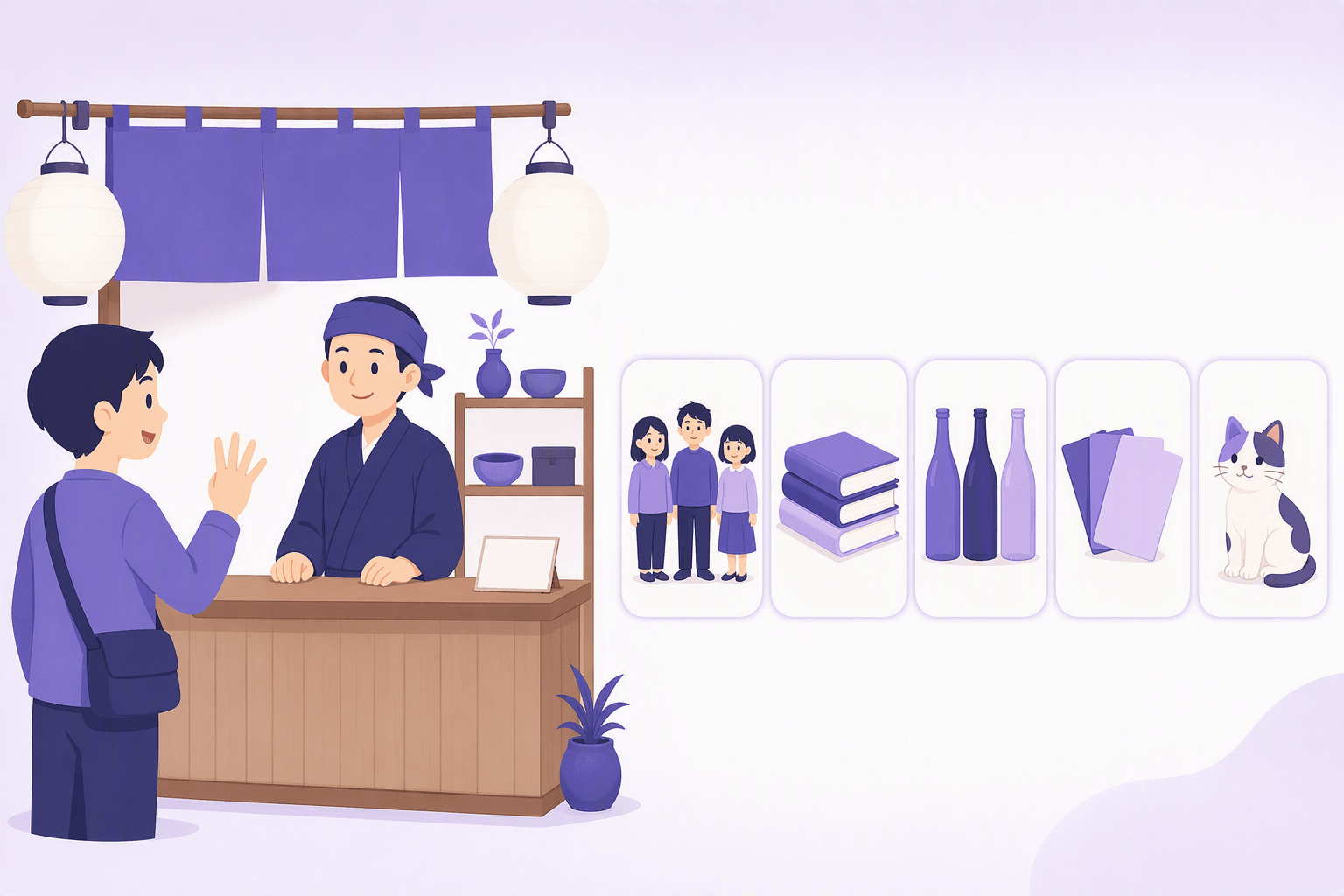
The core idea: number + counter (and where the noun goes)
The most common pattern is:
- Number + Counter + Noun
三本のペン (sahn-BOHN noh pehn), three pens
You will also hear:
- Noun + Number + Counter
ペンを三本 (pehn oh sahn-BOHN), three pens (as the object)
Japanese grammar is flexible about noun placement, but the counter stays glued to the number. This is one reason counters feel like a single "counting unit" in speech.
The counters you should learn first (the 80/20 list)
You can cover a huge amount of real conversation with about 8 counters. The Japan Foundation’s learning frameworks emphasize functional language that appears early and often, and these counters show up immediately in beginner materials.
つ
つ (tsu) is the general counter for things when you do not know the specific counter, or when the speaker is being casual.
Pronunciation note: this set uses special native-Japanese forms, not the usual ichi/ni/san pattern.
- ひとつ (hee-TOH-tsoo), 1
- ふたつ (foo-TAH-tsoo), 2
- みっつ (MEET-tsoo), 3
- よっつ (YOHT-tsoo), 4
- いつつ (EE-tsoo-tsoo), 5
- むっつ (MOOT-tsoo), 6
- ななつ (NAH-nah-tsoo), 7
- やっつ (YAHT-tsoo), 8
- ここのつ (koh-KOH-noh-tsoo), 9
- とお (TOH-oh), 10
Use it when ordering or counting items in a simple way: りんごをみっつ (reen-goh oh MEET-tsoo), three apples.
人
人 is the counter for people.
- 一人 (hee-TOH-ree), 1 person
- 二人 (foo-TAH-ree), 2 people
- 三人 (sahn-NEEN), 3 people
- 何人 (nahn-NEEN), how many people
After 3, it becomes regular: よにん, ごにん, ろくにん, etc. The first two are the ones you must memorize.
個
個 (ko) is for small, discrete items: eggs, candies, buttons, many products.
- 一個 (EEK-koh), 1
- 二個 (nee-koh), 2
- 三個 (sahn-koh), 3
- 何個 (nahn-koh), how many
This is one of the most useful "default" counters in stores, especially for packaged goods.
枚
枚 (mai) is for flat things: paper, tickets, plates (as flat objects), shirts (as flat garments), photos.
- 一枚 (ee-CHEE-my), 1 sheet
- 二枚 (nee-MY), 2 sheets
- 三枚 (sahn-MY), 3 sheets
- 何枚 (nahn-MY), how many sheets
No big sound changes here, which is why learners love 枚.
本
本 (hon) is for long cylindrical things: bottles, pens, umbrellas, bananas, and also "one roll" of something long.
This one has major sound changes:
- 一本 (eep-POHN), 1
- 二本 (nee-BOHN), 2
- 三本 (sahn-BOHN), 3
- 四本 (yohn-BOHN), 4
- 五本 (goh-BOHN), 5
- 六本 (rohp-POHN), 6
- 七本 (nahn-BOHN), 7
- 八本 (hahp-POHN), 8
- 九本 (kyoo-BOHN), 9
- 十本 (jip-POHN), 10
- 何本 (nahn-BOHN), how many
The pattern to notice is the small っ and p-sound at 1, 6, 8, 10.
回
回 (kai) is for occurrences: times, rounds, repetitions.
- 一回 (EEK-kai), 1 time
- 二回 (nee-kai), 2 times
- 三回 (sahn-kai), 3 times
- 何回 (nahn-kai), how many times
You will also hear the irregular:
- 四回 (yon-KAI) is common, but よんかい vs よっかい varies by speaker and context.
匹
匹 (hiki) is for small animals: cats, dogs, rabbits, fish (in many casual contexts).
Sound changes are strong:
- 一匹 (eep-PEEK), 1
- 二匹 (nee-PEEK), 2
- 三匹 (sahn-BEEK), 3
- 四匹 (yon-PEEK), 4
- 五匹 (goh-PEEK), 5
- 六匹 (rohp-PEEK), 6
- 七匹 (nahn-PEEK), 7
- 八匹 (hahp-PEEK), 8
- 九匹 (kyoo-PEEK), 9
- 十匹 (jip-PEEK), 10
- 何匹 (nahn-BEEK), how many
Listen for the b-sound at 3 and "how many".
冊
冊 (satsu) is for bound items: books, notebooks, magazines.
- 一冊 (ees-SAH-tsoo), 1
- 二冊 (nee-SAH-tsoo), 2
- 三冊 (sahn-SAH-tsoo), 3
- 八冊 (hahs-SAH-tsoo), 8
- 十冊 (juss-SAH-tsoo), 10
- 何冊 (nahn-SAH-tsoo), how many
You will hear small っ in some numbers (especially 1, 8, 10).
💡 The fastest path to sounding natural
Memorize counters as chunks you can say quickly: eep-POHN, nee-BOHN, sahn-BOHN, rohp-POHN. In real speech, native speakers do not "compute" these, they retrieve them as fixed forms.
Why counters feel hard: sound changes you cannot ignore
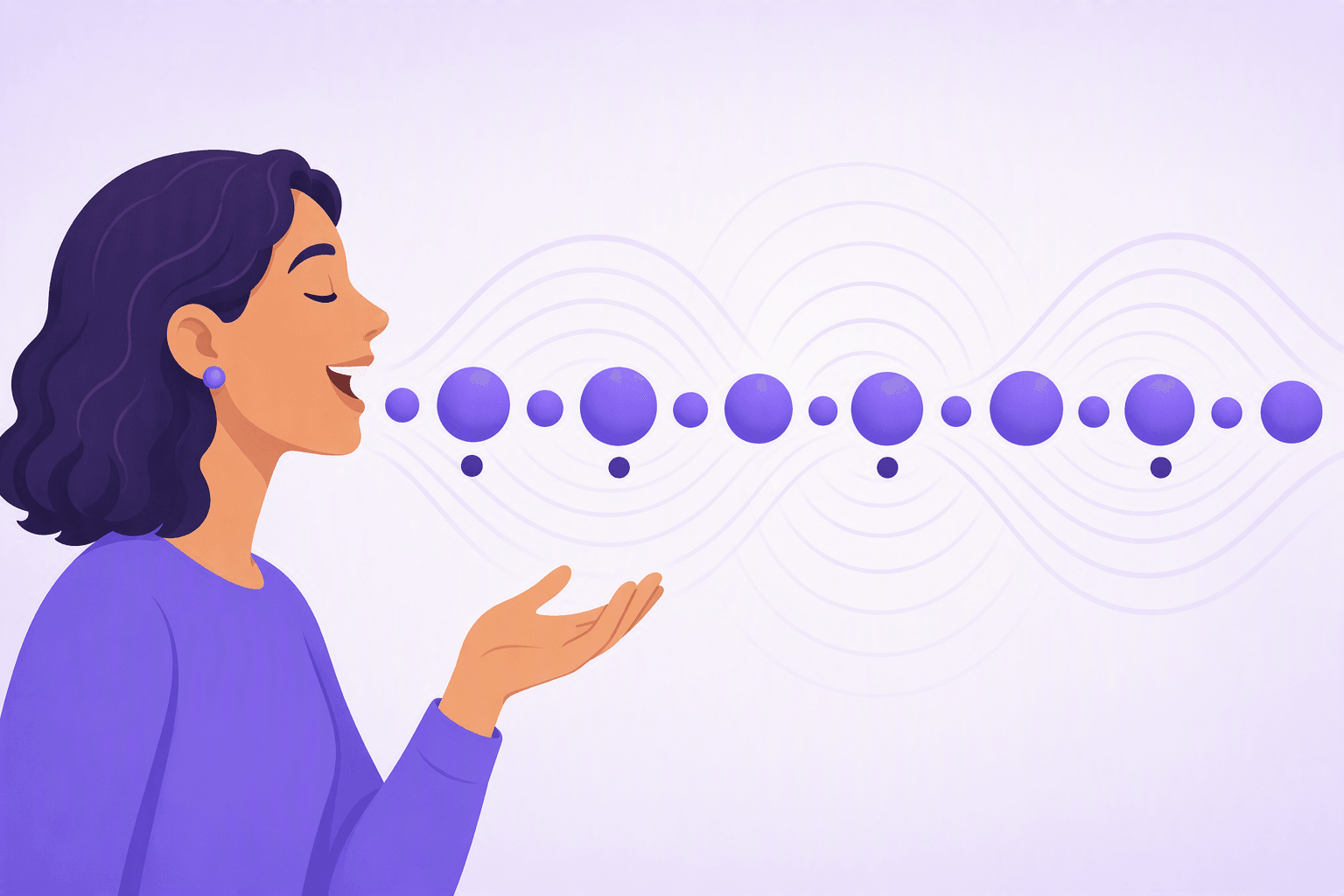
Counters are not just vocabulary, they are phonology. Japanese often modifies sounds at word boundaries to keep rhythm smooth, and counters are a perfect environment for that.
Linguists describe these processes in different ways, but for learners the practical takeaway is simple: memorize the common combinations, not the isolated counter.
Masayoshi Shibatani’s work on Japanese structure highlights how much Japanese relies on predictable patterns and set constructions. Counters are one of the clearest examples: the grammar is consistent, but the surface pronunciation shifts.
Small っ (促音)
Small っ creates a "stop" beat and doubles the next consonant.
You see it in:
- 一個 (EEK-koh)
- 一回 (EEK-kai)
- 一本 (eep-POHN)
If you drop the stop, you sound hesitant or non-native, especially with 本 and 匹.
P and B shifts (は行)
Counters that start with h often shift to p or b after certain numbers.
- 本: hon becomes pon/bon
- 匹: hiki becomes piki/biki
This is why "three" often triggers b: 三本 (sahn-BOHN), 三匹 (sahn-BEEK).
何 (nan) changes with the counter
"How many" is not one fixed sound. It adapts.
- 何人 (nahn-NEEN)
- 何枚 (nahn-MY)
- 何本 (nahn-BOHN)
- 何回 (nahn-kai)
If you only learn なに, you will still be understood, but you will miss what people say back to you at full speed.
Where counters show up in real life (and what natives actually say)
Counters are not formal textbook Japanese. You hear them in casual speech all day.
Ordering food and drinks
Restaurants and cafés are counter-heavy:
- ビールを二本ください (bee-roo oh nee-BOHN koo-dah-SY)
- これを三つお願いします (koh-reh oh MEET-tsoo oh-neh-GAH-ee-shee-mahss)
If you are building travel basics, combine this with Japanese travel phrases for ordering patterns and polite requests.
Shopping and customer service
Stores often use 個 and 枚, plus specialized counters like 点 (ten) for items in a purchase.
You will hear polite set phrases, and counters slot into them:
- こちら、二点でよろしいですか (koh-chee-rah, nee-TEHN deh yoh-roh-SHEE dehss-kah)
NHK’s pronunciation and accent resources are useful here because shop speech is fast and formulaic, and the pitch patterns can blur word boundaries (NHK日本語発音アクセント新辞典, accessed 2026).
Talking about frequency and habits
回 is everywhere when you talk about routines:
- 週に三回ジムに行きます (shoo nee sahn-kai jee-moo nee ee-KEE-mahss), I go to the gym three times a week.
This is also where you start hearing counters with time expressions, which connect nicely to how to tell time in Japanese.
A practical learning order (what to learn next)
After the core set, expand based on your life.
If you read, study, or work in Japanese
Add:
- 冊 (books)
- 台 (dai) for machines and vehicles (cars, computers)
- 件 (ken) for matters, cases, appointments
If you cook or talk about food
Add:
- 杯 (hai) for cups and glasses, with big sound changes (いっぱい, さんばい)
- 切れ (kire) for slices
- 玉 (tama) for round items like onions, eggs (context-dependent)
If you talk about people and groups
Add:
- 名 (mei) as a polite counter for people (often in announcements, reservations)
- 組 (kumi) for groups/teams
🌍 Why Japanese has so many counters
Counters reflect how Japanese packages objects into "countable units" that match shape, animacy, and social framing. NINJAL’s public-facing resources often show how these categories connect to everyday usage rather than strict logic, which is why you will hear 個 used broadly in shops even when a more specific counter exists.
Common mistakes that make you sound unnatural (and quick fixes)
Using the wrong counter when it matters socially
People counters are not optional. Saying 二個 for two people is not a cute mistake, it is confusing.
Fix: lock in 一人 and 二人 early, then add 何人 for questions.
Saying the number correctly but the counter "too carefully"
Learners often say ichi-hon instead of eep-POHN. Native listeners still understand, but it sounds like reading aloud.
Fix: drill the irregular clusters (1, 3, 6, 8, 10) for 本 and 匹.
Avoiding counters by switching to English-like phrasing
You can sometimes dodge counters with いくつ (EE-koo-tsoo), but overusing it makes your Japanese vague.
Fix: use つ as your bridge counter, then replace it with the specific counter as you learn it.
⚠️ Do not overgeneralize 'one counter fits all'
Japanese listeners are generous, but some counters carry meaning. 枚 implies flatness, 本 implies long shape, 冊 implies bound volumes. If you mix them up in a store, you can accidentally order the wrong unit, like bottles vs sheets.
Mini patterns you can reuse immediately
These sentence frames are worth memorizing as full chunks.
ください
- Xを + Number + Counter + ください
チケットを二枚ください (chee-keht-toh oh nee-MY koo-dah-SY)
あります / います
-
Number + Counter + あります (inanimate)
ペンが三本あります (pehn gah sahn-BOHN ah-ree-mahss) -
Number + Counter + います (animate)
猫が二匹います (neh-koh gah nee-PEEK ee-mahss)
何 + counter + ですか
- 何枚ですか (nahn-MY dehss-kah), how many sheets?
- 何回ですか (nahn-kai dehss-kah), how many times?
These are the kinds of short lines you will hear constantly in clips, which is why movie and TV input helps. If you want more listening-first practice, start with Japanese pronunciation basics so you can actually catch the small っ and the p/b shifts.
Counters in media: what to listen for in TV and movies
In scripted dialogue, counters show character and context.
- Police and workplace scenes often use 件 (ken) and 名 (mei) for formality.
- Family scenes use つ and 個 more, especially with kids.
- Comedy exaggerates counters for effect, like over-precise counting to sound fussy.
This is also a good reminder that "politeness" in Japanese is not only about set phrases like こんにちは (kohn-NEE-chee-wah). It is also about choosing the socially expected unit. If you are brushing up on set phrases, see how to say I love you in Japanese for how context changes what is natural.
A simple 10-minute daily drill that works
- Pick one counter (today: 本).
- Say 1-10 out loud twice, fast but clean: eep-POHN, nee-BOHN, sahn-BOHN, yohn-BOHN, goh-BOHN, rohp-POHN, nahn-BOHN, hahp-POHN, kyoo-BOHN, jip-POHN.
- Put it into three sentences you might actually say this week.
- Tomorrow, switch to 枚 or 回.
Paul Pimsleur’s approach to graduated interval recall is well-known in language teaching, and counters respond especially well to spaced repetition because the hard part is automatic retrieval under time pressure, not understanding the concept.
What to learn after you master the basics
Once the core counters feel automatic, you can expand in a targeted way:
- If you travel: 泊 (haku) nights, 階 (kai) floors, 分 (fun/pun) minutes.
- If you work in an office: 通 (tsuu) for letters, 件 (ken) for cases, 部 (bu) for departments.
- If you play games: 勝 (shoh) wins, 戦 (sen) matches, 人 (nin) players.
And if you are curious about the opposite end of "things Japanese learners notice", see Japanese swear words for how Japanese often avoids direct profanity and instead uses tone, pronouns, and context to signal intensity.
Wrap-up: the small set that unlocks real conversation
To use Japanese counters naturally, learn つ, 人, 個, 枚, 本, 回, 匹, 冊, then drill the sound-change clusters until they come out automatically. After that, add specialized counters only when your real life demands them.
If you want to practice counters the way you actually hear them, learn through short scenes where a character orders, counts, repeats, or complains, then shadow the line until the rhythm is automatic. That is where Wordy fits best: quick, repeatable clips that force you to hear and produce eep-POHN vs ee-chee hon as two different realities.
Frequently Asked Questions
Do you have to use counters in Japanese?
What is the easiest Japanese counter to start with?
Why do Japanese counters change pronunciation?
Is 何 (nan) or なん (nan) used with counters?
Can I just use 個 (ko) for everything?
Sources & References
- Japan Foundation, Japanese-Language Education (JF Standard) resources, accessed 2026
- National Institute for Japanese Language and Linguistics (NINJAL), linguistic resources on Japanese, accessed 2026
- NHK, NHK日本語発音アクセント新辞典, accessed 2026
- Ethnologue, 27th edition, 2024
- Shibatani, Masayoshi, The Languages of Japan, Cambridge University Press
Start learning with Wordy
Watch real movie clips and build your vocabulary as you go. Free to download.


