Quick Answer
Advanced Spanish numbers are less about counting to 100 and more about using numbers the way native speakers do: telling time (son las dos y media), saying dates (el tres de mayo de 2026), handling money and decimals (12,50 €), giving phone numbers, and choosing between ordinal and cardinal forms (el piso once vs el undécimo). This guide shows the rules, regional differences, and the most common real-life patterns.
Advanced Spanish numbers are the patterns you need for real life: telling time, saying dates, reading prices and decimals, giving phone numbers, and choosing the natural option between ordinal and cardinal forms. Once you know these conventions, you stop sounding like you are translating from English and start sounding like someone who actually uses Spanish daily.
Spanish is a global language with hundreds of millions of speakers, and it is used as an official language across 20 countries, plus widely in the United States and beyond. Ethnologue’s 2024 entry places Spanish among the world’s top languages by total speakers, and Instituto Cervantes’ reporting highlights its international reach and fast-growing learner base.
If you still want the basics first, start with our Spanish numbers 1-100 guide. For everyday conversation openers you will also hear numbers inside greetings and plans, see how to say hello in Spanish and how to say goodbye in Spanish.

Quick Reference: advanced number formats
Spanish numbers are not hard because the words are difficult, they are hard because the formatting rules change by context. This section gives you the patterns you will see and hear most.
Decimals, thousands, and separators
In most Spanish-speaking countries, the decimal separator is a comma, and thousands are separated with a period or a space depending on style. That means 12,5 is twelve point five, not twelve thousand five.
- 12,5 = doce coma cinco
- 1.000 = mil
- 1.000.000 = un millón
⚠️ Comma vs period is not a small detail
If you write 1,5 in Spanish contexts, many readers interpret it as one and a half. If you write 1.5, many readers interpret it as one thousand five hundred in everyday reading. When money or measurements matter, match the local convention.
Ordinals vs cardinals in real life
Spanish has full ordinal forms, but everyday usage often prefers cardinals after ten. The RAE and ASALE grammar describes this tendency clearly: you can say ordinals, but you often do not need them.
- el primer día (common)
- el segundo intento (common)
- el piso once (very common)
- el undécimo piso (possible, more formal)
Dates in Spanish: how people actually say them
Dates are one of the fastest ways to sound natural, because Spanish date structure is consistent and different from English.
The core pattern
The default spoken pattern is:
el + day + de + month (+ de + year)
Examples:
- el tres de mayo
- el tres de mayo de dos mil veintiséis
Pronunciation notes:
- tres /tɾes/
- mayo /ˈma.ʝo/
- mil /mil/
- veintiséis /ˌbein.tiˈsejs/
Reading years: two common strategies
Spanish speakers usually read years as full numbers, not as two pairs the way English often does.
- 1998: mil novecientos noventa y ocho
- 2026: dos mil veintiséis
In fast speech, you may hear slight reductions, but the structure stays the same. John Butt and Carmen Benjamin’s reference grammar (Routledge) is useful here because it treats numerals as part of the broader system of agreement and style, not as isolated vocabulary.
Writing dates: what you will see
In writing, you will see:
- 3 de mayo de 2026 (very common)
- 03/05/2026 (format depends on country and institution)
If you work with international teams, confirm whether the context expects day-month or month-day. Spanish usage is overwhelmingly day-month in most countries.
🌍 Why 'el' matters in dates
Spanish often treats dates as noun phrases, literally 'the third of May'. That is why 'el' appears so naturally. You can omit it in some written formats, but in speech it is the default in many regions.
Telling time in Spanish: two systems you must recognize
Spanish time-telling has a conversational system and a schedule system. You need both, because movies and TV use the conversational one, while announcements and apps often use the schedule one.
The conversational system: y cuarto, y media, menos cuarto
Use es la for one o’clock, and son las for all other hours.
- Es la una. /es la ˈu.na/
- Son las dos. /son las dos/
Then add minutes:
- Son las dos y cinco.
- Son las dos y cuarto. (2:15)
- Son las dos y media. (2:30)
- Son las tres menos cuarto. (2:45, literally quarter to three)
Pronunciation notes:
- una /ˈu.na/
- cuarto /ˈkwaɾ.to/
- media /ˈme.ðja/
- menos /ˈme.nos/
The schedule system: dos cuarenta y cinco
For timetables, transport, and formal announcements, you will often hear the hour plus minutes as a straight readout:
- dos quince
- dos treinta
- dos cuarenta y cinco
This is not wrong, it is just a different register. If you are learning through clips, you will hear both, sometimes in the same episode.
💡 A fast listening shortcut
Train your ear for 'menos' and 'y'. If you catch 'menos', the hour you hear is the next hour. If you catch 'y', the hour you hear is the current hour.
AM/PM and 24-hour time
Spanish can use de la mañana, de la tarde, de la noche, and de la madrugada. In many countries, 24-hour time is common in writing and announcements.
- a las 7 de la mañana
- a las 7 de la tarde
- 19:00 = las diecinueve horas (formal) or las siete de la tarde (common)
Money in Spanish: euros, pesos, and the "con" pattern
Money is where number habits become culture. People shorten, round, and assume context.
Saying prices naturally
Common patterns:
- doce euros
- doce con cincuenta (12,50, currency implied)
- doce euros con cincuenta
- doce cincuenta (very informal, context-heavy)
Pronunciation notes:
- euros /ˈew.ɾos/
- cincuenta /θiŋˈkwen.ta/ in much of Spain, /siŋˈkwen.ta/ in most of Latin America
In many Spanish-speaking contexts, the currency symbol is used in writing, but in speech the currency word may be dropped if everyone knows whether you mean euros, pesos, or dollars.
Céntimos and centavos
If you need precision:
- cincuenta céntimos
- cincuenta centavos
These words vary by currency system, but the number behavior is similar.
🌍 Rounding is polite in some contexts
In markets and casual purchases, rounding can be a social signal: you are not treating the interaction like an accounting exercise. In formal contexts like invoices, tickets, and contracts, precision returns immediately.
Large numbers in money: millón, mil millones
Spanish naming differs from US English at one key point: billion.
- un millón = 1,000,000
- mil millones = 1,000,000,000 (what US English calls one billion)
- un billón = 1,000,000,000,000 (one trillion in US English)
This is a classic place where learners get burned. If you work with finance or news, treat this as a must-learn distinction.
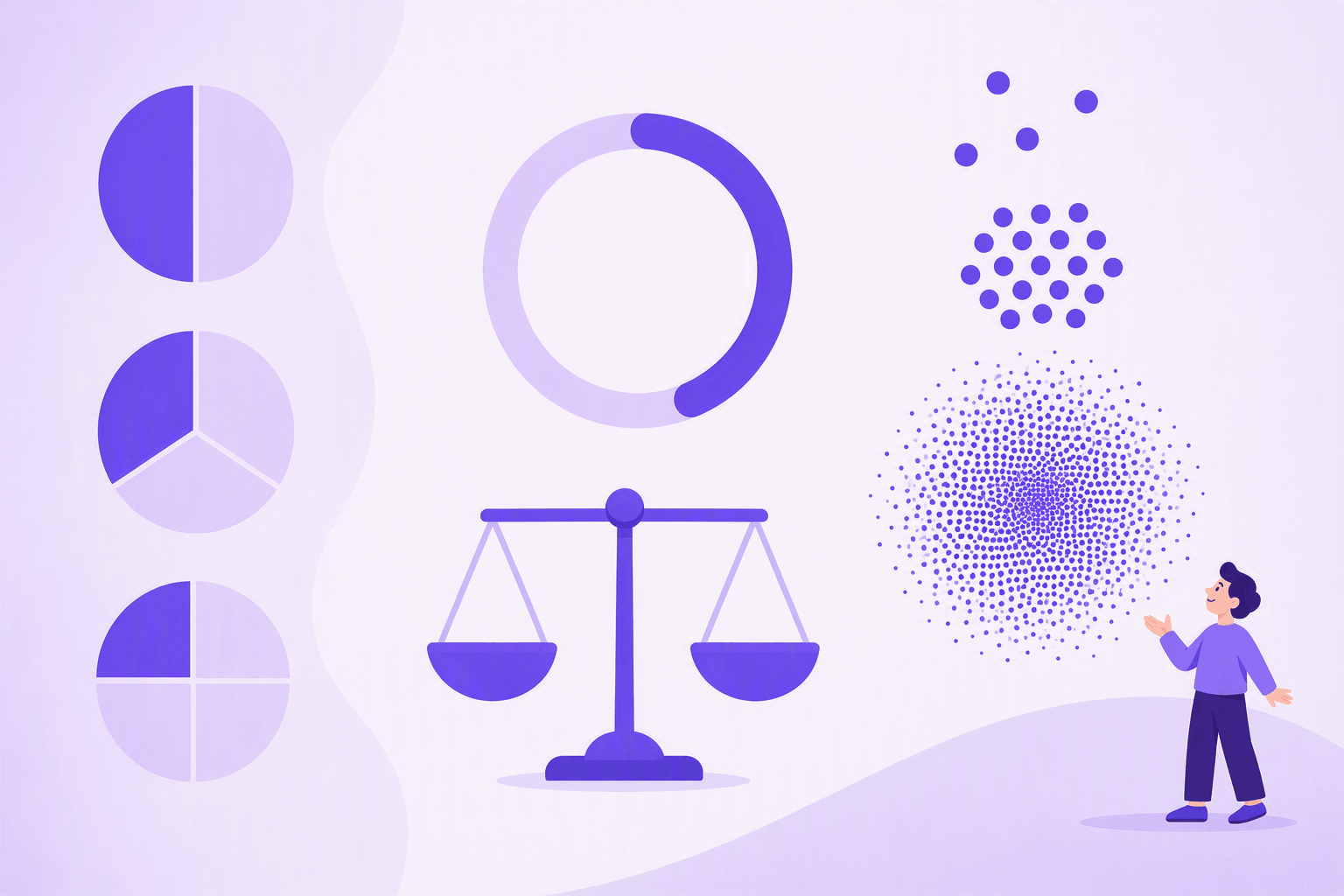
Decimals, fractions, and percentages
Numbers in Spanish become more predictable once you know the keywords.
Coma
Standard decimal reading:
- 3,14 = tres coma catorce
- 0,5 = cero coma cinco
Pronunciation notes:
- cero /ˈθe.ɾo/ in much of Spain, /ˈse.ɾo/ in most of Latin America
- coma /ˈko.ma/
Medio, tercio, cuarto
Fractions you actually hear:
- medio /ˈme.ðjo/ (a half)
- un tercio /un ˈteɾ.θjo/ or /un ˈteɾ.sjo/
- un cuarto /un ˈkwaɾ.to/
In recipes and casual speech, you will hear:
- y medio (two and a half): dos y medio
- y media (feminine agreement): dos y media horas
Por ciento
Percentages are straightforward:
- 10% = diez por ciento
- 2,5% = dos coma cinco por ciento
FundéuRAE’s style recommendations are especially helpful for how to write percentages and numbers cleanly in Spanish, including spacing and symbol usage (accessed 2026).
Phone numbers in Spanish: how people group digits
Phone numbers are not said as one huge number. They are chunked, and chunking varies by country.
Common chunking patterns
You might hear:
- 6 12 34 56 78 (pairs)
- 612 345 678 (three-three-three)
- 11 2345 6789 (common in Argentina style)
The key skill is listening for the rhythm of grouping, not translating each digit.
Zero, double digits, and clarity
- 0 is usually cero
- 11 can be once, but in phone contexts speakers may prefer digit-by-digit clarity if confusion is possible
If you are spelling out numbers in a noisy place, add clarity words:
- seis, uno, dos
- doble cinco (double five) is understood in many places, but not universal, so use it only when you are sure your listener expects it.
Agreement and shortening: un, una, veintiún, primer
Advanced numbers are also grammar. Spanish numerals interact with gender and with apócope, the shortening of certain words before nouns.
Uno, un, una
- uno /ˈu.no/ (counting)
- un libro (masculine noun)
- una mesa (feminine noun)
This extends to 21:
- veintiún días (not veintiuno días)
- veintiuna personas
Pronunciation notes:
- veintiuno /ˌbein.tiˈu.no/
- veintiún /ˌbein.tiˈun/
Primero, tercer, algún style shortening
Before a masculine singular noun:
- primer día (not primero día)
- tercer piso (not tercero piso)
Pronunciation notes:
- primero /pɾiˈme.ɾo/
- primer /pɾiˈmeɾ/
- tercero /teɾˈθe.ɾo/ or /teɾˈse.ɾo/
- tercer /teɾˈθeɾ/ or /teɾˈseɾ/
The RAE and ASALE grammar treats these as systematic, not exceptions you memorize one by one. If you learn the pattern, you can apply it reliably.
Ordinals you will actually use (and when to avoid them)
You do not need 50 ordinals to sound fluent. You need a small set plus the judgment of when cardinals are preferred.
Core ordinals
These show up constantly:
- primero /pɾiˈme.ɾo/
- segundo /seˈɣun.do/
- tercero /teɾˈθe.ɾo/ or /teɾˈse.ɾo/
- cuarto /ˈkwaɾ.to/
- quinto /ˈkin.to/
- sexto /ˈseks.to/
- séptimo /ˈsep.ti.mo/
- octavo /okˈta.βo/
- noveno /noˈβe.no/
- décimo /ˈde.θi.mo/ or /ˈde.si.mo/
Floors, chapters, and centuries
Common real-life choices:
- el capítulo dos (very common)
- el segundo capítulo (also common, slightly more formal)
- el siglo veinte / el siglo XX (both used)
For floors, cardinals dominate in many places:
- el piso once
- la planta baja (ground floor, common in Spain)
If you want more everyday Spanish that shows up in heated scenes and arguments, pair this with our Spanish swear words guide, because numbers and money often appear in the same emotional moments.
Measurements and quantities: kilos, metros, and "y pico"
Numbers in Spanish become idiomatic when you talk about approximate amounts.
Common measurement words
- kilo /ˈki.lo/
- metro /ˈme.tɾo/
- litro /ˈli.tɾo/
- grado /ˈɡɾa.ðo/
Examples:
- dos kilos de arroz
- un metro y medio
- treinta grados
Approximations: y pico, y algo, casi
You will hear these constantly in real speech:
- veinte y pico (twenty-something)
- cien y algo (a bit over 100)
- casi cien (almost 100)
These are not precise, and that is the point. They signal natural, human estimation.
🌍 Why approximation sounds more native
In many Spanish-speaking cultures, sounding overly exact in casual contexts can feel stiff. Approximation phrases like 'y pico' or 'casi' match how people estimate in conversation, especially when the exact number is not socially important.
A practical mini-list: the number words that unlock everything
You already know many of these from basic counting, but advanced usage depends on instant recall.
| English | Español | IPA |
|---|---|---|
| hundred | cien / ciento | /θjen/ , /ˈθjen.to/ (Spain) |
| thousand | mil | /mil/ |
| million | millón | /miˈʎon/ or /miˈʝon/ |
| billion (US) | mil millones | /mil miˈʎo.nes/ or /mil miˈʝo.nes/ |
| percent | por ciento | /poɾ ˈθjen.to/ or /poɾ ˈsjen.to/ |
| comma (decimal) | coma | /ˈko.ma/ |
| minus | menos | /ˈme.nos/ |
| half | medio / media | /ˈme.ðjo/ , /ˈme.ðja/ |
Learning numbers through movies and TV: what to listen for
Numbers in scripted dialogue are often faster than classroom audio because they are embedded in emotion: bargaining, deadlines, ages, and time pressure.
Three high-yield listening targets
- Time phrases: son las, y media, menos cuarto.
- Money phrases: con, euros/pesos, me costó, sale.
- Dates and deadlines: el + de + month, para el + date, antes del.
If you are building a clip-based routine, combine this with our guide on how to learn a language with movies and the listening-focused approach in comprehensible input in Spanish.
💡 A simple drill that works
Pick one scene with a time, a price, and a date. Rewatch until you can repeat the full phrase as a chunk, not as separate numbers. Your goal is automaticity: 'son las tres menos cuarto' should feel like one unit.
Common mistakes English speakers make (and how to fix them)
Mistake 1: using punto for decimals everywhere
In standard Spanish, decimals are introduced with coma. Learn punto as recognition, not as your default production, unless you know your local context uses it.
Mistake 2: overusing ordinals
If you say undécimo, duodécimo, decimotercero in casual contexts, you may sound overly formal. Use primero, segundo, tercero confidently, then switch to cardinals when the context does.
Mistake 3: saying "billion" as billón
Remember: mil millones is the US billion. Billón is much larger.
Mistake 4: forgetting agreement in una hora, veintiuna
Time units and feminine nouns force una and veintiuna. This is one of the most noticeable errors because it happens in very common phrases.
A quick note on romance and numbers
When Spanish gets romantic, numbers show up in dates, anniversaries, and promises. If you want phrases that pair naturally with dates and plans, see how to say I love you in Spanish, because native speech often mixes affection with time references: this weekend, next month, our anniversary.
Final takeaway
Advanced Spanish numbers are a set of conventions: date structure, time systems, decimal formatting, money shortcuts, and a practical preference for cardinals in many everyday labels. Learn the patterns as chunks, listen for them in real dialogue, and you will handle schedules, prices, and plans without translating in your head.
If you want more Spanish you can use immediately, browse the Wordy blog and build a short daily routine around clips that include time, money, and dates.
Frequently Asked Questions
How do you say dates in Spanish correctly?
How do you tell time in Spanish with 'y cuarto' and 'menos cuarto'?
How do Spanish speakers say decimals and prices?
When do you use ordinal numbers in Spanish?
Why does Spanish use 'un' and 'uno' for numbers?
Sources & References
- Real Academia Española (RAE), Diccionario de la lengua española, 23rd edition
- Real Academia Española (RAE) y ASALE, Nueva gramática de la lengua española
- Instituto Cervantes, El español en el mundo, 2024 annual report
- Ethnologue: Languages of the World, Spanish language entry (2024)
- FundéuRAE, recomendaciones sobre escritura de cifras, fechas y porcentajes (accessed 2026)
Start learning with Wordy
Watch real movie clips and build your vocabulary as you go. Free to download.


