Quick Answer
The standard way to ask how much something costs in Spanish is ¿Cuánto cuesta? Use ¿Cuánto cuesta esto? when pointing to an item, or ¿Cuánto es? when asking for the total bill. This guide explains the most natural options for shops, markets, restaurants, and online purchases.
To say how much does it cost? in Spanish, use ¿Cuánto cuesta? /ˈkwanto ˈkwesta/. When you are pointing at something, say ¿Cuánto cuesta esto? /ˈkwanto ˈkwesta ˈesto/. At a checkout or after a meal, ¿Cuánto es? /ˈkwanto es/ is often more natural because you are asking for the total.
Spanish is spoken by more than 600 million people worldwide, according to Instituto Cervantes reporting, across 20 countries where it has official status. Price questions are therefore useful, but the exact shopping routine, currency, and degree of formality can differ from Madrid to Mexico City to Buenos Aires.
Before practicing price questions, make sure you can open a conversation politely with these Spanish hello phrases. A simple greeting followed by a clear question makes a much better first impression than calling out a price question from across the shop.
| English | Spanish | Pronunciation | Formality |
|---|---|---|---|
| How much does it cost? | ¿Cuánto cuesta? | KWAHN-toh KWEH-stah | polite |
| How much does this cost? | ¿Cuánto cuesta esto? | KWAHN-toh KWEH-stah EHS-toh | casual |
| How much is it? | ¿Cuánto es? | KWAHN-toh ehs | casual |
| Can you tell me how much it costs, please? | ¿Me puede decir cuánto cuesta, por favor? | meh PWEH-deh deh-SEER KWAHN-toh KWEH-stah por fah-BOR | formal |
| What is the price? | ¿Cuál es el precio? | kwahl ehs ehl PREH-syoh | polite |
| How much does it cost altogether? | ¿Cuánto cuesta en total? | KWAHN-toh KWEH-stah ehn toh-TAHL | polite |
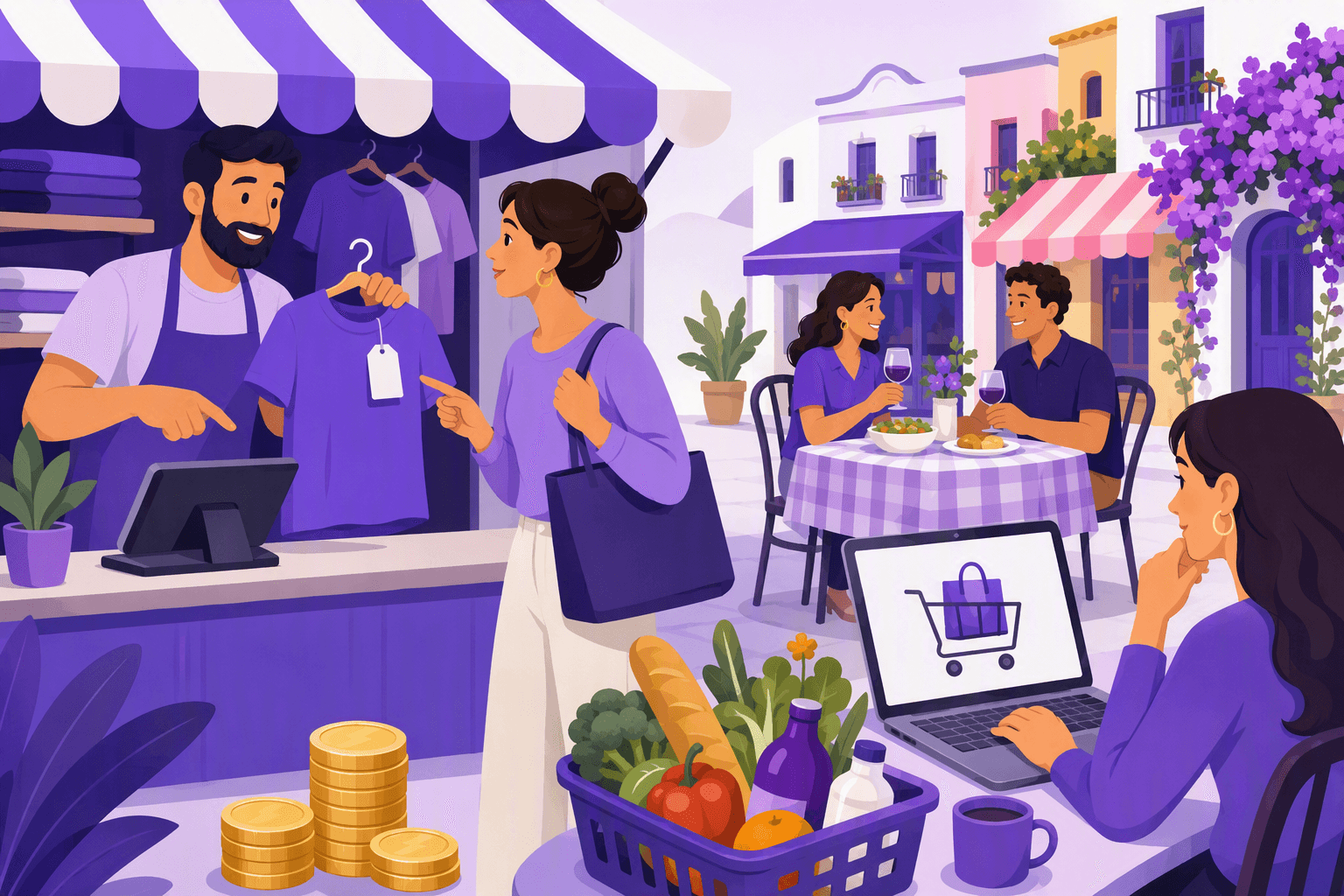
The essential question: ¿Cuánto cuesta?
¿Cuánto cuesta? /ˈkwanto ˈkwesta/ is the dependable question for the price of one item. The verb costar /kosˈtaɾ/ means to cost, and cuánto /ˈkwanto/ means how much.
You can use it in almost any retail setting: a clothing shop, bakery, pharmacy, souvenir stall, or online customer-service chat. Spanish speakers often omit the object when everyone can see what they mean.
¿Cuánto cuesta?
/KWAHN-toh KWEH-stah/
Literal meaning: How much costs it?
“Perdona, ¿cuánto cuesta?”
Excuse me, how much does it cost?
The question is neutral and works throughout the Spanish-speaking world. Use it before deciding whether to buy an item.
The word cuánto /ˈkwanto/ needs an accent mark because it is an interrogative word. Without the accent, cuanto /ˈkwanto/ can function in other grammatical roles, such as in expressions meaning as much as.
The Real Academia Española records costar /kosˈtaɾ/ with the meaning of having a price or value. Its Nueva gramática de la lengua española also explains why Spanish can comfortably omit a noun or pronoun when context makes the reference obvious, which is exactly what happens in a shop when you say ¿Cuánto cuesta? /ˈkwanto ˈkwesta/.
¿Cuánto cuesta esto?
/KWAHN-toh KWEH-stah EHS-toh/
Literal meaning: How much costs this?
“¿Cuánto cuesta esto? No veo la etiqueta.”
How much does this cost? I do not see the label.
Use esto while holding or pointing at an object. It avoids needing to know the noun's gender.
Esto /ˈesto/ means this thing, and it is extremely useful for learners because it does not change for masculine or feminine nouns. You can point at a jacket, a book, or a pair of shoes and ask the same question.
If you know the noun, you can be more specific:
- ¿Cuánto cuesta la camisa? /ˈkwanto ˈkwesta la kaˈmisa/, How much does the shirt cost?
- ¿Cuánto cuesta el libro? /ˈkwanto ˈkwesta el ˈliβɾo/, How much does the book cost?
- ¿Cuánto cuestan los zapatos? /ˈkwanto ˈkwestan los saˈpatos/, How much do the shoes cost?
Notice the final example: cuestan /ˈkwestan/ is plural because los zapatos /los saˈpatos/ is plural. This agreement is small but noticeable in natural speech.
When ¿Cuánto es? is better
¿Cuánto es? /ˈkwanto es/ literally means how much is it, but in real interactions it often means what is the total? Use it after a cashier has scanned your purchases, after a taxi ride, or when you are ready to pay at a restaurant.
¿Cuánto es?
/KWAHN-toh ehs/
Literal meaning: How much is it?
“Ya terminé. ¿Cuánto es?”
I have finished. How much is it?
This is a common payment-stage question. It normally refers to the total, not the listed price of one particular item.
At a café, a server may say Son doce euros /son ˈðose ˈewɾos/, meaning it is twelve euros. In Latin America, the currency naturally changes: pesos /ˈpesos/, soles /ˈsoles/, quetzales /keˈsales/, or another local currency.
If several items are involved, ask ¿Cuánto es en total? /ˈkwanto es en toˈtal/. This is clear, polite, and useful when a receipt has multiple charges.
¿Me trae la cuenta, por favor?
/meh TRAH-eh lah KWEHN-tah por fah-BOR/
Literal meaning: Do you bring me the bill, please?
“Cuando pueda, ¿me trae la cuenta, por favor?”
When you can, could you bring me the bill, please?
La cuenta means the bill in restaurants across much of the Spanish-speaking world. In some places, la cuenta can also mean an account, so context matters.
In Spain, la cuenta /la ˈkwenta/ is standard for a restaurant bill. In parts of Latin America, you may also hear la cuenta /la ˈkwenta/, while la factura /la fakˈtuɾa/ can refer to an invoice or formal receipt.
For food-specific language, see our guide to ordering at a restaurant in Spanish. Asking the price before ordering is sensible when a menu has no visible prices.
Polite ways to ask a salesperson
A bare ¿Cuánto cuesta? /ˈkwanto ˈkwesta/ is not rude. Still, adding a greeting, por favor /poɾ faˈβoɾ/, or a softening phrase is helpful in a formal store, hotel, or service interaction.
Brown and Levinson's work Politeness: Some Universals in Language Usage identifies indirectness and respect for another person's social space as important politeness strategies. In Spanish, you can do this without sounding stiff by using a conditional or a polite question frame.
¿Me puede decir cuánto cuesta?
/meh PWEH-deh deh-SEER KWAHN-toh KWEH-stah/
Literal meaning: Can you tell me how much it costs?
“Disculpe, ¿me puede decir cuánto cuesta este abrigo?”
Excuse me, can you tell me how much this coat costs?
A safe choice with staff, older strangers, and customer-service workers. Disculpe creates a respectful opening.
You can make it slightly softer with ¿Me podría decir cuánto cuesta? /me poˈðɾia deˈsiɾ ˈkwanto ˈkwesta/. The conditional podría /poˈðɾia/ has the sense of could you, rather than can you.
In many Spanish-speaking communities, warmth matters as much as grammatical formality. Say Hola /ˈola/, make brief eye contact, and use por favor /poɾ faˈβoɾ/. You do not need an elaborate speech to sound respectful.
💡 A useful shopping routine
Start with Hola /ˈola/ or Disculpe /disˈkulpe/, ask ¿Cuánto cuesta esto? /ˈkwanto ˈkwesta ˈesto/, then reply Gracias /ˈɡɾasjas/. The canonical pronunciation of gracias is GRAH-syahs.
Asking about plural items and options
When the item is plural, make costar /kosˈtaɾ/ plural too. This is a common place where English speakers accidentally use the singular form every time.
| What you are asking about | Natural Spanish question | IPA |
|---|---|---|
| One ticket | ¿Cuánto cuesta la entrada? | /ˈkwanto ˈkwesta la enˈtɾaða/ |
| Two tickets | ¿Cuánto cuestan las entradas? | /ˈkwanto ˈkwestan las enˈtɾaðas/ |
| One pair of shoes | ¿Cuánto cuestan estos zapatos? | /ˈkwanto ˈkwestan ˈestos saˈpatos/ |
| Several souvenirs | ¿Cuánto cuestan estos recuerdos? | /ˈkwanto ˈkwestan ˈestos reˈkweɾðos/ |
You can also ask about the price of a service:
- ¿Cuánto cuesta el taxi al centro? /ˈkwanto ˈkwesta el ˈtaksi al ˈsentɾo/, How much does the taxi to the center cost?
- ¿Cuánto cuesta una noche? /ˈkwanto ˈkwesta ˈuna ˈnotʃe/, How much does one night cost?
- ¿Cuánto cuesta la entrada al museo? /ˈkwanto ˈkwesta la enˈtɾaða al muˈseo/, How much is admission to the museum?
For a price per unit, say ¿Cuánto cuesta por kilo? /ˈkwanto ˈkwesta poɾ ˈkilo/ or ¿A cuánto está el kilo? /a ˈkwanto esˈta el ˈkilo/. The second is especially common at markets and when asking about produce, fish, or bulk goods.
Price language for markets, bargaining, and sales
Prices are fixed in most supermarkets, malls, pharmacies, and chain stores. In open-air markets, craft stalls, and some tourist areas, you may be able to ask whether there is flexibility, but bargaining norms are local.
Francisco Moreno Fernández, in Variedades de la lengua española, emphasizes the broad regional diversity within Spanish. The language is shared across continents, but local conversational customs are not identical, so watch how nearby customers speak before negotiating.
¿Cuánto me lo deja?
¿Cuánto me lo deja? /ˈkwanto me lo ˈðexa/ means roughly how much can you let me have it for? It is a bargaining question, not a standard retail question.
Use it only where negotiation is expected. Asking it in a fixed-price department store can sound odd, while at an artisan market it may be perfectly normal.
¿Tiene descuento?
¿Tiene descuento? /ˈtjene desˈkwento/ means do you have a discount? A more specific version is ¿Hay descuento para estudiantes? /aj desˈkwento paɾa estuˈðjantes/, Is there a student discount?
In Spain, you may see rebajas /reˈβaxas/ for seasonal sales. Across Latin America, oferta /oˈfeɾta/, promoción /pɾomoˈsjon/, and descuento /desˈkwento/ are widely understood.
🌍 Do not assume every market is a bargaining market
In many cities, vendors quote a fixed price even at outdoor markets. A friendly question about a discount is safer than aggressively naming a lower price. If the seller says no, simply say gracias /ˈɡɾasjas/ and continue politely.
Understanding the answer
You need to recognize numbers and currency words once someone answers. A cashier might say Son quince con cincuenta /son ˈkinse kon sinˈkwenta/, meaning 15.50, or Cuesta veinte euros /ˈkwesta ˈbeinte ˈewɾos/, meaning it costs 20 euros.
Spanish decimal conventions can differ from English writing conventions. Spain and many Latin American countries commonly write a decimal comma, such as 12,50 /ˈðose kon sinˈkwenta/, although spoken language usually makes the amount clear.
| English | Spanish | Pronunciation | Note |
|---|---|---|---|
| price | precio | PREH-syoh | A general noun for price. |
| cost | costo | KOH-stoh | Common in business and many Latin American contexts. |
| cheap | barato | bah-RAH-toh | Changes to barata for a feminine noun. |
| expensive | caro | KAH-roh | Changes to cara for a feminine noun. |
| discount | descuento | dehs-KWEHN-toh | Useful for sales and student rates. |
| bill | cuenta | KWEHN-tah | Usually the restaurant bill. |
| receipt | recibo | reh-SEE-boh | A proof-of-payment document. |
| cash | efectivo | eh-fehk-TEE-boh | Often used when asking whether cash is accepted. |
To react to a price, say Es barato /es baˈɾato/, It is cheap, or Es caro /es ˈkaɾo/, It is expensive. If you need to think, Voy a pensarlo /boj a penˈsaɾlo/, I am going to think about it, is a polite way to step away without committing.
Common mistakes to avoid
Do not say ¿Qué cuesta?
¿Qué cuesta? /ke ˈkwesta/ means what costs?, not how much does it cost? The question word must be cuánto /ˈkwanto/ when you want an amount.
Do not use vale for every situation
In Spain, ¿Cuánto vale? /ˈkwanto ˈbale/ is a normal alternative to ¿Cuánto cuesta? /ˈkwanto ˈkwesta/. Elsewhere it is understood, but ¿Cuánto cuesta? /ˈkwanto ˈkwesta/ is more universally reliable.
The noun vale /ˈbale/ can also mean voucher or ticket in other contexts, and vale /ˈbale/ as a response often means okay in Spain. For travel Spanish across regions, stick with cuesta /ˈkwesta/.
Do not forget plural agreement
Say ¿Cuánto cuestan? /ˈkwanto ˈkwestan/ for multiple objects, not ¿Cuánto cuesta? /ˈkwanto ˈkwesta/. If you are unsure whether a noun is plural, point and use ¿Cuánto cuestan estos? /ˈkwanto ˈkwestan ˈestos/.
Do not confuse price with payment method
¿Cuánto cuesta? /ˈkwanto ˈkwesta/ asks the price. To ask whether a shop accepts cards, say ¿Aceptan tarjeta? /aˈseptan taɾˈxeta/.
A short real-world price conversation
Here is a natural interaction at a shop:
Cliente: Hola, disculpe. ¿Cuánto cuesta esta mochila?
/ˈola disˈkulpe ˈkwanto ˈkwesta ˈesta moˈtʃila/
Dependiente: Cuesta treinta y cinco euros.
/ˈkwesta ˈtɾeinta i ˈsiŋko ˈewɾos/
Cliente: ¿Tiene descuento para estudiantes?
/ˈtjene desˈkwento paɾa estuˈðjantes/
Dependiente: Sí, con el carné queda en treinta euros.
/si kon el kaɾˈne ˈkeða en ˈtɾeinta ˈewɾos/
Cliente: Perfecto, me la llevo.
/peɾˈfekto me la ˈʎeβo/
This exchange works because it moves logically from the item price to a possible discount, then to a decision. Learn it as a pattern rather than memorizing isolated words.
For more useful travel interactions, pair these phrases with our Spanish travel phrases guide. When you leave a shop, a warm Gracias, hasta luego /ˈɡɾasjas ˈasta ˈlweɣo/ is enough, and you can learn more choices in our guide to saying goodbye in Spanish.
Practice the phrase in real speech
Price questions are short, but native speakers often say them quickly. Listen for the stressed syllables in cuánto /ˈkwanto/ and cuesta /ˈkwesta/, then repeat the full phrase as one rhythm group: ¿Cuánto cuesta esto? /ˈkwanto ˈkwesta ˈesto/.
Movie and TV clips are useful because shopping scenes show pointing, tone, numbers, and replies together. Practice hearing the question, pause before the answer, then say it aloud with the item in your hand. That context helps ¿Cuánto cuesta? /ˈkwanto ˈkwesta/ become a usable reflex rather than a phrase you only recognize on a flashcard.
Frequently Asked Questions
What is the most common way to ask how much something costs in Spanish?
Is ¿Cuánto es? the same as ¿Cuánto cuesta?
How do I politely ask for a price in Spanish?
Do Spanish-speaking countries use the same word for price?
How do I ask how much something costs in a restaurant in Spanish?
Sources & References
- Real Academia Española and Asociación de Academias de la Lengua Española, Diccionario de la lengua española, accessed 2026
- Real Academia Española and Asociación de Academias de la Lengua Española, Nueva gramática de la lengua española, Espasa
- Instituto Cervantes, El español: una lengua viva, 2024
- Francisco Moreno Fernández, Variedades de la lengua española, Routledge
- Instituto Cervantes, Centro Virtual Cervantes, Pragmática intercultural, accessed 2026
Start learning with Wordy
Watch real movie clips and build your vocabulary as you go. Free to download.


