Quick Answer
Spanish numbers follow a highly regular pattern. 1-15 have unique names, 16-19 are formed with 'dieci-' + the unit, 20-29 use 'veinti-' + the unit, and from 30 onward you combine tens + 'y' + units (treinta y uno, cuarenta y dos). Once you learn the tens (30, 40, 50...) and the units (1-9), you can count to 100 and beyond.
Spanish numbers are among the most logical in the Romance language family. Once you learn a handful of core patterns, you can count from 1 to 1,000 and beyond without memorizing hundreds of individual words.
With approximately 559 million speakers worldwide according to Ethnologue's 2024 data, Spanish is the second most spoken language by native speakers. Whether you are ordering tres cervezas at a bar in Madrid, negotiating prices at a market in Mexico City, or simply telling someone your phone number, numbers are one of the first things you need.
"The Spanish numeral system is remarkably transparent compared to other Romance languages. Its compound numbers follow predictable rules that make acquisition straightforward for learners." (John Butt & Carmen Benjamin, A New Reference Grammar of Modern Spanish, Routledge, 2019; María Moliner, Diccionario de uso del español)
This guide covers every number you need: 1-100, compound formation rules, ordinals, and the cultural significance of specific numbers across the Spanish-speaking world.
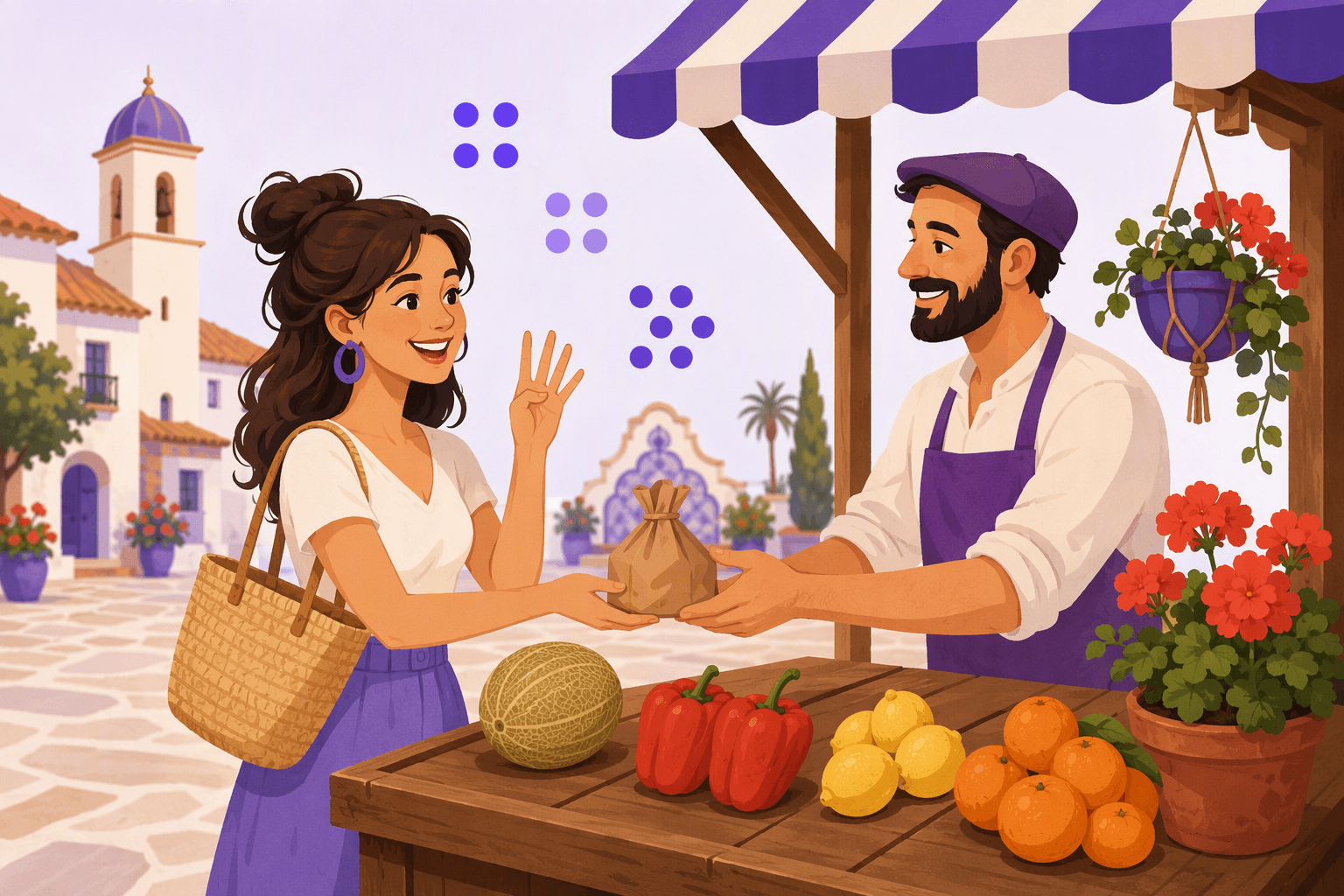
| Spanish | English | Pronunciation |
|---|---|---|
| Uno | 1 | OO-noh |
| Dos | 2 | dohs |
| Tres | 3 | trehs |
| Cuatro | 4 | KWAH-troh |
| Cinco | 5 | SEEN-koh |
| Diez | 10 | dee-EHS |
| Veinte | 20 | BAYN-teh |
| Treinta | 30 | TRAYN-tah |
| Cincuenta | 50 | seen-KWEN-tah |
| Cien | 100 | see-EN |
Numbers 1-10: The Foundation
These ten numbers are entirely unique and must be memorized individually. They form the building blocks for every other number in Spanish.
| English | Spanish | Pronunciation |
|---|---|---|
| 1 | Uno | OO-noh |
| 2 | Dos | dohs |
| 3 | Tres | trehs |
| 4 | Cuatro | KWAH-troh |
| 5 | Cinco | SEEN-koh |
| 6 | Seis | says |
| 7 | Siete | see-EH-teh |
| 8 | Ocho | OH-choh |
| 9 | Nueve | NWEH-beh |
| 10 | Diez | dee-EHS |
💡 Uno vs. Un vs. Una
Uno is the standalone form used when counting. Before a masculine noun, it shortens to un (un libro = one book). Before a feminine noun, it becomes una (una mesa = one table). This gender agreement applies to all compound numbers ending in one: veintiún días, veintiuna semanas.
Numbers 11-20: Unique Names with Emerging Patterns
Numbers 11-15 each have their own unique name. Starting at 16, a clear pattern emerges: dieci- (a contraction of diez y) plus the unit digit, written as one word.
| English | Spanish | Pronunciation |
|---|---|---|
| 11 | Once | OHN-seh |
| 12 | Doce | DOH-seh |
| 13 | Trece | TREH-seh |
| 14 | Catorce | kah-TOR-seh |
| 15 | Quince | KEEN-seh |
| 16 | Dieciséis | dee-eh-see-SAYS |
| 17 | Diecisiete | dee-eh-see-see-EH-teh |
| 18 | Dieciocho | dee-eh-see-OH-choh |
| 19 | Diecinueve | dee-eh-see-NWEH-beh |
| 20 | Veinte | BAYN-teh |
Notice how 16-19 follow the formula dieci + unit. The accent mark on dieciséis is important: it marks the stress on the final syllable. The RAE requires this written accent in all formal contexts.
Numbers 21-29: The Veinti- Series
The twenties continue the one-word compound pattern, using veinti- as the prefix. These are all written as single words.
| English | Spanish | Pronunciation |
|---|---|---|
| 21 | Veintiuno | bayn-tee-OO-noh |
| 22 | Veintidós | bayn-tee-DOHS |
| 23 | Veintitrés | bayn-tee-TREHS |
| 24 | Veinticuatro | bayn-tee-KWAH-troh |
| 25 | Veinticinco | bayn-tee-SEEN-koh |
| 26 | Veintiséis | bayn-tee-SAYS |
| 27 | Veintisiete | bayn-tee-see-EH-teh |
| 28 | Veintiocho | bayn-tee-OH-choh |
| 29 | Veintinueve | bayn-tee-NWEH-beh |
🌍 Written Accents on Numbers
The RAE mandates accent marks on veintidós, veintitrés, and veintiséis. Omitting these in written Spanish is considered a spelling error. In casual texting, many speakers skip them, but in any formal or published context, the accents are required.
Tens: 30 to 100
From 30 onward, each multiple of ten has its own name. These are the anchor points for building all remaining two-digit numbers.
| English | Spanish | Pronunciation |
|---|---|---|
| 30 | Treinta | TRAYN-tah |
| 40 | Cuarenta | kwah-REN-tah |
| 50 | Cincuenta | seen-KWEN-tah |
| 60 | Sesenta | seh-SEN-tah |
| 70 | Setenta | seh-TEN-tah |
| 80 | Ochenta | oh-CHEN-tah |
| 90 | Noventa | noh-BEN-tah |
| 100 | Cien | see-EN |
Notice the satisfying pattern: most tens end in -enta (cuarenta, cincuenta, sesenta, setenta, ochenta, noventa). Treinta is the one exception with its -inta ending.
How to Form Compound Numbers (30-99)
This is where Spanish numbers become beautifully predictable. From 30 to 99, every compound number follows the same formula:
Tens + y + units (written as three separate words)
For example: treinta y uno (31), cuarenta y cinco (45), sesenta y tres (63), noventa y nueve (99).
| English | Spanish | Pronunciation |
|---|---|---|
| 31 | Treinta y uno | TRAYN-tah ee OO-noh |
| 42 | Cuarenta y dos | kwah-REN-tah ee dohs |
| 55 | Cincuenta y cinco | seen-KWEN-tah ee SEEN-koh |
| 67 | Sesenta y siete | seh-SEN-tah ee see-EH-teh |
| 78 | Setenta y ocho | seh-TEN-tah ee OH-choh |
| 84 | Ochenta y cuatro | oh-CHEN-tah ee KWAH-troh |
| 99 | Noventa y nueve | noh-BEN-tah ee NWEH-beh |
The word y (meaning "and") always connects the tens and units. This is different from English, where "and" is optional and often omitted. In Spanish, y is never skipped.
💡 The 30+ Rule vs. the 20s Rule
Remember: numbers 21-29 are written as one word (veintiuno, veintidós), but 31-99 are three words (treinta y uno, treinta y dos). This catches many learners off guard. The pattern shifts at exactly 30.
Beyond 100: Hundreds and Thousands
Once you have mastered 1-100, the hundreds and thousands follow clear rules.
| English | Spanish | Pronunciation | Note |
|---|---|---|---|
| 100 | Cien / Ciento | see-EN / see-EN-toh | Cien alone, ciento in compounds |
| 200 | Doscientos/as | dohs-see-EN-tohs | Feminine: doscientas |
| 300 | Trescientos/as | trehs-see-EN-tohs | Feminine: trescientas |
| 500 | Quinientos/as | kee-nee-EN-tohs | Irregular stem |
| 700 | Setecientos/as | seh-teh-see-EN-tohs | Irregular stem |
| 900 | Novecientos/as | noh-beh-see-EN-tohs | Irregular stem |
| 1,000 | Mil | meel | |
| 1,000,000 | Un millón | oon mee-YOHN |
Key rules for hundreds: Cien is used alone for exactly 100, while ciento is used in compounds (ciento uno = 101, ciento veintitrés = 123). Hundreds from 200-900 agree in gender with the noun they modify: doscientos libros (200 books) but doscientas páginas (200 pages). Watch out for the three irregular stems: 500 (quinientos, not cincocientos), 700 (setecientos, not sietecientos), and 900 (novecientos, not nuevecientos).
Ordinal Numbers in Spanish
Ordinal numbers indicate position or rank. Spanish uses ordinals regularly through 10th, but above that, speakers overwhelmingly switch to cardinal numbers in everyday speech.
| English | Spanish | Pronunciation | Note |
|---|---|---|---|
| 1st | Primero/a | pree-MEH-roh | Shortens to 'primer' before masc. nouns |
| 2nd | Segundo/a | seh-GOON-doh | |
| 3rd | Tercero/a | tehr-SEH-roh | Shortens to 'tercer' before masc. nouns |
| 4th | Cuarto/a | KWAHR-toh | |
| 5th | Quinto/a | KEEN-toh | |
| 6th | Sexto/a | SEKS-toh | |
| 7th | Séptimo/a | SEP-tee-moh | |
| 8th | Octavo/a | ohk-TAH-boh | |
| 9th | Noveno/a | noh-BEH-noh | |
| 10th | Décimo/a | DEH-see-moh |
All ordinal numbers in Spanish agree in gender and number with the noun they modify: la primera vez (the first time, feminine), los primeros días (the first days, masculine plural). Primero and tercero shorten to primer and tercer when placed before a masculine singular noun: el primer piso (the first floor), el tercer capítulo (the third chapter).
"In contemporary spoken Spanish, ordinals above décimo are extremely rare. Even educated speakers will say 'el piso once' rather than 'el undécimo piso' in all but the most formal written contexts." (John Butt & Carmen Benjamin, A New Reference Grammar of Modern Spanish)
🌍 Ordinals Beyond 10th
While Spanish technically has ordinals for every number (undécimo, duodécimo, decimotercero...), they are virtually never used in speech above 10th. You will hear el siglo veintiuno (the 21st century), la planta trece (the 13th floor), and el capítulo quince (Chapter 15), all using cardinal numbers instead of ordinals.
Cultural Significance of Numbers
Numbers carry different cultural weight across the Spanish-speaking world. Understanding these associations helps you handle daily life and avoid faux pas.
Lucky 7: Like much of the Western world, the number seven is considered lucky throughout Spanish-speaking countries. The phrase estar en el séptimo cielo (to be in seventh heaven) is a common expression for happiness.
Unlucky 13, but on Tuesday: While English speakers associate bad luck with Friday the 13th, in Spanish-speaking countries the unlucky day is martes y trece, Tuesday the 13th. The Spanish saying goes: En martes, ni te cases ni te embarques (On Tuesday, neither marry nor set sail). This belief is strong enough that some buildings in Spain and Latin America skip the 13th floor.
15, La Quinceañera: The number 15 has deep cultural significance across Latin America. The quinceañera celebration marks a girl's 15th birthday as her symbolic transition into womanhood. According to the Instituto Cervantes, this tradition has pre-Columbian roots blended with Spanish colonial customs and remains one of the most important family celebrations in Latin American culture.
The number 0: Spanish uses cero for zero. In phone numbers and addresses, it is always pronounced cero, never "oh" as in English. Getting this right immediately marks you as a more aware speaker.
🌍 Saying Phone Numbers
Spanish speakers typically group phone numbers in pairs: 91-555-23-47 would be read as noventa y uno, cinco cinco cinco, veintitrés, cuarenta y siete. In some countries, digits are read individually for clarity. Never say "oh" for zero; always use cero.
Practice with Real Spanish Content
Numbers appear in virtually every real-world conversation, from ordering food (dos cervezas, por favor) to asking prices (¿cuánto cuesta?) to understanding directions (la tercera calle a la derecha). The best way to internalize them is through repeated exposure in context.
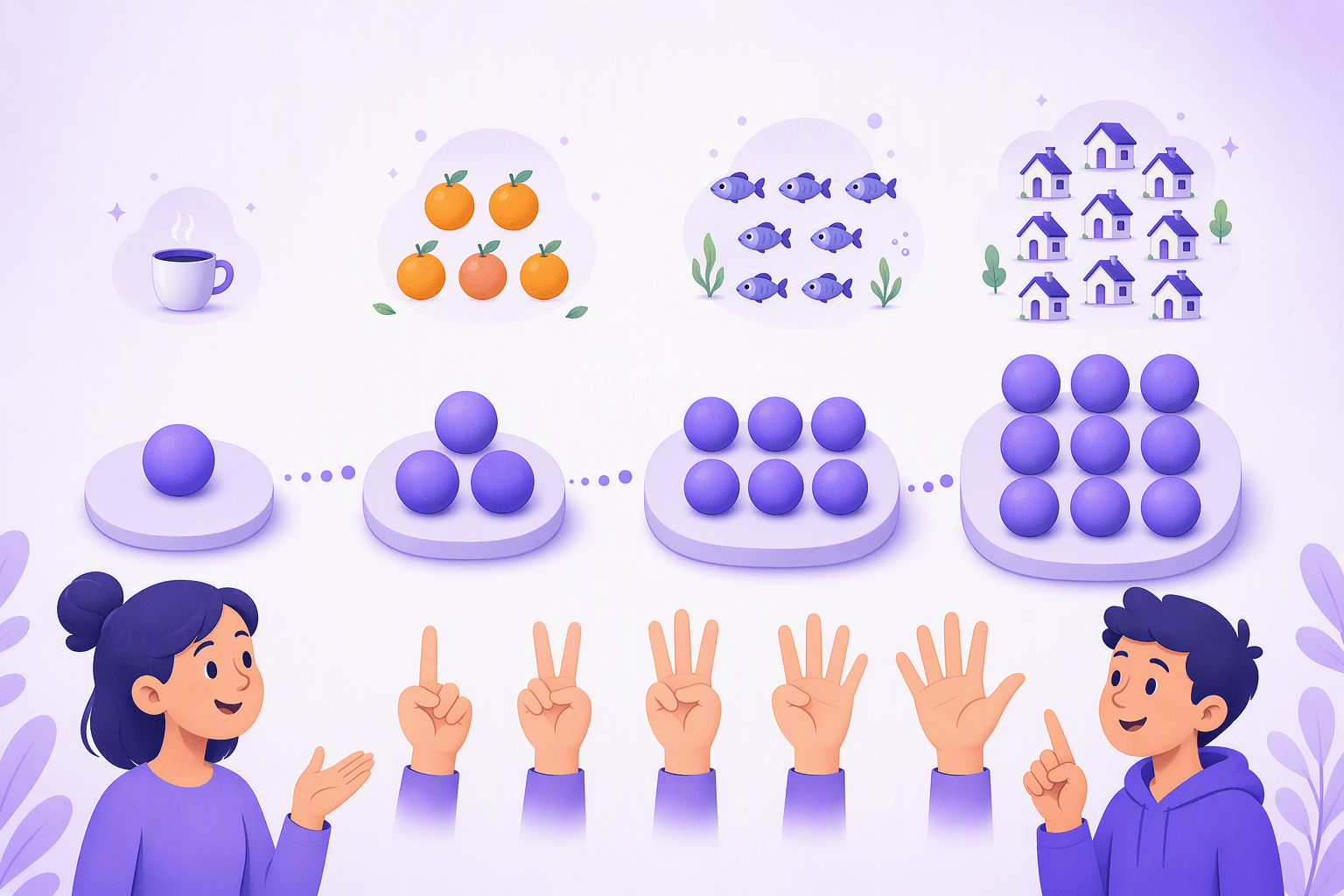
Spanish-language movies and shows provide excellent number practice. Market scenes, phone conversations, and sports commentary are especially number-dense. Check out our guide to the best movies for learning Spanish for recommendations across different dialects.
Wordy lets you practice numbers in real context by watching Spanish content with interactive subtitles. When a number appears in dialogue, you can tap it to see the written form, hear the pronunciation, and review related number patterns. Explore our blog for more Spanish learning guides, or visit our Spanish learning page to start practicing today.
Frequently Asked Questions
What are the numbers 1-10 in Spanish?
How do you form compound numbers in Spanish?
What is the difference between 'uno' and 'un' in Spanish?
How do you say ordinal numbers in Spanish?
Are Spanish numbers masculine or feminine?
Sources & References
- Real Academia Española (RAE), Diccionario de la lengua española, 23rd edition
- Instituto Cervantes, El español en el mundo, 2024 annual report
- Butt, J. & Benjamin, C. (2019). A New Reference Grammar of Modern Spanish, 6th edition. Routledge.
- Ethnologue: Languages of the World, Spanish language entry (2024)
Start learning with Wordy
Watch real movie clips and build your vocabulary as you go. Free to download.


