Japanese Reading Guide: How to Read Hiragana, Katakana, and Kanji (Without Guessing)
Quick Answer
To read Japanese, master hiragana and katakana first (so you can sound out words), then learn high-frequency kanji in context with furigana, graded texts, and real subtitles. Japanese reading becomes manageable when you stop treating kanji as isolated drawings and start recognizing recurring word parts, common readings, and set phrases you see every day.
Reading Japanese becomes straightforward once you treat it as a three-part system: learn hiragana and katakana so you can sound out words, then build kanji recognition through high-frequency vocabulary, furigana, and real reading practice like subtitles, signs, and short articles.
Japanese is spoken by roughly 120 million people (Ethnologue, 27th edition, 2024), and it is studied worldwide. The Japan Foundation’s overseas survey regularly reports millions of learners outside Japan, which is why Japanese reading materials now range from graded readers to fully subtitled streaming content.
If you are also building speaking basics, pair this guide with how to say hello in Japanese so you can connect what you read to what you actually say out loud.

What “reading Japanese” actually means
Japanese writing mixes three scripts in the same sentence.
Hiragana (ひらがな) carries grammar and many native words. Katakana (カタカナ) covers loanwords, emphasis, and many names. Kanji (漢字) carries a lot of meaning and compresses information, especially in nouns and verb stems.
Why Japanese uses multiple scripts
Historically, Japanese adapted Chinese characters, then developed kana as phonetic scripts. The result is a writing system that balances meaning (kanji) with sound (kana).
Haruhiko Kindaichi’s work on Japanese usage is a helpful reminder that “natural Japanese” is not just vocabulary, it is patterns. Reading is where those patterns become visible: endings, particles, and set phrases repeat constantly.
What counts as “fluent reading”
Fluent reading is not “knowing all kanji.” Educated native readers still meet unfamiliar characters in names, specialized fields, or historical texts.
A practical definition is: you can read everyday messages, menus, signs, and subtitles with occasional lookups, and you can keep going without translating every word.
Step 1: Learn hiragana so you can decode Japanese
Hiragana is the foundation because it appears in almost every sentence. It is also the script used for furigana, the small kana printed above kanji to show pronunciation.
How hiragana works (and what to memorize)
Hiragana represents morae, the beat-like timing units of Japanese. This matters for reading because it keeps you from collapsing sounds.
For example, こんにちは is kohn-NEE-chee-wah (5 morae). If you read it as fewer beats, you will struggle to match what you see with what you hear.
Small ゃ ゅ ょ and small っ: the two “reading traps”
Small ゃ ゅ ょ combine with the previous consonant to make sounds like きゃ (kya). Treat them as part of a two-mora unit.
Small っ marks a doubled consonant and counts as its own mora. 待って is MAHT-teh, not “mate.” If you train your eyes to spot small っ early, your reading and listening both improve.
💡 Fast hiragana practice that actually sticks
Do not drill the chart for weeks. Learn the chart quickly, then switch to reading real kana strings: names, simple captions, and children’s books. Your brain remembers shapes better when they carry meaning, not when they are isolated.
Step 2: Learn katakana to unlock modern Japanese
Katakana often feels harder because it is more angular and visually similar across characters. But it pays off immediately in daily life.
What katakana is used for
You will see katakana in:
- Loanwords: コーヒー (coffee)
- Brands and product names
- Scientific and technical terms
- Emphasis, like italics in English
This is why learners who skip katakana feel “stuck” on menus and packaging even when they know basic grammar.
Long vowels in katakana
Katakana uses the long vowel mark ー. It is not decoration, it changes the word.
ビル (building) vs ビール (beer) is a classic example. If you ignore length, you misread, and you also mishear.
Step 3: Start kanji the right way (meaning + word, not “one character = one word”)
Kanji is where most learners either burn out or finally accelerate. The difference is method.
The core truth about kanji readings
Most kanji have multiple readings. The reading you use depends on the word, not the character in isolation.
This is why “memorize all readings” is a trap. A better approach is: learn kanji through high-frequency words, and let readings accumulate naturally.
Radicals and components: your pattern-recognition shortcut
Kanji are built from recurring parts. Learning common components helps you:
- Remember characters
- Guess meaning categories
- Look up kanji when you cannot type them
NINJAL’s public resources emphasize how Japanese writing is systematic, not random. Once you start noticing repeated components, kanji stops feeling like endless unique drawings.
Furigana is not “cheating,” it is how Japanese texts teach reading
Furigana appears in children’s books, manga, some novels, and even newspapers for rare words or names. It is a bridge between sound and meaning.
Use furigana strategically: read the kanji first, then confirm with furigana. If you always read only the furigana, you train yourself to ignore kanji.
🌍 Why names feel impossible in Japan
Japanese names often use uncommon kanji, special readings, or characters chosen for meaning rather than predictability. Even native speakers sometimes ask for the reading of a name. When you see furigana on business cards or event badges, it is a normal courtesy, not a sign you are behind.
A practical reading progression (what to read at each stage)
You do not need “advanced” materials to start reading. You need the right difficulty.
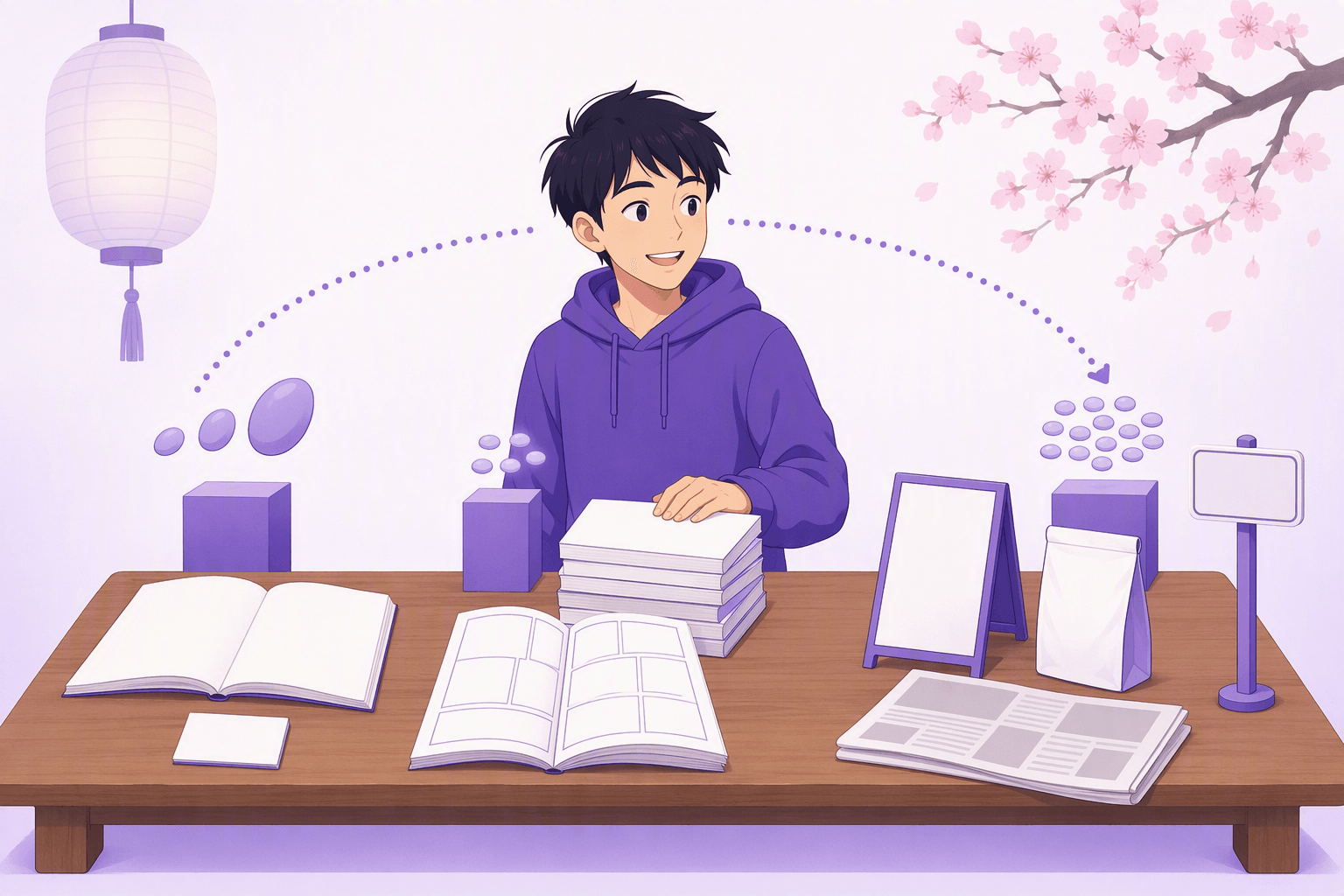
Stage A: Kana-only reading (first 2 to 6 weeks)
Read:
- Simple dialogues written in kana
- Children’s songs and captions
- Very short graded texts
Goal: stop sounding out each character. You want chunking, where たべます is one unit, not four symbols.
If you are still building basic phrases, practice reading and hearing greetings from how to say goodbye in Japanese. The repetition makes kana automatic.
Stage B: Furigana texts (first 3 to 6 months)
Read:
- Manga with furigana
- Graded readers
- Simple news designed for learners
Goal: build a core of high-frequency kanji and words. You should feel the same kanji appearing again and again.
Stage C: Everyday Japanese (ongoing)
Read:
- Product labels and instructions
- Restaurant menus
- Short articles, blogs, and social posts
- Japanese subtitles for shows you already understand
Goal: reduce dictionary dependence and increase reading speed.
How to use subtitles to learn reading, not just “follow along”
Subtitles are one of the best bridges between spoken Japanese and written Japanese, if you use them actively.
Research on lexical coverage in TV and movies (Webb & Rodgers, Applied Linguistics) shows that frequent vocabulary repeats across content. That repetition is exactly what reading needs: you see the same words in new contexts until they become automatic.
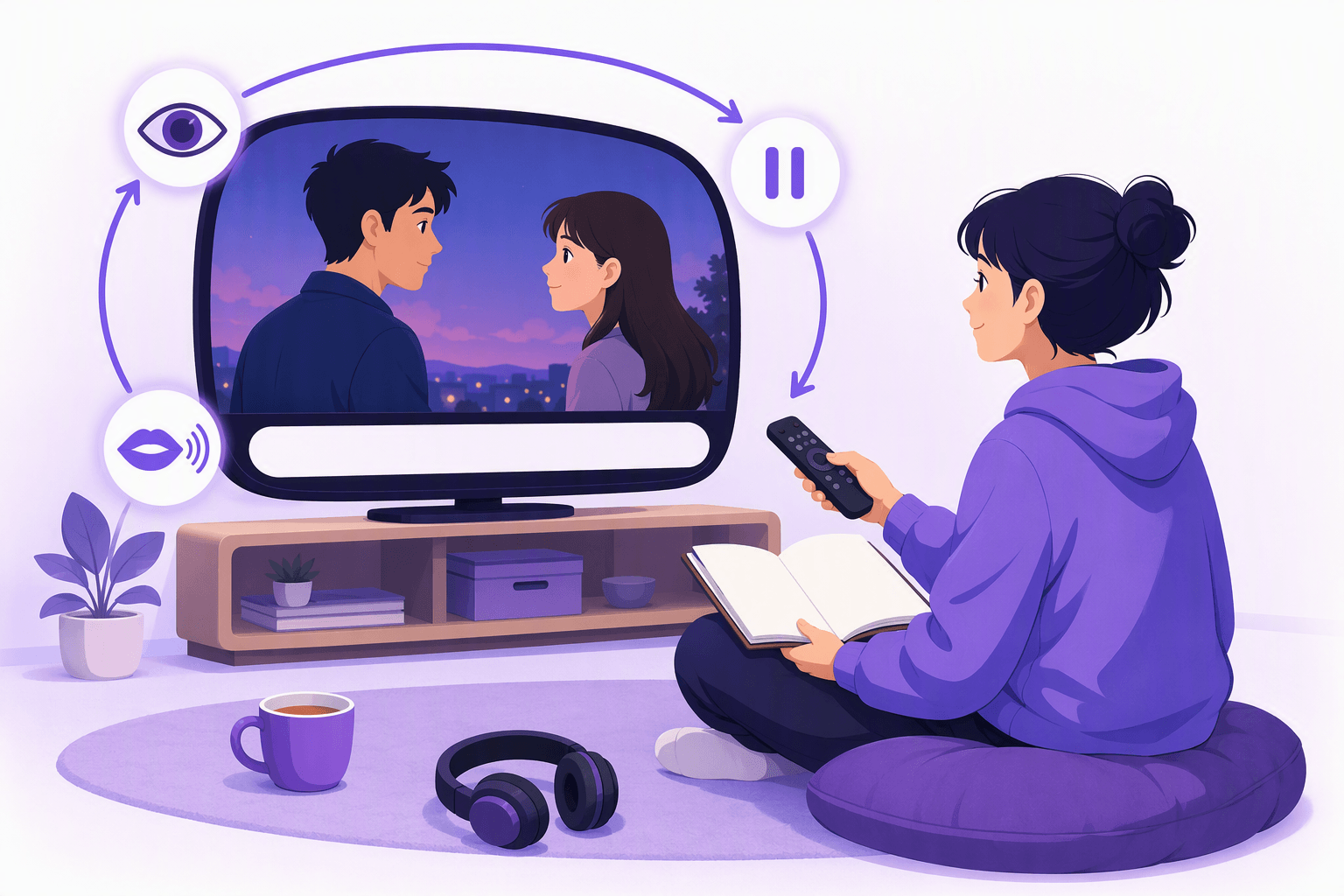
The “one scene, three passes” method
Pass 1: Watch with Japanese subtitles, no pausing. Notice what you can read.
Pass 2: Rewatch and pause only when a line contains a useful word or structure.
Pass 3: Read the line aloud once, then replay the audio to match rhythm and mora timing.
This is also where a clip-based approach shines because you can repeat a short moment until it clicks, instead of losing time scrubbing a full episode. If you want a structured way to do that, Wordy’s core idea is learning from short movie and TV clips with interactive subtitles and review, but any setup that lets you replay precisely will work.
Pronunciation while reading: mora timing beats “perfect accent”
Japanese is mora-timed. Reading with correct mora timing makes your speech clearer and your listening sharper.
Quick examples of mora timing you must keep
学生 (gakusei) is gahk-KOO-say, not “gah-kay.” The “sei” is two morae.
星座 (seiza) is SAY-za, not “seh-zah.” Again, “sei” stays two beats.
距離感 (kyori-kan) is KYOH-ree-kahn, not “kee-yor-ee.” The “kyo” is a combined sound.
David Crystal’s work is often cited for English rhythm and stress, but Japanese works differently: timing is steadier, and long vowels and small っ matter more than stress. When you read Japanese, aim for consistent beats.
⚠️ Do not 'English-ify' katakana
Katakana loanwords are not English with Japanese letters. They are Japanese pronunciations with Japanese mora timing. If you read them as English, you will mishear them in real conversations and you will miss them in subtitles.
The dictionary skills that make reading 3 times faster
A big part of reading Japanese is lookup efficiency. The goal is not “never look up,” it is “look up fast, then keep reading.”
Learn to recognize okurigana
Okurigana are the hiragana endings attached to kanji, especially in verbs and adjectives. They signal grammar and help you identify the dictionary form.
Example pattern: kanji stem + hiragana ending. If you spot the ending, you can often guess the verb family and find it faster.
Use kana search when you have furigana
If a text has furigana, you already have the pronunciation. Use it. Searching by kana is usually faster than trying to identify the kanji components.
Use radicals when you do not have furigana
When you see a kanji with no furigana and you cannot type it, radicals and components become your backup.
This is why even “reading-focused” learners benefit from learning a few dozen common radicals early.
What to do about “adult” Japanese in the wild
Sooner or later, you will read slang, insults, or blunt language in subtitles and comments. The key is to understand it without copying it blindly.
If you want a safety-first explanation of what shows up in media, see our guide to Japanese swear words. It helps you recognize tone, severity, and context.
🌍 Why Japanese can feel 'polite on the surface' in writing
Japanese writing often encodes social distance through word choice and endings. You will see neutral, polite, and rough styles on the same page depending on who is speaking. This is not just grammar, it is relationship management, which politeness research (Brown & Levinson, Politeness: Some Universals in Language Usage, Cambridge University Press) treats as a universal feature of interaction.
Common reading problems (and the fixes that work)
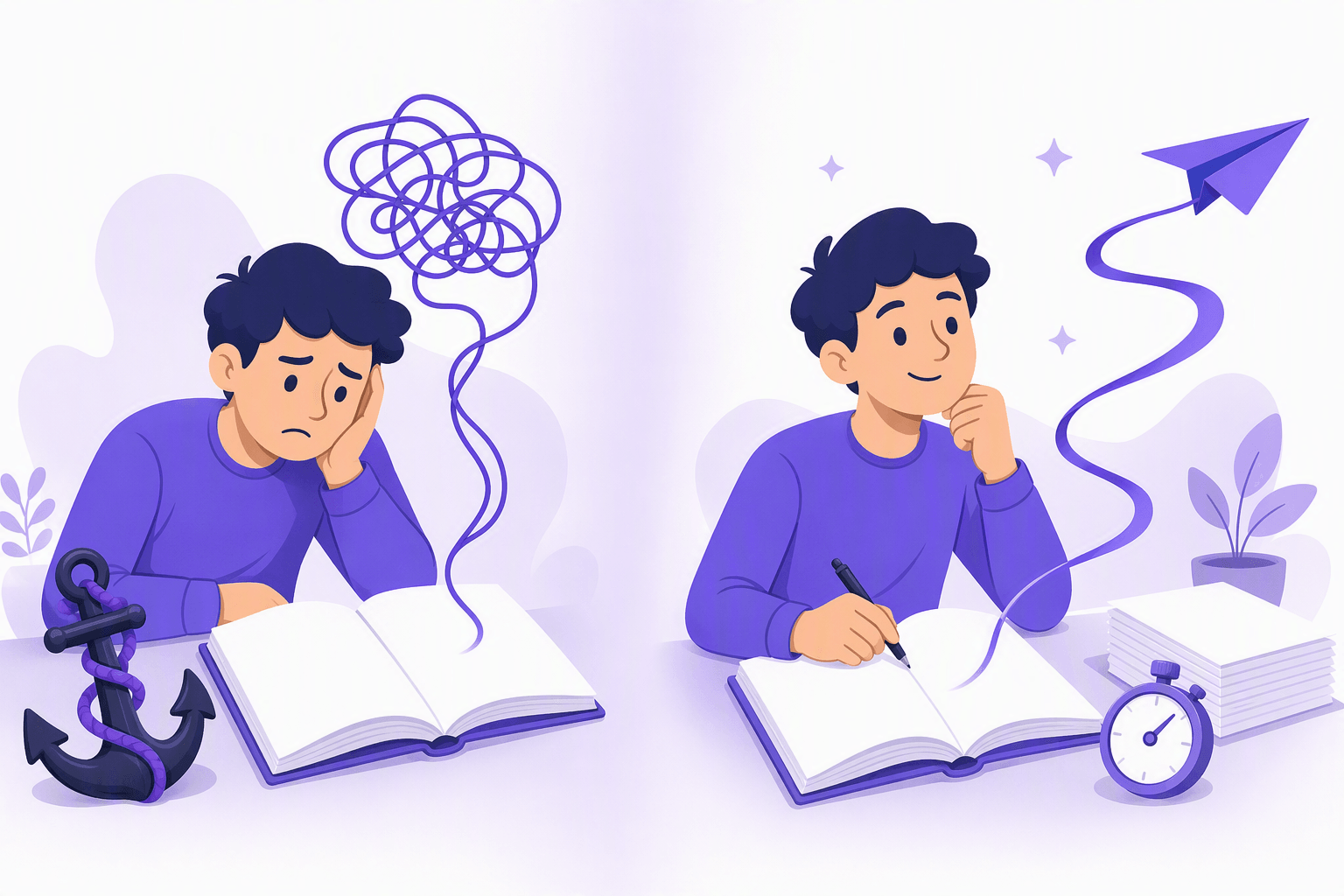
“I can read kana, but I read painfully slowly”
You are still decoding character-by-character. Fix it by reading short, easy texts daily, aiming for speed, not difficulty.
Set a timer for 5 minutes and reread the same page until it feels smooth. Rereading is not boring, it is how automaticity forms.
“Kanji all look the same”
You are not noticing components yet. Pick one kanji you confuse, and write down two differences in parts, not in overall shape.
This trains your eye to see structure, which is the real skill behind kanji recognition.
“I know the kanji, but I cannot read the word”
That is normal because kanji knowledge without vocabulary is fragile. Convert “known kanji” into “known words” by learning 2 to 3 common words per kanji, then meeting them in reading.
“Subtitles go too fast”
Choose content you already understand in your native language, then use short clips. Your reading speed rises when comprehension is high enough that you are not solving meaning and decoding script at the same time.
If you are also learning set phrases for relationships and romance, how to say I love you in Japanese is a good example of how the same idea appears in different written forms, from kana to kanji-heavy expressions.
A simple 4-week plan to start reading Japanese
This plan assumes 20 to 30 minutes per day. More time helps, but consistency matters more.
Week 1: Hiragana + real micro-reading
Learn the chart, then immediately read:
- greetings
- simple captions
- kana-only dialogues
Write a few lines by hand to lock in shapes.
Week 2: Katakana + signage practice
Learn katakana, then read:
- menus and product labels (photos work)
- brand names
- common loanwords
Focus on long vowels and small vowels.
Week 3: First kanji in context
Learn 10 to 15 high-frequency kanji through words, not isolated characters. Read furigana texts and highlight repeated kanji.
Week 4: Subtitles + review loop
Pick one show, one episode, and extract 10 lines you can reread. Rewatch the same lines until you can read them smoothly and match the audio.
For more structured language learning methods that support this kind of repetition, browse the Wordy blog and compare approaches with tools like Anki in our Anki guide.
The metric that matters: “pages per week,” not “kanji per day”
Kanji counts feel motivating, but reading fluency is built from volume and repetition.
Track how many pages, captions, or subtitle lines you can read comfortably each week. When that number rises, your Japanese is becoming usable.
If you want the fastest payoff, prioritize:
- high-frequency vocabulary
- furigana-supported reading
- repeated exposure through subtitles and short texts
That combination turns Japanese reading from a memorization project into a recognition skill you can keep improving for years.
Frequently Asked Questions
How long does it take to learn to read Japanese?
Should I learn hiragana or katakana first?
Do I need to learn stroke order to read Japanese?
What is the best way to learn kanji readings?
Is it realistic to learn Japanese reading through anime subtitles?
Sources & References
- Ethnologue, 27th edition, 2024
- The Japan Foundation, Japanese-Language Education Overseas (Survey), accessed 2026
- National Institute for Japanese Language and Linguistics (NINJAL), resources on Japanese language and writing, accessed 2026
- Webb, S. & Rodgers, M.P.H., research on lexical coverage of movies and TV, Applied Linguistics
- Kindaichi, Haruhiko, writings on Japanese language and usage (日本語), Iwanami Shoten
Start learning with Wordy
Watch real movie clips and build your vocabulary as you go. Free to download.


