Quick Answer
Japanese past tense is made with the casual た-form, such as 食べた /tabe ta/, or the polite ending ました /maɕita/, such as 食べました /tabe maɕita/. Choose た-form with friends and in casual dialogue, and use ました in polite conversation, customer service, and formal situations.
Japanese past tense has two essential styles: the casual た-form /ta keː/, such as 見た /mita/ for “saw,” and the polite ました /maɕita/ form, such as 見ました /mi maɕita/ for “saw.” Learn both from the beginning: Japanese speakers choose between them mainly according to social setting, while both describe an action or state that is complete.
Japanese has roughly 123 million first-language speakers, according to Ethnologue, with the overwhelming majority living in Japan. That means past-tense Japanese appears across countless regional accents and social settings, but the core verb patterns are stable. Once you can recognize た /ta/ and ました /maɕita/, you will hear completed actions much more clearly in conversations, movies, and TV scenes.
If you are still building basic sentence patterns, pair this guide with our Japanese greetings guide. The same polite versus casual distinction that shapes greetings also shapes the past tense.
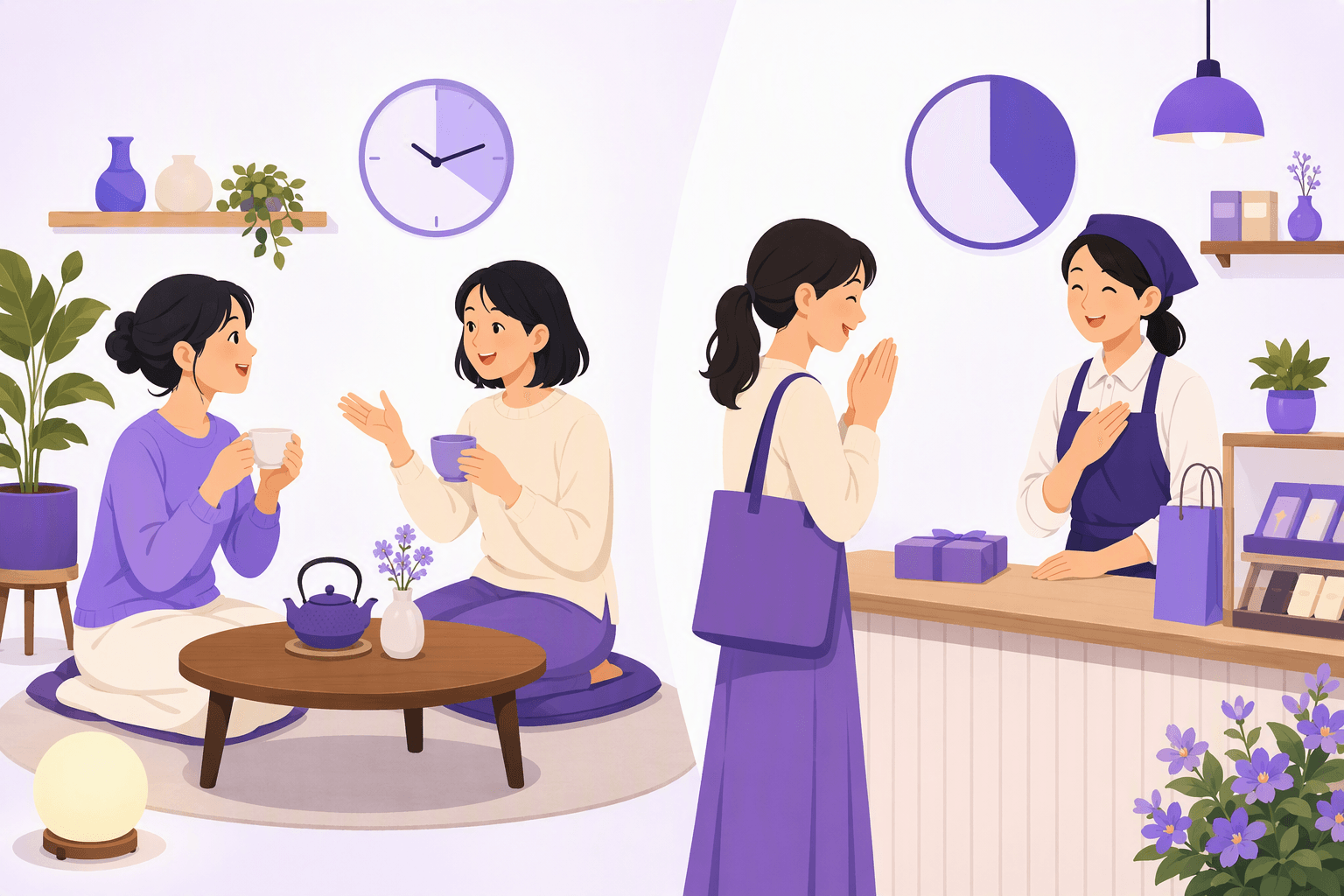
The core idea: completed actions and states
Japanese does not change a verb for person. “I ate,” “you ate,” and “they ate” can all use 食べた /tabe ta/. The subject is supplied by context or stated separately.
| English | Casual Japanese | Polite Japanese |
|---|---|---|
| I ate | 食べた /tabe ta/ | 食べました /tabe maɕita/ |
| I watched | 見た /mita/ | 見ました /mi maɕita/ |
| I went | 行った /itta/ | 行きました /iki maɕita/ |
| I studied | 勉強した /beŋkʲoː ɕita/ | 勉強しました /beŋkʲoː ɕimaɕita/ |
The past tense usually means that an event ended before the moment of speaking. 昨日映画を見た /kinoː eːɡa o mita/ means “I watched a movie yesterday.”
It can also describe a current result caused by an earlier action. ドアが開いた /doa ga aita/ can mean “the door opened,” but in context it may draw attention to the fact that the door is now open.
Masayoshi Shibatani’s The Languages of Japan describes Japanese verbal forms as central to how speakers organize events in time and discourse. For learners, the practical lesson is simple: learn past forms as complete chunks in sentences, not as isolated endings.
Polite past tense with ました
The most reliable beginner pattern is the polite past ending ました /maɕita/. Start with the polite non-past form ending in ます /masɯ/, remove ます /masɯ/, then add ました /maɕita/.
| Dictionary form | Polite non-past | Polite past | Meaning |
|---|---|---|---|
| 食べる /tabeɾɯ/ | 食べます /tabe masɯ/ | 食べました /tabe maɕita/ | eat, ate |
| 見る /miɾɯ/ | 見ます /mi masɯ/ | 見ました /mi maɕita/ | see, saw |
| 読む /jomɯ/ | 読みます /jomi masɯ/ | 読みました /jomi maɕita/ | read, read |
| 話す /hanasɯ/ | 話します /hanaɕi masɯ/ | 話しました /hanaɕi maɕita/ | speak, spoke |
| 行く /ikɯ/ | 行きます /iki masɯ/ | 行きました /iki maɕita/ | go, went |
Use ました /maɕita/ when talking to a teacher, a coworker you do not know well, a customer, an older stranger, or anyone in a formal interaction. It is also normal in announcements, presentations, interviews, and many school situations.
For example:
-
昨日、日本語を勉強しました。/kinoː nihoŋɡo o beŋkʲoː ɕimaɕita/
I studied Japanese yesterday. -
先週、京都へ行きました。/senɕɯː kʲoːto e iki maɕita/
I went to Kyoto last week. -
映画を見ましたか。/eːɡa o mi maɕita ka/
Did you watch the movie?
The question particle か /ka/ makes the sentence a question. Unlike English, Japanese does not require auxiliary verbs such as “did.”
💡 A fast speaking shortcut
When speaking politely, keep ました /maɕita/ as one rhythm group. Do not pause between the verb stem and the ending. 食べました /tabe maɕita/ has five morae: た, べ, ま, し, た.
Casual past tense with the た-form
The casual た-form /ta keː/ is the form you will hear in relaxed speech with friends, siblings, partners, and close classmates. It is especially common in film dialogue, anime, songs, and messages.
Seiichi Makino and Michio Tsutsui’s A Dictionary of Basic Japanese Grammar treats this form as a foundational structure because it does more than say “did.” It also appears in relative clauses, conversational reactions, and larger grammar patterns.
Ru-verbs
For most verbs ending in る /ɾɯ/ after an i or e sound, remove る /ɾɯ/ and add た /ta/.
| Dictionary form | Casual past | Meaning |
|---|---|---|
| 食べる /tabeɾɯ/ | 食べた /tabe ta/ | ate |
| 見る /miɾɯ/ | 見た /mita/ | saw |
| 起きる /okiɾɯ/ | 起きた /okita/ | woke up |
| 寝る /neɾɯ/ | 寝た /neta/ | slept |
A simple pattern is 食べる /tabeɾɯ/ to 食べた /tabe ta/. This is one of the first past forms learners can use confidently.
U-verbs
U-verbs use several sound changes. Memorizing them as families is much easier than trying to guess one verb at a time.
| Dictionary ending | Past ending | Example | Casual past |
|---|---|---|---|
| う /ɯ/, つ /tsɯ/, る /ɾɯ/ | った /tta/ | 買う /kaɯ/ | 買った /katta/ |
| む /mɯ/, ぶ /bɯ/, ぬ /nɯ/ | んだ /nda/ | 読む /jomɯ/ | 読んだ /jonda/ |
| く /kɯ/ | いた /ita/ | 書く /kakɯ/ | 書いた /kaita/ |
| ぐ /ɡɯ/ | いだ /ida/ | 泳ぐ /ojoɡɯ/ | 泳いだ /ojoida/ |
| す /sɯ/ | した /ɕita/ | 話す /hanasɯ/ | 話した /hanaɕita/ |
The key is sound, not spelling. 読む /jomɯ/ becomes 読んだ /jonda/, while 話す /hanasɯ/ becomes 話した /hanaɕita/.
The verb 行く /ikɯ/ is the famous exception. It ends in く /kɯ/, but its past form is 行った /itta/, not 行いた /ikita/. You will encounter it constantly, so treat it as a fixed pair.
Irregular verbs
Japanese has two core irregular verbs, and both are extremely frequent.
| Dictionary form | Casual past | Polite past | Meaning |
|---|---|---|---|
| する /sɯɾɯ/ | した /ɕita/ | しました /ɕimaɕita/ | do, did |
| 来る /kɯɾɯ/ | 来た /kita/ | 来ました /ki maɕita/ | come, came |
Many study and activity words combine with する /sɯɾɯ/. For instance, 勉強する /beŋkʲoː sɯɾɯ/ means “to study,” and 勉強した /beŋkʲoː ɕita/ means “studied.”
Past tense of adjectives and nouns
Past tense is not only for verbs. Japanese adjectives and noun sentences also change to show that a state was true in the past.
い-adjectives
For an い-adjective /i keːʑoːɕi/, replace final い /i/ with かった /katta/.
| Non-past | Past | Meaning |
|---|---|---|
| 楽しい /tanoɕiː/ | 楽しかった /tanoɕikatta/ | was fun |
| 高い /taka i/ | 高かった /takakatta/ | was expensive or high |
| 忙しい /isoɡaɕiː/ | 忙しかった /isoɡaɕikatta/ | was busy |
| おいしい /oiɕiː/ | おいしかった /oiɕikatta/ | was delicious |
映画は楽しかった。/eːɡa wa tanoɕikatta/ means “The movie was fun.”
One major exception is いい /iː/, meaning “good.” Its past form is よかった /jokatta/, not いかった /ikatta/.
な-adjectives and nouns
For noun and な-adjective /na keːʑoːɕi/ statements, use でした /deɕita/ in polite speech and だった /datta/ in casual speech.
| Non-past | Casual past | Polite past | Meaning |
|---|---|---|---|
| 静かだ /ɕizɯka da/ | 静かだった /ɕizɯka datta/ | 静かでした /ɕizɯka deɕita/ | was quiet |
| 元気だ /ɡeŋki da/ | 元気だった /ɡeŋki datta/ | 元気でした /ɡeŋki deɕita/ | was well |
| 学生だ /ɡakɯseː da/ | 学生だった /ɡakɯseː datta/ | 学生でした /ɡakɯseː deɕita/ | was a student |
昨日は静かでした。/kinoː wa ɕizɯka deɕita/ means “Yesterday was quiet.”
Negative past tense
To say something did not happen, use negative past forms. This is where learners often mix polite and casual registers, so keep the two patterns separate.
| Style | Non-past negative | Past negative | Meaning |
|---|---|---|---|
| Polite verb | 食べません /tabe masen/ | 食べませんでした /tabe masen deɕita/ | did not eat |
| Casual verb | 食べない /tabe nai/ | 食べなかった /tabe nakatta/ | did not eat |
| Polite noun or adjective | 元気ではありません /ɡeŋki dewa aɾimasen/ | 元気ではありませんでした /ɡeŋki dewa aɾimasen deɕita/ | was not well |
| Casual noun or adjective | 元気じゃない /ɡeŋki dʑa nai/ | 元気じゃなかった /ɡeŋki dʑa nakatta/ | was not well |
For verbs, the casual pattern is usually ない /nai/ to なかった /nakatta/.
-
行かなかった。/ikanakatta/
I did not go. -
映画を見ませんでした。/eːɡa o mi masen deɕita/
I did not watch the movie. -
昨日は忙しくなかった。/kinoː wa isoɡaɕikɯ nakatta/
Yesterday was not busy.
Why the past tense is so common in Japanese conversation
Japanese speakers regularly use completed forms to react to information, tell short stories, soften a topic, and connect events. In dialogue, a small past-tense phrase may carry much more social meaning than its dictionary translation suggests.
For example, そうだった /soː datta/ means something like “Oh, that was the case,” “I see,” or “Right, that is what happened.” It signals that the speaker has processed information just received.
The National Institute for Japanese Language and Linguistics, NINJAL, documents everyday spoken Japanese through conversation corpora. Real conversation is full of short, context-dependent past forms such as 見た /mita/, 行った /itta/, and だった /datta/, rather than carefully complete textbook sentences.
🌍 Past tense can sound gentler
Japanese speakers may use a past form when referring to a previous attempt, request, or plan because it creates a little distance from the immediate demand. The grammar alone does not guarantee politeness, but context, voice, and relationship shape how indirect or considerate the sentence feels.
This is one reason literal word-by-word translation can mislead. The form is grammatical past tense, but the conversational function may be acknowledgement, softening, recollection, or a transition to the next topic.
Past tense in Japanese media
Past forms are everywhere in fictional dialogue because stories are built from completed events: someone arrived, discovered, promised, left, or changed their mind. Watch how a character’s choice of た /ta/ versus ました /maɕita/ reveals closeness, authority, age, or workplace distance.
A character who shifts from 分かりました /wakaɾimaɕita/, meaning “I understand,” to 分かった /wakatta/ may be changing from formal agreement to direct, casual speech. That shift matters as much as the vocabulary.
For relationship language, compare the restrained use of 愛してる /a iɕiteɾɯ/ with its past form 愛してた /a iɕiteta/, which can sound emotionally loaded in a breakup or memory scene. Our guide to saying I love you in Japanese explains why context matters for that phrase.
You will also hear blunt past forms in arguments and rough dialogue. Understanding them is useful, but using them without awareness can sound aggressive. If you encounter strong language in media, see our contextual guide to Japanese swear words.
A practical way to learn past forms
Do not memorize a long list of endings and stop there. Build a small set of verbs that you can recognize, say, and use in mini-stories.
Start with these pairs:
| Non-past | Past | Example meaning |
|---|---|---|
| 行く /ikɯ/ | 行った /itta/ | went |
| 来る /kɯɾɯ/ | 来た /kita/ | came |
| 食べる /tabeɾɯ/ | 食べた /tabe ta/ | ate |
| 見る /miɾɯ/ | 見た /mita/ | saw |
| 話す /hanasɯ/ | 話した /hanaɕita/ | spoke |
| 読む /jomɯ/ | 読んだ /jonda/ | read |
| する /sɯɾɯ/ | した /ɕita/ | did |
Then make a three-sentence daily recap:
- 今日、何をした?/kʲoː nani o ɕita/
- どこへ行った?/doko e itta/
- 何を食べた?/nani o tabe ta/
You do not need to answer perfectly. The goal is to retrieve past forms repeatedly until they become automatic.
⚠️ Do not use ました everywhere
Polite Japanese is safe with unfamiliar people, but using ました /maɕita/ with close friends can sound unusually distant or stiff. Listen for the relationship in a scene before copying the ending. Casual た-form /ta keː/ is not rude by itself, it is relationship-dependent.
The past tense checklist
When you want to speak about the past, ask three quick questions:
- Is the action complete? Use a past form.
- Am I speaking politely? Choose ました /maɕita/, でした /deɕita/, or ませんでした /masen deɕita/.
- Is this a close, relaxed conversation? Choose た /ta/, だった /datta/, or なかった /nakatta/.
The Japanese past tense becomes manageable when you learn it as a register choice plus a sound pattern. Use polite forms for safe public interaction, use casual forms where closeness permits them, and train your ear with real dialogue.
When you hear someone say またね /mata ne/ after a conversation, the exact goodbye is present-focused, but past-tense stories often come just before it: 今日楽しかった /kʲoː tanoɕikatta/, “Today was fun.” For more natural exits, read our guide to saying goodbye in Japanese.
Frequently Asked Questions
What is the Japanese past tense ending?
Is the Japanese た-form only used for the past?
What is the difference between ました and た in Japanese?
How do you make a Japanese verb negative in the past tense?
Why does 行く become 行った in the past tense?
Sources & References
- National Institute for Japanese Language and Linguistics, Corpus of Everyday Japanese Conversation, accessed 2026
- Makino, Seiichi and Michio Tsutsui, A Dictionary of Basic Japanese Grammar, The Japan Times
- Shibatani, Masayoshi, The Languages of Japan, Cambridge University Press
- Ethnologue, 27th edition, 2024
- The Japan Foundation, Japanese-Language Education Resources, accessed 2026
Start learning with Wordy
Watch real movie clips and build your vocabulary as you go. Free to download.


