Quick Answer
Japanese honorifics like 〜さん (sahn), 〜くん (koon), and 〜ちゃん (chahn) are name suffixes that signal respect, social distance, and closeness. Use 〜さん as the safe default for most adults, 〜くん mainly for boys or junior colleagues in structured settings, and 〜ちゃん for children, close friends, or affectionate nicknames. This guide explains rules, exceptions, and common mistakes.
| English | Japanese | Pronunciation | Formality |
|---|---|---|---|
| Default polite suffix for most adults | 〜さん | sahn | polite |
| Often for boys, male juniors, or students | 〜くん | koon | polite |
| Cute or affectionate, often for kids and close friends | 〜ちゃん | chahn | casual |
| Very respectful, used for customers and VIPs | 〜さま | SAH-mah | formal |
| For teachers, doctors, and masters of a field | 〜せんせい | sen-SEH | formal |
| Dropping suffixes to show closeness (or disrespect) | 呼び捨て | yoh-bee-SOO-teh | slang |
Japanese honorifics like 〜さん (sahn), 〜くん (koon), and 〜ちゃん (chahn) are name suffixes that tell people how close you are, how much respect you are showing, and whether someone is "in your group" or "outside." If you want one rule that keeps you safe, use 〜さん for most adults you do not know well, use 〜くん mainly for juniors in structured settings (often boys or junior colleagues), and use 〜ちゃん only when you are genuinely close or speaking to children.
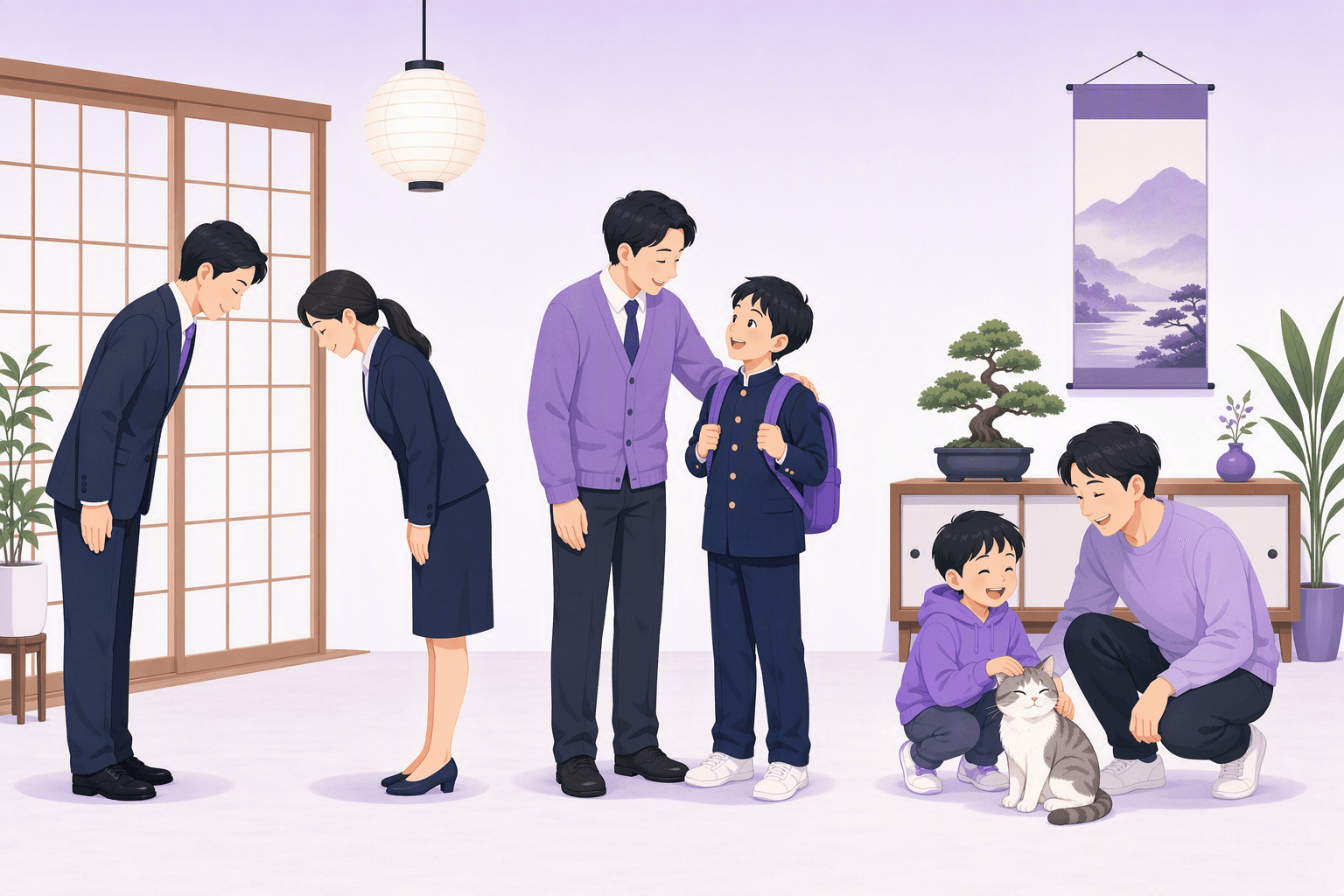
Why honorifics matter in real Japanese
Honorifics are not decoration, they are social information. They help Japanese speakers manage relationships without having to say "we are close" or "please respect me."
Japanese has about 125 million speakers worldwide, with the vast majority in Japan (Ethnologue 2024). In Japan, address terms are tightly linked to workplace hierarchy, school life, and customer service norms, so you hear honorifics constantly in daily conversation.
If you learn through media, you will hear honorifics in everything from office dramas to anime. The tricky part is that fictional speech often exaggerates intimacy, teasing, or rudeness for effect, so you need a real-world filter, especially if you also study from anime vocabulary lists like our anime vocabulary guide.
💡 A practical mindset
Treat the honorific as part of the person's name in that situation. If everyone says "佐藤さん" (Sato-san), then "佐藤" (Sato) alone can sound incomplete, overly intimate, or blunt.
The core idea: distance, respect, and 内 vs 外
Honorific choice is shaped by three forces you can actually use in conversation. You do not need to memorize hundreds of rules if you can read these signals.
Social distance (closeness)
The closer you are, the more likely you will use 〜ちゃん, nicknames, or even 呼び捨て (yoh-bee-SOO-teh), calling someone by name with no suffix.
The farther you are, the more likely you will use 〜さん or a title. This is why first meetings almost always default to 〜さん.
Status and role
A teacher is usually 〜先生 (sen-SEH). A customer may be 〜さま (SAH-mah). A manager might be addressed by title, like 部長 (boo-CHOH), rather than by name.
Roles can override age. A younger doctor is still 先生, and a younger customer is still さま in a store.
内 (uchi) vs 外 (soto)
In Japanese politeness, you often elevate the out-group and downplay your in-group. This is one reason keigo can feel "backwards" to learners.
When speaking to a client, you might refer to your own boss without an honorific, even if you use one internally. The logic is: you do not "honor up" your own side when talking to outsiders.
"Politeness in Japanese is less about fixed 'polite words' and more about indexing social relations in context, including role, distance, and group membership."
Sachiko Ide, sociolinguist (Ide 2006)
| English | Japanese | Pronunciation | Note |
|---|---|---|---|
| in-group (us) | 内 | OO-chee | Often said as うち (uchi) in daily speech. |
| out-group (them) | 外 | SOH-toh | Often said as そと (soto) in daily speech. |
| honorific language | 敬語 | KAY-goh | |
| name without honorific | 呼び捨て | yoh-bee-SOO-teh | |
| title: teacher / doctor | 先生 | sen-SEH | |
| title: section manager | 課長 | kah-CHOH | |
| title: department manager | 部長 | boo-CHOH |
〜さん
Pronunciation: sahn
〜さん is the default polite suffix for adults. It is neutral, widely acceptable, and works across genders.
When to use 〜さん
Use it for:
- People you just met
- Coworkers in many companies
- Neighbors, parents of classmates, acquaintances
- Service interactions when you know the name
You will hear it constantly in everyday openers like those in our how to say hello in Japanese guide. In real speech, greetings and honorifics often come as a bundle: "田中さん、おはようございます" (Tanaka-san, ohayou gozaimasu).
When 〜さん sounds wrong
Avoid it for:
- Yourself (do not say 私さん, Watashi-san)
- Very close family in casual home talk (you usually use kinship terms instead)
- Some tight-knit teams where 〜くん or no suffix is the norm for juniors
🌍 Why 〜さん can feel 'cold' sometimes
In some friend groups, switching from 〜ちゃん to 〜さん can signal emotional distance or annoyance. In dramas, a character suddenly becoming formal is a common way to show a relationship cooling down.
〜くん
Pronunciation: koon
〜くん is commonly used for boys, male students, and junior male colleagues. It can also be used for juniors regardless of gender in certain institutions, but that depends heavily on context.
Typical uses of 〜くん
You will often hear 〜くん from:
- Teachers to male students
- Coaches to team members
- Senior staff to junior staff (especially male juniors)
- Older adults to younger males in semi-formal settings
In many workplaces, a manager might call a younger employee "田中くん" (Tanaka-kun) while being called "部長" (buchō, boo-CHOH) or "田中部長" (Tanaka-buchō) by others.
Can 〜くん be used for women?
Yes, but do not assume it is universal. Some companies and schools use 〜くん as a standardized "junior" suffix regardless of gender, especially in more formal or traditional institutions.
In everyday life, calling a woman 〜くん can sound marked, like you are copying a workplace register. If you are not in that institution, 〜さん is the safer choice.
⚠️ Do not use 〜くん to 'sound like anime'
In anime, 〜くん can be used broadly for character dynamics. In real life, using 〜くん with strangers can sound overly familiar or like you are placing them below you.
When 〜くん can feel rude
Because 〜くん is often top-down (senior to junior), it can imply hierarchy. If you say it to someone older, higher status, or a customer, it can sound disrespectful.
If you are unsure about status, do not gamble. Use 〜さん until you are invited to switch.
〜ちゃん
Pronunciation: chahn
〜ちゃん is affectionate and "cute." It is common for children, pets, close friends, and intimate nicknames.
When 〜ちゃん is natural
Use 〜ちゃん for:
- Small children (boys and girls)
- Close friends in a casual group
- Family nicknames
- Pets (especially in child-directed speech)
- Cute public personas (idols, mascots, streamers), when that is their brand
You will also hear it in couples, but usually after a relationship is established. It is not a "flirty shortcut" for strangers.
When 〜ちゃん is risky
Avoid 〜ちゃん for:
- New acquaintances
- Coworkers unless your workplace is very casual and it is already normal
- Customers
- Anyone who has not signaled closeness
If you call an adult 〜ちゃん without permission, it can sound condescending, like you are "babying" them. That is especially true across age gaps or in professional settings.
🌍 Why 〜ちゃん can be both sweet and insulting
In Japanese, cuteness is a social style, not just a description. Calling someone 〜ちゃん can be affectionate, but it can also frame them as childlike. Context decides whether it lands as warmth or disrespect.
〜さま
Pronunciation: SAH-mah
〜さま is more respectful than 〜さん. You see it in customer service, formal letters, and situations where the other person is treated as a VIP.
Where you will actually see 〜さま
Common places:
- Emails and letters: "山田様" (Yamada-sama)
- Hotels, airlines, and retail: staff addressing customers
- Announcements: "お客様" (o-kyaku-sama, oh-KYAH-koo-SAH-mah), "honored customer"
In entertainment, villains and servants may also use 〜さま to show devotion. That is real as a style, but it is not your daily default.
Should learners use 〜さま?
If you work in Japanese customer service, yes, you will need it. Otherwise, most learners can understand it without using it often.
When in doubt, 〜さん is correct for normal politeness. Overusing 〜さま can sound theatrical.
〜せんせい
Pronunciation: sen-SEH
先生 is a title, not just a suffix. It is used for teachers, doctors, lawyers, politicians, and people seen as masters of a field.
How to use 先生
You can say:
- "田中先生" (Tanaka-sensei)
- "先生" by itself when the context is clear
In classrooms, "先生" often replaces the name entirely. In clinics, patients may do the same.
A common learner mistake with 先生
Do not call yourself 先生 in Japanese unless you are explicitly in that role and the context supports it. Even then, Japanese speakers often avoid self-titling in conversation.
If you are a teacher introducing yourself, you can say "先生をしています" (sensei o shiteimasu, "I work as a teacher") rather than "私は先生です" as a self-label in casual contexts.
Job titles: 課長, 部長, and why titles beat suffixes at work
Pronunciation: 課長 (kah-CHOH), 部長 (boo-CHOH)
In many Japanese workplaces, titles function like names. People may say "部長" instead of "田中さん," especially in meetings.
Practical workplace patterns
You will commonly hear:
- Subordinates: "部長、お疲れ様です" (buchō, otsukaresama desu)
- Peers: "田中さん" or sometimes first name plus 〜さん
- Seniors addressing juniors: "田中くん" or "田中さん" depending on culture
Company culture matters more than textbook rules. Mirror what your team does.
💡 Fast workplace strategy
Listen for one day, then copy the dominant pattern. If everyone calls a junior "〜くん," you can follow. If everyone uses "〜さん" across the board, stick to that.
呼び捨て
Pronunciation: yoh-bee-SOO-teh
呼び捨て means calling someone by name with no honorific. It can signal intimacy, equality, or disrespect depending on whether it is mutual and welcomed.
When 呼び捨て is normal
It is common among:
- Close friends (especially long-term friendships)
- Couples
- Siblings
- Sports teams or tight peer groups
- Some male friend groups, depending on personality and region
You might also see it in fiction as a dramatic marker: the moment someone drops the suffix, the relationship has changed.
When 呼び捨て is rude
It is risky with:
- Seniors (age or rank)
- Teachers and bosses
- Customers
- New acquaintances
If you want to switch to 呼び捨て, Japanese speakers often negotiate it explicitly or implicitly over time. A common pattern is "さん" to "ちゃん" to name-only, not a sudden jump.
How honorifics show up in movies and TV (and why it helps learning)
Honorifics are perfect for clip-based learning because you can hear relationship dynamics in a single line. One character says "鈴木さん," another says "鈴木くん," and you immediately know who is senior, who is distant, and who is affectionate.
This is also why learning with authentic dialogue improves listening accuracy. Research on lexical coverage shows that movies provide dense, repeated high-frequency language in context, which helps learners map words to situations (Webb and Rodgers 2009).
If you want more structured listening practice, Wordy-style clip learning pairs well with etiquette context. Our Japanese social etiquette guide helps you interpret what characters are doing, not just what they are saying.
Common mistakes learners make (and how to avoid them)
These are the errors that most often create awkwardness. Fixing them gives you a big "native-like" boost fast.
Using 〜さん with yourself
Never do it. It reads as joking, childish, or socially unaware.
If you want a polite self-reference, you change verb forms and pronouns, not your own name suffix.
Using 〜ちゃん to be friendly with strangers
In English, calling someone "sweetie" can be friendly in some contexts. In Japanese, 〜ちゃん is much more relationship-bound.
If you want friendly but safe, use 〜さん plus a warm tone. Politeness and warmth are not opposites in Japanese.
Copying anime dynamics into real life
Anime often uses honorifics to signal archetypes quickly. That can mean exaggerated teasing, sudden yobisute, or stylized 〜さま devotion.
Use anime as listening practice, then cross-check with real-life norms. If you like learning through anime, pair it with a grounded guide like anime types explained so you can separate genre conventions from everyday speech.
Overthinking gender rules
Honorifics are not purely gendered. They are relationship markers first.
Yes, patterns exist (like 〜くん often for boys), but institutions and individuals vary. The safest approach is: default to 〜さん, then adapt.
A simple decision guide you can actually use
When you are about to say a name, run this quick mental checklist.
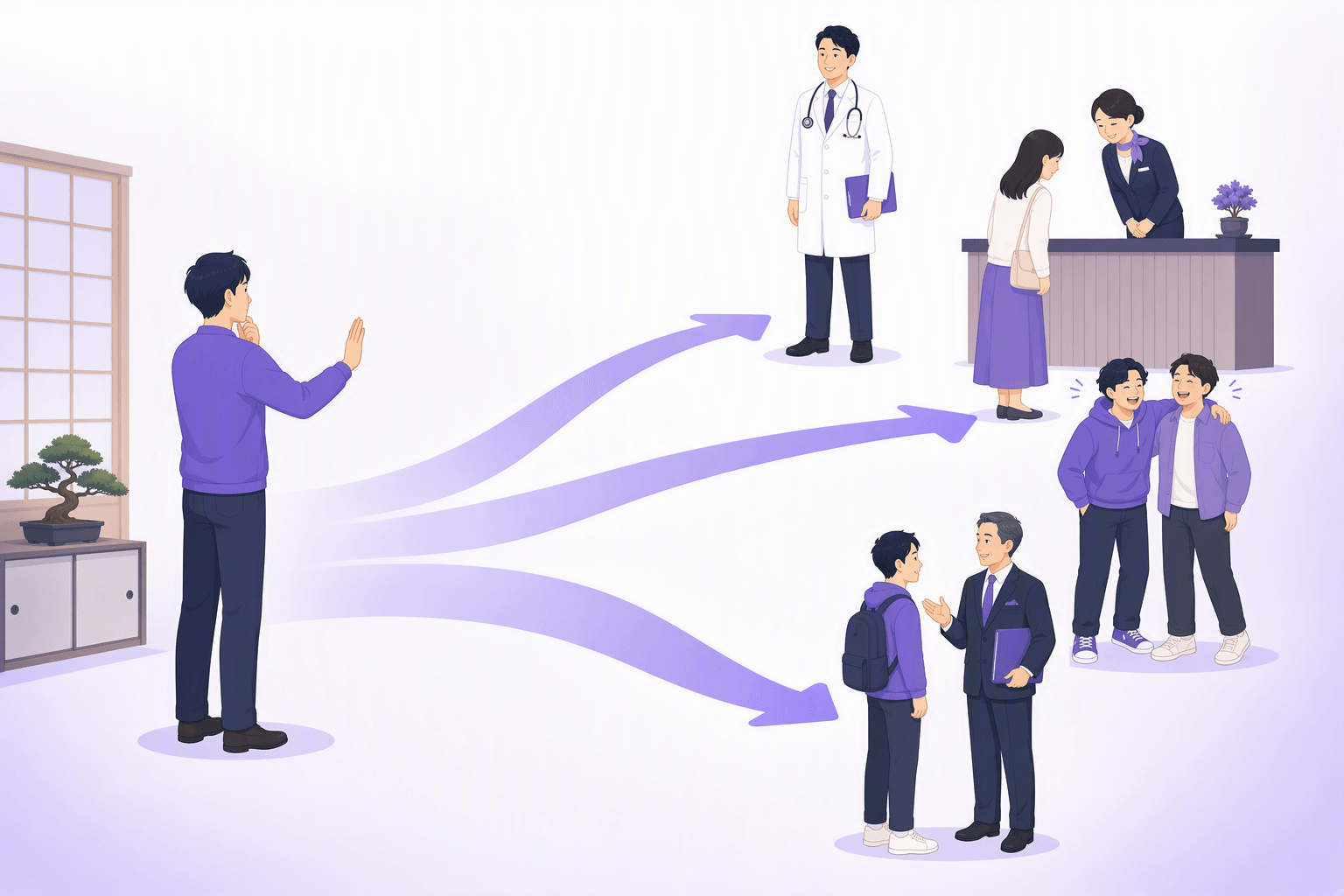
Step 1: Is this person a teacher, doctor, or professional "先生"?
If yes, use 先生. If no, continue.
Step 2: Is this customer service or a formal letter?
If yes, consider 〜さま. If no, continue.
Step 3: Are you close enough for 〜ちゃん or name-only?
If you have to ask, you are probably not. Use 〜さん.
Step 4: Are you in a structured junior-senior setting?
If you are a teacher, coach, or senior addressing a junior and the environment uses 〜くん, use it. Otherwise, 〜さん is fine.
Practice: hear it, repeat it, then swap the relationship
A powerful way to internalize honorifics is to practice the same line with different suffixes and notice how the relationship changes.
Try this with a short greeting:
- "田中さん、おはよう" (Tanaka-san, ohayoh)
- "田中くん、おはよう" (Tanaka-kun, ohayoh)
- "田中ちゃん、おはよう" (Tanaka-chan, ohayoh)
- "田中、おはよう" (Tanaka, ohayoh)
Then imagine who is speaking: a coworker, a teacher, a childhood friend, a partner. This is exactly the kind of micro-context training you get from short clips, especially when you also study core phrases like those in our how to say goodbye in Japanese guide.
The safe default (and the one sentence to remember)
If you remember nothing else: use 〜さん for adults until the relationship clearly changes. Japanese speakers will rarely be offended by 〜さん, but they can be uncomfortable with premature closeness.
Once you can reliably hear and use 〜さん, 〜くん, 〜ちゃん, and 呼び捨て, you will understand a huge amount of social meaning in Japanese dialogue. For the next step, build your everyday listening with Japanese slang expressions so you can hear how closeness and casual speech show up beyond names.
Frequently Asked Questions
Is -san always polite in Japanese?
Can I call a girl -kun?
Why do Japanese people sometimes drop honorifics?
What honorific should I use for my teacher or boss?
Do you use honorifics with family members?
Is -chan only for girls?
Sources & References
- Agency for Cultural Affairs (文化庁), 敬語の指針 (Guidelines on Honorifics), 2007
- National Institute for Japanese Language and Linguistics (NINJAL), 敬語 (Keigo) research resources, 2010s-2020s
- The Japan Foundation, Japanese Language Education resources (敬語 and address terms), 2020s
- Ethnologue, Japanese (jpn) language entry, 27th edition, 2024
- Ide, Sachiko. 'Japanese Sociolinguistics: Politeness and Women's Language.' In The Handbook of Japanese Linguistics, 2006
Start learning with Wordy
Watch real movie clips and build your vocabulary as you go. Free to download.


