Wordy vs Lingopie (2026): Which Video Language App Is Better?
Quick Answer
Wordy and Lingopie share the same core idea of teaching languages through video, but they target different learners. Lingopie streams full TV episodes with click-to-translate subtitles, ideal for intermediate to advanced Romance language learners who want long-form immersion. Wordy uses short, curated movie and TV clips with translations built in, which suits beginners, Asian language learners, and mobile-first users better. The verdict depends on your level, your target language, and how much time you can sit with full episodes.
Lingopie wins if you are an intermediate or advanced learner of Spanish, French, or Italian who wants to watch full TV episodes with click-to-translate subtitles, especially on a smart TV. Wordy wins if you are a beginner, learning an Asian language like Japanese, Korean, or Chinese, or studying mostly on your phone, because its 30 to 90 second curated clips and free tier are easier to commit to than 45-minute episodes.
Both apps reflect a real shift in how people study. According to second-language acquisition research dating back to Stephen Krashen's input hypothesis (Krashen, 1985), comprehensible input is the engine of acquisition, and video gives you sound, image, and context in one signal. The disagreement is just about how that video should be delivered.
If you are still deciding between video-based apps and traditional ones, our best language learning apps guide and our Duolingo review cover the wider field.

Quick Verdict (Pick by Your Situation)
| Your situation | Better choice |
|---|---|
| Beginner in any language | Wordy |
| Intermediate to advanced Spanish, French, Italian | Lingopie |
| Learning Japanese, Korean, Chinese | Wordy |
| Want to watch on smart TV | Lingopie |
| Mobile-only learner with limited time | Wordy |
| Want a free tier before paying | Wordy |
| Want a Netflix-style language experience | Lingopie |
| Need spaced repetition on vocabulary | Wordy |
The table is a starting point, not a rulebook. If you are an intermediate Spanish learner who studies on the bus, Wordy still works. If you are a beginner Spanish learner with a smart TV and patience, Lingopie can still work. The rest of this comparison helps you decide where you actually fit.
What Each App Actually Does
The two apps share a thesis, that video is the most efficient way to expose learners to natural language, but they pick opposite delivery formats.
Lingopie
Lingopie (lingopie.com), founded in 2018 and headquartered in New York, is a streaming service for language learners. The catalog includes more than 5,000 TV shows, movies, and music videos across roughly 15 languages (Lingopie, accessed 2026). When you watch, you get dual subtitles in your target language and your native language. You can click any word for an instant translation, save it to flashcards, and review later with spaced repetition. An AI grammar coach explains structures on demand. The app runs on web, iOS, Android, and most smart TV platforms, including Roku, Fire TV, Apple TV, and Google TV.
Wordy
Wordy (wordy.info), launched in 2024 from Budapest and covered by TechCrunch in September 2024, takes the same input principle and shrinks the unit. Instead of full episodes, it serves 30 to 90 second clips from real movies and TV scenes, with over 15,000 curated clips in its library across 20 plus languages. Each word you tap gets translated instantly, then attached to the scene it came from. Spaced repetition later replays the same scene to anchor the word in context. Speech recognition lets you practice pronunciation aloud. Wordy is on iOS, Android, the web, and as a Chrome extension. The TechCrunch piece described it as a way to learn vocabulary while watching shows, rather than instead of watching them (TechCrunch, September 2024).
Method Comparison: Curated Clips vs Full Episodes
The clip-versus-episode choice matters more than most beginners realize. Both deliver input, but they deliver it at very different intensities.
Lingopie's full-episode format gives you the natural rhythm of a show. Conversations have setup, pause, payoff, and return. You experience the language the way native speakers actually consume it, with all the redundancy and context the storytelling provides. The cost is intensity. A 45-minute episode in an unfamiliar language is a long sit, and the show keeps moving whether you understood the last line or not.
Wordy's clip-based format is the opposite trade. You lose the long arc, but you gain control. A 60-second scene can be replayed, paused, and broken down without losing momentum, and the same clip can come back days later for review. That is closer to how second-language acquisition research describes deliberate practice, short bursts of focused attention, repeated over time.
"We acquire language in only one way: when we understand messages." Stephen Krashen has made this point for decades, and both apps trade on it. The question is just whether you find more comprehensible messages in a full episode or a 60-second scene.
There is no winner in the abstract. The right format depends on your level. Beginners struggle to extract comprehensible input from full episodes because too much is unknown, and the speed of native dialogue overwhelms working memory. Advanced learners get bored by clips because they already follow most of the dialogue and want depth.
💡 A simple test
Watch one full episode in your target language with native subtitles. If you can follow the plot and catch most main words, Lingopie's format will work for you. If you lose the plot within five minutes, start with Wordy's clips and graduate to full episodes later.
Languages and Catalog Depth
This is the most lopsided category in the comparison.
Lingopie's deepest catalogs are in Spanish, French, Italian, and Portuguese, where you get hundreds of titles spanning telenovelas, dramas, comedies, kids' shows, and documentaries. German, Russian, and Polish are well covered too. Asian languages, particularly Japanese, Korean, and Chinese, are present but visibly thinner. If you are learning Spanish and want a Netflix-like browsing experience, Lingopie is hard to beat.
Wordy is broader and shallower per language by show count, but it is wider by language count. It supports 20 plus languages, including the major European ones, the big East Asian three (Japanese, Korean, Chinese), Arabic, Hindi, Russian, Polish, Turkish, Vietnamese, Thai, Dutch, Indonesian, and Czech. The clips come from popular movies and TV series, which is a different bet than full episode rights, since shorter excerpts are easier to license at scale.

If you are learning Spanish, French, or Italian, both apps are credible. If you are learning Japanese, Korean, Chinese, Hindi, Vietnamese, or another non-Romance language, Wordy has a clear catalog advantage. For Japanese learners specifically, our best anime movies to learn Japanese guide pairs naturally with Wordy's clip-based approach, and our learn Japanese hub has more resources.
For Spanish learners, best movies to learn Spanish and our learn Spanish hub give you a starting watchlist that works with either app.
🌍 The full-episode immersion tradition
Long-form immersion has roots in how previous generations actually learned languages, by sitting in front of a foreign TV channel for hours. Lingopie modernizes that experience with subtitles and click-to-save. It works, but only when your level is high enough to ride the wave. If you cannot, the wave just passes over you. Curated clips are a more recent answer to that problem, designed for an attention environment where 45 uninterrupted minutes is a luxury.
Pricing: Which Is Better Value?
Pricing changes often, but the structure has been stable.
Lingopie has no permanent free tier. New users get a paid trial, typically seven days. The annual plan works out to roughly 12 dollars per month, the monthly plan is around 18 dollars per month, and the lifetime plan appears on sale at roughly 120 to 180 dollars (Lingopie, accessed 2026). For that price you get unlimited streaming across the full catalog in your chosen languages.
Wordy offers a free tier with a daily limit on clips, plus a 7-day trial on paid plans. Paid tiers are available monthly, annually, or as a one-time lifetime purchase. Annual pricing typically lands below Lingopie's annual rate, and the free tier lets you commit to the method before paying anything (Wordy, accessed 2026). The Chrome extension is included with all plans.
Pure cost is not the only factor. Lingopie's value is best for someone who would otherwise pay for entertainment streaming, since you are getting a study tool and a viewing platform in one bill. Wordy's value is best for someone who wants a focused study app with a low risk start, especially if you study from your phone and only have 15 to 30 minutes a day.
For a different price-to-method comparison, our Duolingo review and Babbel review cover the classic non-video apps.
Who Should Pick Lingopie
Pick Lingopie if most of the following are true.
You are an intermediate or advanced learner. The Council of Europe's CEFR framework (Council of Europe) describes B1 as the threshold where you can follow the main points of standard speech on familiar topics, and that is roughly where full-episode immersion starts paying off. Below that, the format outpaces your comprehension.
You are learning Spanish, French, Italian, Portuguese, or German. These are Lingopie's deepest catalogs, with enough content variety to keep you watching for months without repetition.
You have a smart TV and want to study on the couch. Lingopie's TV apps make this experience smooth. Watching on a 50-inch screen with click-to-translate via remote is genuinely different from watching on a phone, and it shifts your study session into something closer to leisure.
You learn well from extended context. Some learners build vocabulary faster when they have a story to attach to it. Lingopie's full-episode format gives you exactly that, the same character saying similar things across different situations.
You want a single app for both entertainment and study. If you would otherwise be paying for a streaming service and watching shows in your target language anyway, Lingopie merges those budgets.
Who Should Pick Wordy
Pick Wordy if most of the following are true.
You are a beginner or early intermediate. Wordy's 30 to 90 second clips fit inside the working memory budget that early learners actually have. You can replay, pause, and look up without losing the plot, because the plot of a 60-second clip is small by design.
You are learning Japanese, Korean, Chinese, or another non-European language. Wordy's catalog depth for these languages, combined with the clip format, is the most beginner-friendly combination on the market in 2026 (Wordy, accessed 2026).
You study from your phone. Most clip-based sessions on Wordy fit inside a commute or a coffee break. You do not need a 45-minute time block to get value.
You want a free tier before paying. Wordy lets you commit to the method first and the subscription later. Lingopie does not.
You need spaced repetition built into the same app. Wordy's spaced repetition replays the same scene days later, with the saved word in context. You do not need an external flashcard system like Anki to retain what you learned.
You want speech practice. Wordy's speech recognition is integrated into the clip flow, which is a different experience from passive subtitle clicking.
⚠️ Avoid the format trap
The biggest mistake beginners make with Lingopie is treating it like Netflix. Without active engagement, you can stream hours of native content and remember almost nothing. If you choose Lingopie, commit to clicking unknown words and reviewing them. Otherwise you are watching, not learning. With Wordy, the equivalent trap is collecting saved words without doing the spaced review. Save fewer, review more.
Can You Use Both?
Yes, and it is one of the better stacks if you can afford it.
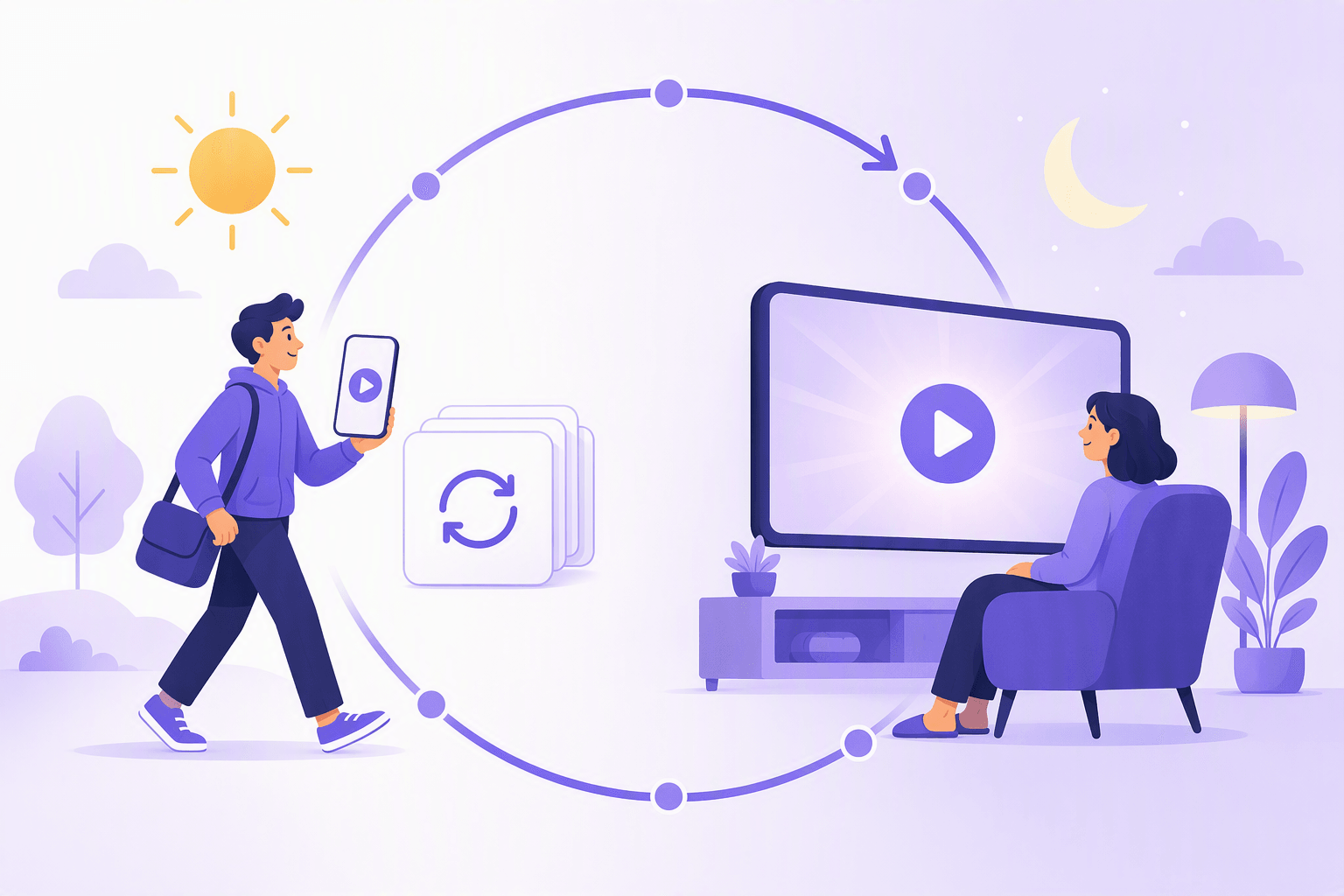
The combined version works like this. Wordy handles your daily vocabulary acquisition and spaced review, in short sessions on your phone. Lingopie handles your evening immersion, full episodes on a TV or laptop, with click-to-save for words you genuinely want to keep. The two apps target different parts of the input pipeline, and they do not fight for the same minutes in your day.
A typical week with both might look like 15 to 20 minutes of Wordy on weekday mornings, plus two or three Lingopie episodes on weekend evenings. You get the rhythm and the depth, the burst and the long arc. The total cost is real, but for serious learners targeting B2 or above in a Romance language, it can be cheaper than a tutor.
If you want to keep one app, default to Wordy if you are below B1 in your target language, and to Lingopie if you are at B1 or above and learning a language with a deep Lingopie catalog.
Final Verdict
Lingopie and Wordy are not really competitors, even though they look similar from the outside. They are answers to different versions of the same question.
If your question is, how do I make immersion realistic for me right now as a beginner or as a learner of an Asian language, Wordy is the right answer. The clip format respects your current attention budget, the free tier lowers the risk of trying, and the catalog actually covers the languages where streaming-based competitors thin out.
If your question is, I am already comfortable in Spanish, French, or Italian and I want a Netflix experience that doubles as study, Lingopie is the right answer. The full-episode format and the smart TV apps make the daily habit easier to sustain when the content is the reward, not the chore.
Be honest with yourself about your level and your target language. The wrong app for your situation is a much bigger problem than the difference between their two prices. If you want to compare these video-first options against more traditional apps, our best language learning apps overview puts both in their wider context.
Whichever you pick, the principle underneath is the same one Krashen described 40 years ago, you acquire language by understanding messages. Lingopie and Wordy are just two paths to the same input.
Frequently Asked Questions
Wordy vs Lingopie: which is better for beginners?
Which has more languages, Wordy or Lingopie?
Is Lingopie or Wordy cheaper?
Can you use both Wordy and Lingopie together?
Which is better for Japanese, Wordy or Lingopie?
Sources & References
- Lingopie, official website (lingopie.com), accessed 2026
- Wordy, official website (wordy.info), accessed 2026
- TechCrunch, 'Wordy's new app helps you learn vocab while watching movies & TV shows,' September 2024
- Krashen, S., The Input Hypothesis, Longman, 1985
- Council of Europe, Common European Framework of Reference for Languages (CEFR)
Start learning with Wordy
Watch real movie clips and build your vocabulary as you go. Free to download.


