Quick Answer
Advanced Korean slang is fast, creative, and highly context-dependent. Learn ten expressions used in online communities, gaming, fitness posts, and casual messages, plus the social cues that tell you when slang sounds natural and when it sounds forced.
Advanced Korean slang includes compact expressions such as 찐 /t͡ɕ͈in/, 갓생 /kat̚.s͈ɛŋ/, 억까 /ʌk̚.k͈a/, and 오운완 /o.un.wan/. You will see them most often in messages, gaming chats, short-form video captions, comments, and conversations among close peers, but they are usually inappropriate with teachers, clients, older relatives, or strangers.
Korean has roughly 82 million first-language speakers worldwide according to Ethnologue, with its largest speech communities in South Korea and North Korea. That scale matters: slang is not one fixed national list. A term can begin in a gaming community, spread through Korean social media, and then become familiar to students, office workers, fitness creators, or K-pop fans.
If you already know basic expressions from our Korean slang guide, these are the next-level words that make fast online Korean easier to follow. The aim is not to force every term into your speech. It is to understand the joke, recognize the social signal, and use a few expressions where they genuinely fit.
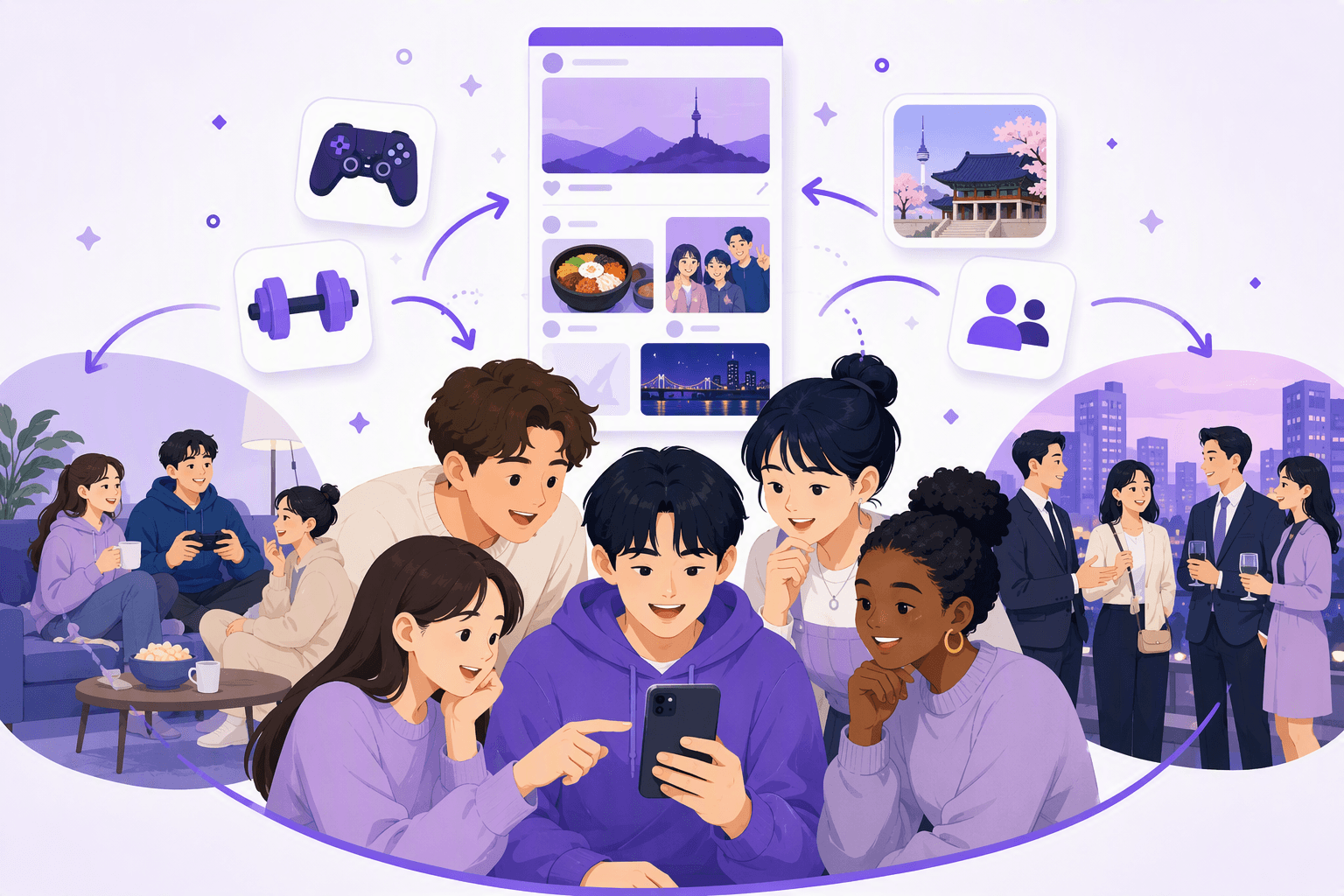
Why advanced Korean slang is difficult
Korean slang often compresses an entire sentence into two to five syllables. The listener is expected to know the original phrase, the online context that made it popular, and the speaker's intended tone.
For example, an abbreviation can feel friendly and efficient between friends but confusing or impolite in a formal setting. Korean also has strong speech-level conventions, so informal slang works alongside casual endings such as 아 /a/ and 어 /ʌ/, rather than polite endings such as 요 /jo/.
Ho-min Sohn's Korean Language in Culture and Society explains Korean usage through social relationships, hierarchy, and levels of formality. That perspective is essential here: slang is not simply vocabulary. It signals who you are talking to and what kind of shared space you occupy.
Jaehoon Yeon and Lucien Brown, in Korean: A Comprehensive Grammar, also show how Korean speakers make meaning through endings, particles, omitted subjects, and context. A short slang expression can carry amusement, annoyance, solidarity, or self-mockery without stating those feelings directly.
💡 A practical rule for slang
Understand advanced slang before trying to produce it. Use it only with people who already speak casually with you, and copy the tone of the conversation rather than inserting trendy words at random.
10 advanced Korean slang expressions
찐
찐 /t͡ɕ͈in/ means real, authentic, genuinely intense, or the true version of something. It comes from 진짜 /t͡ɕin.d͡ɕ͈a/, meaning really or genuine, but it is more compact and expressive.
You can call someone a true fan, a real expert, or a genuinely close friend with it. The compound 찐친 /t͡ɕ͈in.t͡ɕʰin/ means a truly close friend, not just an acquaintance.
Example: 이 사람은 찐팬이야. /i.sa.ɾa.mɯn t͡ɕ͈in.pʰɛn.i.ja/
This means that person is a real fan. The phrase is casual and warm, often used with admiration.
Do not confuse it with a formal claim of authenticity. In a product review or business conversation, use 진짜 /t͡ɕin.d͡ɕ͈a/ or an appropriate formal description instead.
갓생
갓생 /kat̚.s͈ɛŋ/ describes a disciplined, productive, self-improving lifestyle. It combines 갓 /kat̚/, a Koreanized form of the English word God used as an intensifier, with 인생 /in.sɛŋ/, meaning life.
The term became especially visible in Korean online communities and social media around 2021, when posts about exercise, studying, budgeting, and early mornings became common. It often has a half-serious, half-playful tone because people know that perfect productivity is hard to maintain.
Example: 오늘 아침에 운동하고 공부까지 했어. 갓생이다. /o.nɯl a.t͡ɕʰim.e un.doŋ.ha.ɡo koŋ.bu.k͡ɡa.d͡ʑi hɛs.sʌ. kat̚.s͈ɛŋ.i.da/
This means: I exercised and even studied this morning. That is a productive life.
Use it to praise yourself or a friend after a productive day. It is common in captions, habit-tracking posts, and friendly chats, but it can sound ironic when someone has only completed one small task.
억까
억까 /ʌk̚.k͈a/ means unfairly criticizing, attacking, or dismissing someone for forced reasons. It comes from 억지로 /ʌk.t͡ɕi.ɾo/, meaning forcibly or unreasonably, plus 까다 /k͈a.da/, an online verb meaning to criticize harshly.
It is especially common in gaming, sports fandoms, celebrity discussions, and comment sections. A speaker uses it when they believe criticism is not based on a fair reading of the situation.
Example: 그 실수 하나로 계속 욕하는 건 억까 아니야? /kɯ sil.su ha.na.ɾo kje.sok jokʰ.ha.nɯn kʌn ʌk̚.k͈a a.ni.ja/
This means: Is it not unfair to keep attacking them over one mistake?
The expression can be useful for understanding online debates, but it can also shut down valid criticism. Use it carefully, because calling someone unfair can escalate an argument quickly.
뇌절
뇌절 /nwe.d͡ʑʌl/ means taking a joke, bit, reaction, or topic too far. It originally developed from musical vocabulary, where a solo passage can continue beyond the expected point, then became a popular internet metaphor.
If someone repeats the same joke after the funny moment has passed, a viewer may say this word. It often expresses affectionate annoyance rather than serious anger.
Example: 그 밈 이제 너무 뇌절이야. /kɯ mim i.d͡ʑe nʌ.mu nwe.d͡ʑʌl.i.ja/
This means: That meme is being dragged on too long now.
It is common in livestream chats and friend groups. Avoid using it toward a senior colleague or someone you do not know well, because it can sound like a direct dismissal of their humor.
갑분싸
갑분싸 /kap̚.pun.s͈a/ means that the atmosphere suddenly became awkward, cold, or silent. It abbreviates 갑자기 분위기 싸해짐 /kap̚.t͡ɕa.ɡi pun.wi.ɡi s͈a.hɛ.d͡ʑim/, literally the atmosphere suddenly became chilly.
The expression was widely circulated in Korean online communities during the late 2010s. It captures a recognizable social moment: someone says something unexpected, a joke fails, or a private topic appears in the wrong setting.
Example: 내가 농담했는데 다 조용해졌어. 완전 갑분싸였어. /nɛ.ɡa noŋ.dam.hɛs.nɯn.de ta t͡ɕo.joŋ.hɛ.d͡ʑʌs.sʌ. wan.d͡ʑʌn kap̚.pun.s͈a.jʌs.sʌ/
This means: I made a joke, but everyone went quiet. It became very awkward.
The term is best used after the moment, usually as humorous self-commentary. Saying it during the silence can sometimes make the awkwardness worse.
오운완
오운완 /o.un.wan/ is a fitness abbreviation meaning that today's workout is complete. Its full form is 오늘 운동 완료 /o.nɯl un.doŋ wan.ɾjo/.
You will see it in gym selfies, running-app posts, workout videos, and captions shared by friends who are keeping one another accountable. It is a small ritual statement, not a boast about athletic ability.
Example: 비 와도 러닝 끝. 오운완! /pi wa.do ɾʌ.niŋ k͡kɯt̚. o.un.wan/
This means: Even though it rained, the run is done. Today's workout is complete.
This is one of the safest slang terms to use online because its context is clear. Still, it belongs to casual fitness culture, not a formal health consultation or workplace message.
스불재
스불재 /sɯ.bul.d͡ʑɛ/ means a disaster that you brought on yourself. It abbreviates 스스로 불러온 재앙 /sɯ.sɯ.ɾo pul.ɾʌ.on t͡ɕɛ.aŋ/.
The tone ranges from rueful to mocking. You might use it after staying up too late before an exam, spending too much money, or ignoring a deadline until the last minute.
Example: 과제 미루다가 밤샜어. 이건 스불재지. /k͡wa.d͡ʑe mi.ɾu.da.ɡa pam.sɛs.sʌ. i.ɡʌn sɯ.bul.d͡ʑɛ.d͡ʑi/
This means: I put off my assignment and stayed up all night. This is my own fault.
It works best for your own mistake or with a friend who is clearly joking about theirs. Never use it to mock someone dealing with a real loss, financial problem, or serious personal difficulty.
킹받네
킹받네 /kʰiŋ.ban.ne/ means that something is extremely irritating, absurd, or annoyingly funny. It plays with 열받네 /jʌl.ban.ne/, literally getting heated, by adding 킹 /kʰiŋ/, the Korean loanword for king, as an exaggerated intensifier.
It spread through Korean meme culture, gaming streams, and online reactions around 2020. The phrase often communicates comic frustration rather than genuine rage.
Example: 거의 다 이겼는데 마지막에 졌어. 킹받네. /kʌ.i ta i.ɡjʌs.nɯn.de ma.d͡ʑi.ma.ɡe t͡ɕjʌs.sʌ. kʰiŋ.ban.ne/
This means: I almost won, but lost at the end. That is so annoying.
Use it when the situation is minor and shared laughter is possible. In serious conflict, it can come across as dismissive or childish.
알잘딱깔센
알잘딱깔센 /al.d͡ʑal.t͡ɕ͈ak̚.k͈al.sen/ means handle it yourself, properly, neatly, and with good sense. It condenses 알아서 잘 딱 깔끔하고 센스 있게 /a.ɾa.sʌ t͡ɕal t͡ɕ͈ak̚ k͈al.k͡kɯm.ha.ɡo sen.sɯ it̚.ɡe/.
The phrase is deliberately overpacked, which is why it is funny. It often appears when someone wants another person to understand an unstated task without needing detailed instructions.
Example: 선물은 알잘딱깔센으로 준비해 줘. /sʌn.mul.ɯn al.d͡ʑal.t͡ɕ͈ak̚.k͈al.sen.ɯ.ɾo t͡ɕun.bi.hɛ d͡ʑwo/
This means: Please prepare the gift appropriately and with good judgment.
Be cautious with this one. It can sound playful between close friends, but telling a coworker to figure something out without instructions may feel passive-aggressive.
무물
무물 /mu.mul/ means ask me anything. It abbreviates 무엇이든 물어보세요 /mu.ʌs.i.dɯn mu.ɾʌ.bo.se.jo/.
It is common in social media stories, livestreams, fan communities, and personal Q-and-A posts. The writer invites followers to submit questions, usually about a topic, event, hobby, or daily life.
Example: 오늘 밤에 무물 할게요. /o.nɯl pam.e mu.mul hal.k͡ke.jo/
This means: I will do an ask-me-anything session tonight.
The term is internet-specific and is much less likely in face-to-face speech. It is useful for reading creator posts, but avoid using it in formal announcements.
How to tell whether slang is current
The National Institute of Korean Language records many newer expressions through resources such as 우리말샘 /u.ri.mal.s͈ɛm/, its open dictionary. This is useful for checking meanings, spellings, and how a word has been documented, but a dictionary entry does not automatically mean a word is fashionable right now.
Look for a term in at least three places: current video captions, recent comments, and messages from native speakers in your age group or interest community. If it appears only in an old listicle or a drama from years ago, recognize it but do not assume it is still common.
Korean slang also changes by platform. Gamers may use terms that do not appear in university group chats. Fitness creators use abbreviations such as 오운완 /o.un.wan/ that may be unfamiliar to people outside that scene.
🌍 Slang is a relationship signal
Korean casual speech is not automatically rude, but it depends on the relationship. Even a harmless expression can feel too familiar if you have not established 반말 /pan.mal/, casual speech, with the other person. When in doubt, keep the slang in a caption or among close friends and use polite Korean in direct conversation.
Using slang in K-dramas, messages, and real conversation
Watch for delivery before copying vocabulary. A character may say 킹받네 /kʰiŋ.ban.ne/ with a laugh, a sigh, or exaggerated disbelief, and each version has a different emotional effect.
For subtitles, pause after a slang term and identify three things: what happened, who is speaking, and whether the response is warm, sarcastic, or genuinely upset. This turns slang from a list of translations into something you can understand in context.
You can also compare slang with basic social phrases. A casual hello or goodbye needs its own level of care, as explained in our guides to saying hello in Korean and saying goodbye in Korean. The same principle applies to slang: the relationship comes first, then the word choice.
Avoid mixing trendy slang into an apology, job application, customer-service message, or first conversation with an older person. For emotionally direct expressions, see how Korean affection works in our guide to saying I love you in Korean. Familiarity and tone matter more than having the newest phrase.
Finally, keep slang separate from insults. Some online expressions are playful, while others are genuinely hostile. If you are unsure about a harsh expression, read our Korean swear words guide for the social risks before repeating anything you hear in a clip.
The best way to remember Korean slang
Learn each expression as a mini-scene rather than as an isolated flashcard. Picture the failed joke behind 갑분싸 /kap̚.pun.s͈a/, the finished workout behind 오운완 /o.un.wan/, or the self-inflicted late-night problem behind 스불재 /sɯ.bul.d͡ʑɛ/.
That approach gives you meaning, emotion, setting, and social boundaries at the same time. Advanced Korean slang becomes useful when you can recognize why someone chose it, not when you can merely translate it.
Frequently Asked Questions
Is advanced Korean slang appropriate for beginners?
Do Korean people use slang in everyday speech?
What is the difference between Korean slang and Korean swear words?
Why does Korean internet slang have so many abbreviations?
How can I learn current Korean slang without sounding outdated?
Sources & References
- National Institute of Korean Language, Standard Korean Language Dictionary, accessed 2026
- National Institute of Korean Language, Urimalsaem Open Dictionary, accessed 2026
- King Sejong Institute Foundation, Sejong Korean learning materials, accessed 2026
- Ethnologue, Korean, 27th edition, 2024
- Ho-min Sohn, Korean Language in Culture and Society, University of Hawaii Press
Start learning with Wordy
Watch real movie clips and build your vocabulary as you go. Free to download.


