Quick Answer
The best Korean dramas and movies to learn Korean are Crash Landing on You and Itaewon Class for beginners, Parasite and Reply 1988 for intermediate learners, and Oldboy and My Mister for advanced students. Korean has approximately 82 million speakers and is classified by the FSI as a Category V language, requiring around 2,200 hours to reach proficiency.
K-dramas are the single biggest reason people start learning Korean. The Korean Foundation reported a 76% increase in Korean language learners worldwide between 2018 and 2024, largely driven by the global popularity of K-dramas and K-pop. The problem is, most learners just binge-watch with English subtitles and hope something sticks. It does not really work that way. The shows on this list were chosen because the Korean in them is actually learnable. Korean has approximately 82 million speakers (Ethnologue, 2024) and the FSI classifies it as a Category V language, requiring around 2,200 hours to reach proficiency. Some shows have clear, standard Seoul dialect. Others show you how speech changes depending on who is talking to whom, which is critical in Korean because the honorific system is not optional. Get it wrong and you will confuse or offend people. Korean has seven speech levels, but you will mostly encounter three in dramas: formal polite (hapsyo-che), informal polite (haeyo-che), and casual (hae-che). This list notes which shows are best for hearing each one.

Crash Landing on You
The leads speak clearly and at a moderate pace. The romance setup means lots of repeated emotional vocabulary: "I miss you," "are you okay," "I'm sorry." You hear these phrases dozens of times across 16 episodes, which is exactly how words stick. The North Korean characters also use noticeably different speech patterns, giving you an ear for dialect variation.
Learning tip: Ri Jeong-hyeok (Hyun Bin) uses polite, measured Korean that is easy to follow. Focus on his lines first. Se-ri uses more casual, sometimes sarcastic speech, which is great once you have the basics down.
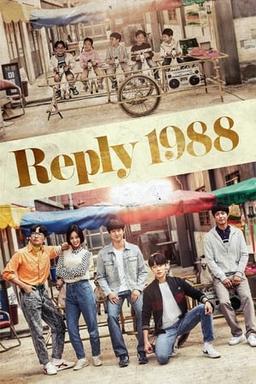
Reply 1988
Set in a Seoul neighborhood in 1988, this show is almost entirely about family and friendship. The dialogue is warm, domestic, and repetitive in the best way. You hear how parents talk to children (banmal), how friends joke around (casual), and how neighbors address each other (polite). The vocabulary is practical and everyday.
Learning tip: The family dinner scenes are gold for picking up food-related vocabulary and casual speech patterns. Rewatch those scenes a few times and try to catch the verb endings.
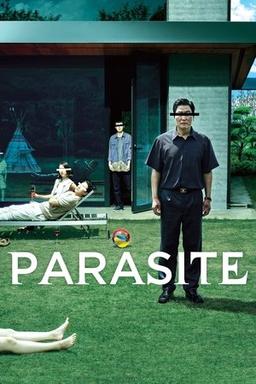
Parasite
Bong Joon-ho's Oscar winner is a masterclass in how Korean shifts based on social class. The Kim family speaks casually among themselves but switches to respectful, almost servile Korean when addressing the Parks. The Parks speak with the easy confidence of people used to being deferred to. Watching this film teaches you more about speech levels than any textbook chapter.
Learning tip: Watch the scene where Ki-woo first meets the Park family. Notice how his speech becomes more formal and careful. Then compare it to how he talks with his own family five minutes earlier. Same person, completely different Korean.

Squid Game
The characters come from very different backgrounds, so you hear a wide range of Korean: street slang, formal announcements from the game organizers, desperate emotional outbursts, and quiet manipulation. The dialogue is direct and often blunt, which makes individual sentences easier to parse even when the vocabulary is rough.
Learning tip: The VIPs speak English, not Korean, so skip those scenes for language practice. Focus on the conversations between players, especially Gi-hun and Sang-woo, where the language shifts between old-friend casual and tense formality.

Extraordinary Attorney Woo
A courtroom drama with a protagonist on the autism spectrum. Woo Young-woo speaks in precise, structured Korean that is unusually clear for a drama. The legal setting introduces formal vocabulary, and her literal way of expressing things means fewer idioms to trip you up. The workplace interactions also show standard polite Korean in a professional context.
Learning tip: Woo's whale monologues use descriptive vocabulary that is surprisingly useful for everyday conversation: animals, sizes, comparisons. Pay attention to how she structures her explanations.

My Love from the Star
A rom-com about an alien who has lived in Korea for 400 years. The male lead speaks with almost textbook-perfect Korean, formal and precise, because he is playing an aloof professor. The female lead is a celebrity who speaks with exaggerated, dramatic flair. The contrast between their styles is entertaining and educational.
Learning tip: Do Min-joon's lines are some of the clearest Korean you will hear in any drama. Use his dialogue for shadowing practice. His pronunciation is deliberate and his sentences are well-structured.

Itaewon Class
Set in Seoul's most international neighborhood, this show has a younger, more diverse cast than typical K-dramas. The dialogue covers business, ambition, revenge, and romance, giving you a wide vocabulary spread. The speech is modern and urban. Park Saeroyi's determination means you hear a lot of goal-oriented language: "I will," "I can," "I won't give up."
Learning tip: The business negotiation scenes use formal Korean (hapsyo-che) that mirrors real workplace interactions. If you plan to work with Korean colleagues, these scenes are genuinely practical.

Minari
A Korean-American family film where characters switch between Korean and English constantly. The Korean dialogue is naturalistic and often unpolished, reflecting how immigrant families actually speak. The grandmother character uses older, more rural Korean that differs from standard Seoul dialect. This is a great film for understanding Korean as a living, varied language.
Learning tip: Notice which situations trigger a switch to Korean versus English. Emotional moments, arguments, and private family talk tend to happen in Korean, while interactions with the outside world are in English. That code-switching pattern is real and common.

Hotel Del Luna
A fantasy drama set in a hotel for ghosts. Jang Man-wol (IU) speaks with an imperious, old-fashioned Korean that contrasts sharply with the modern speech of the hotel manager. The show mixes poetic, literary language with casual contemporary Korean, exposing you to a wider range than most dramas offer.
Learning tip: IU's character uses commanding speech (haera-che) that you rarely hear from female characters in K-dramas. It is a useful register to recognize even if you will not use it yourself.

Hometown Cha-Cha-Cha
A feel-good romance set in a small seaside village. The pace is relaxed, the vocabulary is simple, and the community setting means lots of everyday conversation: greetings, small talk, gossip, and neighborly banter. The female lead is a city dentist adjusting to rural life, so there is a natural contrast between formal professional Korean and warm village casual.
Learning tip: The village elders use more traditional polite forms while the younger characters keep it casual. Listen for the verb endings. If it ends in "-yo," it is polite. If the ending is bare or drops the "-yo," it is casual.
Tips for Learning Korean from K-Dramas
Learn Hangul first. It takes an afternoon, seriously. King Sejong designed it to be simple. Once you can read it, Korean subtitles become pronunciation guides instead of mysterious symbols.
Focus on verb endings, not just vocabulary. Korean grammar lives at the end of the sentence. The same verb root can sound polite, casual, commanding, or pleading depending on the ending. Dramas show you this in action constantly.
Rewatch scenes instead of chasing new episodes. Your brain needs repetition to absorb patterns. Pick a 2-minute scene, watch it 5 times, and try to catch one more word each time.
Do not ignore the cultural context. Why a character uses formal speech with one person and casual speech with another tells you about their relationship, age gap, and social status. Understanding this is as important as the words themselves.
Use Wordy to study clips actively. Passive watching builds familiarity, but breaking down individual clips with word-by-word translations is what actually grows your vocabulary.
Frequently Asked Questions
Can I learn Korean just by watching K-dramas?
Why do characters keep switching between polite and casual Korean?
Which K-drama should I start with as a complete beginner?
How long until I can watch a K-drama without subtitles?
Sources & References
- Foreign Service Institute (FSI). "Language Difficulty Rankings." U.S. Department of State.
- Korean Foundation (2024). "Global Status of Korean Language Education."
- Ethnologue (2024). "Korean Language Profile." SIL International.
Start learning with Wordy
Watch real movie clips and build your vocabulary as you go. Free to download.


