Quick Answer
Japanese 'untranslatable' words are terms that pack a culturally specific idea into one short expression, like 木漏れ日 (KOH-moh-reh-bee) for sunlight filtering through leaves. They are not truly impossible to translate, but they usually need a full phrase in English. This guide explains 18 of the most useful ones with pronunciation and context.
Japanese untranslatable words are Japanese terms that bundle a culturally specific idea into a single, compact label, so English usually needs a longer phrase to explain the same meaning. They are not magic words that "cannot be translated," but they are excellent shortcuts into how Japanese speakers notice the world, manage relationships, and talk about beauty, effort, and restraint.
| English | Japanese | Pronunciation | Formality |
|---|---|---|---|
| Wasteful, what a shame | もったいない | moht-tie-NAI | casual |
| Thanks for your hard work | お疲れ様 | oh-TSOO-keh-reh-SAH-mah | polite |
| Reading the room | 空気を読む | KOO-kee oh YOH-moo | casual |
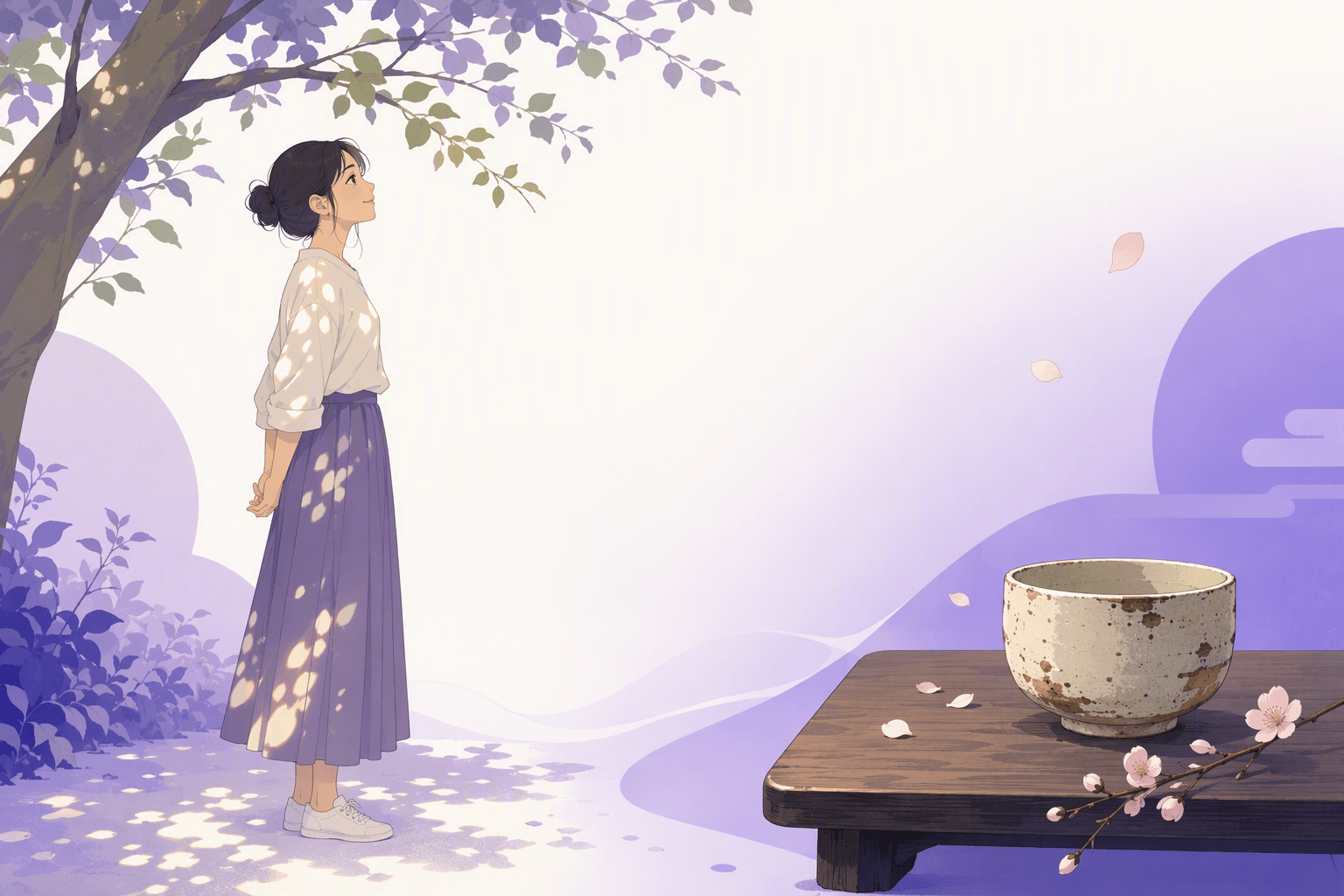
| Sunlight through leaves | 木漏れ日 | KOH-moh-reh-bee | casual |
| It can't be helped | しょうがない | shoh-GAH-nai | casual |
| A little lonely (pleasantly) | 寂しい | sah-BEE-shee | casual |
| Aesthetic of imperfect simplicity | 侘寂 | wah-bee-SAH-bee | formal |
| A subtle, profound beauty | 幽玄 | yoo-GEN | formal |
Why these words feel "untranslatable"
English can translate almost anything if you allow a full sentence. The friction happens when you want a single word that carries the same social expectations, emotional color, and shared background knowledge.
Japanese has a long tradition of naming social positioning and aesthetic perception directly. That includes set phrases for workplace solidarity, words for quiet seasonal feelings, and terms that assume you will infer context.
"Languages differ very widely in what they must convey and in what they may leave unsaid."
Roman Jakobson, linguist (often cited in translation studies)
That difference matters in Japanese because context is not just a bonus, it is part of how meaning is built in everyday interaction.
A quick reality check with numbers
Japanese is spoken by roughly 120 million native speakers worldwide (Ethnologue, 2024). The Japan Foundation also reported millions of Japanese-language learners overseas in its global survey (Japan Foundation, 2021), which helps explain why these "one-word culture lessons" spread online.
If you want a broader map of where Japanese sits globally, see most spoken languages.
Relationship and social harmony words
These are the terms you will actually hear in offices, clubs, schools, and friend groups. They are "untranslatable" because they encode social roles and expectations, not just dictionary meaning.
お疲れ様
Pronunciation: oh-TSOO-keh-reh-SAH-mah.
This is the all-purpose "thanks for your hard work" that also functions as "hi" and "bye" in work contexts. You say it after meetings, at the end of a shift, or when someone finishes a task.
It is less about praising performance and more about acknowledging effort and shared time. That is why it can feel strange to translate literally.
💡 Movie and TV realism
In Japanese workplace scenes, you will often hear お疲れ様 as the first line when someone walks in and the last line when they leave. It is a social lubricant, not a report card.
For more everyday openers and closers, pair this with how to say hello in Japanese and how to say goodbye in Japanese.
よろしく
Pronunciation: yoh-ROH-shee-koo.
This word is famous because it does many jobs: "nice to meet you," "please take care of this," "I am counting on you," and "let's work well together." The core idea is relationship management: aligning expectations politely.
In introductions, it often appears as よろしくお願いします (yoh-ROH-shee-koo oh-neh-GUY-shee-mahs), which adds a polite "request" frame.
空気を読む
Pronunciation: KOO-kee oh YOH-moo.
Literally "to read the air," meaning to sense what is appropriate without being told. English has "read the room," but 空気 includes a stronger expectation that you should adjust your behavior to protect group harmony.
You will also see the shorthand "KY" (pronounced KAI-wai) in pop culture, meaning someone who cannot read the air.
🌍 Why 'air' matters
In Japanese interaction, what is not said can be as important as what is said. That is why "air" becomes a thing you can "read." It is a social skill, not a supernatural power.
建前
Pronunciation: tah-teh-MAE.
建前 is the public-facing stance you present to fit the situation, especially in formal or group settings. It is often contrasted with 本音 (hohn-NEH), your private, genuine feelings.
Neither is "fake" by default. 建前 can be a considerate choice, especially when blunt honesty would embarrass someone.
本音
Pronunciation: hohn-NEH.
本音 is your true intention or real feeling. People may share it only with close friends, family, or in private.
Understanding the 本音 vs 建前 dynamic helps you interpret scenes where characters say "it is fine" but their body language says otherwise.
甘え
Pronunciation: ah-MAE.
甘え is the feeling of depending on someone else’s indulgence, like assuming they will forgive you, take care of you, or let you be vulnerable. English can say "dependence" or "being spoiled," but those miss the relational warmth that 甘え can carry.
It is often discussed in family and close relationships, and it shows up in subtle ways in romance plots too. If you are learning romantic language, compare how direct English can be with how to say I love you in Japanese.
Emotion and inner-state words
These words are powerful because they name emotional textures that English often describes indirectly.
もったいない
Pronunciation: moht-tie-NAI.
This is "what a waste," but it also implies respect for resources, effort, and value. You can say it about throwing away food, wasting time, or receiving something too fancy for you.
In Japan, it connects to everyday habits like finishing rice, using items carefully, and not over-consuming. It can be moral, practical, or affectionate depending on tone.
切ない
Pronunciation: seh-TSU-nai.
切ない is a tight, aching sadness, often mixed with longing. It is common in songs and drama dialogue when someone misses a person or a past moment.
English can say "heartbreaking" or "wistful," but 切ない often feels quieter and more internal.
懐かしい
Pronunciation: nah-kah-SHEE.
This is the warm feeling of nostalgia when something reminds you of the past. It is frequently used as an exclamation: 懐かしい! when you see an old snack, hear a childhood song, or visit a former neighborhood.
It is not necessarily sad. It can be bright and comforting.
寂しい
Pronunciation: sah-BEE-shee.
寂しい means "lonely," but it can also mean "a bit empty" or "I miss you" depending on context. In romance, saying 寂しい can be a softer way to express desire for closeness without demanding it.
In everyday life, it can describe a quiet house, a party that ended, or a street after a festival.
⚠️ Common learner mistake
Do not assume 寂しい always equals "sad." In many scenes, it is closer to "I wish you were here" or "it feels a little empty now." Watch the context and the speaker’s relationship.
しょうがない
Pronunciation: shoh-GAH-nai.
This means "it can't be helped." It can express acceptance, resignation, or a calm decision to move on.
In dialogue, it often appears after a small setback, like missing a train or dealing with bad weather. The cultural point is not passivity, it is emotional regulation: stop fighting reality and choose the next action.
Nature, seasons, and aesthetics
Japanese has a dense vocabulary for noticing subtle beauty, especially tied to seasons. These terms are often called untranslatable because they sit at the intersection of language, art, and cultural memory.
木漏れ日
Pronunciation: KOH-moh-reh-bee.
This is sunlight filtering through leaves, creating a dappled pattern. English can describe it, but Japanese names it as a single scene.
You will hear it in poetry, essays, and sometimes casual speech when someone wants to be a little lyrical.
侘寂
Pronunciation: wah-bee-SAH-bee.
侘寂 is an aesthetic of imperfect, transient, understated beauty. Think weathered wood, a chipped teacup, a quiet room, or a garden in late autumn.
It is not "ugly is beautiful." It is more like: time leaves marks, and those marks can be meaningful.
幽玄
Pronunciation: yoo-GEN.
幽玄 refers to a subtle, profound beauty that suggests more than it shows. It is associated with traditional arts like Noh theater and classical poetry.
If a scene feels deep because it is restrained, not because it is loud, 幽玄 is one way Japanese can talk about that effect.
物の哀れ
Pronunciation: moh-noh noh ah-WAH-reh.
This is the gentle sadness of impermanence, the awareness that things pass. It is often linked to seasonal imagery like cherry blossoms, which are beautiful precisely because they do not last.
It is not depression. It is sensitivity to time.
🌍 Cherry blossoms as a cultural shorthand
Cherry blossoms (桜, sah-KOO-rah) bloom briefly, and that short peak is culturally salient. The language around impermanence, including 物の哀れ, becomes easier to feel once you connect it to seasonal rituals and shared imagery.
いただきます
Pronunciation: ee-tah-dah-KEE-mahs.
Said before eating, often translated as "let’s eat," but it literally frames the meal as something you "receive." It can imply gratitude to the cook, to the ingredients, and to the broader chain that made the meal possible.
That is why it is hard to translate cleanly. It is a ritualized stance, not a menu announcement.
ごちそうさま
Pronunciation: goh-chee-SOH-sah-mah.
Said after eating, often glossed as "thank you for the meal." Like いただきます, it is a social and moral frame around food.
In restaurants, you might say it to staff on the way out, especially in smaller places.
Words that describe a person, not just a feeling
These terms can be sharp, funny, or socially loaded. They are useful for understanding characters, especially in comedies and slice-of-life shows.
生き甲斐
Pronunciation: ee-kee-guy.
生き甲斐 is your reason for living, or what makes life feel worth it. English has "purpose," but 生き甲斐 can be smaller and more personal: a hobby, a pet, a weekly ritual, or caring for someone.
In dialogue, it often appears when someone is reflecting on what keeps them going.
めんどくさい
Pronunciation: men-doh-KOO-sai.
This is "what a hassle" or "I cannot be bothered," but it is broader. It can describe tasks, people, social obligations, or even emotions that feel like work.
It is extremely common and very character-revealing in TV dialogue, especially with teens and tired adults.
ずるい
Pronunciation: zoo-ROO-ee.
ずるい means "sneaky" or "unfair," but it is often used playfully, like when someone gets something you wanted. It can be teasing, not accusatory.
Tone matters. Said sharply, it can mean genuine moral criticism.
天然
Pronunciation: ten-NEN.
In modern slang, 天然 describes someone who is naturally airheaded or unintentionally funny, not malicious. It is often used affectionately for a person who says odd things with a straight face.
It is not the same as "stupid." It is closer to "adorably clueless."
おもてなし
Pronunciation: oh-moh-teh-NAH-shee.
Often translated as "hospitality," but it implies anticipating needs with care and attention to detail. It is a cultural keyword in tourism and service contexts, but it also appears in everyday talk about hosting.
English "hospitality" can be transactional. おもてなし is more about sincerity and atmosphere.
How to actually learn these words (and use them naturally)
Memorizing a list is easy. Using them without sounding like a dictionary is the hard part.

Step 1: Learn the scene, not the gloss
For each word, attach a typical situation:
- お疲れ様: end of work, end of practice, after a task
- しょうがない: small setback, acceptance, moving on
- 懐かしい: sudden memory trigger, shared nostalgia
That is how native speakers store these expressions in the brain: as scripts.
Step 2: Copy the exact phrasing you hear
Many of these words appear in fixed frames:
- お疲れ様です (oh-TSOO-keh-reh-SAH-mah dess) in polite settings
- しょうがないよ (shoh-GAH-nai yoh) to soften it
- 懐かしいね (nah-kah-SHEE neh) to invite agreement
If you are practicing with media, Wordy-style clip learning works because you repeat the whole line with timing and emotion, not just the vocabulary.
Step 3: Track register (casual vs polite vs literary)
Some words are everyday. Some are aesthetic theory. Mixing them can sound strange, like using "sublime" in a grocery store conversation.
As a rule:
- Daily speech: もったいない, めんどくさい, しょうがない, 懐かしい
- Workplace ritual: お疲れ様, よろしく
- Literary or cultural discourse: 侘寂, 幽玄, 物の哀れ
Step 4: Use internal contrasts to remember meaning
Pairs help:
| Contrast | Pronunciation | What it helps you remember |
|---|---|---|
| 建前 vs 本音 | tah-teh-MAE vs hohn-NEH | public stance vs private feeling |
| いただきます vs ごちそうさま | ee-tah-dah-KEE-mahs vs goh-chee-SOH-sah-mah | before meal vs after meal |
| 寂しい vs 懐かしい | sah-BEE-shee vs nah-kah-SHEE | missing now vs warm past |
Where you will hear these in real Japanese dialogue
If you watch Japanese shows, you will notice patterns:
- Workplace dramas: お疲れ様, よろしく, 建前, 本音
- Romance and family stories: 寂しい, 甘え, 切ない
- Coming-of-age comedies: めんどくさい, ずるい, 天然
- Artful films: 物の哀れ, 侘寂, 幽玄 (often implied more than said)
If you also want to understand the opposite end of the register spectrum, see Japanese swear words. Swearing is another area where direct translation fails because social force matters more than literal meaning.
A practical way to practice with Wordy-style clips
Pick one word per week and collect five examples from different scenes. Your goal is to notice what stays constant (situation, tone, relationship) and what changes (politeness, gendered speech, intensity).
A simple weekly routine:
- Watch 5 short clips featuring the word.
- Shadow the line out loud 10 times.
- Write one sentence you could say in your own life.
- Ask: would this be casual, polite, or literary?
To build a broader base of everyday Japanese, combine this with how to say hello in Japanese and how to say goodbye in Japanese, then add these "concept words" on top.
Key takeaway
Japanese "untranslatable" words are best understood as cultural compression. Once you learn the scene each word belongs to, the meaning stops being mysterious and starts being usable, especially when you hear it repeatedly in real dialogue.
If you want a next step that stays fun, learn one relationship word (like よろしく), one emotion word (like 懐かしい), and one aesthetic word (like 侘寂), then listen for them in shows until you can predict when a character will say them.
Frequently Asked Questions
Are Japanese 'untranslatable words' really impossible to translate?
What is the most famous untranslatable Japanese word?
Do native Japanese speakers use these words in everyday conversation?
How many people speak Japanese, and where is it spoken?
How can I learn these words without sounding unnatural?
Sources & References
- Ethnologue, Ethnologue: Languages of the World (27th ed.), 2024
- The Japan Foundation, Japanese-Language Education Overseas (Survey Report), 2021
- Wierzbicka, A., Cross-Cultural Pragmatics: The Semantics of Human Interaction (2nd ed.), 2003
- Kramsch, C., Language and Culture, 1998
- NINJAL (National Institute for Japanese Language and Linguistics), Publications on Japanese language and culture, ongoing
Start learning with Wordy
Watch real movie clips and build your vocabulary as you go. Free to download.


