Japanese Pop Culture Vocabulary: 45+ Words You Actually Hear in Anime, Games, and J-Pop
Quick Answer
Japanese pop culture vocabulary is the set of everyday words and set phrases you hear constantly in anime, games, and J-pop, like 推し (oh-SHEE), ガチ (GAH-chee), and 尊い (toh-TOH-ee). Learning them helps you follow tone, relationships, and jokes that subtitles often flatten, while avoiding terms that sound unnatural outside fandom contexts.
Japanese pop culture vocabulary is a practical set of words and phrases that show up constantly in anime, games, J-pop, and fandom talk, and learning them helps you understand relationships, tone, and jokes that basic textbook Japanese often misses.
Japanese is spoken by about 123 million native speakers (Ethnologue, 27th edition, 2024), and Japanese media travels far beyond Japan. The Japan Foundation’s overseas surveys consistently show millions of learners worldwide, many of whom start because of anime, games, and music.
This guide focuses on words you will actually hear, plus the social rules that decide whether a term sounds normal, cringe, or surprisingly rude. If you want a foundation for greetings first, start with how to say hello in Japanese and come back.
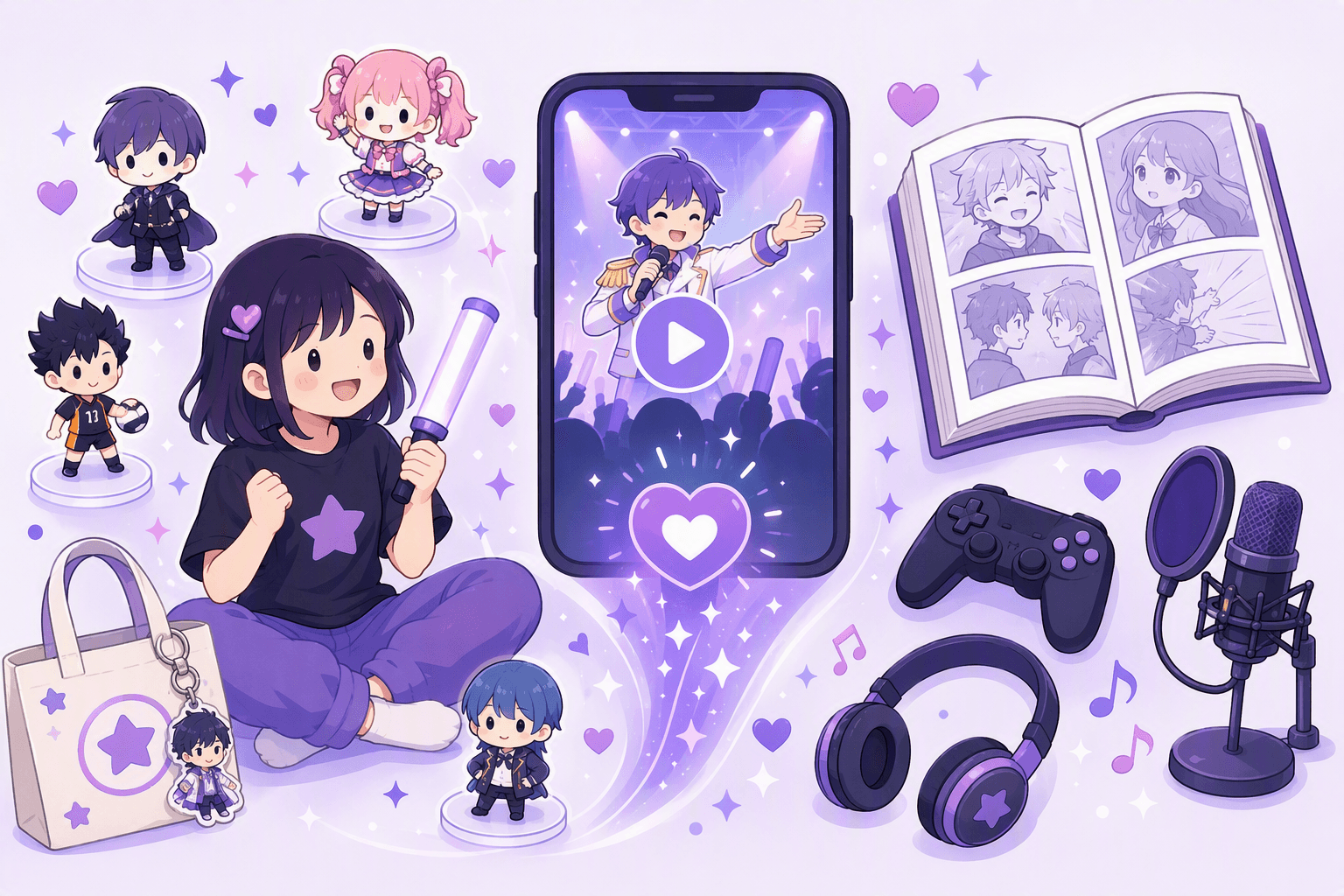
What counts as "pop culture vocabulary" in Japanese?
Pop culture Japanese sits between standard everyday speech and niche internet slang. It includes loanwords (カタカナ), fandom terms (推し, 尊い), and media-specific labels (アニメ, 声優).
A key idea is register: the same word can be fine in a group chat and weird in a job interview. Satoshi Kinsui’s work on role language (yakuwarigo) is useful here, because anime often assigns speech styles to character types, not to real-life people.
⚠️ Anime speech vs real speech
Some lines are written to signal a character archetype, not to model natural conversation. Copying sentence endings like だぞ, である, or overly rough 俺様 talk can make you sound like you are performing a role.
Quick list: 45+ pop culture words with kana and pronunciation
| English | Japanese | Pronunciation | Note |
|---|---|---|---|
| Anime | アニメ | AH-nee-meh | Short for アニメーション. Standard word. |
| Manga | マンガ | MAHN-gah | Comics. Often written 漫画 too. |
| Light novel | ライトノベル | RYE-toh NOH-beh-roo | Often shortened to ラノベ. |
| Game | ゲーム | GAY-moo | Long vowel: げー (two morae). |
| Cosplay | コスプレ | KOH-soo PREH | Short for コスチュームプレイ. |
| Idol | アイドル | AH-ee-doh-roo | Long 'ai' is two morae. |
| Otaku | オタク | oh-TAH-koo | Can be neutral or negative depending on context. |
| Fandom | 界隈 | KAI-wai | Literally 'community/scene'. Often used online. |
| Shipping (pairing) | カップリング | KAH-poo-reehn-goo | Often shortened to カプ. |
| My favorite (bias) | 推し | oh-SHEE | Your supported favorite person or character. |
| Supporting activities | 推し活 | oh-SHEE-kah-tsu | Buying merch, attending events, posting support. |
| Precious (fandom) | 尊い | toh-TOH-ee | Used when something feels emotionally overwhelming. |
| Too cute | 可愛すぎる | kah-WAH-ee soo-GEE-roo | Common reaction line. |
| Seriously / for real | ガチ | GAH-chee | Very common in casual speech and online. |
| Real / true | 本当 | hohn-TOH | Also ほんと (casual). |
| Awesome / the best | 最高 | SAI-koh | Also さいこう. |
| Cute (internet) | かわいい | kah-WAH-ee | Everyday word, not just fandom. |
| Cool | かっこいい | kahk-KOH-ee | Small っ doubles consonant. |
| Hype / excitement | テンション | TEHN-shohn | Often テンション上がる. |
| To get hyped | 上がる | ah-GAH-roo | テンションが上がる. |
| To calm down | 落ち着く | oh-chee-TSOO-koo | Useful when chat is too excited. |
| Spoiler | ネタバレ | NEH-tah BAH-reh | Short for ネタバレる. |
| No spoilers | ネタバレ禁止 | NEH-tah BAH-reh kin-SHEE | Common in streams and threads. |
| Plot twist | どんでん返し | dohn-DEHN-gah-eh-shee | More literary than slang. |
| Cliffhanger | 引き | HEE-kee | As in 次回への引き. |
| Voice actor | 声優 | SEH-yoo | Two morae in ゆう. |
| Opening song | オープニング | OH-poo-neehn-goo | Often OP. |
| Ending song | エンディング | EHn-deehn-goo | Often ED. |
| Theme song | 主題歌 | shoo-DAI-kah | Used in official promos. |
| Merch | グッズ | GOO-dzoo | Small っ in writing: グッズ. |
| Acrylic stand | アクスタ | AH-koo-soo-tah | Short for アクリルスタンド. |
| Random merch draw | ランダム | RAHN-dah-moo | As in ランダム封入. |
| Limited edition | 限定 | gehn-TEH | Also 期間限定. |
| Collaboration | コラボ | KOH-rah-boh | Brand or creator collab. |
| Livestream | 配信 | hai-SHEEN | Streams, uploads, live broadcasts. |
| Clip (video) | 切り抜き | kee-ree-NOO-kee | Stream highlight clips. |
| Comment section | コメント欄 | koh-MEHN-toh rahn | Where reactions happen. |
| Trending | トレンド | toh-REHN-doh | Often on X or YouTube. |
| Viral | バズる | BAH-zoo-roo | To blow up online. |
| Relatable | 共感 | kyoh-KAHN | Two morae in きょ. |
| I get it | わかる | wah-KAH-roo | Classic reaction in chats. |
| I don't get it | わからん | wah-kah-RAHN | Casual, slightly rough. |
| Same | それな | SOH-reh-nah | Very casual agreement. |
| I can't (too much) | 無理 | moo-REE | Often playful: もう無理. |
If you are building core listening vocabulary too, pair this with the 100 most common Japanese words so you recognize the glue words around the slang.
推し
推し (oh-SHEE) is the single most useful fandom word to learn. It means the person or character you actively support, not just someone you like.
You will see it in phrases like 推しが尊い (my fave is too precious) and 推し活 (supporting activities). In idol culture, it maps closely to “my main” or “my bias,” but it is now used for VTubers, actors, athletes, and even brands.
/oh-SHEE-gah SAI-koh/
Literal meaning: My 'oshi' is the best.
“推しが最高。今日の配信、神だった。”
My fave is the best. Today's stream was god-tier.
推し is widely understood in pop culture spaces. In formal settings, it can sound too fandom-coded, so switch to 好きな人 or 応援している.
推し活
推し活 (oh-SHEE-kah-tsu) is what fans do for their 推し: buying グッズ, going to live events, watching 配信, and posting support.
It is also a budgeting word. You will hear people talk about 推し活費 (oshi-katsu expenses) and how they plan around 限定 drops.
尊い
尊い (toh-TOH-ee) literally means “precious” or “noble,” but in fandom it is a reaction word. It signals emotional overload, often from a cute moment, a perfect pairing, or a character growth scene.
Used too often, it can sound performative. Used once at the right moment, it sounds native.
💡 A natural pattern
Try: 尊い + 無理. Example: 尊い、無理 (This is too precious, I can't handle it). It is intentionally exaggerated, like English 'I am not okay' in fandom talk.
ガチ
ガチ (GAH-chee) means “seriously,” “for real,” or “genuinely.” It is common in everyday casual Japanese, not only fandom.
You will hear ガチで (seriously) and ガチ勢 (hardcore people). In games, ガチ can contrast with エンジョイ (playing for fun).
/GAH-chee deh moo-ZOO-kah-shee/
Literal meaning: Seriously, it's difficult.
“このボス、ガチで難しい。”
This boss is seriously hard.
ガチ is safe with friends and online. In polite conversation, switch to 本当に or かなり.
バズる
バズる (BAH-zoo-roo) means “to go viral.” It is used for posts, clips, songs, and even phrases.
You will see it with トレンド (trending) and 切り抜き (clips). It is a good word for understanding creator talk on YouTube and streaming platforms.
ネタバレ
ネタバレ (NEH-tah BAH-reh) is “spoiler.” It is used as a noun and as a warning label.
Common patterns include ネタバレ注意 (spoiler warning) and ネタバレ禁止 (no spoilers). In comment sections, people may hide spoilers with spaces or symbols.
オタク
オタク (oh-TAH-koo) is complicated. It can mean a dedicated fan, but it can also carry a stereotype of being socially awkward or overly obsessed.
In modern usage, many people self-identify as オタク in a neutral way. Calling someone else オタク can still feel judgmental unless you know the relationship.
Cultural studies of Japanese media fandom often point out how labels shift over time, and this is a clear example. If you want a safer neutral label, ファン (fan) is easy.
声優
声優 (SEH-yoo) means voice actor. In anime and games, voice actors are celebrities, and fans follow them across roles.
You will hear phrases like 推し声優 (favorite voice actor) and イベント (events) tied to 声優. Knowing this word helps you understand casting talk and promotional interviews.
グッズ and アクスタ
グッズ (GOO-dzoo) is “merch.” It is a catch-all term for keychains, badges, posters, and more.
アクスタ (AH-koo-soo-tah) is short for acrylic stand, a very common collectible. If you have ever wondered why Japanese fans talk about “stands,” this is it.
コラボ
コラボ (KOH-rah-boh) is “collab,” used for brand tie-ins, café events, and creator crossovers.
You will see it with 限定 (limited) and 期間限定 (limited time). Those words are not slang, but they are essential for understanding marketing language around pop culture.
How pop culture changes politeness and pronouns
A lot of “anime Japanese” that learners copy is not vocabulary, it is stance. Pronouns, sentence endings, and roughness levels are used to signal character type.
Kinsui’s role-language framework helps explain why a villain might use 俺様, or why a refined character might use わたくし. Those forms exist, but they are not equally common in daily life.
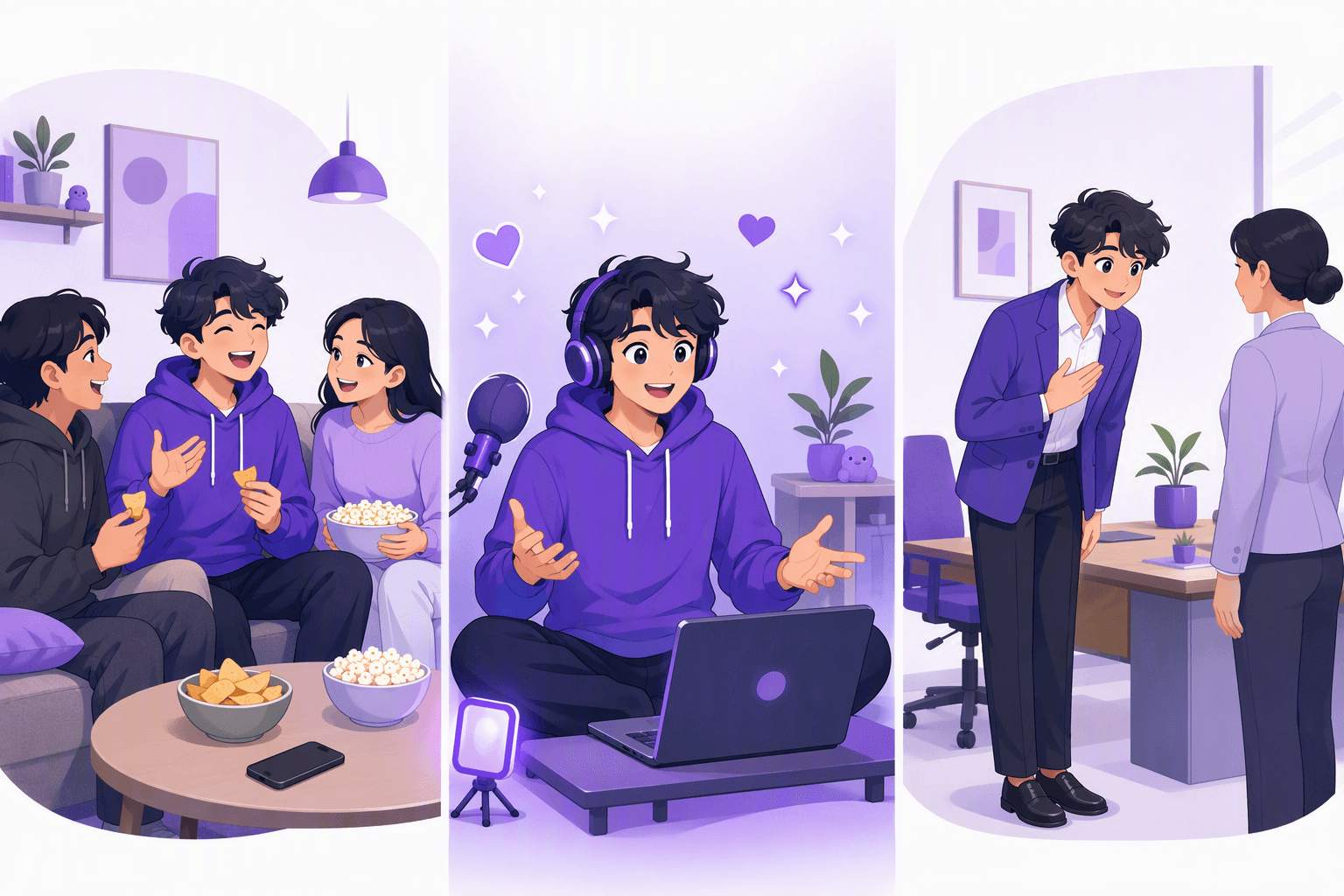
If you want a safer baseline, learn polite greetings and exits first, then add pop culture flavor. These two guides help you anchor that baseline: how to say goodbye in Japanese and how to say hello in Japanese.
⚠️ Do not copy rough speech blindly
Words like てめえ, きさま, and certain insults are real, but they are aggressive. If you want to understand them for comprehension, that is fine. If you want to use them, read our guide to Japanese swear words first.
Mini patterns you will hear again and again
These are not “slang words,” but they are pop-culture engines: short patterns that carry tone.
それな
それな (SOH-reh-nah) is a casual “same” or “exactly.” It is common in chats reacting to a clip or a scene.
It is very casual, so avoid it in formal settings. A safer alternative is 本当にそう (that’s really true).
わかる
わかる (wah-KAH-roo) is “I get it,” and it is one of the most common reaction lines in Japanese comment culture.
You will also see わかりみ, a playful internet form meaning “the feeling of understanding.” It is niche, but you may run into it.
無理
無理 (moo-REE) literally means “impossible,” but in pop culture it often means “I can’t handle this” emotionally.
It can be serious too, like refusing a request. Tone and context decide which meaning is intended.
Where these words show up most (and why)
Anime and games repeat vocabulary because they repeat situations: fights, confessions, rivalries, and team dynamics. That repetition is good for learners, because you get spaced exposure without trying.
NHK’s communication research and the Agency for Cultural Affairs’ language materials both emphasize that real usage depends on context and audience. Pop culture is a huge audience, but it is still an audience with its own norms.
If your goal is to understand confessions and romantic tension, pair this article with how to say I love you in Japanese. Pop culture often plays with indirectness, and that guide helps you hear what is being implied.
A practical way to learn this vocabulary with real clips
Pick one show, one game streamer, or one music interview series and stick with it for two weeks. You will hear the same words in similar emotional situations, which makes them stick.
Then rotate content types: anime for dramatic dialogue, variety shows for casual banter, and interviews for polite speech. This prevents you from learning only one register.
For a structured path, use movie and TV clips that match your level, and track the words you miss. Wordy’s clip-based approach is built for this, but the method works with any consistent source.
🌍 A small but important cultural cue
In Japanese fandom spaces, people often soften strong opinions with hedges like かも (maybe) or with playful exaggeration like 無理. It is a way to show enthusiasm without sounding like you are attacking someone else's favorite.
Common mistakes learners make with pop culture Japanese
One mistake is treating slang as “cooler Japanese.” In practice, slang is narrower: it fits certain relationships and settings, and outside those settings it can sound childish or overly online.
Another mistake is collapsing morae in pronunciation. Japanese listeners rely on rhythm, so アイドル is AH-ee-doh-roo, not “EYE-dl,” and ゲーム is GAY-moo with a long vowel.
A third mistake is copying character role language. If you want to sound natural, build your default in polite or neutral Japanese, then add pop culture expressions as seasoning.
Keep going
If you want more structured building blocks, browse the Wordy blog and combine pop culture vocabulary with core grammar and listening practice. The fastest progress comes from hearing words in real scenes, not from memorizing them in isolation.
Frequently Asked Questions
Is anime Japanese different from real Japanese?
What does 推し (oshi) mean in Japanese pop culture?
Can I use these words with Japanese people in real life?
What is the difference between オタク and nerd?
How many people speak Japanese, and where is it spoken?
Sources & References
- Ethnologue, Ethnologue: Languages of the World, 27th edition, 2024
- The Japan Foundation, Japanese-Language Education Overseas (survey report)
- Kinsui, Satoshi, Virtual Japanese: Enigmas of Role Language, University of California Press
- NHK Broadcasting Culture Research Institute, Japanese language and communication research (accessed 2026)
- Agency for Cultural Affairs (文化庁), Japanese language policy and surveys (accessed 2026)
Start learning with Wordy
Watch real movie clips and build your vocabulary as you go. Free to download.


