Quick Answer
German comparatives usually add -er and use als for comparisons, while superlatives use am plus -sten or a definite article plus -ste adjective endings. Learn the regular patterns, spelling changes, irregular forms, and the sentence structures German speakers use every day.
German comparatives usually add -er to an adjective and use als /als/ for “than”: größer als /ˈɡʁøːsɐ als/, “bigger than.” German superlatives usually use am /am/ plus -sten, such as am größten /am ˈɡʁøːstn̩/, “the biggest,” or a declined form before a noun, such as der größte Hund /deːɐ̯ ˈɡʁøːstə hʊnt/, “the biggest dog.” The key is knowing when to add an umlaut, when to use -esten /ˈeːstn̩/, and when adjective endings change.
German is spoken by roughly 130 million people worldwide and has official status in six countries: Germany, Austria, Switzerland, Liechtenstein, Belgium, and Luxembourg. Comparisons are especially useful in everyday German, whether you are comparing prices, cities, films, food, or plans with friends. Once you can say besser /ˈbɛsɐ/, “better,” and am besten /am ˈbɛstn̩/, “best,” your opinions become far more precise.
For core sentence patterns that support these forms, review German word order alongside this guide.
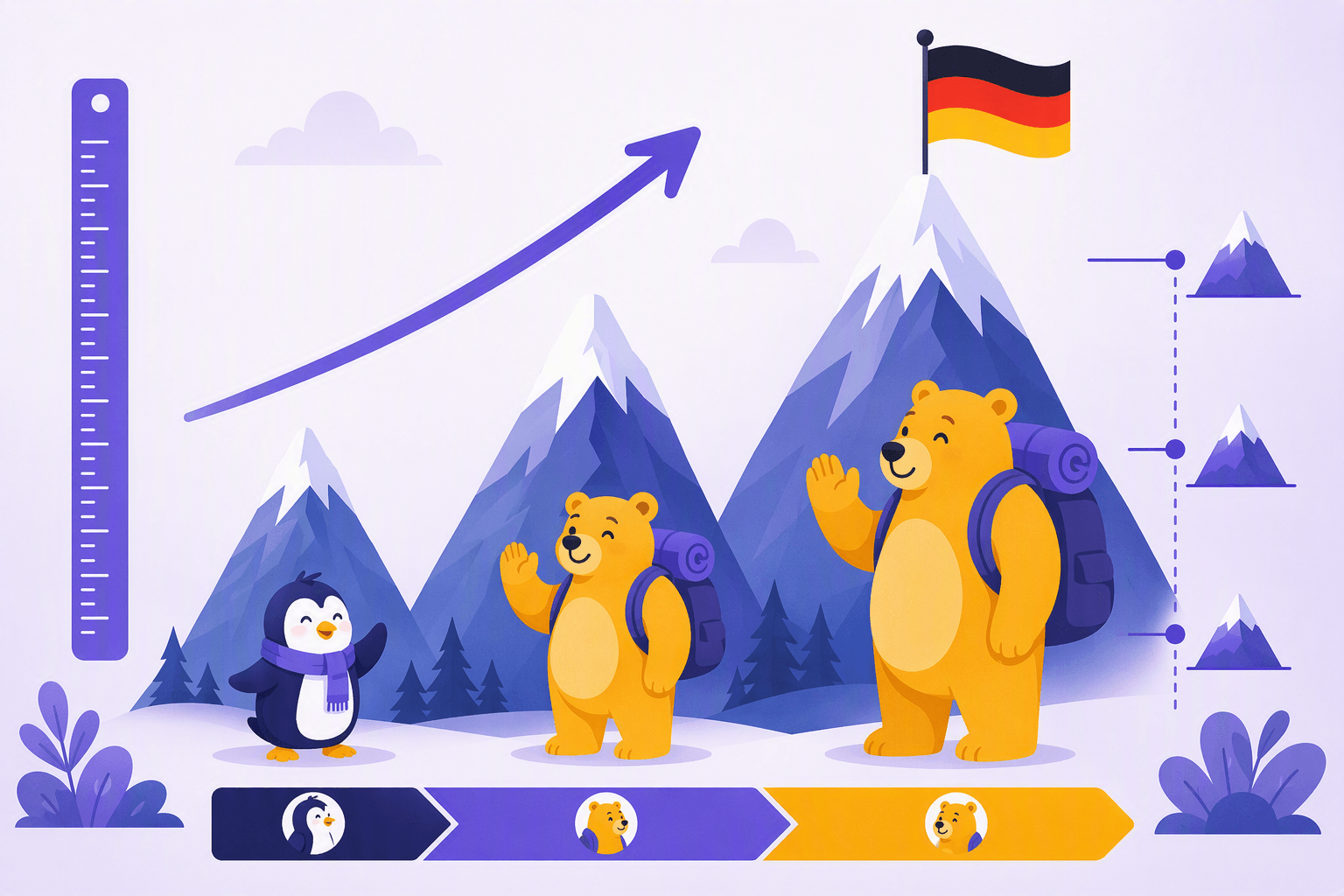
The basic German comparative rule
The comparative is used when one person, object, or situation has more of a quality than another. In English, this is usually “faster,” “more interesting,” or “better.” In German, regular adjectives generally take -er /ɐ/.
| Base adjective | IPA | Comparative | IPA | Meaning |
|---|---|---|---|---|
| schnell | /ʃnɛl/ | schneller | /ˈʃnɛlɐ/ | fast, faster |
| klein | /klaɪn/ | kleiner | /ˈklaɪnɐ/ | small, smaller |
| lang | /laŋ/ | länger | /ˈlɛŋɐ/ | long, longer |
| teuer | /ˈtɔʏɐ/ | teurer | /ˈtɔʏʁɐ/ | expensive, more expensive |
| interessant | /ɪntəʁɛˈzant/ | interessanter | /ɪntəʁɛˈzantɐ/ | interesting, more interesting |
The standard comparison word is als /als/, meaning “than.” German does not use the equivalent of English “more” before an ordinary comparative adjective.
-
Berlin ist größer als München. /bɛʁˈliːn ɪst ˈɡʁøːsɐ als ˈmʏnçn̩/
Berlin is bigger than Munich. -
Dieser Film ist interessanter als der andere. /ˈdiːzɐ fɪlm ɪst ɪntəʁɛˈzantɐ als deːɐ̯ ˈandəʁə/
This film is more interesting than the other one. -
Der Kaffee ist heute teurer. /deːɐ̯ kaˈfeː ɪst ˈhɔʏtə ˈtɔʏʁɐ/
The coffee is more expensive today.
In everyday conversation, German speakers often leave out the second item when context makes it obvious. Der ist besser /deːɐ̯ ɪst ˈbɛsɐ/ simply means “That one is better.”
Comparative sentence patterns you need
Comparative plus als
The most common structure is:
Thing A + verb + comparative + als + Thing B
German main clauses keep the conjugated verb in second position, even when a comparative phrase is long.
-
Mein neuer Laptop ist leichter als mein alter. /maɪn ˈnɔʏɐ ˈlɛptɔp ɪst ˈlaɪçtɐ als maɪn ˈaltɐ/
My new laptop is lighter than my old one. -
Ich spreche heute besser Deutsch als letztes Jahr. /ɪç ˈʃpʁɛçə ˈhɔʏtə ˈbɛsɐ dɔʏtʃ als ˈlɛtstəs jaːɐ̯/
I speak German better today than last year.
The second example matters because besser /ˈbɛsɐ/ can describe how an action is performed. German often puts the language object, Deutsch /dɔʏtʃ/, after the comparative adverb.
So ... wie for equal comparisons
Use so ... wie /zoː viː/ for “as ... as.” This is not a comparative, because neither item is presented as greater.
-
Der Weg ist so kurz wie gestern. /deːɐ̯ veːk ɪst zoː kʊʁts viː ˈɡɛstɐn/
The route is as short as yesterday. -
Sie ist genauso freundlich wie ihre Schwester. /ziː ɪst ˈɡeːnaʊzoː ˈfʁɔʏntlɪç viː ˈiːʁə ˈʃvɛstɐ/
She is just as friendly as her sister.
A common error is using wie /viː/ after a comparative. Say größer als /ˈɡʁøːsɐ als/, not größer wie /ˈɡʁøːsɐ viː/, in standard German. Some regional dialects use wie differently, but learners should keep the standard distinction clear.
Je ... desto
For “the more..., the more...,” use je /jeː/ and desto /ˈdɛstoː/, or sometimes umso /ˈʊmzoː/.
- Je mehr du hörst, desto besser verstehst du Deutsch. /jeː meːɐ̯ duː høːɐ̯st ˈdɛstoː ˈbɛsɐ fɛɐ̯ˈʃteːst duː dɔʏtʃ/
The more you listen, the better you understand German.
This structure appears often in advice, advertising, and formal writing. It also makes a useful study principle: repeated exposure creates more opportunities to recognize comparative patterns in context.
Umlauts in German comparatives
Several common one-syllable adjectives add an umlaut in their comparative and superlative forms. You need to memorize these patterns, because the umlaut changes the vowel sound as well as the spelling.
| Base form | IPA | Comparative | IPA | Superlative | IPA |
|---|---|---|---|---|---|
| alt | /alt/ | älter | /ˈɛltɐ/ | am ältesten | /am ˈɛltəstn̩/ |
| arm | /aʁm/ | ärmer | /ˈɛʁmɐ/ | am ärmsten | /am ˈɛʁmstə n/ |
| groß | /ɡʁoːs/ | größer | /ˈɡʁøːsɐ/ | am größten | /am ˈɡʁøːstn̩/ |
| jung | /jʊŋ/ | jünger | /ˈjʏŋɐ/ | am jüngsten | /am ˈjʏŋstn̩/ |
| kalt | /kalt/ | kälter | /ˈkɛltɐ/ | am kältesten | /am ˈkɛltəstn̩/ |
| klug | /kluːk/ | klüger | /ˈklyːɡɐ/ | am klügsten | /am ˈklyːkstn̩/ |
| lang | /laŋ/ | länger | /ˈlɛŋɐ/ | am längsten | /am ˈlɛŋstn̩/ |
| stark | /ʃtaʁk/ | stärker | /ˈʃtɛʁkɐ/ | am stärksten | /am ˈʃtɛʁkstn̩/ |
Not every short adjective takes an umlaut. schnell /ʃnɛl/ becomes schneller /ˈʃnɛlɐ/, not an umlaut form. Learn high-frequency words as complete three-part sets: base form, comparative, and superlative.
German grammarian Martin Durrell, in Hammer’s German Grammar and Usage, treats these vowel changes as part of the adjective’s lexical pattern rather than a rule learners can apply without exceptions. That is a practical approach: memorize groß, größer, am größten /ɡʁoːs ˈɡʁøːsɐ am ˈɡʁøːstn̩/ together.
Forming the German superlative
German has two major superlative patterns. The first is the predicative or adverbial form with am /am/. The second comes before a noun and needs normal adjective endings.
Am plus -sten
Use am + adjective + -sten /am ... stn̩/ when describing how an action happens or stating that something is the most of its kind.
-
Ich lerne am besten am Morgen. /ɪç ˈlɛʁnə am ˈbɛstn̩ am ˈmɔʁɡn̩/
I learn best in the morning. -
Wer läuft am schnellsten? /veːɐ̯ lɔʏft am ˈʃnɛlstn̩/
Who runs the fastest? -
Im Sommer ist es am wärmsten. /ɪm ˈzɔmɐ ɪst ɛs am ˈvɛʁmstn̩/
In summer, it is warmest.
The adjective in this structure is not declined. Am schnellsten /am ˈʃnɛlstn̩/ stays the same regardless of who performs the action.
Definite article plus superlative adjective
Before a noun, German superlatives work like ordinary adjectives. The adjective begins with -st /st/ and receives an ending based on gender, case, number, and the determiner.
| Phrase | IPA | Meaning |
|---|---|---|
| der schnellste Zug | /deːɐ̯ ˈʃnɛlstə tsuːk/ | the fastest train |
| die schönste Stadt | /diː ˈʃøːnstə ʃtat/ | the most beautiful city |
| das beste Restaurant | /das ˈbɛstə ʁɛstoˈʁãː/ | the best restaurant |
| mit dem besten Freund | /mɪt deːm ˈbɛstn̩ fʁɔʏnt/ | with the best friend |
| die teuersten Hotels | /diː ˈtɔʏʁstn̩ hoˈtɛls/ | the most expensive hotels |
The distinction is easy to see in paired examples:
-
Dieses Restaurant ist am besten. /ˈdiːzəs ʁɛstoˈʁãː ɪst am ˈbɛstn̩/
This restaurant is the best. -
Das ist das beste Restaurant der Stadt. /das ɪst das ˈbɛstə ʁɛstoˈʁãː deːɐ̯ ʃtat/
That is the best restaurant in the city.
The first sentence describes the restaurant. The second modifies the noun Restaurant /ʁɛstoˈʁãː/, so it needs das beste /das ˈbɛstə/.
For a fuller explanation of adjective endings before nouns, see our German adjective endings guide.
When German uses -esten
Most superlatives simply add -sten /stn̩/. But certain endings need an extra -e- /ə/ to make the word pronounceable. Use -esten /ˈeːstn̩/ after adjectives ending in -d /t/, -t /t/, -s /s/, -ß /s/, -sch /ʃ/, -x /ks/, or -z /ts/.
| Base form | IPA | Superlative | IPA | Meaning |
|---|---|---|---|---|
| kalt | /kalt/ | am kältesten | /am ˈkɛltəstn̩/ | coldest |
| nett | /nɛt/ | am nettesten | /am ˈnɛtəstn̩/ | nicest |
| kurz | /kʊʁts/ | am kürzesten | /am ˈkʏʁtsəstn̩/ | shortest |
| süß | /zyːs/ | am süßesten | /am ˈzyːsəstn̩/ | sweetest |
| frisch | /fʁɪʃ/ | am frischesten | /am ˈfʁɪʃəstn̩/ | freshest |
| interessant | /ɪntəʁɛˈzant/ | am interessantesten | /am ɪntəʁɛˈzantəstn̩/ | most interesting |
The spelling is not decorative. Without the extra vowel, forms such as kältesten /ˈkɛltəstn̩/ would be difficult to articulate. Listen for this extra syllable in films and series, especially in emotional dialogue where speakers emphasize opinions.
Essential irregular comparative and superlative forms
A small group of adjectives does not follow the normal pattern. These are among the most common German words, so learn them early.
| Base form | IPA | Comparative | IPA | Superlative | IPA |
|---|---|---|---|---|---|
| gut | /ɡuːt/ | besser | /ˈbɛsɐ/ | am besten | /am ˈbɛstn̩/ |
| viel | /fiːl/ | mehr | /meːɐ̯/ | am meisten | /am ˈmaɪstn̩/ |
| gern | /ɡɛʁn/ | lieber | /ˈliːbɐ/ | am liebsten | /am ˈliːpstn̩/ |
| hoch | /hoːx/ | höher | /ˈhøːɐ̯/ | am höchsten | /am ˈhøːçstn̩/ |
| nah | /naː/ | näher | /ˈnɛːɐ̯/ | am nächsten | /am ˈnɛːçstn̩/ |
Gern /ɡɛʁn/ is particularly useful because it expresses preference. Rather than saying you “like” an action, German often uses gern /ɡɛʁn/ with a verb.
-
Ich trinke lieber Tee als Kaffee. /ɪç ˈtʁɪŋkə ˈliːbɐ teː als kaˈfeː/
I prefer drinking tea to coffee. -
Am liebsten bleibe ich zu Hause. /am ˈliːpstn̩ ˈblaɪbə ɪç tsuː ˈhaʊzə/
Most of all, I prefer staying at home.
This pattern is common in polite social talk. If someone asks what you would like to do, Ich würde lieber... /ɪç ˈvʏʁdə ˈliːbɐ/ gives a softer, more cooperative answer than a blunt refusal.
Comparative endings before nouns
Comparatives also behave like normal adjectives when they appear before nouns. The comparative stem gets the adjective ending required by the sentence.
| Context | Example | IPA | Meaning |
|---|---|---|---|
| Masculine nominative | ein größerer Hund | /aɪn ˈɡʁøːsəʁɐ hʊnt/ | a bigger dog |
| Feminine nominative | eine größere Wohnung | /ˈaɪnə ˈɡʁøːsəʁə ˈvoːnʊŋ/ | a bigger apartment |
| Neuter nominative | ein besseres Angebot | /aɪn ˈbɛsəʁəs ˈanɡəboːt/ | a better offer |
| Plural accusative | größere Probleme | /ˈɡʁøːsəʁə pʁoˈbleːmə/ | bigger problems |
| Dative plural | mit besseren Freunden | /mɪt ˈbɛsəʁən ˈfʁɔʏndn̩/ | with better friends |
This is where learners often confuse the comparative ending -er /ɐ/ with the grammatical adjective ending. In ein größerer Hund /aɪn ˈɡʁøːsəʁɐ hʊnt/, größer- /ˈɡʁøːsɐ/ is the comparative stem, and the final -er /ɐ/ is the masculine nominative adjective ending.
The Institut für Deutsche Sprache distinguishes between comparison as a word-formation pattern and declension as a grammatical agreement pattern. Keeping these jobs separate makes long forms less intimidating.
Common mistakes and how to avoid them
Do not use mehr with a normal comparative
Avoid mehr größer /meːɐ̯ ˈɡʁøːsɐ/ for “bigger.” The ending already expresses comparison.
- Correct: Das Haus ist größer. /das haʊs ɪst ˈɡʁøːsɐ/
- Incorrect: Das Haus ist mehr größer. /das haʊs ɪst meːɐ̯ ˈɡʁøːsɐ/
Use mehr /meːɐ̯/ with nouns and quantities: mehr Zeit /meːɐ̯ tsaɪt/, “more time.”
Keep als and wie separate
Use als /als/ after a comparative and wie /viː/ after so /zoː/ or genauso /ˈɡeːnaʊzoː/.
- Heute ist es wärmer als gestern. /ˈhɔʏtə ɪst ɛs ˈvɛʁmɐ als ˈɡɛstɐn/
- Heute ist es so warm wie gestern. /ˈhɔʏtə ɪst ɛs zoː vaʁm viː ˈɡɛstɐn/
Use am best, not der beste, for actions
Say Du kochst am besten. /duː kɔxst am ˈbɛstn̩/, “You cook best.” Use der beste Koch /deːɐ̯ ˈbɛstə kɔx/, “the best cook,” only when a noun follows.
Watch the difference between hoch and höher
Hoch /hoːx/ loses its final -ch /x/ in the comparative: höher /ˈhøːɐ̯/. This pattern is irregular, so do not build it as hocher /ˈhoːxɐ/.
💡 A useful listening habit
When watching German scenes, pause whenever a character gives an opinion about a person, place, meal, or plan. Identify whether you hear a base adjective, a comparative with als /als/, or an am /am/ superlative. This turns familiar dialogue into focused grammar practice.
Natural German comparisons in real conversation
Comparatives often carry social meaning, not just factual information. Germans may compare options directly when planning, shopping, or evaluating a service, but softeners can make an opinion sound less absolute.
-
Ich finde den ersten Vorschlag besser. /ɪç ˈfɪndə deːn ˈeːɐ̯stn̩ ˈfoːɐ̯ʃlaːk ˈbɛsɐ/
I think the first suggestion is better. -
Vielleicht wäre eine frühere Uhrzeit besser. /fiˈlaɪçt ˈvɛːʁə ˈaɪnə ˈfʁyːəʁə ˈuːɐ̯tsaɪt ˈbɛsɐ/
Perhaps an earlier time would be better. -
Das klingt viel besser. /das klɪŋt fiːl ˈbɛsɐ/
That sounds much better.
Words such as vielleicht /fiˈlaɪçt/, “perhaps,” and ein bisschen /aɪn ˈbɪsçn̩/, “a little,” make comparisons tactful. This is useful at work, in group decisions, and when disagreeing without sounding abrupt.
You will also hear superlatives in affectionate language. Du bist die Beste /duː bɪst diː ˈbɛstə/ addresses a woman and means “You are the best.” Du bist der Beste /duː bɪst deːɐ̯ ˈbɛstə/ addresses a man. For more warm, natural expressions, see how to say I love you in German.
A practical way to memorize German comparison forms
Learn adjectives in three columns rather than as isolated vocabulary:
| Base | Comparative | Superlative |
|---|---|---|
| gut /ɡuːt/ | besser /ˈbɛsɐ/ | am besten /am ˈbɛstn̩/ |
| groß /ɡʁoːs/ | größer /ˈɡʁøːsɐ/ | am größten /am ˈɡʁøːstn̩/ |
| schnell /ʃnɛl/ | schneller /ˈʃnɛlɐ/ | am schnellsten /am ˈʃnɛlstn̩/ |
| gern /ɡɛʁn/ | lieber /ˈliːbɐ/ | am liebsten /am ˈliːpstn̩/ |
Create sentences that reflect your own preferences. Personal statements are easier to remember than disconnected drills: Ich lerne lieber mit Filmen /ɪç ˈlɛʁnə ˈliːbɐ mɪt ˈfɪlmən/, “I prefer learning with films,” is more memorable than a generic exercise sentence.
For extra practice, compare greetings by formality after reading how to say hello in German, then make your own sentences about which greeting is more formal, shorter, or friendlier. You can apply the same method to German goodbyes.
German comparative and superlative grammar becomes reliable when you remember three foundations: use -er /ɐ/ plus als /als/ for comparison, use am ... -sten /am ... stn̩/ for adverbial superlatives, and add adjective endings when the form comes before a noun. Learn irregular sets whole, listen for them in context, and make comparisons about real choices every day.
Frequently Asked Questions
How do you form the comparative in German?
How do you form the superlative in German?
What is the difference between besser and am besten?
When do German superlatives use -sten and -esten?
Can I use wie with German comparatives?
Sources & References
- Duden, Grammatik der deutschen Gegenwartssprache, accessed 2026
- Institut für Deutsche Sprache, Grammis: Adjektiv und Steigerung, accessed 2026
- Goethe-Institut, German grammar learning materials, accessed 2026
- Ethnologue, German, 27th edition, 2024
Start learning with Wordy
Watch real movie clips and build your vocabulary as you go. Free to download.


