Quick Answer
English-German false friends are words that look similar in both languages but mean different things, like German 'bekommen' (to receive) vs English 'become.' This guide explains 35 high-frequency traps with pronunciation, real examples, and safer alternatives so German speakers can write and speak natural English.
English false friends with German are look-alike words that trick German speakers into using the wrong English meaning, like German bekommen (to receive) leading to incorrect English become. The fix is simple: learn the highest-frequency traps, memorize a safer English alternative, and practice them in real sentences until the “German meaning” stops popping up automatically.
German is one of the world’s most widely learned and used languages, with roughly 90 million native speakers and many more second-language speakers (Ethnologue, 27th ed., 2024). That means these mix-ups show up constantly in emails, meetings, and everyday conversations.
If you also want to sharpen your real listening, pair this list with movie dialogue, our picks in best movies to learn English are a strong start.
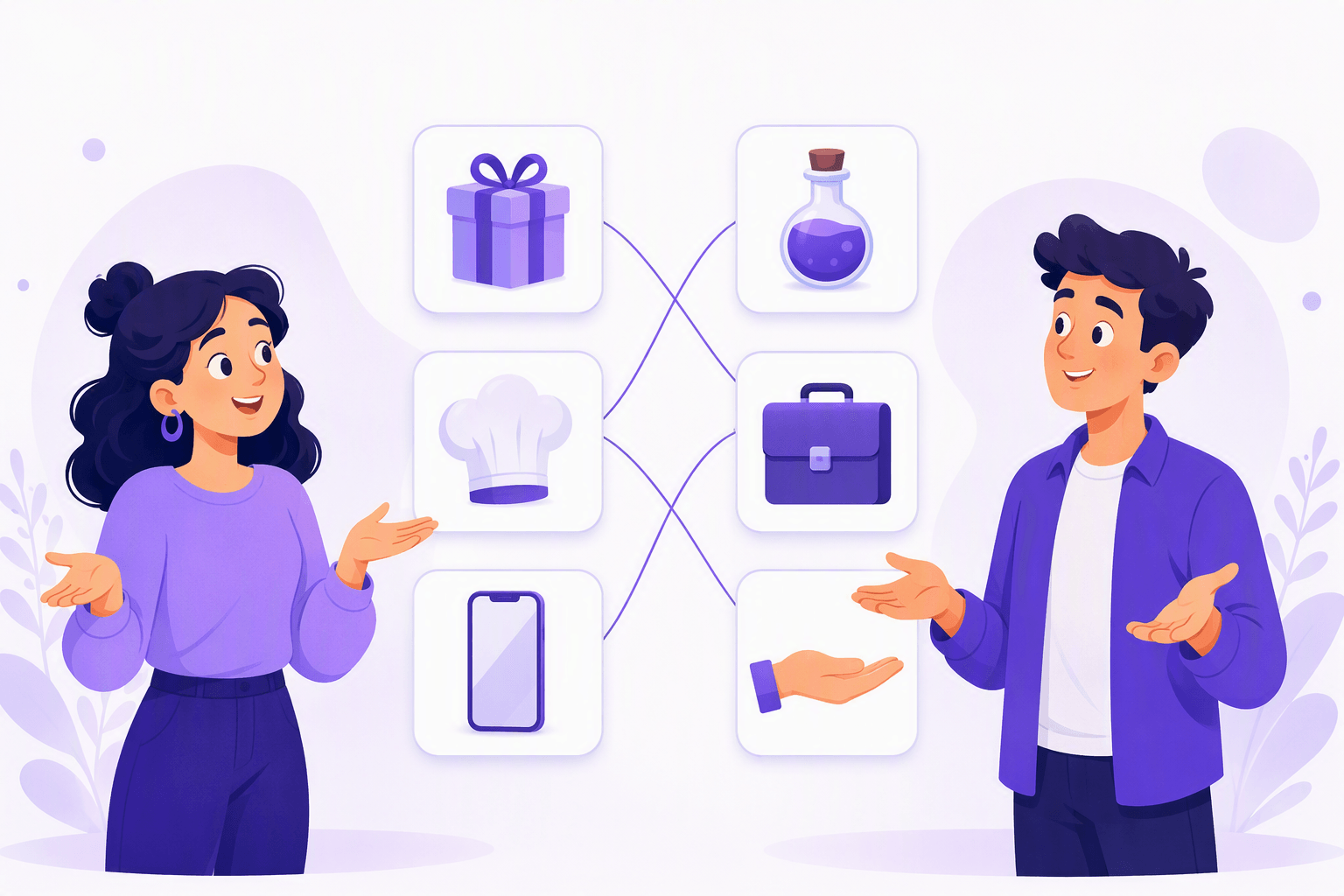
What “false friends” really are (and why they happen)
False friends (also called false cognates) are words that look related across languages but have drifted in meaning, usage, or register. Dictionaries define them as deceptive similarities that lead to wrong translations (Cambridge Dictionary, accessed 2026).
Historically, English and German share deep roots, but English also absorbed huge amounts of French and Latin vocabulary. That mix creates “near twins” that feel familiar to German speakers, yet behave differently in modern English.
In second-language acquisition research, this is often described as negative transfer: you reuse a pattern from your first language because it usually works, until it doesn’t. Vivian Cook’s work on multicompetence is useful here: your languages interact in the mind, so the goal is not to “turn German off,” but to build reliable English defaults for high-risk items.
How to use this guide (so it sticks)
Read each pair as a mini-rule: “When I’m tempted to say X, I should say Y.” Then write one sentence about your life using the correct English word.
💡 A fast practice routine
Pick 10 false friends you personally misuse. Record yourself saying one correct sentence for each. Re-listen the next day and correct any sentence that still sounds like German-in-English.
The 35 most common English-German false friends (with pronunciation)
Below, the “German trap” is the meaning German speakers often import into English. The “safe English” is what you should use instead in most situations.
actually
Pronunciation: AK-choo-uh-lee
German trap: aktuell = current
Real English meaning: “in fact,” “really,” “to be honest”
- Correct: “I’m not hungry, actually.”
- If you mean aktuell: say “currently” (KUR-uhnt-lee) or “right now.”
become
Pronunciation: bih-KUHM
German trap: bekommen = receive, get
Real English meaning: to change into something
- Wrong: “I become a coffee.”
- Correct: “I’ll get a coffee.” / “I’ll have a coffee.”
Duden’s entry for bekommen makes the “receive” meaning explicit, which is why this is such a classic trap (Duden, accessed 2026).
eventually
Pronunciation: ih-VEN-choo-uh-lee
German trap: eventuell = possibly
Real English meaning: in the end, after some time
- Correct: “He eventually apologized.”
- If you mean eventuell: “possibly,” “maybe,” “if needed.”
sensible
Pronunciation: SEN-suh-buhl
German trap: sensibel = sensitive
Real English meaning: practical, reasonable
- Correct: “That’s a sensible plan.”
- If you mean sensibel: “sensitive” (SEN-suh-tiv).
Oxford Learner’s Dictionaries separates these meanings clearly, and learners benefit from treating them as opposites, not cousins (accessed 2026).
sensitive
Pronunciation: SEN-suh-tiv
German trap: sensitiv can overlap, but German speakers often underuse it in English
Real English meaning: easily hurt, emotionally reactive, or requiring careful handling
- Correct: “This is sensitive information.”
- Correct: “He’s sensitive about his accent.”
chef
Pronunciation: SHEF
German trap: Chef = boss
Real English meaning: professional cook
- Wrong: “My chef is on vacation.”
- Correct: “My boss is on vacation.”
boss
Pronunciation: BOSS
German trap: sounds like Boss in German, but English uses it more broadly
Real English meaning: manager, supervisor, or slang “cool” (“That’s boss” is UK-flavored)
- Neutral work English: “manager,” “team lead,” “supervisor.”
gift
Pronunciation: GIFT
German trap: Gift = poison
Real English meaning: present
- Correct: “Thanks for the gift.”
- If you mean poison: “poison” (POY-zuhn), “toxin” (TOK-sin).
Duden’s Gift entry is a good reminder that identical spelling can be maximally misleading (Duden, accessed 2026).
billion
Pronunciation: BIL-yuhn
German trap: Billion in German is 10^12
Real English meaning: 10^9
This one matters in business. In English, 1 billion is 1,000,000,000.
If numbers stress you out, our numbers in English guide helps you say big numbers cleanly in speech.
million
Pronunciation: MIL-yuhn
German trap: usually safe, but German speakers sometimes mix “billion” and “million” in fast speech
Real English meaning: 10^6
A practical speaking tip: pause before the unit word (“million,” “billion”) and hit it clearly.
public
Pronunciation: PUHB-lik
German trap: Publikum = audience
Real English meaning: relating to everyone, not private
- Wrong: “The public was great tonight.”
- Correct: “The audience was great tonight.”
audience
Pronunciation: AW-dee-uhns
German trap: feels like Audienz (rare) or Publikum
Real English meaning: the people watching or listening
- Correct: “The audience loved the show.”
control
Pronunciation: kuhn-TROHL
German trap: kontrollieren = check, inspect
Real English meaning: manage, command, have power over
- Wrong: “I will control the tickets.”
- Correct: “I’ll check the tickets.” / “I’ll inspect the tickets.”
check
Pronunciation: CHEK
German trap: English “check” is broader than German checken slang
Real English meaning: verify, look at, confirm
- Correct: “Let me check the schedule.”
realize
Pronunciation: REE-uh-lyze
German trap: realisieren can mean “carry out”
Real English meaning: become aware, understand suddenly
- Wrong: “We realized the project.”
- Correct: “We carried out the project.” / “We implemented the project.”
implement
Pronunciation: IM-pluh-ment
German trap: often the right fix for realisieren in business German
Real English meaning: put a plan into action
- Correct: “We implemented the new process.”
provision
Pronunciation: pruh-VIH-zhuhn
German trap: Provision = commission (sales)
Real English meaning: a supply, a clause, or the act of providing
- Wrong: “I get a provision for each sale.”
- Correct: “I get a commission for each sale.”
commission
Pronunciation: kuh-MIH-shuhn
German trap: overlaps with Kommission (committee)
Real English meaning: a fee paid for sales, or a group assigned a task
Context decides. In sales: “commission.” In politics: “commission” can be a committee.
recipe
Pronunciation: REH-suh-pee
German trap: Rezept = prescription
Real English meaning: cooking instructions
- Wrong: “The doctor gave me a recipe.”
- Correct: “The doctor gave me a prescription.”
prescription
Pronunciation: prih-SKRIP-shuhn
German trap: not a trap, but the safe word you want
Real English meaning: doctor-authorized medicine order
- Correct: “I need a prescription.”
magazine
Pronunciation: MAG-uh-zeen
German trap: Magazin can also mean storage, depot, ammo magazine
Real English meaning: a periodical publication
- Correct: “I read it in a magazine.”
- If you mean storage: “warehouse,” “storage room.”
- If you mean ammo: “magazine” exists in English too, but context is specialized.
brief
Pronunciation: BREEF
German trap: Brief = letter
Real English meaning: short, or a summary document (a “brief”)
- Wrong: “I sent you a brief.”
- Correct: “I sent you a letter.” / “I sent you an email.”
letter
Pronunciation: LEH-ter
German trap: looks too simple, so learners avoid it
Real English meaning: written message, often formal
- Correct: “I wrote a letter to the landlord.”
polite
Pronunciation: puh-LYTE
German trap: politisch = political
Real English meaning: respectful, well-mannered
- Wrong: “We had a polite discussion about elections.”
- Correct: “We had a political discussion.”
political
Pronunciation: puh-LIH-tih-kuhl
German trap: confusion with “polite”
Real English meaning: related to politics
- Correct: “Political debates can get heated.”
moral
Pronunciation: MOR-uhl
German trap: moralisch is close, but learners sometimes use “moral” when they mean “mood”
Real English meaning: about right and wrong, ethics
- Correct: “It’s a moral question.”
mood
Pronunciation: MOOD
German trap: Mut = courage, not mood
Real English meaning: emotional state
- Correct: “I’m in a good mood.”
brave
Pronunciation: BRAYV
German trap: brav = well-behaved
Real English meaning: courageous
- Wrong: “The kids were very brave today.”
- Correct: “The kids were well-behaved today.”
well-behaved
Pronunciation: WEHL bih-HAYVD
German trap: the real target for brav
Real English meaning: behaved appropriately
- Correct: “They were well-behaved at the restaurant.”
sympathetic
Pronunciation: sim-puh-THET-ik
German trap: sympathisch = likeable, nice
Real English meaning: showing compassion for someone’s problem
- Wrong: “My new colleague is very sympathetic.”
- Better: “My new colleague is really nice.” / “He’s friendly.”
nice
Pronunciation: NYCE
German trap: feels too basic, but it is often the right choice
Real English meaning: pleasant, kind, agreeable
- Correct: “She’s nice.”
fast
Pronunciation: FAST
German trap: fast = almost
Real English meaning: quick
- Wrong: “I’m fast finished.”
- Correct: “I’m almost finished.”
almost
Pronunciation: AWL-mohst
German trap: the real translation of German fast
Real English meaning: nearly
- Correct: “I’m almost done.”
handy
Pronunciation: HAN-dee
German trap: Handy = mobile phone
Real English meaning: convenient, useful, or good with hands
- Wrong: “I forgot my handy.”
- Correct: “I forgot my phone.” / “I forgot my mobile.”
mobile
Pronunciation: MOH-buhl
German trap: German uses Handy, English does not
Real English meaning: a mobile phone (especially UK), or “mobile” as adjective
In US English, “cell phone” is common. In international English, “phone” is safest.
home office
Pronunciation: HOHM AW-fis
German trap: Homeoffice = working from home
Real English meaning: in US English, “Home Office” can mean a government department, and “home office” can mean a room in your house
- If you mean remote work: “I’m working from home today.” / “I work remotely.”
colleague
Pronunciation: KOL-eeg
German trap: Kollege can be broader, including classmates in some contexts
Real English meaning: someone you work with
- Correct: “My colleague is on leave.”
- For classmates: “classmate.”
semester
Pronunciation: suh-MES-ter
German trap: sometimes used correctly, but German academic calendars differ
Real English meaning: half-year term (common in US), sometimes “term” is safer
In UK and many other systems, “term” is more common than “semester.”
professor
Pronunciation: pruh-FES-er
German trap: Professor is a specific title in German academia
Real English meaning: in US English, many university teachers are called “professor”
If you are speaking internationally, “lecturer” or “instructor” can be more precise.
undertaker
Pronunciation: UHN-der-tay-ker
German trap: Unternehmer = entrepreneur
Real English meaning: funeral director
- Wrong: “My father is an undertaker, he started a company.”
- Correct: “My father is an entrepreneur.” / “He’s a business owner.”
entrepreneur
Pronunciation: ahn-truh-pruh-NUR
German trap: spelling looks French, so learners avoid it
Real English meaning: someone who starts and runs businesses
- Correct: “She’s an entrepreneur.”
patent
Pronunciation: PAT-nt (often two syllables: PA-tnt)
German trap: Patent can also mean “obvious” in some contexts, plus legal usage differs
Real English meaning: legal protection for an invention, or “patent” meaning obvious (formal)
If you mean “obvious,” “clearly” or “obviously” is usually better in everyday English.
genial
Pronunciation: JEE-nee-uhl
German trap: genial = brilliant, ingenious
Real English meaning: friendly, cheerful (a bit formal)
- Wrong: “That’s a genial idea.”
- Correct: “That’s a brilliant idea.” / “That’s a great idea.”
brilliant
Pronunciation: BRIL-yuhnt
German trap: the real target for German genial
Real English meaning: very smart, excellent
- Correct: “That solution is brilliant.”
False friends in real life: where they cause the most damage
Work emails and meetings
The biggest problems are “boss vs chef,” “control vs check,” and “provision vs commission.” They can make you sound less precise than you are, especially in sales, finance, and operations.
If you want a quick style upgrade for professional English, build a habit of replacing vague words with concrete ones. “Check” beats “control,” “commission” beats “provision,” and “manager” beats “chef.”
Numbers, money, and international contexts
“Billion” is the high-stakes one. A single mistaken “billion” can change the meaning of a budget by three zeros.
⚠️ When you say big numbers out loud
If you are speaking English in international teams, add the digits once: “That’s one billion, 1-0-0-0 million.” It feels redundant, but it prevents expensive misunderstandings.
Social English and tone
Words like “sympathetic” and “sensible” are tone traps. You can accidentally sound cold (“sensible”) when you meant warm (“sensitive”), or overly emotional (“sympathetic”) when you meant “nice.”
This is where movies and TV help. You hear which adjective shows up naturally in a given scene, which is why clip-based practice is so effective.
How to spot a false friend before you say it
Test 1: Can you define it without translating?
If you cannot explain the English word in simple English, you are probably relying on German meaning. Use a learner dictionary and check example sentences.
Test 2: Does it “fit” common English collocations?
English is collocation-heavy: we “make a decision,” “take a break,” “get a coffee.” If your word choice feels grammatically correct but still odd, it is often a false friend or a collocation mismatch.
Michael Lewis’s Lexical Approach is useful here: fluency is built from chunks, not single words. For false friends, the chunk is the antidote.
Test 3: Is the word unusually formal for the situation?
German tolerates abstract nouns in formal writing more than everyday English does. If your sentence is full of Latinate nouns (“realization,” “provision,” “implementation”), you might be translating German business style too directly.
A movie-and-TV method for fixing false friends
If you learn English through scenes, you can “overwrite” the German default with a native pattern. Watch a short clip, repeat the line, then swap in your own details.
A practical workflow:
- Choose a show with modern dialogue and clear audio.
- Turn on English subtitles first, then rewatch without them.
- When you hear one of your false friends, pause and write the native alternative.
This pairs well with any spaced repetition tool. If you want a flashcard strategy that does not become busywork, see our Anki guide for language learning.
Common German-to-English mistakes that look like false friends (but are grammar)
Some “false friend” errors are really grammar transfer.
- “Since two years” is a tense issue: English prefers present perfect for ongoing time.
- “I am here since Monday” becomes “I have been here since Monday.”
For a deeper look at how real input builds grammar intuition, our guide to comprehensible input explains why seeing patterns repeatedly beats memorizing rules.
A short “danger list” you can memorize today
If you only learn 8, learn these:
- actually = in fact, not current
- become = change into, not receive
- eventually = in the end, not possibly
- chef = cook, not boss
- gift = present, not poison
- billion = 10^9 in English
- sympathetic = compassionate, not likeable
- fast = quick, not almost
When false friends collide with slang and swearing
False friends are mostly a “standard English” problem, but German speakers also get tripped up by tone in casual speech. For example, “boss” can be slang in some varieties, and “brilliant” can be everyday in UK English.
If you are building informal English, compare neutral vocabulary with what people actually say in our English slang guide. For high-risk words you should treat carefully, our English swear words guide explains severity and context.
Final takeaway
English-German false friends are predictable, and that’s good news: you can eliminate most of them by mastering a small set of high-frequency traps and practicing them in real sentences. Focus on meaning plus context, not word-for-word translation, and your English will immediately sound clearer, more confident, and more native.
If you want to train this with real dialogue, start with best movies to learn English and keep a running list of every false friend you catch in the subtitles.
Frequently Asked Questions
What are false friends between English and German?
Is 'actually' the same as German 'aktuell'?
Why do German speakers say 'I am learning since two years'?
Is 'eventually' the same as German 'eventuell'?
How can I learn false friends faster?
Sources & References
- Ethnologue, 27th edition, 2024
- Cambridge Dictionary, 'false friend' definition, accessed 2026
- Duden, 'bekommen' and 'Gift' entries, accessed 2026
- Merriam-Webster, 'actual' and 'eventual' entries, accessed 2026
- Oxford Learner's Dictionaries, 'sensible' and 'sensitive' entries, accessed 2026
Start learning with Wordy
Watch real movie clips and build your vocabulary as you go. Free to download.


