Quick Answer
To talk about your home in Spanish, start with core room words (casa, apartamento, cocina, baño, dormitorio, sala) and then add everyday objects (mesa, silla, cama, nevera, ducha). This guide gives you 120+ house and furniture words with easy pronunciations, plus regional differences like refrigerador vs nevera and closet vs armario.
To learn Spanish house vocabulary fast, focus on three clusters: rooms (cocina, baño, dormitorio), furniture and fixtures (cama, mesa, ducha), and the verbs and nouns you use to manage a home (limpiar, lavar, basura). Once you can name the rooms and the objects you touch every day, you can describe where you live, ask for what you need, and understand most “at home” dialogue in movies and TV.
Spanish is a global language with roughly 559 million total speakers reported in Ethnologue’s 2024 data, and it is used across 21 countries where it is an official language. That matters for home vocabulary because everyday words vary by region, especially for appliances and housing types.
If you want a broader foundation first, pair this list with the 100 most common Spanish words. For real listening practice, home scenes are also perfect for the clip-based method described in how to learn a language with movies.
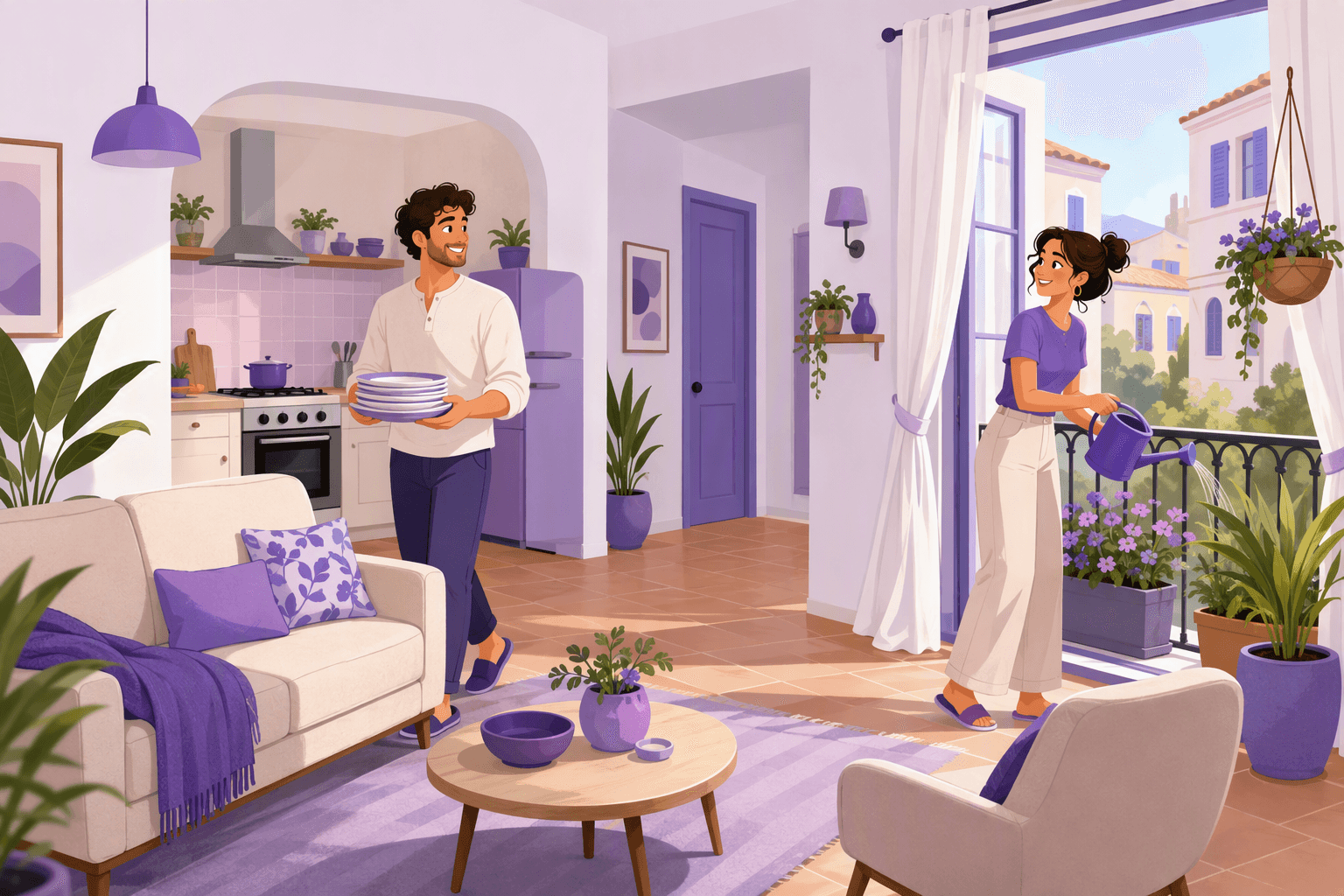
| Category | Spanish | Pronunciation | Note |
|---|---|---|---|
| house | la casa | lah KAH-sah | General word for 'house/home' as a place. |
| home (as a concept) | el hogar | el oh-GAHR | More emotional or abstract than 'casa'. |
| apartment | el apartamento | el ah-par-tah-MEN-toh | Neutral and widely understood. |
| apartment (Spain) | el piso | el PEE-soh | Common in Spain for an apartment. |
| apartment (many Latin American countries) | el departamento | el deh-par-tah-MEN-toh | Very common in Latin America. |
| building | el edificio | el eh-dee-FEE-syoh | |
| floor (level of a building) | el piso | el PEE-soh | Also means 'floor surface' depending on context. |
| room (in a house) | la habitación | lah ah-bee-tah-SYOHN | Also used for 'bedroom' in some contexts. |
| living room | la sala | lah SAH-lah | In some regions: 'la sala de estar'. |
| living room (explicit) | la sala de estar | lah SAH-lah deh ehs-TAHR | |
| dining room | el comedor | el koh-meh-DOR | |
| kitchen | la cocina | lah koh-SEE-nah | |
| bathroom | el baño | el BAH-nyoh | |
| restroom (Spain, common on signs) | el aseo | el ah-SEH-oh | Often used for public restrooms in Spain. |
| bedroom | el dormitorio | el dor-mee-TOR-yoh | |
| bedroom (also common) | la recámara | lah reh-KAH-mah-rah | Common in Mexico. |
| bedroom (also common) | la habitación | lah ah-bee-tah-SYOHN | Can mean 'room' or 'bedroom' depending on context. |
| hallway | el pasillo | el pah-SEE-yoh | |
| stairs | las escaleras | lahs ehs-kah-LEH-rahs | |
| elevator | el ascensor | el ah-sehn-SOR | |
| balcony | el balcón | el bahl-KOHN | |
| terrace | la terraza | lah teh-RAH-sah | |
| patio / courtyard | el patio | el PAH-tyoh | |
| garden | el jardín | el har-DEEN | |
| garage | el garaje | el gah-RAH-heh | |
| attic | el ático | el AH-tee-koh | Also means 'penthouse' in some contexts. |
| basement | el sótano | el SOH-tah-noh | |
| roof | el techo | el TEH-choh | |
| wall | la pared | lah pah-REHD | |
| ceiling | el techo | el TEH-choh | Same word as 'roof' in many contexts. |
| floor (surface) | el suelo | el SWEH-loh |
The 3 house vocabulary zones that unlock real conversations
Home scenes are where beginner Spanish becomes useful fast: someone arrives, greets, takes off shoes, asks for water, looks for the bathroom, and sits down. If you already know greetings like Hola (OH-lah), you can connect them to a location: Hola, pasa a la sala.
For more greeting basics, keep these two guides open while you study: how to say hello in Spanish and how to say goodbye in Spanish. Home vocabulary sticks better when you attach it to actions like entering and leaving.
Zone 1: Rooms and layout words
Rooms are high-frequency nouns, and they are also “navigation words” in dialogue. In real speech, people often omit extra detail and rely on context: Está en la cocina is enough.
A practical note from descriptive grammar work on Spanish usage, like John Butt and Carmen Benjamin’s reference grammar (Routledge), is that learners progress faster when they master everyday noun phrases with articles, not just bare dictionary forms. That is why this guide lists la cocina, not just cocina.
Zone 2: Furniture and fixtures you point at
Furniture words are perfect for “Where is it?” questions. Once you know la mesa and la silla, you can handle dozens of situations: finding a seat, setting the table, or describing a room in a rental.
Zone 3: Kitchen, bathroom, and chores vocabulary
Appliances and chores are where regional Spanish shows up strongly. The RAE’s dictionary and ASALE’s Diccionario de americanismos are useful here because they document common variants across the Spanish-speaking world.
In other words, if you learn nevera and refrigerador, you are not learning “extra,” you are learning coverage.
Rooms and housing types: what you hear in real life
The word casa is the default for “my place,” even if you live in an apartment. You will hear ¿Vamos a tu casa? said by people who live in a piso.
In Spain, piso is extremely common for “apartment,” and you will also hear planta for “floor level” in buildings, especially in formal contexts. In much of Latin America, departamento is often the most natural choice.
💡 A fast pattern to memorize
Learn room words in the phrase en la... or en el...: en la cocina, en el baño, en el dormitorio. This trains your brain to retrieve the article automatically, which is a common sticking point for English speakers.
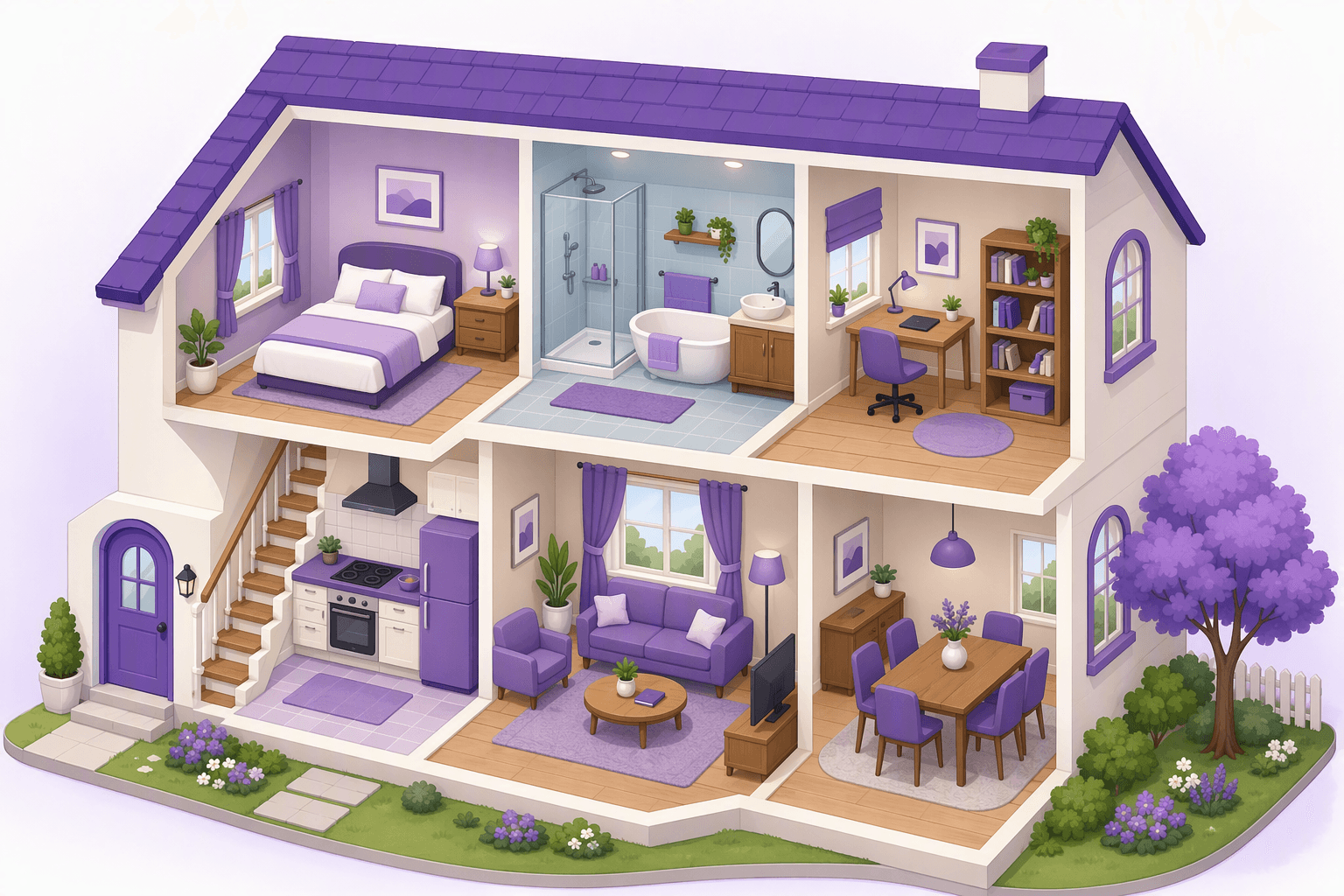
| Category | Spanish | Pronunciation | Note |
|---|---|---|---|
| bed | la cama | lah KAH-mah | |
| pillow | la almohada | lah ahl-moh-AH-dah | |
| blanket | la manta | lah MAHN-tah | Also: 'la cobija' in many regions. |
| blanket (common in Mexico) | la cobija | lah koh-BEE-hah | |
| sheet | la sábana | lah SAH-bah-nah | |
| mattress | el colchón | el kohl-CHOHN | |
| nightstand | la mesita de noche | lah meh-SEE-tah deh NOH-cheh | |
| closet / wardrobe | el armario | el ahr-MAH-ryoh | In some regions: 'el clóset'. |
| closet (common in parts of Latin America) | el clóset | el KLOH-seht | |
| dresser | la cómoda | lah KOH-moh-dah | |
| mirror | el espejo | el ehs-PEH-hoh | |
| sofa | el sofá | el soh-FAH | |
| armchair | el sillón | el see-YOHN | |
| chair | la silla | lah SEE-yah | |
| table | la mesa | lah MEH-sah | |
| coffee table | la mesa de centro | lah MEH-sah deh SEHN-troh | |
| dining table | la mesa del comedor | lah MEH-sah del koh-meh-DOR | |
| desk | el escritorio | el ehs-kree-TOR-yoh | |
| bookshelf | la estantería | lah ehs-tahn-teh-REE-ah | |
| lamp | la lámpara | lah LAHM-pah-rah | |
| rug | la alfombra | lah ahl-FOHM-brah | |
| curtains | las cortinas | lahs kor-TEE-nahs | |
| blinds | las persianas | lahs pehr-SYAH-nahs | |
| door | la puerta | lah PWEHR-tah | |
| window | la ventana | lah behn-TAH-nah | |
| key | la llave | lah YAH-beh | |
| lock | la cerradura | lah seh-rah-DOO-rah |
Furniture and fixtures: the words that make you sound specific
If you say Tengo una mesa y dos sillas, you already sound like you can function in Spanish. Specific nouns reduce the need for complicated grammar.
Two small “movie dialogue” details that matter:
First, people often shorten: la mesita (little table) is more common than a formal “nightstand” term. Second, Spanish uses diminutives constantly at home, not only for cuteness but for practicality: mesita, lamparita, cajoncito.
Armario vs clóset
Armario is broadly understood, and it can mean a wardrobe, cabinet, or closet depending on the room. Clóset is common in parts of Latin America, especially in everyday speech and real estate listings.
If you are watching Spanish-language shows, you will often hear the word that matches the setting. A Madrid apartment scene will lean toward armario and persianas, while a Mexico City apartment scene may lean toward clóset and recámara.
🌍 Why 'piso' can confuse learners
In Spain, piso can mean the apartment itself, the floor level, or the floor surface. Context usually makes it obvious: Vivo en un piso means you live in an apartment, while El piso está sucio means the floor is dirty.
| Category | Spanish | Pronunciation | Note |
|---|---|---|---|
| stove | la estufa | lah ehs-TOO-fah | In Spain, 'la cocina' can mean stove too. |
| stove / cooktop (Spain, common) | la cocina | lah koh-SEE-nah | Context decides: room vs appliance. |
| oven | el horno | el OR-noh | |
| microwave | el microondas | el mee-kroh-OHN-dahs | |
| refrigerator (common) | la nevera | lah neh-BEH-rah | |
| refrigerator (common) | el refrigerador | el reh-free-heh-rah-DOR | |
| fridge (Spain, common) | el frigorífico | el free-goh-REE-fee-koh | |
| freezer | el congelador | el kohn-heh-lah-DOR | |
| sink | el fregadero | el freh-gah-DEH-roh | Kitchen sink. |
| faucet | el grifo | el GREE-foh | |
| dishwasher | el lavavajillas | el lah-bah-bah-HEE-yahs | |
| plate | el plato | el PLAH-toh | |
| bowl | el tazón | el tah-SOHN | Also: 'el bol' in some contexts. |
| glass (drinking) | el vaso | el BAH-soh | |
| cup | la taza | lah TAH-sah | |
| fork | el tenedor | el teh-neh-DOR | |
| knife | el cuchillo | el koo-CHEE-yoh | |
| spoon | la cuchara | lah koo-CHAH-rah | |
| pan | la sartén | lah sahr-TEHN | |
| pot | la olla | lah OH-yah | |
| trash | la basura | lah bah-SOO-rah | |
| trash can | el bote de basura | el BOH-teh deh bah-SOO-rah | Also: 'la papelera' for small bins. |
| recycling | el reciclaje | el reh-see-KLAH-heh | |
| toilet | el inodoro | el ee-noh-DOH-roh | |
| shower | la ducha | lah DOO-chah | |
| bathtub | la bañera | lah bah-NYEH-rah | |
| towel | la toalla | lah toh-AH-yah | |
| soap | el jabón | el hah-BOHN | |
| shampoo | el champú | el chahm-POO | |
| toothbrush | el cepillo de dientes | el seh-PEE-yoh deh dee-EHN-tehs | |
| toothpaste | la pasta de dientes | lah PAHS-tah deh dee-EHN-tehs |
Kitchen and bathroom vocabulary: the regional minefield (made simple)
Kitchen words are where you will notice “country Spanish” immediately. The appliance set is the classic example:
- nevera (neh-BEH-rah): very common in Spain and also used in parts of Latin America
- refrigerador (reh-free-heh-rah-DOR): common in Mexico and many other countries
- frigorífico (free-goh-REE-fee-koh): especially common in Spain
None of these are “wrong.” They are normal regional choices, and ASALE’s work on American Spanish documents many of these everyday differences.
Cocina as a room vs cocina as a stove
In Spain especially, cocina can refer to the room or the stove. If someone says Enciende la cocina, they mean the appliance, not the room.
If you want to be extra clear, la estufa is a safe “stove” word across many regions, but you will still hear variation.
Baño, aseo, inodoro: what to say without sounding odd
El baño is the universal “bathroom.” El aseo is common in Spain for “restroom,” often in public places.
El inodoro is the toilet itself. In real dialogue, people often avoid being too explicit and just say el baño unless they need to specify a broken fixture.
⚠️ Avoid one common beginner mistake
Do not say la baño. It is el baño (el BAH-nyoh). If you want a feminine bathroom-related noun, la ducha (shower) and la bañera (bathtub) are feminine.
| Category | Spanish | Pronunciation | Note |
|---|---|---|---|
| to clean | limpiar | leem-PYAR | |
| to tidy up | ordenar | or-deh-NAR | Also means 'to organize' or 'to put in order'. |
| to wash (clothes) | lavar | lah-BAR | |
| to do laundry | hacer la colada | ah-SEHR lah koh-LAH-dah | Common in Spain. |
| laundry (general) | la ropa | lah ROH-pah | In context: 'lavar la ropa'. |
| washing machine | la lavadora | lah lah-bah-DOH-rah | |
| dryer | la secadora | lah seh-kah-DOH-rah | |
| vacuum (machine) | la aspiradora | lah ahs-pee-rah-DOH-rah | |
| to vacuum | aspirar | ahs-pee-RAR | |
| broom | la escoba | lah ehs-KOH-bah | |
| mop | la fregona | lah freh-GOH-nah | Common in Spain. |
| bucket | el cubo | el KOO-boh | |
| detergent | el detergente | el deh-tehr-HEHN-teh | |
| bleach | la lejía | lah leh-HEE-ah | Common in Spain. |
| cleaning product | el producto de limpieza | el proh-DOOK-toh deh leem-PYEH-sah | |
| electricity | la electricidad | lah eh-lehk-tree-see-DAHD | |
| power outlet | el enchufe | el ehn-CHOO-feh | |
| light switch | el interruptor | el een-teh-roop-TOR | |
| light (lamp or ceiling light) | la luz | lah LOOSS | |
| water | el agua | el AH-gwah | Feminine noun with masculine article in singular. |
| hot water | el agua caliente | el AH-gwah kah-LYEHN-teh | |
| gas | el gas | el GAHS | |
| internet | el internet | el een-tehr-NEHT | Also: 'la internet' in some regions. |
| Wi-Fi | el wifi | el WEE-fee |
Cleaning, laundry, and utilities: the words that show up in every household scene
Home dialogue is full of “maintenance language”: cleaning, laundry, taking out trash, and dealing with utilities. These words also appear in roommate conversations and short text messages.
A useful Spain-specific phrase is hacer la colada for “do the laundry.” In many Latin American contexts, you will more often hear lavar la ropa.
Agua: why it uses el in singular
El agua is one of the first “rule exceptions” learners meet at home. The noun is feminine, but it takes el in singular to avoid the awkward sound of la agua.
You still say agua fría and agua caliente with feminine agreement in adjectives. This is a standard pattern described in Spanish reference grammars, including works like Butt and Benjamin’s.
Mini dialogues you can steal for real life (and for TV scenes)
These are short enough to memorize, and they match what people actually say.
- ¿Dónde está el baño? (DOHN-deh ehs-TAH el BAH-nyoh)
- Está al final del pasillo. (ehs-TAH ahl fee-NAHL del pah-SEE-yoh)
- Deja las llaves en la mesa. (DEH-hah lahs YAH-behs ehn lah MEH-sah)
- ¿Tienes wifi? (TYEH-nehs WEE-fee)
- Voy a limpiar la cocina. (boy ah leem-PYAR lah koh-SEE-nah)
If you want to add warmth to these home scenes, Spanish often uses affectionate phrases more freely than English in family contexts. For options, see how to say I love you in Spanish.
How to learn this vocabulary with movie and TV clips
House vocabulary is visual, which makes it ideal for clip-based learning. When you see la puerta on screen and hear it at the same moment, you get meaning without translating.
Pick one setting and stay there for a week: kitchen scenes, bedroom scenes, or living-room conversations. This matches what applied linguists like Paul Nation emphasize in vocabulary learning: repeated encounters in meaningful context beat isolated memorization.
💡 A 7-day home-vocab plan
Day 1-2: rooms and directions (pasillo, puerta, ventana). Day 3-4: furniture (cama, mesa, sofá). Day 5: kitchen appliances (nevera, horno, microondas). Day 6: bathroom (ducha, toalla). Day 7: chores and utilities (lavadora, basura, enchufe).
Regional notes that actually matter (and the ones you can ignore)
Some variation is worth learning immediately because it affects comprehension. Appliance words and housing terms are high priority.
Other variation is low priority at beginner level. For example, whether someone says alfombra or a regional synonym for a specific type of rug rarely blocks understanding, because the scene usually makes it clear.
If you are curious about how Spanish changes across regions more broadly, the Instituto Cervantes report on Spanish worldwide is a good high-level reference, and it helps explain why “one Spanish” is not the reality for a global language.
Quick self-check: can you describe your home in 5 sentences?
Try these prompts out loud:
- Vivo en un apartamento / piso.
- Tengo una sala y una cocina.
- El baño está cerca del dormitorio.
- En la cocina hay una nevera y un microondas.
- Dejo las llaves en la mesa.
If you can do that smoothly, you are already ready for a lot of everyday dialogue.
For a change of pace after studying household words, you can also explore how Spanish sounds when it gets emotional or intense, but keep it contextual and responsible: Spanish swear words. Even if you never use them, recognizing them improves comprehension in realistic shows.
Keep going with Spanish that you actually hear
House vocabulary is a high-return topic because it shows up in almost every genre: sitcoms, thrillers, romances, and family dramas. Once these nouns feel automatic, your listening improves because your brain stops spending effort on basic objects.
If you want to keep building practical Spanish from real dialogue, browse the Wordy language learning blog or jump into Spanish learning with clips on the Spanish learning page.
Frequently Asked Questions
What is the difference between casa and hogar in Spanish?
Is it el baño or la baño?
How do you say apartment in Spanish?
How do you say refrigerator in Spanish, and which word is most common?
What are the most useful Spanish house words for beginners?
Sources & References
- Real Academia Española (RAE), Diccionario de la lengua española, 23rd edition
- Asociación de Academias de la Lengua Española (ASALE), Diccionario de americanismos
- Instituto Cervantes, El español en el mundo, 2024 annual report
- Ethnologue: Languages of the World, Spanish language entry (2024)
- FundéuRAE, recommendations on everyday Spanish usage (accessed 2026)
Start learning with Wordy
Watch real movie clips and build your vocabulary as you go. Free to download.


