Spanish Articles (El, La, Los, Las, Un, Una): A Clear Guide With Real Examples
Quick Answer
Spanish articles are the small words before nouns: definite articles (el, la, los, las) mean 'the', and indefinite articles (un, una, unos, unas) mean 'a/an/some'. The key is matching gender and number, and knowing when Spanish uses an article where English does not, especially with general statements, days, and titles.
Spanish articles are the words like el, la, un, una that come before nouns, and the rule is simple: you choose definite articles for specific or known things (el/la/los/las, pronounced ehl, lah, lohs, lahs) and indefinite articles for non-specific things (un/una/unos/unas, pronounced oon, OO-nah, OO-nohs, OO-nahs), then match gender and number.
Why Spanish articles feel harder than they are
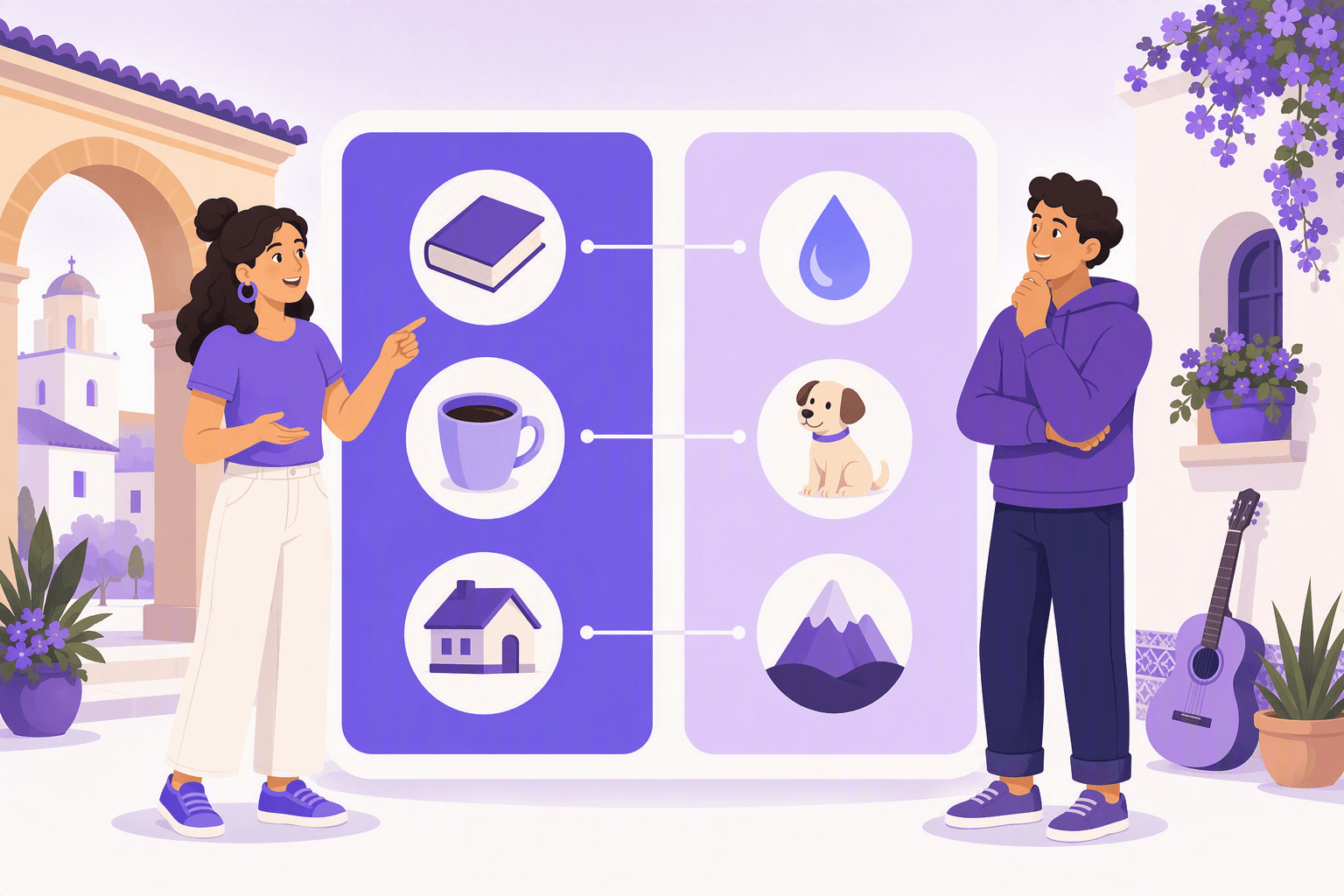
If English is your first language, articles can feel tricky because Spanish uses them in places where English often does not, especially when speaking generally.
You will hear native speakers say Me gusta el café (meh GOOS-tah ehl kah-FEH) for “I like coffee” in general, even though English drops “the.”
Spanish is also spoken across 20+ countries and by hundreds of millions of people, so you will notice variation in style, not in the core rules. Ethnologue lists Spanish as one of the world’s largest languages by total speakers (Ethnologue, 27th ed., 2024), and Instituto Cervantes tracks its global reach in its annual El español: una lengua viva report (accessed 2026).
For listening practice, articles are a big deal because they are frequent, unstressed, and easy to miss in fast speech. If you are training your ear with real dialogue, pairing this guide with movie-based listening helps, see our Spanish listening practice guide.
The two article families: definite vs indefinite
Spanish has two main sets of articles.
Definite articles: el, la, los, las
Use definite articles when the listener can identify the noun, or when you are talking about something as a category.
- el (ehl): masculine singular
- la (lah): feminine singular
- los (lohs): masculine plural
- las (lahs): feminine plural
Examples:
- el libro (ehl LEE-broh): the book
- la película (lah peh-LEE-koo-lah): the movie
- los amigos (lohs ah-MEE-gohs): the friends
- las ideas (lahs ee-DEH-ahs): the ideas
Indefinite articles: un, una, unos, unas
Use indefinite articles when you introduce something new, unknown, or “one of many.”
- un (oon): masculine singular
- una (OO-nah): feminine singular
- unos (OO-nohs): masculine plural, often “some”
- unas (OO-nahs): feminine plural, often “some”
Examples:
- un problema (oon proh-BLEH-mah): a problem
- una escena (OO-nah eh-SEH-nah): a scene
- unos días (OO-nohs DEE-ahs): some days, a few days
- unas preguntas (OO-nahs preh-GOON-tahs): some questions
💡 A fast way to sound more native
When you learn a new noun, learn it as a chunk with its article: "el trabajo", "la gente", "un viaje". This is the same memory logic behind collocations, and it reduces gender mistakes dramatically.
Gender and number: the matching rule (and the real exceptions)
The core rule is agreement: the article must match the noun’s grammatical gender and number.
The common endings (useful, but not enough)
Many masculine nouns end in -o and many feminine nouns end in -a, but you cannot rely on that alone.
- el mapa (ehl MAH-pah) is masculine despite -a
- la mano (lah MAH-noh) is feminine despite -o
The RAE’s grammar and usage resources emphasize that gender is a grammatical property of the noun, not a “male/female” label for objects (RAE, Nueva gramática, accessed 2026).
Feminine nouns with stressed a: el agua, el águila
This is one of the most important “exceptions” because it is common and it sounds strange to English speakers at first.
Some feminine nouns that start with a stressed “a” sound take el in the singular to avoid the clash of la + a sounds:
- el agua (ehl AH-gwah): the water
- el águila (ehl AH-ghee-lah): the eagle
They are still feminine:
- el agua fría (ehl AH-gwah FREE-ah): cold water
- plural is las aguas (lahs AH-gwahs), not los aguas
FundéuRAE regularly highlights this as a pronunciation-driven rule that learners should not interpret as a gender change (FundéuRAE, accessed 2026).
Plural is not optional: los, las, unos, unas
Spanish plural articles are used more consistently than English “the” in everyday speech.
- los libros (lohs LEE-brohs): the books
- unas cosas (OO-nahs KOH-sahs): some things
If you skip plural articles, you can still be understood, but you will sound clipped, especially in storytelling.
When Spanish uses an article but English does not
This is where most “I know the rules but I still get it wrong” mistakes come from.
These are not random. They are patterns tied to how Spanish packages information in discourse, a topic treated seriously in reference grammars like Butt and Benjamin’s A New Reference Grammar of Modern Spanish (Routledge).
Talking about things in general: el café, la música, los perros
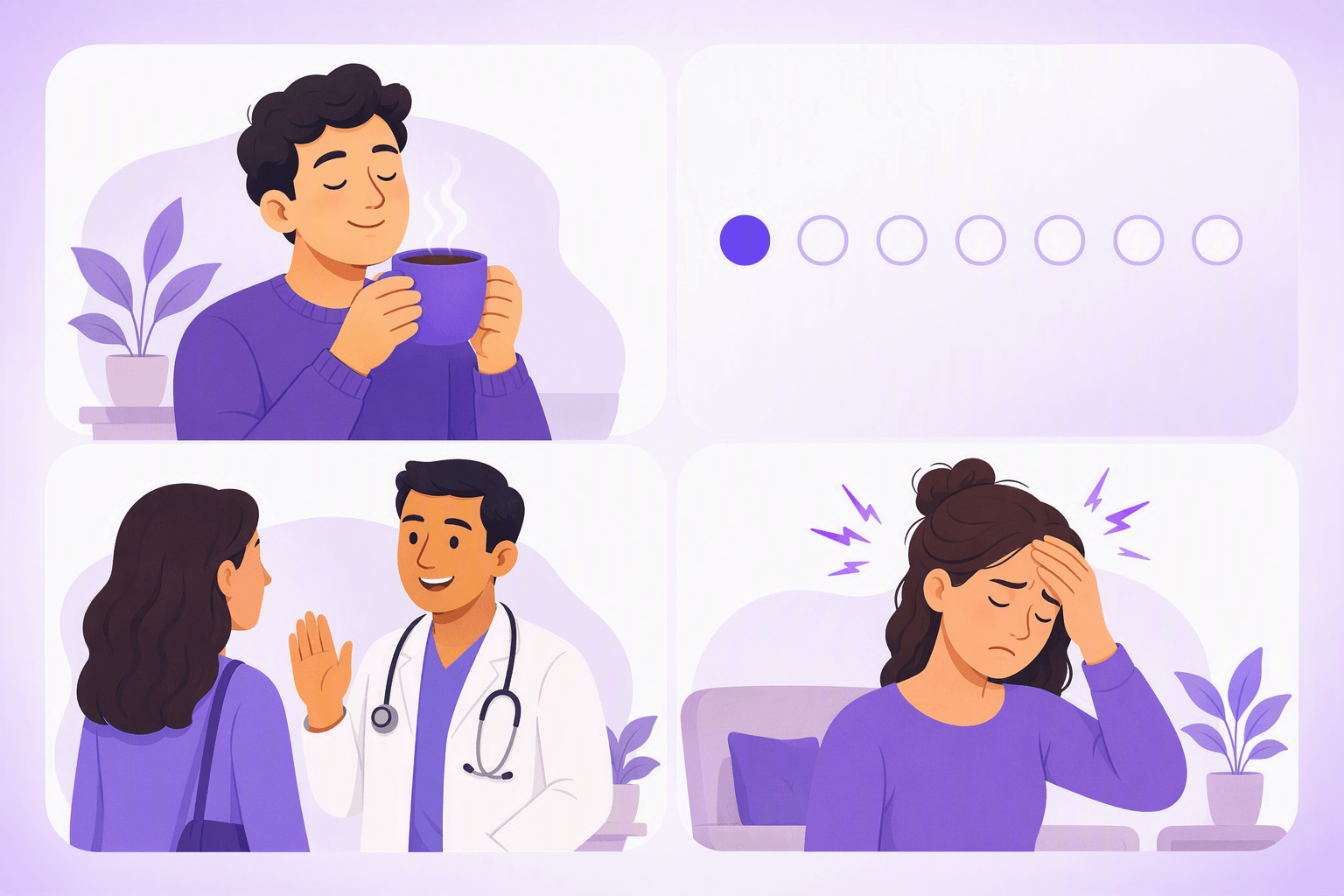
Spanish often uses the definite article to talk about a whole category.
- Me gusta el café. (meh GOOS-tah ehl kah-FEH): I like coffee.
- La música ayuda. (lah MOO-see-kah ah-YOO-dah): Music helps.
- Los perros son leales. (lohs PEH-rrohs sohn leh-AH-lehs): Dogs are loyal.
This is one reason articles matter so much in movie dialogue: characters constantly talk about categories, habits, and opinions.
Days of the week: el lunes
Spanish commonly uses el with days when referring to a specific day or a recurring schedule.
- El lunes tengo clase. (ehl LOO-nehs TEHN-goh KLAH-seh): On Monday I have class.
- Los viernes salimos. (lohs VYEHR-nehs sah-LEE-mohs): On Fridays we go out.
In some contexts, especially in headlines or very clipped speech, you might see the article dropped, but in normal conversation it is very common.
Titles and professions in speech: la doctora, el profesor
In many Spanish-speaking contexts, people use an article before a title when speaking about someone.
- La doctora García (lah dohk-TOH-rah Gahr-SEE-ah)
- El profesor Ramírez (ehl proh-feh-SOHR rah-MEE-rehs)
This is not “more formal” by itself, it is just a standard spoken pattern. You will hear it constantly in workplace scenes and family conversations.
With body parts: me duele la cabeza
Spanish typically uses the definite article with body parts, where English uses a possessive.
- Me duele la cabeza. (meh DWEH-leh lah kah-BEH-sah): My head hurts.
- Se lavó las manos. (seh lah-BOH lahs MAH-nohs): He washed his hands.
This pattern is especially common with reflexive verbs (lavarse, ponerse, romperse). If you want more everyday vocabulary around this, our Spanish body parts guide pairs well with this section.
When Spanish drops the article (and learners add it by mistake)
Spanish also omits articles in predictable places.
After ser in “profession” statements: Soy estudiante
A classic beginner error is saying soy un estudiante when you mean “I’m a student” as a description, not “one student among others.”
- Soy estudiante. (soy ehs-too-DYAN-teh): I’m a student.
- Soy profesor. (soy proh-feh-SOHR): I’m a teacher.
You use un/una if you are emphasizing “one” or adding description:
- Soy un estudiante muy aplicado. (soy oon ehs-too-DYAN-teh mwee ah-plee-KAH-doh): I’m a very diligent student.
With uncountable nouns in some contexts
Spanish can say:
- Necesito agua. (neh-seh-SEE-toh AH-gwah): I need water.
But it can also say Necesito el agua if the water is specific, like “the water (we talked about).” The article is doing real work here.
In some fixed expressions
You will see article-less phrases like:
- tener hambre (teh-NEHR AHM-breh): to be hungry
- tener razón (teh-NEHR rah-SOHN): to be right
If you are building practical conversation chunks, you might like our guide to saying hello in Spanish and guide to saying goodbye in Spanish, because greetings are full of these fixed patterns.
The neuter article lo: the most useful “article” you are not using yet
Lo (loh) is not masculine or feminine. It is neuter, and it is used to talk about abstract ideas.
This is extremely common in real speech because it lets you refer to “the thing about X” without naming a noun.
lo + adjective: lo bueno, lo difícil
- lo bueno (loh BWEH-noh): the good part, what’s good
- lo difícil (loh dee-FEE-seel): the difficult part
Example:
- Lo bueno es que llegamos temprano. (loh BWEH-noh ehs keh yeh-GAH-mohs tehm-PRAH-noh): The good thing is we arrived early.
lo de + noun/time/topic: lo de ayer
- lo de ayer (loh deh ah-YEHR): the thing about yesterday
- lo de tu hermano (loh deh too ehr-MAH-noh): the thing about your brother
You will hear this in quick, natural dialogue when characters avoid details or assume shared context.
🌍 Why 'lo' shows up so much in arguments and gossip scenes
In everyday Spanish, speakers often manage face and indirectness by referring to situations abstractly: "lo de ayer", "lo tuyo", "lo que pasó". Research on politeness strategies in Spanish pragmatics often points out how speakers soften direct accusations by talking about "the situation" rather than naming a person directly, which is one reason "lo" feels everywhere in dramas.
Contractions: al and del (and when you cannot use them)
Spanish has two mandatory contractions:
- a + el = al (ahl)
- de + el = del (dehl)
Examples:
- Voy al cine. (boy ahl SEE-neh): I’m going to the cinema.
- Vengo del trabajo. (BEHN-goh dehl trah-BAH-hoh): I’m coming from work.
But you do not contract if el is part of a name or title:
- Voy a El Salvador. (boy ah ehl sahl-bah-DOHR): I’m going to El Salvador.
- Depende de El País. (deh-PEHN-deh deh ehl pah-EES): It depends on El País (newspaper name).
The RAE’s usage guidance treats these contractions as standard, not optional style (RAE, Diccionario panhispánico de dudas, accessed 2026).
Articles with adjectives: the pattern you hear in real dialogue
Spanish often uses articles to turn adjectives into “people like X” or “the X ones.”
los + adjective: “the ones who are…”
- los ricos (lohs REE-kohs): the rich (people)
- los jóvenes (lohs HOH-beh-nehss): young people
- las mejores (lahs meh-HOH-rehs): the best ones (feminine plural)
Example:
- Los nuevos pagan más. (lohs NWEH-bohs PAH-gahn mahs): The new ones pay more.
This shows up in workplace scenes, school scenes, and any conversation about groups.
Common mistakes that give you away (and how to fix them)
Mistake 1: treating un and una like English “a/an” in every case
In Spanish, un/una can imply “one” more strongly than English “a,” especially in contrast.
If you are simply describing your role, drop it: Soy médico, not Soy un médico unless you mean “I’m a doctor (not a nurse)” or you add description.
Mistake 2: skipping the article in general statements
English learners often say Me gusta café. Native speakers usually say Me gusta el café.
If you want a quick self-check: if you could add “in general” in English, Spanish often uses the definite article.
Mistake 3: forgetting that el agua is still feminine
Learners sometimes say el agua frío. The adjective must stay feminine: el agua fría.
Mistake 4: overusing “the” in Spanish place phrases
Some places take an article, many do not. You will learn these by exposure, not by a single rule.
- la India (lah EEN-dee-ah) is common in Spanish
- España (eh-SPAH-nyah) usually has no article in standard use
When in doubt, check a reliable dictionary or the RAE.
⚠️ A note on 'bad words' and articles
You will hear articles attached to insults and swear words constantly, like "un idiota" or "la p*ta". If you are learning slang from shows, learn the grammar first so you can recognize structure without copying tone. Our Spanish swear words guide focuses on meaning and severity so you do not repeat something you do not intend.
Mini practice: choose the right article by meaning
Try these as “meaning first” drills. Say them out loud.
-
“I want coffee (in general).”
Answer: Quiero el café. (KYEH-roh ehl kah-FEH) in some contexts, but more naturally Quiero café. (KYEH-roh kah-FEH) if you mean “I want some coffee.” -
“The coffee (we ordered) is cold.”
Answer: El café está frío. (ehl kah-FEH ehs-TAH FREE-oh) -
“She is a doctor (one of many), and she’s excellent.”
Answer: Es una doctora excelente. (ehss OO-nah dohk-TOH-rah ehk-seh-LEHN-teh) -
“Monday is my busiest day.”
Answer: El lunes es mi día más ocupado. (ehl LOO-nehs ehs mee DEE-ah mahs oh-koo-PAH-doh)
The point is that articles are not just gender markers. They encode whether you mean “in general,” “this specific one,” or “some amount.”
How to learn articles faster with real TV and movie dialogue
Articles are high-frequency, low-stress words, which makes them hard to hear and easy to ignore.
Stephen Krashen’s work on input-based acquisition is relevant here: frequent, meaningful exposure helps grammar become automatic, especially for function words you cannot “logic” your way into during fast conversation.
A practical method:
- Watch a short clip with subtitles.
- Rewatch and focus only on articles and nouns: el/la/los/las + noun.
- Shadow the line, keeping the article attached to the noun as one rhythm unit.
If you are building conversational range, pair this with phrase sets like how to say I love you in Spanish, because emotional lines tend to repeat the same noun phrases, which is perfect for article practice.
A quick cheat sheet you can actually use
- Use el/la/los/las for known things and categories: Me gusta el cine.
- Use un/una/unos/unas to introduce or mean “some”: una idea, unas horas.
- Remember el agua is feminine: el agua fría, las aguas frías.
- Use al and del automatically, except with names like El Salvador.
- Use lo for abstract “the thing”: lo bueno, lo de ayer.
If you want to keep going, browse the Wordy blog for Spanish grammar and listening guides, then use real clips to make these tiny words feel automatic.
Frequently Asked Questions
What are Spanish articles?
How do I know if a Spanish noun is masculine or feminine?
When do you use 'el' with feminine nouns like 'agua'?
Do you always need articles in Spanish like in English?
What is the neuter article 'lo' in Spanish?
Sources & References
- Real Academia Española (RAE), Diccionario panhispánico de dudas, accessed 2026
- Real Academia Española (RAE), Nueva gramática de la lengua española, accessed 2026
- Instituto Cervantes, El español: una lengua viva (annual report), accessed 2026
- Ethnologue, 27th edition, 2024
- FundéuRAE, Recomendaciones sobre el uso del artículo, accessed 2026
Start learning with Wordy
Watch real movie clips and build your vocabulary as you go. Free to download.


