Spanish Body Parts: 35+ Essential Words With Pronunciation and Medical Phrases
Quick Answer
The most important Spanish body parts to learn first are 'la cabeza' (head), 'el brazo' (arm), 'la pierna' (leg), and 'el corazón' (heart). All body part nouns in Spanish have grammatical gender. Most follow predictable patterns, with '-a' endings typically feminine and '-o' endings masculine.
Why Learn Body Parts in Spanish?
Knowing body parts in Spanish is essential for medical situations, everyday conversation, and understanding hundreds of common idioms. With approximately 559 million Spanish speakers worldwide across 21 countries, according to Ethnologue's 2024 data, body vocabulary ranks among the most practical word sets you can master.
Spanish body part nouns all carry grammatical gender, masculine (el) or feminine (la). Most follow predictable patterns: words ending in -o are typically masculine (el brazo, the arm) and words ending in -a are typically feminine (la pierna, the leg). But several high-frequency exceptions exist, most famously la mano (the hand), which is feminine despite its -o ending. Whether you're looking up "spanish body parts" for travel, study, or conversation, this guide covers everything you need.
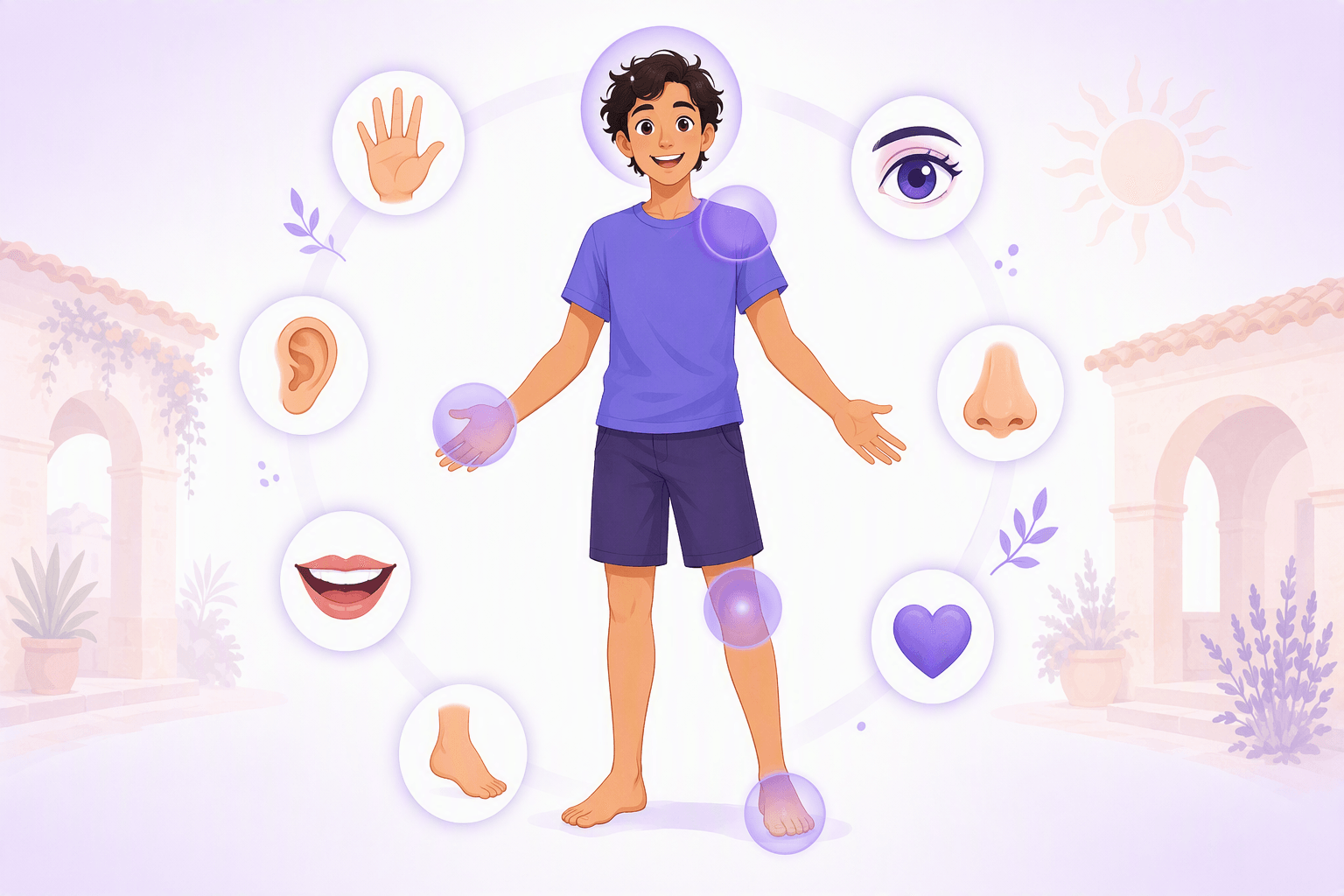
"Body-part vocabulary forms the foundation of medical communication, idiomatic expression, and physical description in every language. In Spanish, the grammatical gender system adds an additional layer that learners must internalize early." (John Butt & Carmen Benjamin, A New Reference Grammar of Modern Spanish, Routledge, 2019; María Moliner, Diccionario de uso del español)
This guide covers 35+ body parts organized by region, complete with pronunciation, gender, medical phrases, and the colorful idioms that native speakers use daily. For interactive practice with real Spanish content, visit our Spanish learning page.
Head and Face
The head and face contain the highest concentration of vocabulary, with over a dozen essential words. In Spanish, the definite article is used with body parts instead of possessive adjectives when context makes ownership clear.
| English | Spanish | Pronunciation | Note |
|---|---|---|---|
| Head | la cabeza (f) | lah kah-BEH-sah | Also means 'mind' or 'leader' |
| Face | la cara (f) | lah KAH-rah | Also 'la faz' in literary use |
| Eye | el ojo (m) | ehl OH-hoh | Plural: los ojos |
| Ear | la oreja (f) | lah oh-REH-hah | Outer ear; inner ear = el oído |
| Nose | la nariz (f) | lah nah-REES | Plural: las narices |
| Mouth | la boca (f) | lah BOH-kah | Used in many idioms |
| Tongue | la lengua (f) | lah LEHN-gwah | Also means 'language' |
| Tooth | el diente (m) | ehl dee-EHN-teh | Molar = la muela |
| Lip | el labio (m) | ehl LAH-bee-oh | Plural: los labios |
| Chin | la barbilla (f) | lah bar-BEE-yah | Also 'el mentón' |
| Forehead | la frente (f) | lah FREHN-teh | Also means 'front' |
| Cheek | la mejilla (f) | lah meh-HEE-yah | Affectionate: 'cachete' |
| Eyebrow | la ceja (f) | lah SEH-hah | Plural: las cejas |
| Hair | el pelo (m) | ehl PEH-loh | Also 'el cabello' (formal) |
💡 Oreja vs. Oído
Spanish distinguishes between la oreja (the outer, visible ear) and el oído (the inner ear / hearing). When someone says "me duele el oído," they mean an earache. When they say "tiene las orejas grandes," they are describing the physical ears.
Key Medical Phrases for Head and Face
When visiting a doctor or pharmacy in a Spanish-speaking country, these phrases are invaluable:
- Me duele la cabeza (meh DWEH-leh lah kah-BEH-sah): "My head hurts" / "I have a headache"
- Me duelen los ojos (meh DWEH-lehn lohs OH-hohs): "My eyes hurt"
- Tengo dolor de muelas (TEHN-goh doh-LOHR deh MWEH-lahs): "I have a toothache"
- Me sangra la nariz (meh SAHN-grah lah nah-REES): "My nose is bleeding"
Notice the verb doler (to hurt) follows the same pattern as gustar: the body part is the subject, and the person experiencing pain is the indirect object. For plural body parts, the verb becomes duelen.
Upper Body and Torso
The torso vocabulary is critical for describing medical symptoms and understanding physical descriptions in Spanish literature and conversation.
| English | Spanish | Pronunciation | Note |
|---|---|---|---|
| Neck | el cuello (m) | ehl KWEH-yoh | Also means 'collar' |
| Shoulder | el hombro (m) | ehl OHM-broh | Plural: los hombros |
| Chest | el pecho (m) | ehl PEH-choh | Also 'el tórax' (medical) |
| Back | la espalda (f) | lah ehs-PAHL-dah | Upper back specifically |
| Stomach | el estómago (m) | ehl ehs-TOH-mah-goh | Belly = la barriga / la panza |
| Waist | la cintura (f) | lah seen-TOO-rah | |
| Hip | la cadera (f) | lah kah-DEH-rah | Plural: las caderas |
| Rib | la costilla (f) | lah kohs-TEE-yah | Plural: las costillas |
🌍 Barriga, Panza, and Regional Belly Words
While el estómago is the anatomical term for stomach, everyday Spanish uses several informal alternatives. La barriga and la panza both mean "belly" and are used casually across most countries. In Mexico, la panza is especially common. In Argentina, you might hear la guata. These are not rude; they are simply the words native speakers actually use.
Medical Phrases for the Upper Body
- Me duele la espalda (meh DWEH-leh lah ehs-PAHL-dah): "My back hurts"
- Tengo dolor de estómago (TEHN-goh doh-LOHR deh ehs-TOH-mah-goh): "I have a stomachache"
- Me duele el pecho (meh DWEH-leh ehl PEH-choh): "My chest hurts" (seek immediate help for this one)
- Tengo náuseas (TEHN-goh NOW-seh-ahs): "I feel nauseous"
Arms and Hands
The arm-and-hand group is particularly important because la mano is one of Spanish's most famous gender exceptions, feminine despite ending in -o.
| English | Spanish | Pronunciation | Note |
|---|---|---|---|
| Arm | el brazo (m) | ehl BRAH-soh | Plural: los brazos |
| Elbow | el codo (m) | ehl KOH-doh | Idiom: hablar por los codos |
| Wrist | la muñeca (f) | lah moo-NYEH-kah | Also means 'doll' |
| Hand | la mano (f) | lah MAH-noh | Feminine despite -o ending! |
| Finger | el dedo (m) | ehl DEH-doh | Thumb = el pulgar |
| Thumb | el pulgar (m) | ehl pool-GAHR | |
| Nail | la uña (f) | lah OO-nyah | Fingernail or toenail |
⚠️ La Mano: The Famous Exception
La mano is feminine even though it ends in -o. This irregularity comes from the Latin manus, which was a fourth-declension feminine noun. The plural is las manos. This is one of the first grammar exceptions every Spanish student learns, and even native-speaking children sometimes say "el mano" before being corrected.
Body Part Idioms: Arms and Hands
Spanish is rich with arm-and-hand idioms. Here are some that native speakers use regularly:
- Hablar por los codos (to talk through the elbows): to talk too much, to be a chatterbox
- Dar la mano (to give the hand): to shake hands; also "to help out"
- Echar una mano (to throw a hand): to lend a hand, to help
- Tener mano dura (to have a hard hand): to be strict or heavy-handed
- Con las manos en la masa (with hands in the dough): caught red-handed
Lower Body and Legs
Lower body vocabulary covers everything from the hip down. These words appear frequently in medical contexts, sports commentary, and everyday directions.
| English | Spanish | Pronunciation | Note |
|---|---|---|---|
| Leg | la pierna (f) | lah pee-EHR-nah | Upper leg specifically |
| Thigh | el muslo (m) | ehl MOOS-loh | |
| Knee | la rodilla (f) | lah roh-DEE-yah | De rodillas = kneeling |
| Shin | la espinilla (f) | lah ehs-pee-NEE-yah | Also means 'pimple'! |
| Calf | la pantorrilla (f) | lah pahn-toh-RREE-yah | |
| Ankle | el tobillo (m) | ehl toh-BEE-yoh | |
| Foot | el pie (m) | ehl pee-EH | Plural: los pies |
| Toe | el dedo del pie (m) | ehl DEH-doh dehl pee-EH | Lit. 'finger of the foot' |
| Heel | el talón (m) | ehl tah-LOHN | From Achilles' heel myth |
Lower Body Idioms
- Meter la pata (to put the paw in): to put your foot in it, to make a blunder
- Buscarle tres pies al gato (to look for three feet on the cat): to overcomplicate things
- No dar pie con bola (to not hit foot with ball): to get everything wrong
- De rodillas (on the knees): kneeling; figuratively, to be begging or humbled
💡 Dedo Does Double Duty
Spanish uses el dedo for both fingers and toes. To specify toes, add del pie: el dedo del pie. For fingers specifically, you can say el dedo de la mano, though context usually makes this unnecessary. The individual finger names are: pulgar (thumb), índice (index), medio/corazón (middle), anular (ring), and meñique (pinky).
Internal Organs
Internal organ vocabulary is essential for medical situations. According to the World Health Organization's multilingual health resources, these are the terms most frequently needed in cross-language medical consultations.
| English | Spanish | Pronunciation | Note |
|---|---|---|---|
| Heart | el corazón (m) | ehl koh-rah-SOHN | Also means 'darling' |
| Brain | el cerebro (m) | ehl seh-REH-broh | |
| Lung | el pulmón (m) | ehl pool-MOHN | Plural: los pulmones |
| Liver | el hígado (m) | ehl EE-gah-doh | |
| Kidney | el riñón (m) | ehl ree-NYOHN | Plural: los riñones |
| Bone | el hueso (m) | ehl WEH-soh | H is silent |
| Blood | la sangre (f) | lah SAHN-greh | |
| Skin | la piel (f) | lah pee-EHL | Also means 'leather' |
| Muscle | el músculo (m) | ehl MOOS-koo-loh |
Essential Medical Phrases With Organs
- Tengo el corazón acelerado (TEHN-goh ehl koh-rah-SOHN ah-seh-leh-RAH-doh): "My heart is racing"
- Me duelen los riñones (meh DWEH-lehn lohs ree-NYOH-nehs): "My kidneys hurt" (often used for lower back pain)
- Tengo la piel irritada (TEHN-goh lah pee-EHL ee-rree-TAH-dah): "My skin is irritated"
- Me rompí el hueso (meh rohm-PEE ehl WEH-soh): "I broke the bone"
🌍 Corazón: The Heart of Spanish Endearments
El corazón does far more than name an organ. It is one of the most common terms of endearment in Spanish: mi corazón (my heart), corazoncito (little heart). Songs, poetry, and everyday conversation use it constantly. The expression de todo corazón means "with all my heart" or "wholeheartedly."
The Doler Construction: Expressing Pain in Spanish
The most important grammatical pattern for body-part vocabulary is the verb doler (to hurt). It works identically to gustar:
| English | Spanish | Literal Translation |
|---|---|---|
| My head hurts | Me duele la cabeza | To me hurts the head |
| My eyes hurt | Me duelen los ojos | To me hurt the eyes |
| Does your stomach hurt? | ¿Te duele el estómago? | To you hurts the stomach? |
| His legs hurt | Le duelen las piernas | To him hurt the legs |
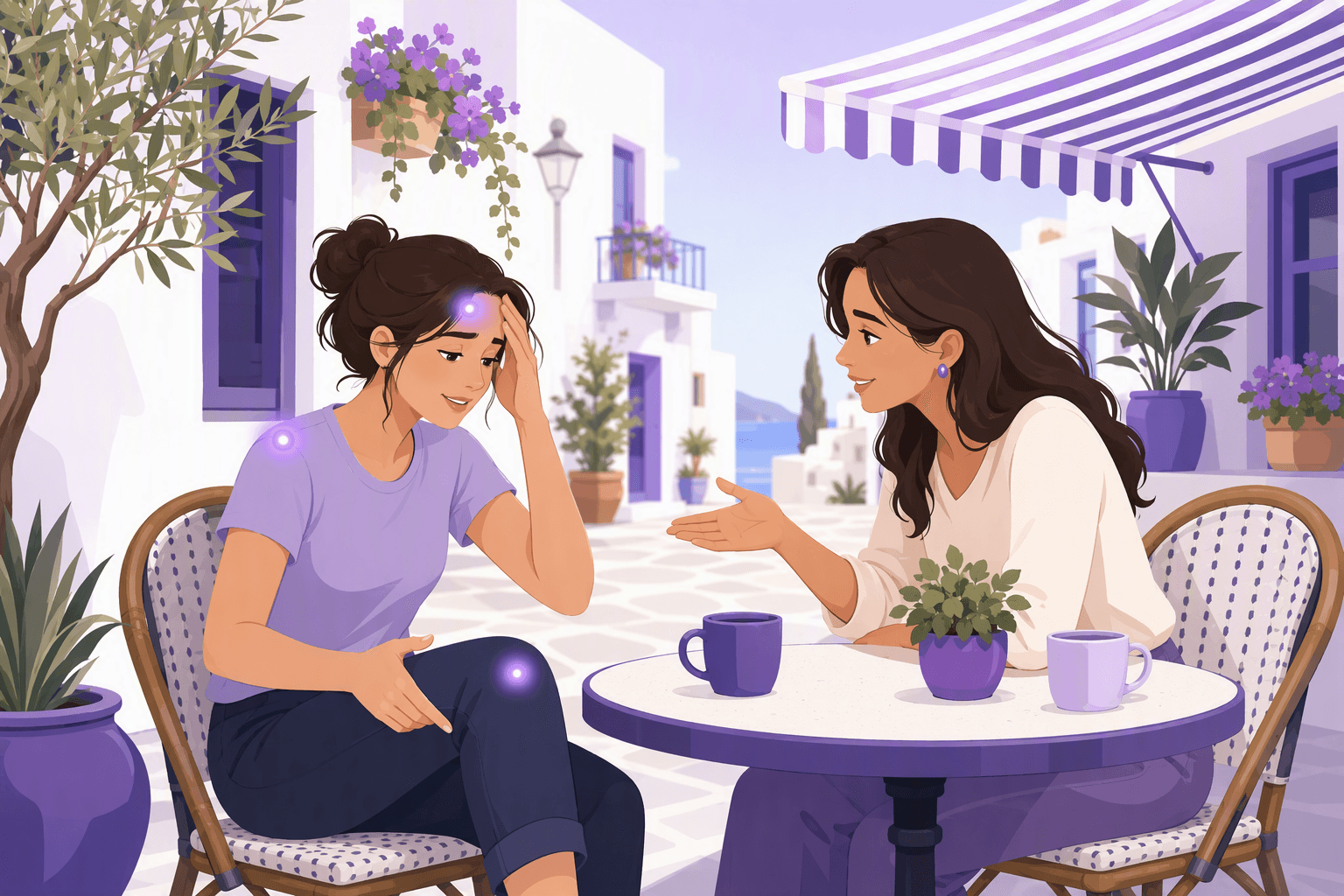
The body part is the grammatical subject (what does the hurting), and the person is the indirect object (who experiences it). This is why Spanish uses el/la instead of mi/tu with body parts: the indirect object pronoun already indicates whose body part it is.
Body Part Idioms Native Speakers Actually Use
Spanish is exceptionally rich in body-part idioms. The Real Academia Española's dictionary catalogs hundreds. Here are the ones you will encounter most in everyday conversation and in Spanish movies and TV shows:
- Costar un ojo de la cara (to cost an eye from the face): to be extremely expensive
- Tomar el pelo (to take the hair): to pull someone's leg, to kid
- No tener pelos en la lengua (to have no hairs on the tongue): to speak bluntly
- Ser todo oídos (to be all ears): to be all ears (this one translates directly)
- Tener sangre fría (to have cold blood): to be cold-blooded or calm under pressure
- Romperse la cabeza (to break one's head): to rack one's brain
- A pies juntillas (with feet together): firmly, without question
"Idiomatic expressions using body parts represent one of the oldest layers of any language's metaphorical system. Spanish preserves dozens of these from medieval Castilian that have no equivalent in other Romance languages." (Real Academia Española, Diccionario de la lengua española, 23rd edition)
Practice Body Parts With Real Spanish Content
Learning vocabulary from lists is a solid foundation, but absorbing these words in authentic contexts is what makes them stick. Spanish-language films and series are packed with body-part vocabulary, from medical dramas to action scenes to romantic comedies.
Wordy lets you watch Spanish content with interactive subtitles. Tap any body-part word to see its gender, pronunciation, and usage in context. Instead of drilling flashcards, you encounter la cabeza, el corazón, and la mano naturally, the way native speakers use them.
Explore our blog for more Spanish guides, or check out the best movies to learn Spanish for viewing recommendations that bring this vocabulary to life.
Frequently Asked Questions
What are the most common body parts in Spanish?
How do you say 'my head hurts' in Spanish?
Is 'mano' masculine or feminine in Spanish?
How do you describe pain to a doctor in Spanish?
What are some Spanish idioms that use body parts?
Why does Spanish use 'el' and 'la' with body parts instead of 'my'?
Sources & References
- Real Academia Española (RAE), Diccionario de la lengua española, 23rd edition
- Instituto Cervantes, El español en el mundo, 2024 annual report
- Ethnologue: Languages of the World, Spanish language entry (2024)
- Butt, J. & Benjamin, C. (2019). A New Reference Grammar of Modern Spanish, 6th edition. Routledge.
- World Health Organization, Multilingual Health Phrase Guide (2023)
Start learning with Wordy
Watch real movie clips and build your vocabulary as you go. Free to download.


