Migaku Review (2026): The Browser Extension for Immersion Learning
Quick Answer
Migaku is the most powerful browser-based tool for sentence mining from Netflix, YouTube, and any video content, especially for Japanese, Korean, and Chinese learners who already know what they want to study. Its biggest drawback is the steep setup curve and the assumption that you can find appropriate content on your own. For learners who want the same 'learn from real video' idea without configuring an entire Anki-style workflow, a curated clip app like Wordy is far easier to start with.
Migaku is the most powerful browser-based tool in 2026 for turning real video content into language flashcards, especially for Japanese, Korean, and Chinese learners. Its strength is depth and customization. Its weakness is that it expects you to already know what to study, where to find it, and how to run an Anki-style review habit. If that sounds like work, a curated clip app such as Wordy gives you the same "learn from real video" idea without the setup.
For context on scale, Migaku has been built and refined since 2017 and supports over 30 target languages through its browser extension and companion mobile app. That longevity is one of the reasons it remains the favorite tool of serious immersion learners, especially in the anime and K-drama communities.
If you want a broader market view first, our best language learning apps guide compares the main contenders side by side.
What Migaku is and how it works
Migaku started life as MIA, the Mass Immersion Approach, a community-driven method built around watching huge amounts of native content and mining sentences from it. The product has evolved, but the core idea has not changed: you learn by paying attention to language that matters to you, and you reinforce it with spaced repetition.
In practice, Migaku is two things working together:
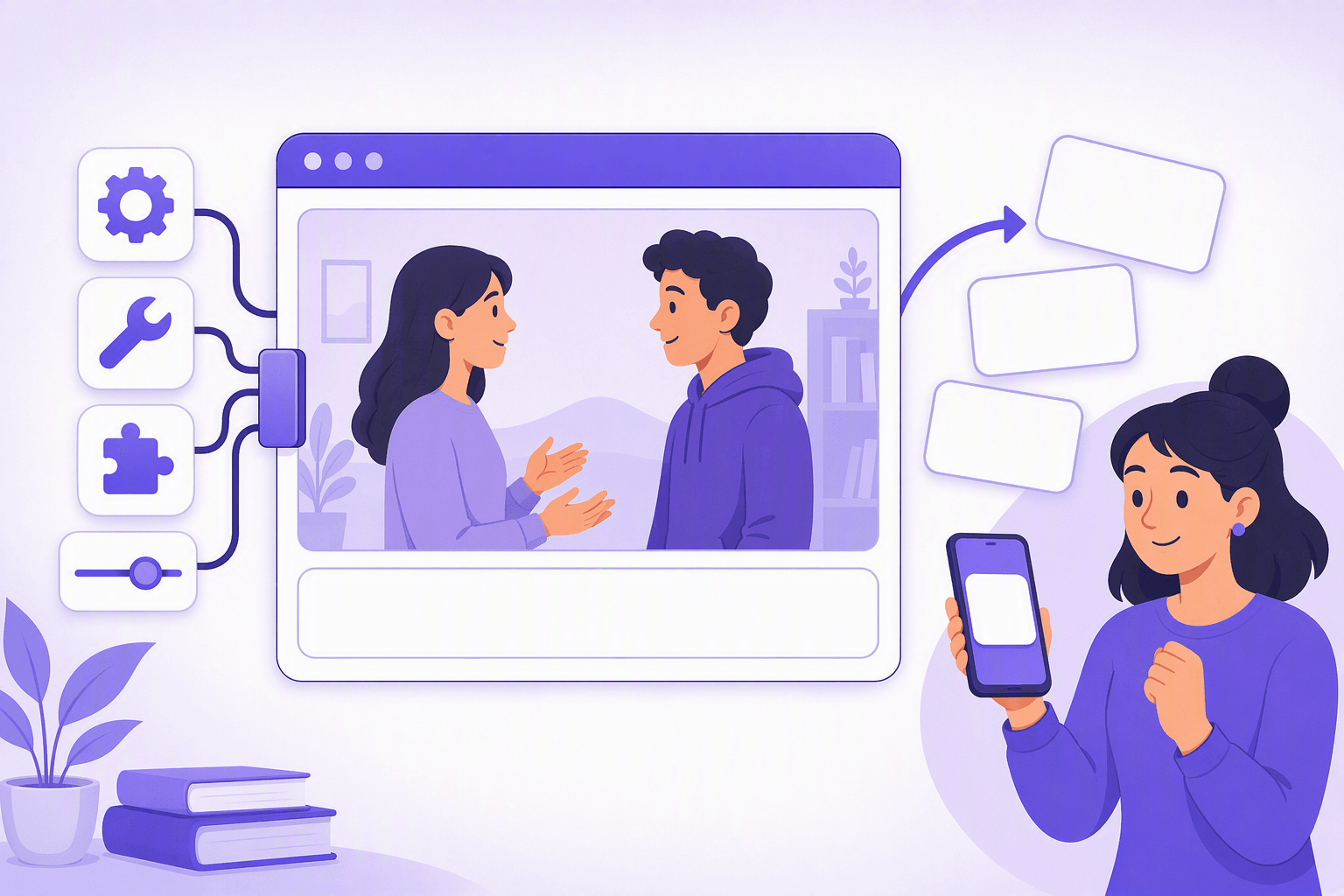
- A browser extension that overlays Netflix, YouTube, and most browser-based video players with interactive subtitles. You can click any word in a subtitle line to see a definition, hear the audio, and save the sentence as a flashcard with one click.
- A companion mobile app that handles review, so you are not stuck at a desktop to study.
Behind the scenes, an Anki-style spaced repetition system decides when you see each card again. Cards include the sentence, audio, optional screenshot, dictionary entry, and any custom fields you configure.
Why it appeals to advanced learners
Migaku is opinionated software for people who already have an opinion about how they learn. You can swap dictionaries, change card templates, configure pitch accent display for Japanese, generate cards with AI assistance, and tune the review algorithm. Almost nothing is locked down.
That depth is also the reason new users often bounce. The first time you open Migaku, you are not handed a lesson, you are handed a toolkit.
If you want to try a more guided alternative for that first hour, the Wordy iOS app and Android app are zero-setup. You install, pick a language, and the first clip plays.
The sentence mining method (explained for newcomers)
Sentence mining is the term Migaku is built around. The idea is simple, even if the implementation in vanilla Anki is famously fiddly.
When you watch something in your target language, you constantly run into sentences that are almost understandable. There is one new word, or one structure you do not quite know, and that is exactly where learning happens. Stephen Krashen called this the "i+1" zone of comprehensible input.
"We acquire language in only one way: when we understand messages, when we receive comprehensible input."
Stephen Krashen, The Input Hypothesis (1985)
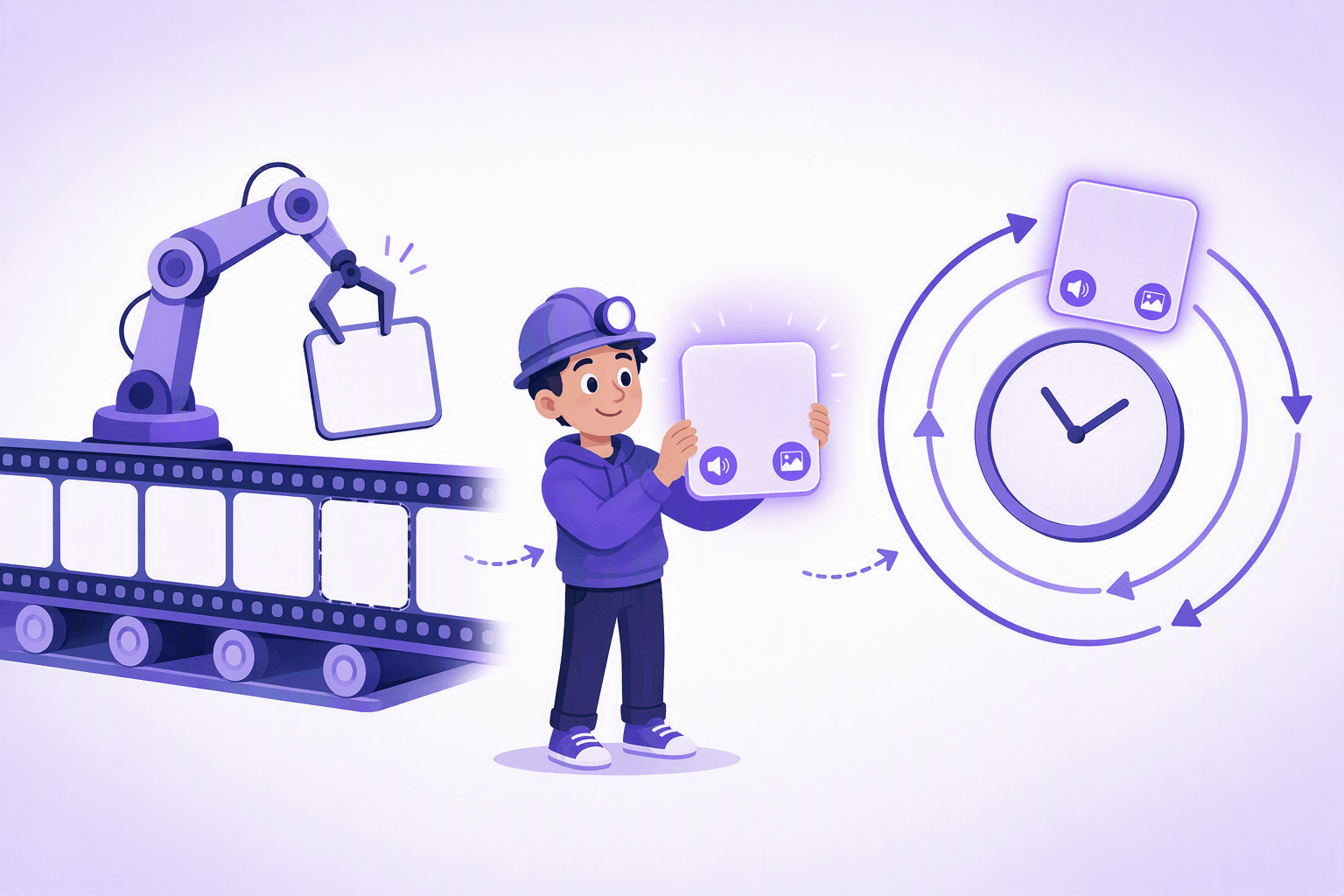
A mined sentence is a flashcard built from one of those i+1 moments in real media. The front is the sentence with one unknown word. The back is the meaning, the audio, and often the screenshot. Because the sentence comes from content you actually wanted to watch, the card is sticky in your memory.
Migaku exists to make that process fast. Without a tool like it, mining a single Anki card from a Netflix scene might take ninety seconds of pausing, copying, looking up, screenshotting, and formatting. With Migaku, it takes a click.
Why this is so different from Duolingo or Babbel
Duolingo and Babbel give you content that the platform built. Sentence mining gives you content that the world built. Paul Nation, one of the most cited researchers in second-language vocabulary acquisition, argues that learners need to meet a word many times in context to truly learn it (Nation, Learning Vocabulary in Another Language). Real video gives you those meetings naturally, with audio, body language, and situational context attached.
If you are still deciding whether structured apps or immersion tools fit you better, compare with our Duolingo review and Babbel review.
Where Migaku shines
Migaku has clear strongholds. If you fall inside them, almost nothing on the market is better.
Japanese, Korean, and Chinese learners
These three languages are where Migaku is genuinely outstanding. The dictionary integration handles the writing systems well, Japanese pitch accent is shown directly on cards, and the workflow plays nicely with anime, K-dramas, and Chinese drama streaming sources.
If you are learning Japanese, pair Migaku with our list of the best anime movies to learn Japanese. For Korean learners, the same logic applies to our best K-dramas to learn Korean picks.
You can also explore Wordy's structured paths at /learn/japanese and /learn/korean for a softer ramp before you start mining your own cards.
Working with any video source
Most language apps lock you into their library. Migaku reverses that. The extension can work on Netflix, YouTube, Disney+, and other major browser-based players, plus uploaded video files. Whatever you legally have access to becomes study material.
Customization for power users
Migaku rewards tinkering. If you care about exactly how a card looks, which dictionaries appear in which order, which fields are searchable, and how often a card surfaces, you can shape it all.
💡 Be honest about your appetite for setup
If reading the previous paragraph made you tired, Migaku may not be your tool. The people who thrive with Migaku enjoy customizing their workflow as part of the learning hobby. If you just want to study, pick something simpler and protect your energy for actual language exposure.
Strong AI-assisted features
Recent versions of Migaku lean harder into AI-generated cards, automatic definitions, and example sentence suggestions. For learners who already understand sentence mining, this removes most of the remaining manual work.
Where Migaku falls short
Migaku is excellent at what it does, but it is not for everyone, and pretending otherwise would be dishonest.

The setup curve is steep
You install the extension, sign in, pick a language, install the right dictionaries, set up your card templates, link the mobile app, and learn how the review system behaves. This can absolutely be done in an afternoon, but an afternoon is more than most learners want to spend before their first lesson.
You have to find your own content
Migaku does not include a library. It assumes you already know what to watch, that you have an active Netflix account or another legal source, and that you can pick shows at your level.
That last part is the silent killer. Many learners install Migaku, point it at a show that is too hard, mine ten cards in twenty minutes, and quietly stop opening the app. The tool is not the problem, the content choice is, but Migaku does not protect you from that mistake.
This is exactly where a curated alternative helps. Wordy already chose 15,000+ clips and tagged them by difficulty, so the "what should I watch" question is solved before you press play.
It assumes Anki literacy
Even though Migaku polishes Anki considerably, you still need to be okay with the basic SRS rhythm: cards come back at intervals, sometimes you forget, you press a button to grade yourself, you review every day. If that loop does not motivate you, no amount of customization will save the experience.
Beginners struggle
Sentence mining works on i+1 sentences. Pure beginners are usually at i+5 or i+10 with native content, which means the input is not comprehensible enough to drive acquisition. Migaku gives them the same powerful tool, but pointed at material they cannot follow.
🌍 The immersion community context
Migaku sits inside a wider culture sometimes called AJATT (All Japanese All The Time) and its many descendants. The community ethos values massive native input, daily SRS review, and aggressive self-reliance. It has produced some genuinely impressive learners, especially in Japanese and Korean. It has also produced burnout, perfectionism, and shame spirals for people who could not keep up. If you join this world, treat the loudest forum voices as one data point, not a prescription.
Migaku pricing in 2026
Migaku has consistently been priced as a subscription product. As of 2026, the typical range is roughly five to fifteen US dollars per month depending on the plan, with annual options that bring the per-month cost down to roughly sixty to one-hundred-twenty US dollars per year. Lifetime plans have appeared and disappeared over the years, so check migaku.com for current pricing.
That is broadly competitive with Duolingo Super and cheaper than Babbel Live, while delivering a fundamentally different product.
Is the price fair?
For learners who use the workflow daily, yes. You are paying for a piece of software that effectively turns the entire video internet into your textbook. If you watch one episode a day and mine even five strong sentence cards, the marginal cost per card is tiny.
For learners who install it, configure it for two weekends, then drift away, no. That is a common failure mode for tool-heavy products, and it is worth being honest with yourself before you commit.
If you would rather start with a free tier and a seven-day trial on the curated side, you can try Wordy at wordy.info before committing to any paid immersion stack.
Who should use Migaku?
Migaku is a strong fit for a specific learner profile. The clearer you are about whether you match it, the better your outcome will be.
Migaku is a great fit if you are
- An intermediate or advanced learner of Japanese, Korean, or Chinese
- Already watching native content regularly and pausing to look words up
- Comfortable with Anki or already using it
- Willing to spend a couple of hours configuring your environment once
- Studying for the long haul (a year or more, not a vacation)
Migaku is a poor fit if you are
- A complete beginner who cannot yet follow basic native content
- Looking for guided lessons or a syllabus
- Resistant to spaced repetition reviews
- Studying on mobile only with no desktop browser access
- Hoping for a curated content library
The honest middle ground is that many learners are not currently a Migaku fit but will be one day. The best move for those learners is to build a base with simpler tools first, then graduate to Migaku once their input is rich enough to mine.
⚠️ Do not skip the input phase
Sentence mining without enough comprehensible input is just translation drilling. Krashen and Nation both, despite differing on details, agree that quantity of meaningful exposure is the engine. Make sure you have that engine running before you start tuning the carburetor.
Best Migaku alternatives in 2026
Migaku is not the only way to learn from real video. Depending on what you actually need, an alternative may serve you better.
Wordy
Wordy is the easiest alternative because it solves the two problems Migaku does not. Wordy comes with a curated library of more than 15,000 movie and TV clips, organized by language and difficulty, with translations baked in. You tap any word in a clip to see what it means. The word is saved tied to that exact scene, and the spaced repetition review replays the same scene later, which is exactly the kind of contextual recall that Nation's research recommends. There is also speech recognition for output practice.
Wordy was featured in TechCrunch in September 2024 and serves more than 500,000 users with a 4.7 to 4.8 star average across 13,000+ reviews. It runs on iOS, Android, and as a Chrome extension, plus the web. There is a free tier and a seven-day trial before any paid plan. Try it at wordy.info or grab the iOS app or Android app directly.
The trade-off is fair: Wordy gives up some of Migaku's deep customization in exchange for a near-zero setup curve and a library that is already chosen for you.
Lingopie
Lingopie sits closer to "Netflix for language learners" than to Migaku. It has its own curated library with interactive subtitles and basic flashcard saving. It is friendlier than Migaku for casual watching but weaker for serious sentence mining.
Anki + manual mining
The original approach. You can build Migaku's entire workflow yourself using base Anki plus a few free add-ons. The cost is your time, and your time is rarely cheap. Most people who try this for more than three months either switch to Migaku or give up on mining.
Lingq
Lingq is a reading-first tool that has expanded into listening and some video. It uses a known-word counting model that some learners love and some find arbitrary. It is closer to a Migaku alternative for readers than for video watchers.
Final verdict
Migaku is the right answer to a very specific question: "How do I turn any video on the internet into highly customized, audio-rich, screenshot-rich SRS cards in my target language?" If that question maps to your goals, especially in Japanese, Korean, or Chinese, you should genuinely consider Migaku and budget a weekend to set it up properly.
If your question is different, if you are asking "How do I start learning from real video without configuring anything?" or "How do I do this on my phone during my commute?", then a curated clip app like Wordy is a better answer in 2026. You keep the core insight that drives Migaku, which is that comprehensible input from real media is the engine of acquisition, but you remove the setup tax that stops most learners before they begin.
The honest summary is this: Migaku is the best tool in its niche, and its niche is narrower than the marketing implies. Pick it deliberately, or pick around it deliberately, and either way you will be ahead of the learner who simply installs five apps and hopes.
Browse the Wordy blog for more practical guides, or start with a clip in your target language today, on whatever platform makes you most likely to come back tomorrow.
Frequently Asked Questions
Is Migaku worth it in 2026?
Is Migaku better than Anki?
Can beginners use Migaku?
How does Migaku compare to Lingopie?
What's the easiest Migaku alternative?
Sources & References
- Migaku, official website (migaku.com), accessed 2026
- Nation, P., Learning Vocabulary in Another Language, Cambridge University Press, 2nd edition
- Krashen, S., The Input Hypothesis, Longman, 1985
- Council of Europe, Common European Framework of Reference for Languages (CEFR)
- TechCrunch, 'Wordy's new app helps you learn vocab while watching movies & TV shows,' September 2024
Start learning with Wordy
Watch real movie clips and build your vocabulary as you go. Free to download.


