Quick Answer
Advanced Italian slang includes everyday reactions such as boh, che sbatti, ci sta, and un botto. These expressions can make listening easier and speech more natural, but their tone, region, and relationship context matter as much as their dictionary meaning.
Advanced Italian slang is the informal language Italians use to react, agree, complain, joke, and show closeness. Learn expressions such as boh /bɔ/, ci sta /tʃi sta/, che sbatti /ke ˈzbatti/, and un botto /um ˈbɔtto/ first: they appear constantly in films, group chats, university conversations, and everyday speech, without forcing you into rude or highly regional language.
Italian has roughly 68 million speakers worldwide according to Ethnologue, and it is an official language in Italy, San Marino, Vatican City, and Switzerland. That reach does not mean slang is uniform: a phrase that sounds ordinary in Rome may sound theatrical, old-fashioned, or simply unfamiliar in another city.
If you already know basic Italian greetings, slang helps you understand what happens after ciao /ˈtʃaːo/. It supplies the short reactions and social signals that textbooks often leave out.
| English | Italian | Pronunciation | Note |
|---|---|---|---|
| I don't know / no idea | Boh | boh | A very common reaction to uncertainty. |
| Fair enough / that works | Ci sta | chee stah | Shows agreement or acceptance. |
| Maybe / if only | Magari | mah-GAH-ree | Meaning changes with context and intonation. |
| What a hassle | Che sbatti | keh ZBAHT-tee | Informal complaint about effort or inconvenience. |
| A lot / loads | Un botto | oon BOHT-toh | Very common intensifier in casual speech. |
| Awesome / great | Una figata | OO-nah fee-GAH-tah | Enthusiastic, informal praise. |
| Cool / attractive | Figo | FEE-goh | Can describe a person, idea, or object. |
| To be great / to rock | Spaccare | spahk-KAH-reh | Literally 'to break'; slang sense is positive. |
| To annoy / bother | Rosicare | roh-zee-KAH-reh | Often implies envy or resentment. |
| A mess / chaos | Un casino | oon kah-ZEE-noh | Informal and sometimes mildly vulgar. |
| Relax / take it easy | Scialla | SHAHL-lah | Youth slang associated especially with Rome. |
| Guys / everyone | Raga | RAH-gah | Shortened form of ragazzi, used for a group. |
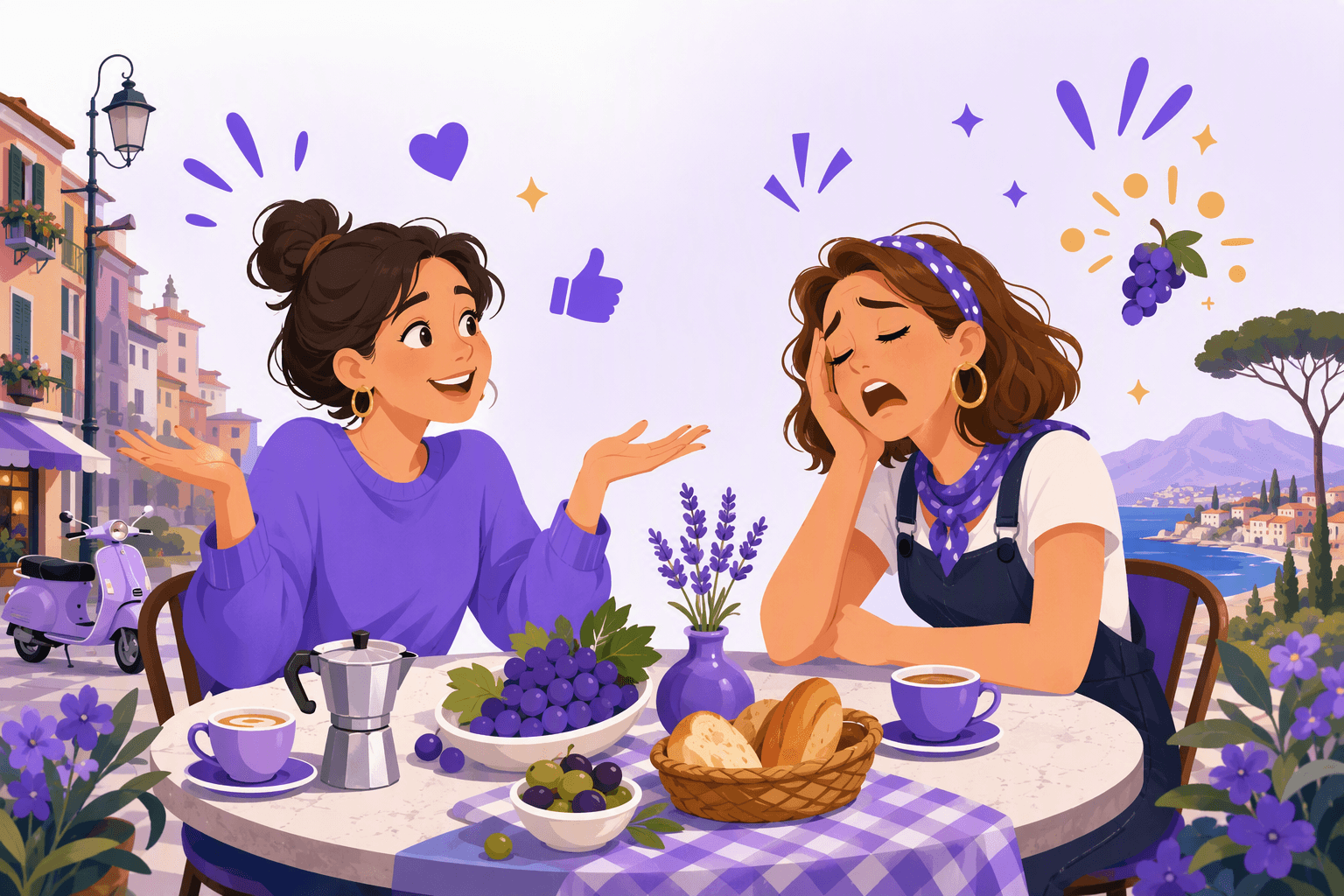
Why advanced Italian slang is hard
Slang is not merely extra vocabulary. It carries clues about age, city, intimacy, emotion, and the situation. A learner can know the literal words in che sbatti /ke ˈzbatti/ and still miss that it is a complaint about the effort something requires.
Gaetano Berruto's work on contemporary Italian sociolinguistics shows why this variation matters: Italian shifts across formal, regional, social, and conversational settings. The useful goal is not to imitate every phrase you hear. It is to recognize tone, then choose expressions that match your relationship with the listener.
Tullio De Mauro's work on the history of unified Italian also helps explain a modern reality: national media spread common informal speech, but local varieties remain powerful. Streaming shows, football interviews, rap, reality TV, and TikTok can spread a phrase quickly, yet local speakers decide whether it sounds current and natural.
💡 A safe learner rule
Use slang first as listening vocabulary. Once you have heard an expression used naturally by people around your age in several contexts, try it with friends or classmates. In a job interview, shop, classroom presentation, or first meeting, choose standard Italian instead.
Everyday reactions Italians actually use
Boh
Boh /bɔ/ is one of the highest-value Italian reaction words. It can mean I do not know, I have no idea, who knows, or I do not really care, depending on stress and facial expression.
- Boh, non ne so niente. /bɔ non ne so ˈnjɛnte/, “I have no idea about it.”
- Boh, vediamo. /bɔ veˈdjaːmo/, “I do not know, we will see.”
A flat boh /bɔ/ is usually neutral. A longer, sharper version can imply that the question feels obvious or tiresome. Avoid copying that impatient tone until you can hear the difference.
Ci sta
Ci sta /tʃi sta/ literally suggests that something fits. In informal speech, it is a compact way to say fair enough, that makes sense, why not, or I agree.
- Pizza stasera? Ci sta! /ˈpittsa staˈseːra tʃi sta/, “Pizza tonight? Sounds good!”
- Dopo tutto quello che hai fatto, ci sta che tu sia stanco. /ˈdɔːpo ˈtutto ˈkwello ke ai ˈfatto tʃi sta ke tu ˈsiːa ˈstanko/, “After everything you did, it makes sense that you are tired.”
It is friendly and widely understood, but still informal. For a more neutral agreement, use va bene /va ˈbɛːne/.
Magari
Magari /maˈɡaːri/ is deceptively flexible. It can mean maybe, perhaps, if only, or absolutely, depending on where it appears and how it is said.
- Magari vengo domani. /maˈɡaːri ˈveŋɡo doˈmaːni/, “Maybe I will come tomorrow.”
- Andiamo al mare questo weekend? Magari! /anˈdjaːmo al ˈmaːre ˈkwesto wiˈkɛnd maˈɡaːri/, “Are we going to the beach this weekend? I wish!”
The second use carries enthusiasm. If someone proposes something appealing and you answer magari /maˈɡaːri/, you are not being uncertain. You are saying that you would love that.
Complaining without sounding like a textbook
Che sbatti
Che sbatti /ke ˈzbatti/ means what a hassle, what a drag, or that is so much effort. The noun comes from sbattere /ˈzbatteːre/, literally to bang or knock around, but the slang expression is about emotional or practical effort.
- Fare tutta quella fila, che sbatti. /ˈfaːre ˈtutta ˈkwella ˈfiːla ke ˈzbatti/, “Waiting in that whole line, what a hassle.”
- Non ho voglia di studiare, che sbatti. /non o ˈvɔʎʎa di stuˈdjaːre ke ˈzbatti/, “I do not feel like studying, what a drag.”
This is common among friends and peers. It is not profanity, but it is too casual for a formal email or a conversation with a professor you do not know well.
Che palle
Che palle /ke ˈpalle/ is stronger than che sbatti /ke ˈzbatti/. It means how annoying, what a pain, or this is boring, but it has a mildly vulgar literal origin.
- Tre ore di riunione, che palle. /tre ˈoːre di rjuˈnjoːne ke ˈpalle/, “Three hours of meetings, what a pain.”
You will hear it often in TV dialogue. Treat it as recognition vocabulary first. For a safer complaint, say che noia /ke ˈnɔːja/, “how boring,” or che seccatura /ke sekkaˈtuːra/, “what an inconvenience.”
For a clearer boundary between casual complaints and actual insults, read our Italian swear words guide.
Un casino
Un casino /uŋ kaˈziːno/ can mean a mess, chaos, or a huge amount. It is extremely common, but it can sound coarse because of its original meaning.
- C'è un casino di gente. /tʃɛ uŋ kaˈziːno di ˈdʒɛnte/, “There are loads of people.”
- La mia stanza è un casino. /la ˈmiːa ˈstantsa ɛ uŋ kaˈziːno/, “My room is a mess.”
In professional contexts, replace it with confusione /konfuˈzjoːne/ for chaos or molte persone /ˈmolte perˈsoːne/ for many people.
Praise, excitement, and approval
Figo and una figata
Figo /ˈfiːɡo/ means cool, great, or attractive. Una figata /ˈfiɡaːta/ is an enthusiastic noun meaning something awesome. Both are informal, and both have origins that can be considered crude, particularly in some contexts.
- Quel film è troppo figo. /kwel film ɛ ˈtrɔppo ˈfiːɡo/, “That film is really cool.”
- Il concerto è stato una figata. /il konˈtʃɛrto ɛ ˈstaːto ˈuːna fiɡaˈta/, “The concert was awesome.”
A safer all-purpose alternative is bello /ˈbɛllo/, which can mean nice, good, or beautiful. If you are learning through cinema, notice how a character's age and social group affect whether they choose figo /ˈfiːɡo/ or bello /ˈbɛllo/. Our guide to Italian movies for language learners can help you find dialogue-rich viewing.
Spaccare
Literally, spaccare /spakˈkaːre/ means to break or smash. In youth and music-related speech, it means to be excellent, to rock, or to do extremely well.
- Questa canzone spacca. /ˈkwesta kantsoːne ˈspakka/, “This song rocks.”
- Hai spaccato all'esame. /ai სპakˈkaːto alleˈzaːme/, “You crushed the exam.”
The past form hai spaccato /ai spakˈkaːto/ is a lively compliment. Use it with friends after a performance, presentation, match, or exam, not as a formal workplace evaluation.
Un botto
Un botto /um ˈbɔtto/ literally means a bang. In slang, it means a lot, loads, or very much.
- Mi piace un botto. /mi ˈpjaːtʃe um ˈbɔtto/, “I like it a lot.”
- C'era un botto di traffico. /ˈtʃɛːra um ˈbɔtto di ˈtraffiko/, “There was loads of traffic.”
It is widespread in informal speech, especially among younger speakers. In neutral Italian, use molto /ˈmolto/ or tantissimo /tanˈtissimo/.
Regional flavor and words to handle carefully
Scialla
Scialla /ˈʃalla/ means relax, chill, or do not worry. It is associated strongly with Roman youth speech, though many Italians elsewhere recognize it through films and music.
- Scialla, ci penso io. /ˈʃalla tʃi ˈpɛnso iːo/, “Relax, I will handle it.”
The expression became especially visible in national pop culture during the 2010s. It can sound playful, but it may also sound dismissive if you say it to someone who is genuinely stressed.
🌍 Rome is not all of Italy
Romanesco has an unusually visible presence in Italian entertainment. A Roman phrase can feel nationally familiar while remaining locally marked. Do not assume that every slang term heard in a Roman comedy belongs in everyday speech in Turin, Naples, Palermo, or Lugano.
Raga
Raga /ˈraːɡa/ is a clipped form of ragazzi /raˈɡatt͡si/, meaning guys, everyone, or friends. It is common when addressing a group in a chat, classroom, or casual gathering.
- Raga, ci vediamo alle otto. /ˈraːɡa tʃi veˈdjaːmo alle ˈɔtto/, “Guys, see you at eight.”
It can address mixed-gender groups, much like “guys” in informal English. Avoid it when speaking to clients, teachers in a formal context, or older strangers.
Rosicare
Rosicare /roziˈkaːre/ literally means to gnaw. Slang use often means to be bitter, jealous, or resentful because somebody else succeeded.
- Rosica perché non è stato invitato. /roˈziːka perˈke non ɛ ˈstaːto inviˈtaːto/, “He is bitter because he was not invited.”
This can be teasing among friends, but it can also accuse someone of envy. Use it carefully, especially when you do not know the group dynamic.
Slang in texts, films, and real conversation
Italian films are useful because slang arrives with voice, facial expression, and social context. A dictionary can tell you that boh /bɔ/ means uncertainty. A scene can show whether it means “I do not know,” “I do not care,” or “please stop asking.”
When watching, collect full chunks rather than isolated words. Write down ci sta /tʃi sta/ with the proposal that came before it, or che sbatti /ke ˈzbatti/ with the task that triggered it. This is more reliable than forcing slang into unrelated sentences.
⚠️ Do not confuse slang with confidence
Using highly local, vulgar, or outdated slang too early can sound performative rather than natural. Clear standard Italian plus a few well-timed informal reactions is far more convincing than a long list of trendy expressions.
Italian slang also changes quickly online. Linguist Vera Gheno's writing on language and digital communication emphasizes that words gain meaning through communities and context, not through a fixed list of approved definitions. If an expression appears only in one creator's videos, treat it as a clue to investigate, not a phrase to repeat immediately.
A practical way to learn these expressions
Start with five low-risk expressions: boh /bɔ/, magari /maˈɡaːri/, ci sta /tʃi sta/, raga /ˈraːɡa/, and un botto /um ˈbɔtto/. Listen for them in several scenes, then repeat the complete line aloud with its original emotion.
Next, notice register shifts. A character may greet friends with ciao /ˈtʃaːo/ and raga /ˈraːɡa/, but switch to buongiorno /bwɔnˈdʒorno/ and standard vocabulary when entering an office. That switch is as valuable as the slang itself.
Finally, balance modern casual speech with core social phrases. Learn how to say goodbye in Italian for ordinary interactions, and save expressions such as che palle /ke ˈpalle/ for contexts where you fully understand the relationship and tone.
Slang should make your Italian more observant, not more reckless. Recognize it widely, use it selectively, and let real conversations teach you which expressions belong to your voice.
Frequently Asked Questions
What is the most common Italian slang word?
Can foreigners use Italian slang?
Is Italian slang different in Rome and Milan?
What does ci sta mean in Italian slang?
Is che palle a swear word in Italian?
Sources & References
- Treccani, Vocabolario Treccani online, accessed 2026
- Accademia della Crusca, Consulenza linguistica, accessed 2026
- Ethnologue, 27th edition, 2024
- Gaetano Berruto, Sociolinguistica dell'italiano contemporaneo, Carocci
- Tullio De Mauro, Storia linguistica dell'Italia unita, Laterza
Start learning with Wordy
Watch real movie clips and build your vocabulary as you go. Free to download.