Quick Answer
Italian pronunciation is highly consistent: most letters sound the same across words, stress is usually predictable, and the main challenges are double consonants, open vs closed E/O, and special letter pairs like GLI, GN, and SCI. This guide gives practical rules, English-friendly pronunciations, and examples you can copy from real speech in movies and TV.
Italian pronunciation is one of the most learnable in Europe because spelling is largely phonetic: if you know the sound rules, you can read new words out loud with confidence. The skills that make the biggest difference are keeping vowels "pure" (no English-style vowel reduction), placing stress correctly, and pronouncing double consonants and special letter pairs like GLI and GN clearly.

| English | Italian | Pronunciation | Formality |
|---|---|---|---|
| Hello | Ciao | chow | casual |
| Good morning | Buongiorno | bwon-JOR-noh | polite |
| Good evening | Buonasera | bwoh-nah-SEH-rah | polite |
| Please | Per favore | pehr fah-VOH-reh | polite |
| Thank you | Grazie | GRAH-tsyeh | polite |
| Excuse me | Scusi | SKOO-zee | polite |
| I'm sorry | Mi dispiace | mee dee-SPYAH-cheh | polite |
| Goodbye | Arrivederci | ah-ree-veh-DEHR-chee | polite |
Why Italian pronunciation is different from English (in a good way)
Italian is spoken by tens of millions of people as a first language, and far more as a second language. Ethnologue lists Italian as a major world language with over 60 million native speakers (Ethnologue, 2024).
That matters for learners because you will hear many accents, but the core sound system stays stable. Standard Italian is strongly tied to spelling conventions, so once you learn the rules, you stop guessing.
If you are also building everyday phrases, pair this guide with how to say hello in Italian so you practice pronunciation on lines you will actually use.
"Italian offers a relatively transparent mapping between orthography and phonology, but learners must still acquire prosodic structure: stress placement and consonant length are not optional details, they are meaning-bearing."
Irene Vogel, linguist and co-author of Prosodic Phonology (Nespor & Vogel, 2007)
The Italian sound system in 5 practical rules
Rule 1: Every vowel is pronounced
Italian vowels do not usually disappear or turn into a lazy "uh" sound the way many English vowels do. Even in fast speech, Italians keep vowels audible.
If you train one habit, train this: pronounce every vowel cleanly.
Rule 2: Consonants are crisp, and doubles are longer
Italian consonants are often "cleaner" than English ones. And when you see a double consonant, you must lengthen it, because it can change meaning.
You will feel this most with pp, tt, cc, ll, mm, nn, rr.
Rule 3: Stress is part of the word
Italian stress is not random, but you cannot ignore it. Stress affects rhythm, and sometimes meaning.
When a written accent appears (like città), it tells you exactly where stress goes.
Rule 4: Letter pairs matter more than single letters
Italian uses combinations like ch, gh, gli, gn, sc, ci, gi to represent specific sounds. These are predictable once learned.
Rule 5: Regional accents exist, but the rules still work
You will hear differences in vowel openness (especially e and o) and rhythm across Italy. Still, the spelling-based rules remain a reliable foundation.
For a fun contrast in how pronunciation changes across varieties, see our American vs British English guide. It highlights how unusual English spelling is compared to Italian.
Vowels: the core of sounding Italian
Italian has five vowel letters: a, e, i, o, u. The key is that each stays stable.
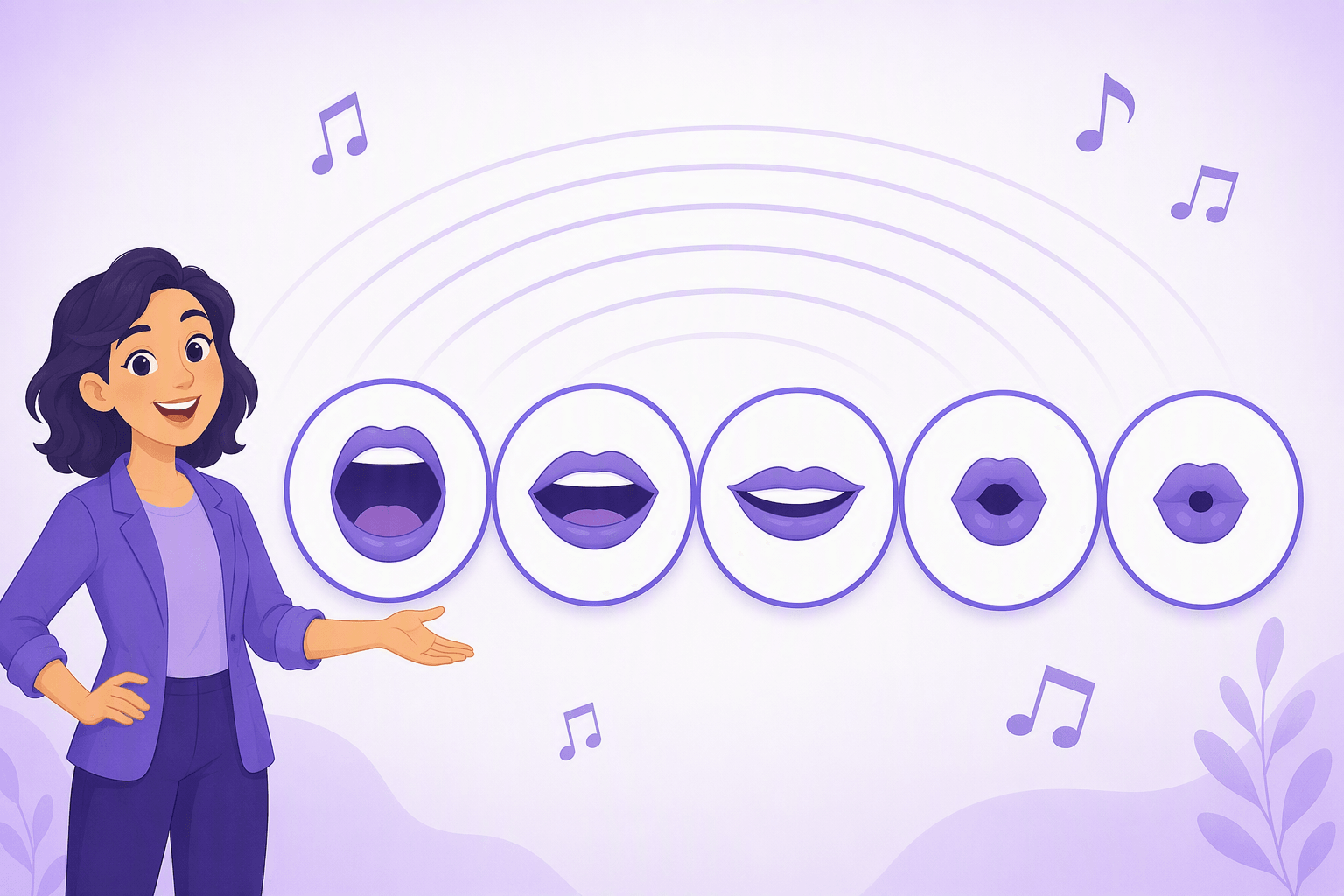
A, I, U
- a is "ah" as in "father": casa (KAH-zah)
- i is "ee" as in "see": vino (VEE-noh)
- u is "oo" as in "food": luna (LOO-nah)
Avoid turning unstressed vowels into "uh". Italiano is ee-tah-LYAH-noh, not ih-tuh-LYAH-noh.
E and O: open vs closed
Italian e and o can be more "open" or "closed" depending on the word and region. Learners do not need perfection here to be understood, but you should know it exists.
- e can sound like "eh" or a tighter "ay" without the English glide.
- o can sound like "oh" or a more open "aw".
A safe learner default:
- e as "eh": bene (BEH-neh)
- o as "oh": solo (SOH-loh)
Treccani’s phonology overview discusses these vowel distinctions in standard Italian (Treccani, 2011). In real movie dialogue, you will notice speakers from Rome, Milan, and Naples color these vowels differently.
💡 A fast fix for English vowel habits
Say Italian vowels like five "pure notes": AH, EH, EE, OH, OO. Do not add an extra "y" or "w" glide at the end, especially after EH and OH.
Stress: where the beat goes
The most common pattern
Many Italian words are stressed on the second-to-last syllable. Examples:
- ragazzo (rah-GAHT-tsoh)
- parlare (par-LAH-reh)
- italiano (ee-tah-LYAH-noh)
When you see an accent mark
If a word ends with an accent, stress is on that final syllable:
- città (chee-TAH)
- perché (pehr-KEH)
- così (koh-ZEE)
These accents are not decoration, they are pronunciation instructions.
Why stress matters in conversation
Italian speech rhythm is stress-timed in a way that makes the stressed syllable pop. In movies and TV, stress is one of the biggest cues that separates "textbook Italian" from natural Italian.
If you want lines that force you to practice stress, romantic phrases are perfect. Try how to say I love you in Italian and copy the rhythm, not just the sounds.
Double consonants: the meaning-changing detail
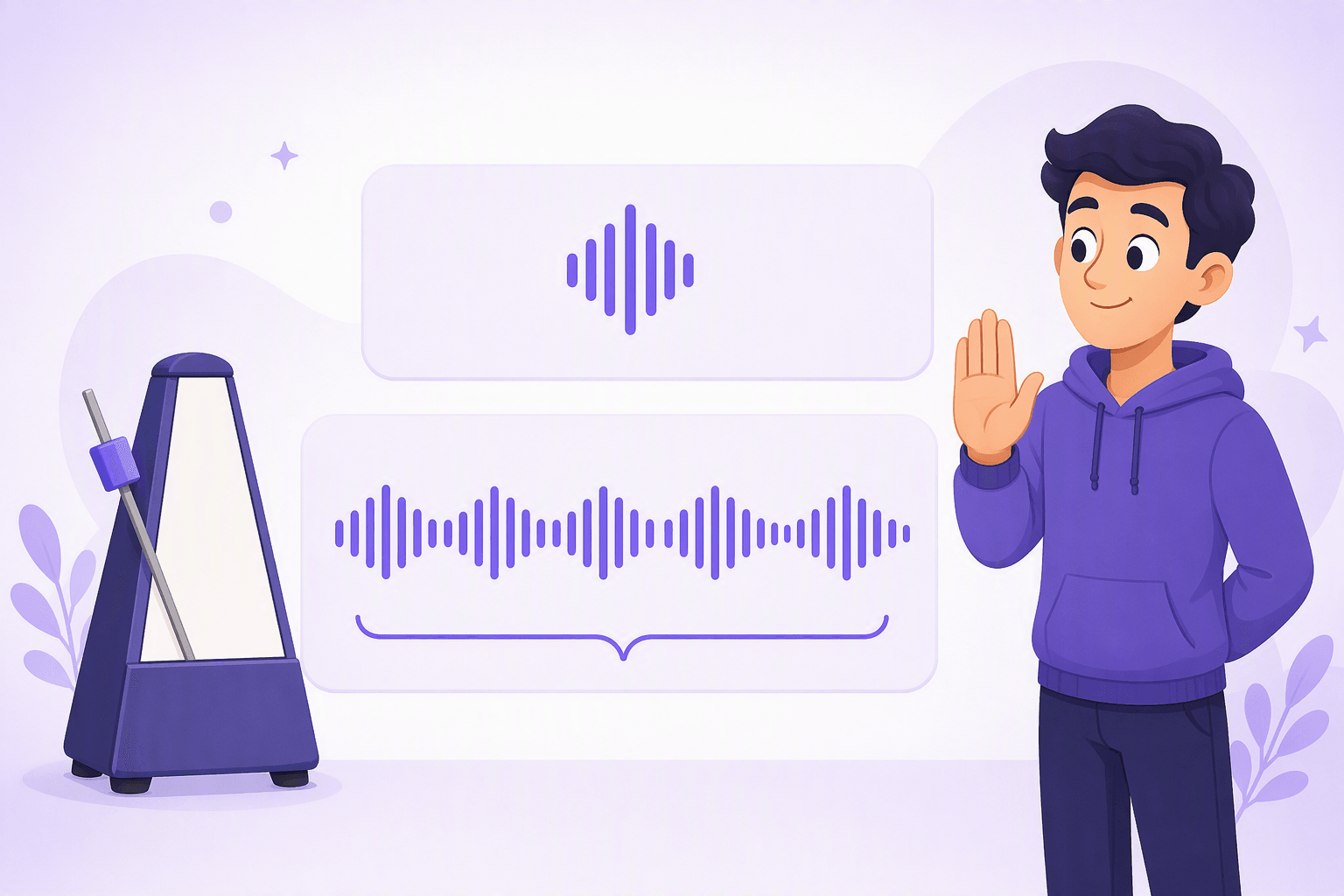
Double consonants (consonanti doppie) are one of the most important pronunciation features in Italian. They are not optional emphasis, they are part of the word.
How to pronounce them
Think of a double consonant as:
- a tiny hold or pause, then
- a stronger release.
Examples:
- papa (PAH-pah) vs pappa (PAHP-pah)
- sete (SEH-teh) vs sette (SEHT-teh)
- pena (PEH-nah) vs penna (PEHN-nah)
In subtitles, doubles are easy to ignore. In audio, they are easy to miss until you train your ear. This is exactly why short clips help: you can loop a one-second contrast until your mouth matches it.
🌍 Why doubles feel 'dramatic' in Italian acting
Italian screen dialogue often exaggerates consonant length for clarity, especially in emotional scenes. That is not fake Italian, it is a performance style that still follows real phonology. Copying it can actually improve your everyday intelligibility.
Tricky letters and letter pairs (with English-friendly pronunciations)
Below are the combinations that cause most learner mistakes. The good news is that they are consistent.
C and CH
- c before a, o, u is hard "k": casa (KAH-zah), cosa (KOH-zah)
- c before e, i is "ch": cena (CHEH-nah), cinema (CHEE-neh-mah)
- ch before e, i keeps hard "k": che (keh), chi (kee)
The Accademia della Crusca regularly addresses spelling and sound rules like c/ci/che/chi in its language advice (Accademia della Crusca, 2019).
G and GH
- g before a, o, u is hard "g": gatto (GAHT-toh)
- g before e, i is soft "j": gelato (jeh-LAH-toh), giro (JEE-roh)
- gh before e, i keeps hard "g": spaghetti (spah-GHEHT-tee)
SC, SCI, SCE
- sc before a, o, u is "sk": scala (SKAH-lah)
- sc before e, i is "sh": scena (SHEH-nah), sciare (shah-REH)
- sci is also "sh": sciocco (SHOHK-koh)
GLI
gli is a signature Italian sound. Approximate it as LYEE with the tongue high and forward.
Examples:
- famiglia (fah-MEE-lyah)
- figlio (FEE-lyoh)
- moglie (MOH-lyeh)
Common mistake: pronouncing it like "glee". Avoid that.
GN
gn is like NYEE, similar to the "ny" in "canyon" but cleaner.
Examples:
- lasagna (lah-ZAH-nyah)
- bagno (BAH-nyoh)
- signore (see-NYOH-reh)
Z
Italian z can sound like "ts" or "dz" depending on the word and region. A safe approximation is often "ts".
Examples:
- grazie (GRAH-tsyeh)
- pizza (PEET-tsah)
R
Italian r is typically tapped or rolled. You do not need a perfect trill to be understood, but you should avoid the English "r" sound.
Practice with a light tap: Roma (ROH-mah), caro (KAH-roh).
⚠️ Do not add extra sounds at the end
English speakers often add a faint final vowel or an "r" coloring. Italian words usually end cleanly on the final vowel: bene (BEH-neh), not BEH-nehr.
The silent H and why it exists
Italian h is not pronounced in native words. It is used to signal hard sounds:
- che (keh), chi (kee)
- ghe (geh), ghi (gee)
You will also see ho, hai, ha, hanno (forms of avere, "to have") where h distinguishes them from other words in writing. In speech, the h still stays silent.
Linking and elision: sounding natural in fast speech
Italian often connects words smoothly. In movies, this is where learners feel they "know the words" but cannot hear them.
Raddoppiamento fonosintattico (the hidden double)
In many varieties of Italian, certain words can trigger a doubled consonant at the start of the next word. You will hear it after some stressed monosyllables.
Example idea (varies by region and style):
- a casa can sound like "ah KKA-zah" in connected speech.
You do not need to master this early, but you should recognize it so it does not confuse you.
Elision in writing, connection in speech
Writing may show elision with an apostrophe:
- l’amico (lah-MEE-koh)
- un’idea (oo-NEE-deh-ah)
In speech, the goal is flow, not pauses between every word.
A pronunciation checklist you can use with any clip
When you repeat a line from a movie or show, focus on these in order:
- Vowels: are they pure AH EH EE OH OO?
- Stress: which syllable is the beat?
- Doubles: do you hear and produce length?
- Letter pairs: GLI, GN, SCI, CHE, GHE
- Rhythm: do you match speed and melody?
This approach works especially well with short, emotional lines because actors articulate clearly. If you want more everyday lines, pair this with how to say goodbye in Italian and practice farewells in different tones.
Common learner mistakes (and quick fixes)
Mistake: reducing vowels
Fix: read slowly and exaggerate vowels, then speed up without changing vowel quality.
Mistake: ignoring double consonants
Fix: add a micro-pause before the consonant. Record yourself and compare.
Mistake: pronouncing "e" and "o" like English diphthongs
Fix: keep EH and OH steady, no slide.
Mistake: treating GLI and GN as two sounds
Fix: make them one consonant sound, then the vowel. fi-glio is not "fig-lee-oh", it is (FEE-lyoh).
Cultural listening notes: what you will hear in Italy
Italian pronunciation is shaped by regional identity. Italy has strong local speech traditions, and many actors keep a light regional flavor even in standard Italian.
A few patterns you may notice:
- In some southern accents, consonants can sound stronger and rhythm more staccato.
- In parts of the north, vowel openness can shift, especially e/o.
- In Rome-centered media, you may hear relaxed consonants in casual dialogue, but doubles still show up when it matters.
If you are curious about how slang and taboo words interact with pronunciation and intensity, our Italian swear words guide shows how emotion often pushes clearer consonants and sharper stress.
Practice plan: 10 minutes a day, focused on pronunciation
Minute 1-3: vowel drill on real words
Pick 10 common words and say them slowly, then naturally:
- casa (KAH-zah)
- bene (BEH-neh)
- vino (VEE-noh)
- luna (LOO-nah)
Minute 4-7: one clip, one line, ten reps
Choose a short line with a double consonant or a tricky pair (GN, GLI). Repeat until your timing matches.
Minute 8-10: record and compare
Record yourself once. Compare stress and consonant length, not just "accent".
For more structured learning through short clips, browse the Wordy blog or go straight to learn Italian and practice pronunciation with interactive subtitles.
Mini examples you can steal (with pronunciation)
famiglia
famiglia (fah-MEE-lyah)
Focus: GLI as one sound, and clear vowels.
lasagna
lasagna (lah-ZAH-nyah)
Focus: GN as NYEE, and stress on ZAH.
spaghetti
spaghetti (spah-GHEHT-tee)
Focus: GH keeps hard G, and double TT.
arrivederci
arrivederci (ah-ree-veh-DEHR-chee)
Focus: tapped R, stress on DEHR, and clean final vowel.
The bottom line
Italian pronunciation rewards rule-based learning: once you master vowels, stress, and consonant length, your speech becomes clear fast. Use real dialogue, repeat short lines, and prioritize doubles and stress, because those are the features Italians actually rely on to hear meaning.
When you are ready to apply it to daily conversation, start with how to say hello in Italian and how to say goodbye in Italian, then build from there with clips you can replay until your mouth matches the audio.
Frequently Asked Questions
Is Italian pronunciation easy for English speakers?
How do I know which syllable is stressed in Italian?
Do double consonants really matter in Italian?
Why do Italians pronounce 'gli' and 'gn' differently from English?
What is the biggest Italian pronunciation mistake learners make?
Sources & References
- Treccani, Enciclopedia dell'Italiano: Fonologia e pronuncia, 2011
- Accademia della Crusca, Consulenza linguistica: uso di 'c'/'g' e grafia, 2019
- Ethnologue, Italian (ita) language entry, 27th edition, 2024
- Nespor, M. & Vogel, I., Prosodic Phonology, 2nd edition, 2007
Start learning with Wordy
Watch real movie clips and build your vocabulary as you go. Free to download.


