Quick Answer
Italian adjectives must agree with the noun they describe in gender and number. Most adjectives change their ending for masculine, feminine, singular, and plural nouns, while a smaller group has only two forms.
Italian adjective agreement means that an adjective changes to match the gender and number of the noun it describes. For example, un ragazzo italiano /un raˈɡat.tso itaˈlja.no/ means an Italian boy, while una ragazza italiana /ˈu.na raˈɡat.tsa itaˈlja.na/ means an Italian girl. Learn the noun’s gender first, then choose the adjective ending that matches it.
This is one of the most visible patterns in Italian. It affects simple introductions, descriptions, compliments, restaurant orders, and everyday phrases such as buona sera /ˈbwɔ.na ˈse.ra/, meaning good evening. It also explains why greetings and romantic phrases sound different depending on whom you are addressing.
Italian has roughly 68 million first-language speakers according to Ethnologue’s 27th edition. It is the official language of Italy, San Marino, and Vatican City, and it is also a national language of Switzerland. Because agreement is built into nearly every Italian sentence, mastering it gives you a strong foundation for speaking Italian naturally.
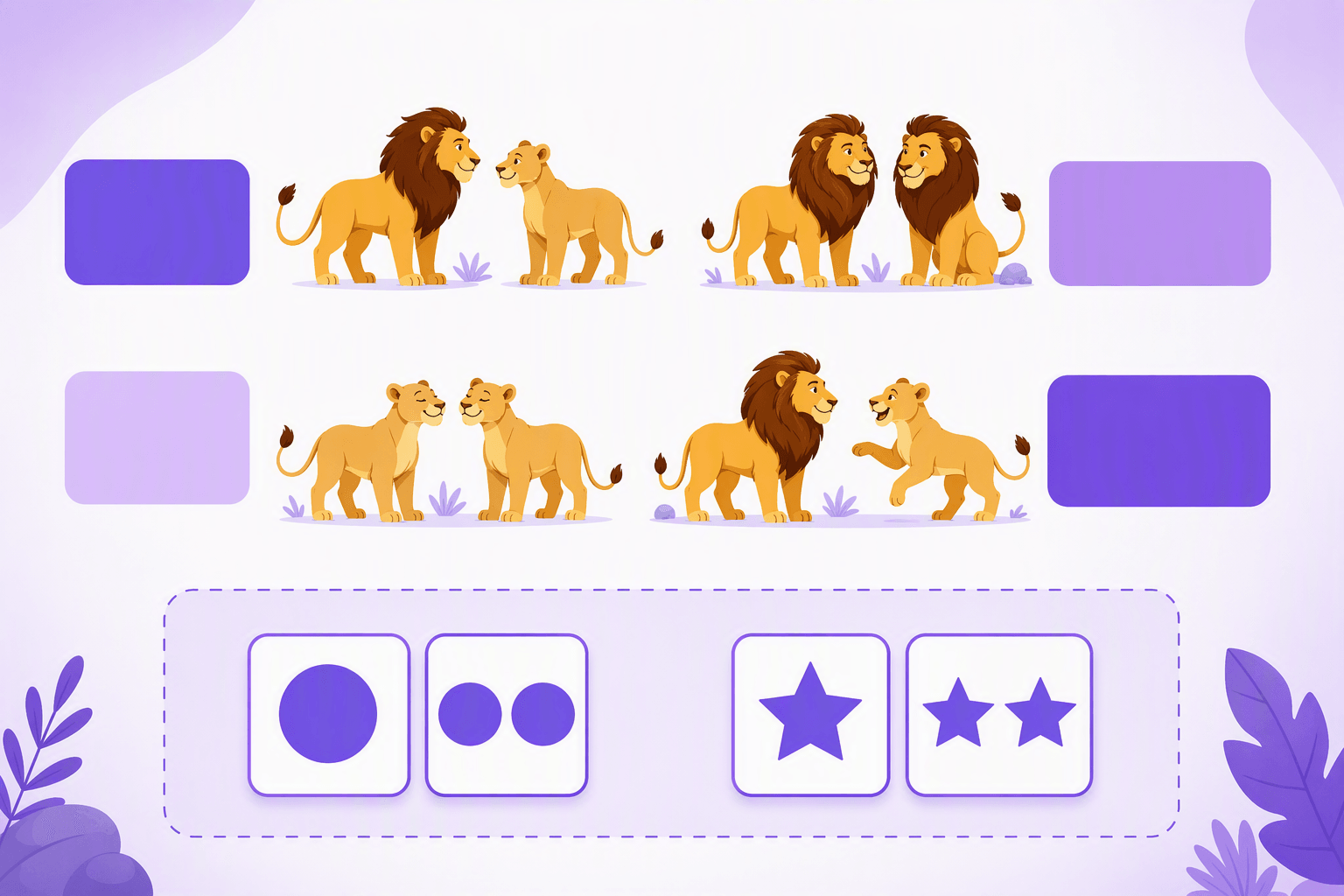
The core rule: match gender and number
Every Italian noun has a grammatical gender, masculine or feminine, and a number, singular or plural. An adjective normally copies both features.
That creates four possible combinations:
| Noun type | Typical noun ending | Adjective ending | Example |
|---|---|---|---|
| Masculine singular | -o | -o | un libro interessante /un ˈli.bro inte.resˈsan.te/ |
| Feminine singular | -a | -a | una casa bella /ˈu.na ˈka.za ˈbɛl.la/ |
| Masculine plural | -i | -i | libri interessanti /ˈli.bri inte.resˈsan.ti/ |
| Feminine plural | -e | -e | case belle /ˈka.ze ˈbɛl.le/ |
The most common beginner pattern is:
| Masculine singular | Feminine singular | Masculine plural | Feminine plural |
|---|---|---|---|
| bello /ˈbɛl.lo/ | bella /ˈbɛl.la/ | belli /ˈbɛl.li/ | belle /ˈbɛl.le/ |
So you can say:
- un film bello /um ˈfilm ˈbɛl.lo/, a beautiful film
- una città bella /ˈu.na tʃitˈta ˈbɛl.la/, a beautiful city
- film belli /film ˈbɛl.li/, beautiful films
- città belle /tʃitˈta ˈbɛl.le/, beautiful cities
The adjective ending supplies grammatical information even when the noun is omitted. If someone says sono stanca /ˈso.no ˈstan.ka/, the feminine ending tells you the speaker identifies herself as female. A male speaker would usually say sono stanco /ˈso.no ˈstan.ko/.
The four-ending adjective pattern
Most Italian adjectives belong to the four-ending group. Their masculine singular form ends in -o /o/, and their other forms change to -a /a/, -i /i/, and -e /e/.
Bello
Bello /ˈbɛl.lo/ is a high-frequency adjective meaning beautiful, lovely, attractive, or nice. Its regular agreement forms are especially useful because you will hear them in daily conversation, films, and compliments.
| Meaning | Masculine singular | Feminine singular | Masculine plural | Feminine plural |
|---|---|---|---|---|
| Beautiful, lovely | bello /ˈbɛl.lo/ | bella /ˈbɛl.la/ | belli /ˈbɛl.li/ | belle /ˈbɛl.le/ |
Compare these natural examples:
- Roma è bella /ˈro.ma ɛ ˈbɛl.la/, Rome is beautiful.
- I paesaggi sono belli /i paeˈzad.dʒi ˈso.no ˈbɛl.li/, the landscapes are beautiful.
- Le strade sono belle /le ˈstra.de ˈso.no ˈbɛl.le/, the streets are beautiful.
When bello /ˈbɛl.lo/ comes before a noun, it has special shortened forms that resemble Italian articles. You will hear un bel giorno /um bɛl ˈdʒor.no/, a beautiful day, and una bella giornata /ˈu.na ˈbɛl.la dʒorˈna.ta/, a lovely day. This is not a different agreement system, just a pronunciation and spelling pattern tied to position.
Buono
Buono /ˈbwɔ.no/ means good. Like bello /ˈbɛl.lo/, it has four basic agreement forms.
| Meaning | Masculine singular | Feminine singular | Masculine plural | Feminine plural |
|---|---|---|---|---|
| Good | buono /ˈbwɔ.no/ | buona /ˈbwɔ.na/ | buoni /ˈbwɔ.ni/ | buone /ˈbwɔ.ne/ |
Use it with people, food, ideas, and experiences:
- Il caffè è buono /il kafˈfɛ ɛ ˈbwɔ.no/, the coffee is good.
- La pizza è buona /la ˈpit.tsa ɛ ˈbwɔ.na/, the pizza is good.
- I consigli sono buoni /i konˈsiʎ.ʎi ˈso.no ˈbwɔ.ni/, the advice is good.
- Le idee sono buone /le iˈdɛ.e ˈso.no ˈbwɔ.ne/, the ideas are good.
The phrase buon appetito /bwɔn ap.peˈti.to/, enjoy your meal, uses a shortened masculine singular form before a vowel-free masculine noun. You will hear it often in Italy, particularly before people begin eating.
Italiano
Nationality adjectives also follow agreement. Italiano /itaˈlja.no/ changes depending on the person or people described.
| Meaning | Masculine singular | Feminine singular | Masculine plural | Feminine plural |
|---|---|---|---|---|
| Italian | italiano /itaˈlja.no/ | italiana /itaˈlja.na/ | italiani /itaˈlja.ni/ | italiane /itaˈlja.ne/ |
For example:
- Lui è italiano /lui ɛ itaˈlja.no/, he is Italian.
- Lei è italiana /lɛi ɛ itaˈlja.na/, she is Italian.
- Loro sono italiani /ˈlo.ro ˈso.no itaˈlja.ni/, they are Italian.
- Le ragazze sono italiane /le raˈɡat.tse ˈso.no itaˈlja.ne/, the girls are Italian.
This pattern applies to many nationalities, including francese /franˈtʃe.ze/, French, and spagnolo /spaɲˈɲɔ.lo/, Spanish. Be aware that nationality words can function as adjectives or nouns depending on context.
The two-ending adjective pattern
A second major group of Italian adjectives ends in -e /e/ in the singular. These adjectives do not distinguish masculine and feminine in the singular. They only change for plural.
| Form | Singular | Plural |
|---|---|---|
| Masculine | interessante /inte.resˈsan.te/ | interessanti /inte.resˈsan.ti/ |
| Feminine | interessante /inte.resˈsan.te/ | interessanti /inte.resˈsan.ti/ |
This is easier than the four-ending pattern. You only need to identify whether the noun is singular or plural.
- un libro interessante /un ˈli.bro inte.resˈsan.te/, an interesting book
- una storia interessante /ˈu.na ˈstɔ.rja inte.resˈsan.te/, an interesting story
- libri interessanti /ˈli.bri inte.resˈsan.ti/, interesting books
- storie interessanti /ˈstɔ.rje inte.resˈsan.ti/, interesting stories
Other common two-ending adjectives include grande /ˈɡran.de/, big or great, felice /feˈli.tʃe/, happy, triste /ˈtri.ste/, sad, and difficile /difˈfi.tʃi.le/, difficult.
Luca Serianni’s Grammatica italiana treats this division between four-ending and two-ending adjectives as a central organizing principle. Instead of memorizing dozens of isolated forms, identify the adjective’s singular ending first. That tells you which pattern to use.
Adjective position changes meaning
Italian adjectives often come after the noun:
- una macchina veloce /ˈu.na makˈki.na veˈlo.tʃe/, a fast car
- un problema difficile /um პროˈble.ma difˈfi.tʃi.le/, a difficult problem
- un ristorante costoso /un ristoˈran.te koˈsto.zo/, an expensive restaurant
This is the safest default for learners. Put descriptive adjectives after the noun unless you know that a specific adjective commonly comes before it.
However, some common adjectives can move before the noun. Their position may add a subjective, emotional, or figurative meaning. Martin Maiden and Cecilia Robustelli discuss adjective position as one area where Italian word order carries meaning, not just style.
Consider un grande uomo /un ˈɡran.de ˈwɔ.mo/ and un uomo grande /un ˈwɔ.mo ˈɡran.de/.
- Un grande uomo /un ˈɡran.de ˈwɔ.mo/ means a great man, an important or admirable person.
- Un uomo grande /un ˈwɔ.mo ˈɡran.de/ means a large man or an adult man, depending on context.
Another familiar contrast is un vecchio amico /um ˈvɛk.kjo aˈmi.ko/, an old friend in the sense of a long-time friend, versus un amico vecchio /un aˈmi.ko ˈvɛk.kjo/, an elderly friend.
Do not try to apply a mechanical rule to every adjective position. Build recognition through real sentences and repeated exposure. Italian films and TV shows are particularly useful because speakers use these meaningful word-order choices naturally. For a practical viewing method, see how to learn a language with movies.
🌍 Compliments need agreement
In Italian, compliments commonly agree with the person being addressed. You might say sei bellissima /sɛi belˈlis.si.ma/ to a woman and sei bellissimo /sɛi belˈlis.si.mo/ to a man. The ending is not optional: it is part of how the compliment sounds complete and personal.
Agreement with more than one noun
When an adjective describes multiple nouns, Italian normally uses a plural adjective. If the group contains at least one masculine noun, standard grammar generally uses masculine plural.
- Marco e Anna sono stanchi /ˈmar.ko e ˈan.na ˈso.no ˈstan.ki/, Marco and Anna are tired.
- Anna e Lucia sono stanche /ˈan.na e luˈtʃi.a ˈso.no ˈstan.ke/, Anna and Lucia are tired.
The first example uses masculine plural stanchi /ˈstan.ki/ because the group is mixed. The second uses feminine plural stanche /ˈstan.ke/ because both people are female.
Contemporary usage can vary in discussions of inclusive language, especially in writing and public communication. For standard learner Italian, masculine plural remains the conventional form for mixed groups. Focus first on recognizing it accurately in speech and reading.
Agreement after essere
Adjectives after essere /ˈes.se.re/, to be, also agree with the subject. This is especially important when you describe yourself.
| Subject | Correct form | Meaning |
|---|---|---|
| Io sono stanco /i.o ˈso.no ˈstan.ko/ | masculine singular | I am tired, male speaker |
| Io sono stanca /i.o ˈso.no ˈstan.ka/ | feminine singular | I am tired, female speaker |
| Noi siamo pronti /noi ˈsja.mo ˈpron.ti/ | masculine or mixed plural | We are ready |
| Noi siamo pronte /noi ˈsja.mo ˈpron.te/ | feminine plural | We are ready |
This pattern appears in everyday conversation constantly. You may hear sono contento /ˈso.no konˈtɛn.to/ or sono contenta /ˈso.no konˈtɛn.ta/, meaning I am happy or pleased.
When a speaker’s gender is unknown or irrelevant in written Italian, writers may sometimes choose different strategies, such as rephrasing the sentence. In ordinary spoken interaction, the traditional gendered forms are still the expected grammatical choice.
Adjectives with irregular-looking forms
Some adjectives seem irregular because they shorten before a noun. The underlying agreement system remains predictable.
Grande /ˈɡran.de/ can become gran /ɡran/ before a singular noun:
- un grande problema /un ˈɡran.de პროˈble.ma/, a big problem
- un gran problema /uŋ ɡram პროˈble.ma/, a big problem
Both are correct. The shorter form is common in fixed expressions and more literary or emphatic phrasing.
Similarly, buono /ˈbwɔ.no/ can become buon /bwɔn/ before a masculine singular noun:
- un buon libro /um bwɔn ˈli.bro/, a good book
- una buona idea /ˈu.na ˈbwɔ.na iˈdɛ.a/, a good idea
These shortened forms are worth learning as phrases. They occur often in greetings, menus, advertising, and conversation.
💡 Learn adjective-noun chunks
Do not memorize bello /ˈbɛl.lo/ as an isolated dictionary word. Memorize short chunks such as una bella casa /ˈu.na ˈbɛl.la ˈka.za/, un bel film /um bɛl ˈfilm/, and due belle giornate /ˈdu.e ˈbɛl.le dʒorˈna.te/. The noun, article, and adjective then reinforce each other.
Common Italian adjective agreement mistakes
Matching the adjective to the speaker instead of the noun
The adjective matches the noun it describes, not automatically the person speaking.
Correct: la macchina è nuova /la makˈki.na ɛ ˈnwɔ.va/, the car is new.
Incorrect: using masculine nuovo /ˈnwɔ.vo/ because the speaker is male. The noun macchina /makˈki.na/ is feminine, so the adjective must be feminine too.
Forgetting plural agreement
English adjectives do not change for plural nouns, but Italian adjectives usually do.
Correct: le case sono piccole /le ˈka.ze ˈso.no ˈpik.ko.le/, the houses are small.
Incorrect: le case sono piccola /le ˈka.ze ˈso.no ˈpik.ko.la/. The noun is plural, so the adjective needs plural -e /e/.
Assuming every noun ending tells the full story
Many nouns follow the familiar -o /o/ masculine and -a /a/ feminine pattern, but there are exceptions. La mano /la ˈma.no/, hand, is feminine despite ending in -o /o/. Il problema /il პროˈble.ma/, problem, is masculine despite ending in -a /a/.
This is why articles matter. Learn la mano /la ˈma.no/ and il problema /il პროˈble.ma/ as complete units, then agreement follows naturally: la mano destra /la ˈma.no ˈde.stra/, the right hand, and un problema serio /um პროˈble.ma ˈsɛ.rjo/, a serious problem.
Overusing pre-noun adjectives
English places adjectives before nouns, so learners may produce Italian sentences with the same order. Italian allows this in some cases, but the normal position for many descriptive adjectives is after the noun.
Start with una casa grande /ˈu.na ˈka.za ˈɡran.de/ rather than moving grande /ˈɡran.de/ before the noun. As you hear more Italian, you will recognize the adjectives that naturally occur before nouns.
A practical way to make agreement automatic
First, always learn a noun with its definite article: il tavolo /il ˈta.vo.lo/, the table, or la sedia /la ˈsɛ.dja/, the chair. This gives you the noun’s gender from day one.
Second, say each new adjective in all of its relevant forms. For rosso /ˈros.so/, red, practise rosso /ˈros.so/, rossa /ˈros.sa/, rossi /ˈros.si/, and rosse /ˈros.se/. You do not need to recite every form forever, but early repetition makes the pattern familiar.
Third, use descriptions connected to your real life. Describe your room, friends, clothes, food, or weekend plans. A phrase such as le mie scarpe sono comode /le ˈmi.e ˈskar.pe ˈso.no ˈkɔ.mo.de/, my shoes are comfortable, is easier to remember than an abstract drill sentence.
Finally, listen for adjective endings in authentic dialogue. Notice the difference between sono pronto /ˈso.no ˈpron.to/ and sono pronta /ˈso.no ˈpron.ta/ when characters speak. Pairing grammar with memorable scenes helps you hear agreement as meaningful information, not as a chart to memorize. Once you are comfortable with core descriptions, expand your conversational range through Italian greetings, Italian goodbyes, and Italian expressions of affection.
The key takeaway
Italian adjective agreement is a matching system: masculine nouns take masculine adjective forms, feminine nouns take feminine forms, and plural nouns take plural forms. Begin with the two major patterns, four endings and two endings, then learn adjective position through real examples.
Accuracy comes from repeated noun-adjective chunks, not from guessing at the last second. If you learn una bella casa /ˈu.na ˈbɛl.la ˈka.za/ as one phrase, you are already training gender, number, article use, and natural word order together.
Frequently Asked Questions
Do Italian adjectives always agree with nouns?
How do I know whether an Italian noun is masculine or feminine?
Do Italian adjectives come before or after the noun?
What is the difference between bello and buona in Italian?
Are Italian adjective agreement mistakes serious?
Sources & References
- Treccani, Grammatica italiana: l'aggettivo, accessed 2026
- Accademia della Crusca, Consulenza linguistica: accordo dell'aggettivo, accessed 2026
- Martin Maiden and Cecilia Robustelli, A Reference Grammar of Modern Italian, Routledge
- Luca Serianni, Grammatica italiana, UTET
- Ethnologue, Italian, 27th edition, 2024
Start learning with Wordy
Watch real movie clips and build your vocabulary as you go. Free to download.


