Quick Answer
To learn English fast, focus on high-frequency vocabulary, daily listening to real speech, and short speaking practice every day. A realistic plan is 60 to 90 minutes daily split into: 20 minutes of focused vocabulary, 20 minutes of listening with transcripts, 10 minutes of shadowing, and 10 to 20 minutes of speaking or writing. Track a small set of phrases, recycle them in real contexts, and increase difficulty weekly.
Learning English fast means doing the right things every day: build high-frequency vocabulary, listen to real speech with transcripts, and speak out loud in short sessions you can repeat consistently. If you can commit 60 to 90 minutes a day for 30 days, you can make a visible jump in comprehension and conversational ability, even if full fluency takes longer.
English is also a smart target if your goal is speed because it has massive global support. Ethnologue estimates about 1.5 billion English speakers worldwide (including second-language speakers), and English is used as an official language in dozens of countries, which means you can find input, teachers, and conversation partners almost anywhere.
If you also want a media-based approach, pair this plan with best movies to learn English. For quick building blocks like dates and prices, keep English numbers in your weekly rotation.

What "fast" actually looks like (so you do not quit)
Fast progress is not the same as instant fluency. Fast means you improve the skills that unlock everything else: hearing words clearly, producing common sentence patterns, and reacting without translating.
A realistic 30-day outcome
If you follow the plan below, a realistic result is:
- You understand more everyday speech at normal speed, especially in familiar topics.
- You can hold short conversations using repeated patterns.
- You can speak with fewer long pauses because you have memorized usable chunks.
The CEFR framework is helpful here because it describes what learners can do at each level. Moving from A1 to A2 or from A2 to B1 can happen quickly with focused daily work, but B2 and above usually require longer exposure and broader vocabulary.
The three levers that make English feel faster
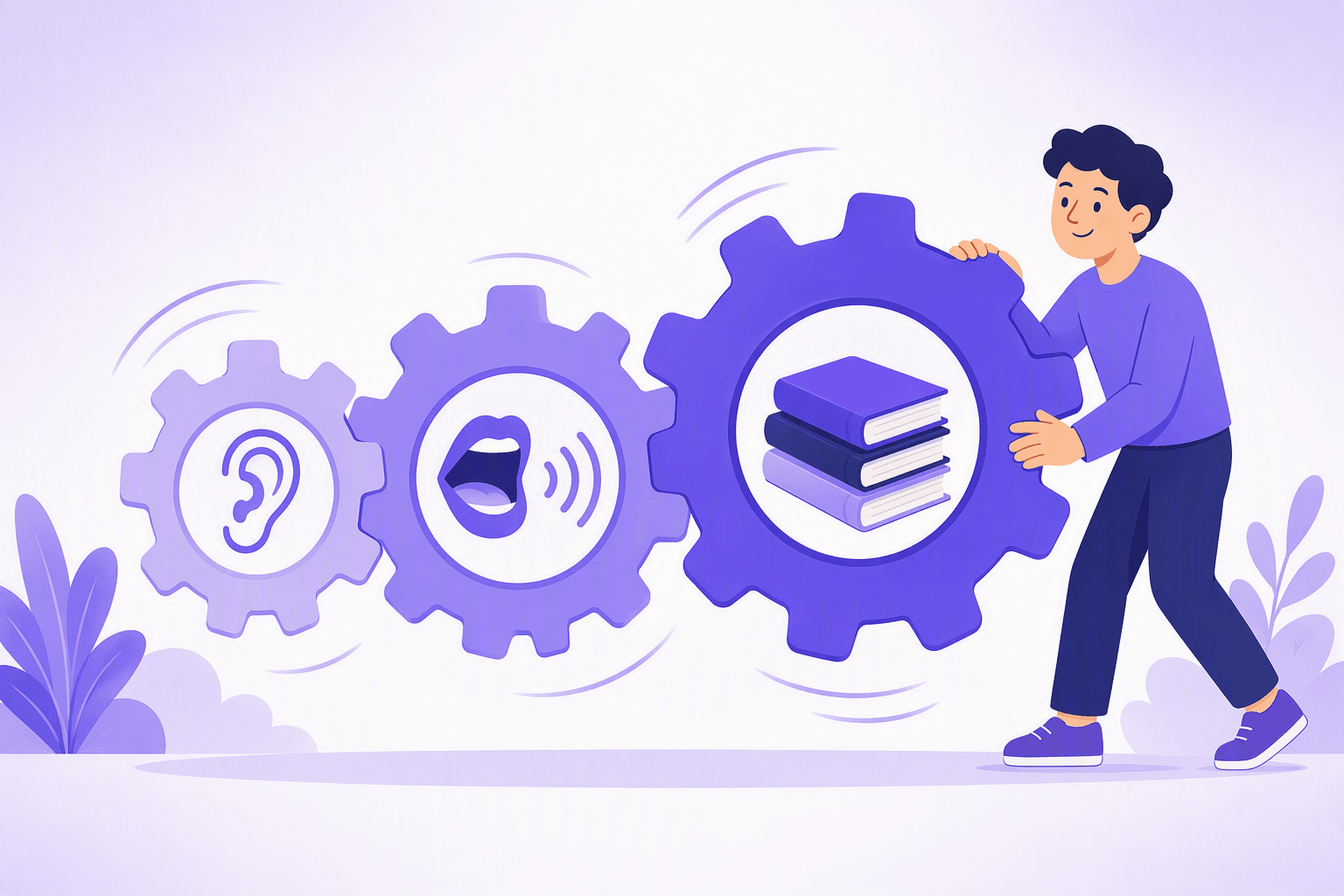
- Vocabulary coverage: the more common words you know, the more you understand.
- Listening segmentation: hearing where one word ends and the next begins.
- Automaticity: producing phrases without building them word-by-word.
Paul Nation’s work on vocabulary learning is especially useful for speed because it pushes you to focus on high-frequency words and repeated encounters, not rare words you will not reuse soon.
The 30-day plan (60 to 90 minutes a day)
This plan is designed for consistency. It is better to do 70 minutes daily than 3 hours once a week.
Daily schedule (copy this)
1) Vocabulary (20 minutes) Pick 8 to 12 items, learn meaning, pronunciation, and one example sentence. Review yesterday’s items first.
2) Listening with transcript (20 minutes) Use a short clip or a short podcast segment with text. Listen once without reading, then listen while reading, then listen again without reading.
3) Shadowing (10 minutes) Repeat the audio out loud, matching rhythm and stress. Record yourself once.
4) Output (10 to 20 minutes) Speak to a tutor, do a voice note, or write a short paragraph and read it out loud.
💡 The speed rule
If you want fast results, do not increase difficulty every day. Repeat the same material for 2 to 4 days until it feels easy, then level up.
Weekly structure (so you keep improving)
Week 1: clarity Your goal is hearing words and copying rhythm, not perfect grammar.
Week 2: control Start correcting your top 3 mistakes, usually past tense, articles, and pronunciation of endings.
Week 3: range Add new topics (work, school, travel, hobbies) while recycling the same core patterns.
Week 4: pressure Do timed speaking: 60 seconds, then 90 seconds, then 2 minutes on the same topic.
Build a "core phrase bank" instead of isolated words
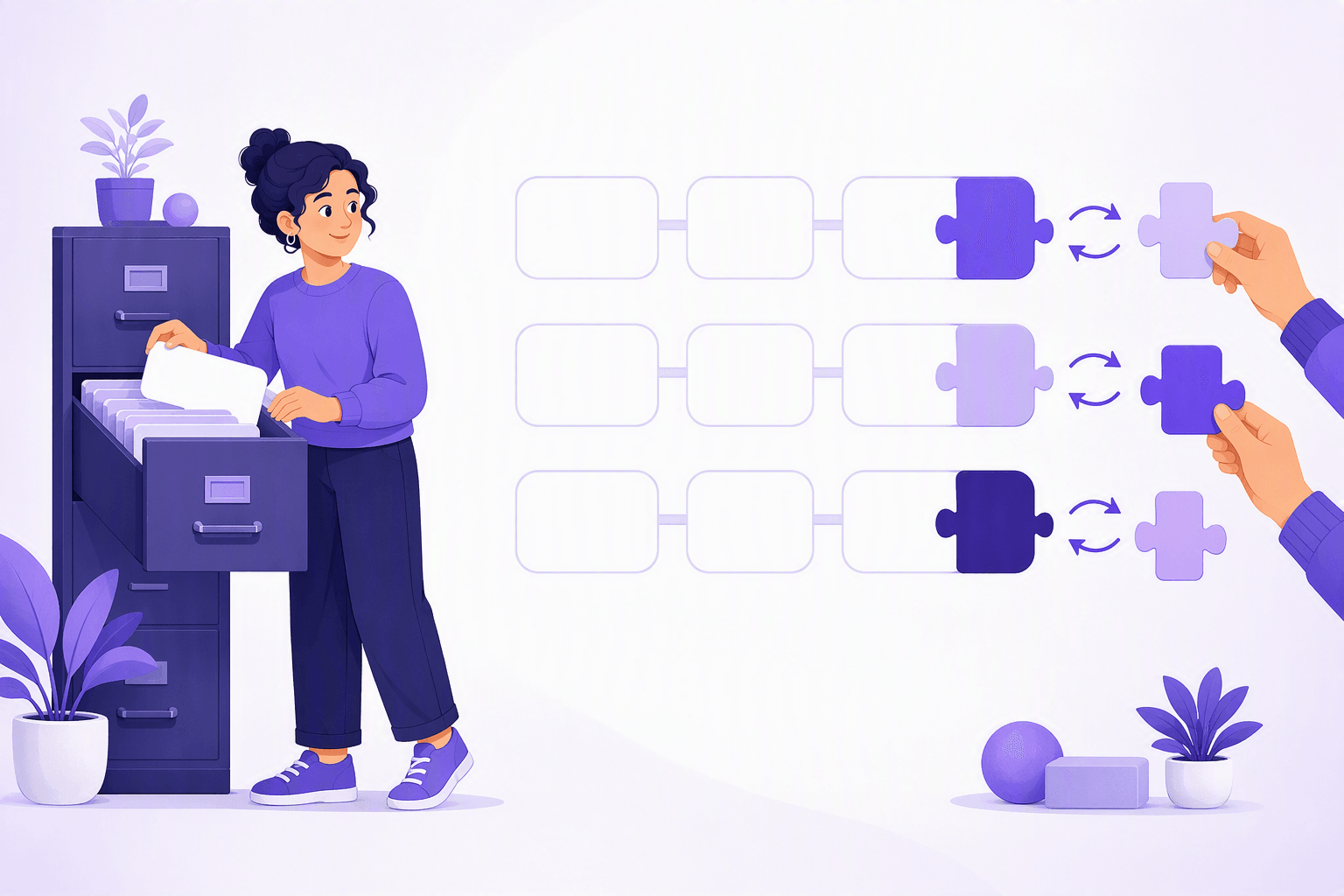
Fast learners do not only learn words, they learn reusable sentence frames. This is a major difference between knowing English and being able to speak English.
The 12 sentence patterns that cover daily life
Memorize patterns like:
- "I’m trying to ___."
- "Do you mind if I ___?"
- "I’m not sure, but I think ___."
- "What do you mean by ___?"
- "It depends on ___."
These patterns reduce thinking time because you only swap the final piece. They also sound natural because native speakers rely on predictable frames.
How to choose the right vocabulary
Choose words that:
- appear often in your life
- combine with many other words
- show up in spoken English
If you need a frequency-based starting point, use 100 most common English words as a foundation, then add topic words that matter to you.
⚠️ Avoid the 'rare word trap'
Learning advanced synonyms too early feels productive, but it slows speaking. You need the boring, common words first because they glue sentences together.
Listening: the fastest skill multiplier
Listening is the skill that improves everything else. When your ear improves, your pronunciation improves, your vocabulary sticks faster, and your grammar becomes easier to notice.
Why English listening feels hard
English is stress-timed, so unstressed syllables often reduce. Words like "going to" become "gonna" in casual speech, and "want to" becomes "wanna." This is not slang, it is normal connected speech.
David Crystal’s work on English highlights how rhythm and stress shape how English sounds in real life. If you only learn from slow, careful recordings, real conversations will still feel too fast.
The transcript method (3 passes)
Use this loop with any clip:
- Listen without text: catch the topic and a few key words.
- Listen with text: map sounds to words.
- Listen without text again: confirm you can hear the same words now.
Do not move on until pass 3 feels noticeably easier than pass 1.
Shadowing: the pronunciation shortcut
Shadowing means repeating right after the speaker, copying timing and stress. It is one of the fastest ways to stop speaking in a "translated" rhythm.
Use short lines, 3 to 8 seconds. If you cannot match the speed, slow the audio, but keep the rhythm.
Speaking fast: small daily output beats big weekly output
Speaking is where learners often freeze because they try to create perfect sentences. Speed comes from practicing imperfect speaking, then improving it.
A simple speaking routine (10 minutes)
- Pick a topic: "my job," "my weekend," "my city."
- Speak for 60 seconds and record it.
- Listen and write down 3 problems.
- Re-speak for 60 seconds, fixing only those 3 problems.
This is how you build automaticity without burning out.
Get feedback without overpaying
You do not need a full lesson every day. You need frequent correction on the same recurring errors.
Options:
- a tutor 2 times a week plus daily self-recording
- language exchange plus a clear correction request
- writing plus reading your corrected text out loud
Grammar: learn it as a tool, not as a subject
Grammar matters, but grammar-first is rarely the fastest route for adults who want to speak.
The "fix what you keep doing wrong" approach
Instead of studying random grammar chapters, track your repeated errors:
- forgetting third-person -s: "she work" instead of "she works"
- past tense endings: "I watch yesterday" instead of "I watched yesterday"
- articles: "I went to store" instead of "I went to the store"
Then study only what fixes those. For articles, use English articles as a targeted repair manual.
One high-impact grammar habit
When you learn a new verb, learn it in time:
- present: "I work"
- past: "I worked"
- present perfect: "I’ve worked here for two years"
This turns grammar into a speaking skill, not a test skill.
Vocabulary that sticks: spaced repetition plus real encounters
If you want speed, you need memory efficiency. That means review at the right time, not random re-reading.
A practical spaced repetition setup
Use a flashcard system that supports spaced repetition. If you already use Anki, follow a simple workflow like the one in Anki for language learning.
Keep cards simple:
- one word or one phrase
- one example sentence
- audio if possible
The "three encounters" rule
A word is not learned when you recognize it once. Treat it as learned when you have:
- seen it in text
- heard it in audio
- used it in your own speech or writing
This is why movie and TV clips can be so effective. They give you repeated, memorable encounters with the same phrasing.
Use movies and TV the right way (so it is not just entertainment)
Movies and TV can accelerate English, but only if you turn them into practice.
The clip method (better than full episodes)
Pick a 10 to 30 second clip and do:
- listen 3 times
- read transcript once
- shadow 5 times
- speak the meaning in your own words
Repeat the same clip tomorrow. This is how you train your ear and mouth together.
Subtitles: what to use and when
- English subtitles help you connect sound to spelling.
- Your native-language subtitles help you follow the story, but they reduce listening growth.
A good compromise is: first watch with native subtitles for context, then rewatch the same scene with English subtitles, then do the clip method without subtitles.
For a curated starting list, use best movies to learn English and choose one genre you actually enjoy, because repetition is the whole point.
🌍 Why English in movies feels different from classroom English
A lot of spoken English relies on softeners and indirectness: "kind of," "maybe," "I guess," "do you want to," "would you mind." This is partly politeness and partly social style. If you learn only direct textbook sentences, you can sound too intense even when you are being friendly.
Pronunciation: fix the few things that block understanding
You do not need a perfect accent to learn fast. You need clarity.
Prioritize these three areas
1) Word stress Wrong stress can make a known word unrecognizable.
2) Sentence stress English highlights content words and reduces function words.
3) Endings Past tense -ed and plural -s carry meaning. Dropping them makes you harder to understand.
If you want a structured overview, use English pronunciation guide and focus on rhythm and stress first.
A fast clarity test
Record yourself saying 5 sentences. Then wait one day and listen again. If you cannot understand yourself easily, your listener will struggle too.
Slang and swearing: learn recognition first, not production
Learning English fast includes understanding what people actually say, but you do not need to use everything you understand.
Slang: useful, but time-sensitive
Slang changes quickly and is often age- and community-specific. Learn it for comprehension, especially if you watch modern shows or use social media.
A safe approach is to learn:
- meaning
- tone (friendly, rude, joking)
- where it is used (online, in-person, workplace)
For a curated list, see English slang. Treat it as listening vocabulary first.
Swear words: understand the severity
Swear words are high-frequency in some media, but high-risk in real life. Learn them so you are not confused, but be careful using them until you understand social boundaries.
If you need a reference, use English swear words and focus on what not to say at work.
⚠️ Fast learners avoid social mistakes
Using the wrong slang or a swear word can damage relationships faster than a grammar mistake. If you are unsure, choose neutral English.
A 30-day checklist you can actually follow
Days 1 to 7: build the base
- Learn 60 to 80 high-frequency words and 20 core phrases.
- Do transcript listening daily.
- Shadow one short clip daily.
Days 8 to 14: start speaking daily
- Add 10 minutes of recorded speaking daily.
- Fix one pronunciation issue: endings or stress.
- Start a simple conversation routine with a partner twice this week.
Days 15 to 21: expand topics
- Add one new topic set: work, school, travel, health.
- Keep recycling old phrases in new topics.
- Watch one movie scene and mine 10 useful lines.
Days 22 to 30: increase pressure
- Do timed speaking 2 minutes per day.
- Do one longer listening session (30 minutes) twice this week.
- Review your recordings from day 1 and day 30 to measure progress.
Common mistakes that slow you down (and the fix)
Mistake 1: studying too many resources
If you switch apps, books, and channels every day, you reset your progress. Choose one main input source and one review system.
Mistake 2: avoiding repetition
Repetition feels boring, but it is the engine of speed. Rewatching the same 20-second clip five times teaches more than watching 20 minutes once.
Mistake 3: waiting to speak until you are ready
You get ready by speaking. Start with controlled speaking: short, repeated topics and recycled phrases.

How Wordy fits into a fast English plan (without replacing everything)
If your biggest bottleneck is understanding real speech, movie and TV clips can help because they combine audio, context, and repetition. Wordy is designed for short, level-appropriate clips with interactive subtitles and review, which fits the transcript and shadowing method above.
If you prefer longer-form watching, combine clips with one longer weekly session where you watch for enjoyment, then extract a few lines to practice.
For more ways to study with media, read how to learn a language with movies.
A simple next step
Pick one clip today, do the three-pass transcript method, shadow it for 10 minutes, and reuse two lines in your own speaking. Then repeat the same clip tomorrow. That is what learning English fast looks like in real life: small, repeatable actions that stack.
If you want more structured building blocks, browse the Wordy blog and keep one track for vocabulary, one for listening, and one for speaking.
Frequently Asked Questions
Can I learn English fast in 30 days?
What is the fastest way to improve English speaking?
How many hours a day should I study English to learn fast?
Should I learn English with movies and TV shows?
What should I learn first in English: grammar or vocabulary?
Sources & References
- Ethnologue, English (27th edition, 2024)
- British Council, The English Effect (accessed 2026)
- Council of Europe, Common European Framework of Reference for Languages (CEFR) (accessed 2026)
- Paul Nation, *Learning Vocabulary in Another Language*, Cambridge University Press
- Merriam-Webster Dictionary, entries for 'shadowing' and 'fluency' (accessed 2026)
Start learning with Wordy
Watch real movie clips and build your vocabulary as you go. Free to download.


