Quick Answer
You can learn a language with music by using songs as repeatable listening practice: choose clear, level-appropriate tracks, study a small section, shadow the singer, and turn lyrics into spaced-repetition vocabulary. Music helps most with pronunciation, listening rhythm, and high-frequency phrases, but it works best when paired with spoken dialogue practice.
You can learn a language with music by turning songs into structured listening practice: pick level-appropriate tracks, study a short section, repeat it until you can hear the words without reading, then shadow the singer and save the best phrases into spaced repetition.
Music will not replace conversation, but it is one of the easiest ways to get high-quality repetition, which is the ingredient most learners never get enough of. If you also want dialogue practice, pair this method with movie and TV clips, see our picks for best movies to learn English.
Why music helps, and where it does not
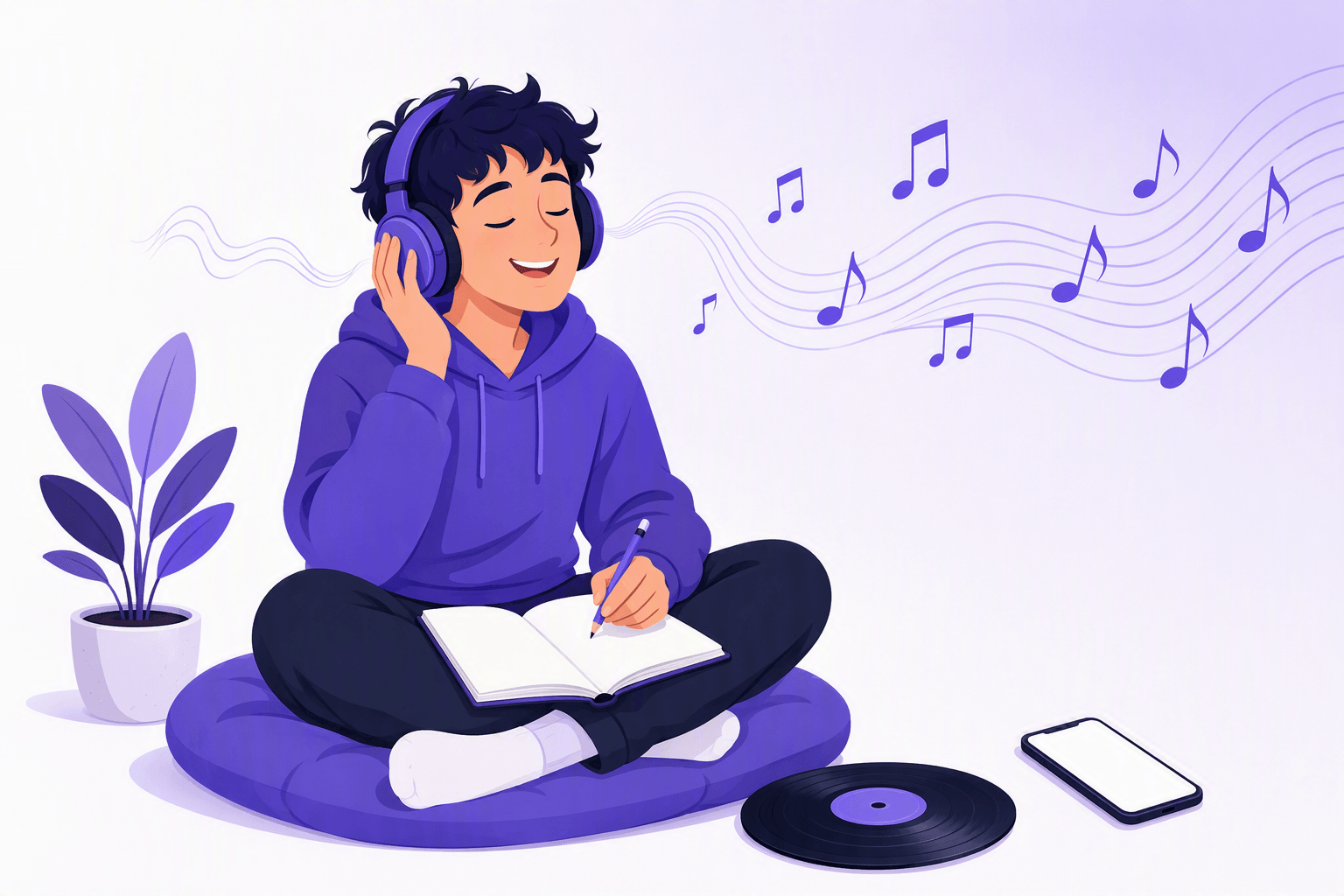
Songs give you something rare: the same native audio repeated thousands of times in the real world. That repetition is gold for your ear, especially for stress, reductions, and linking.
At the same time, lyrics are not everyday speech. Singers stretch vowels, drop sounds, use slang, and sometimes break grammar for rhyme.
What music is especially good for
Music is strong for pronunciation timing. English is stress-timed, so learners often sound choppy when every syllable gets equal weight.
Music also helps you internalize common chunks like "I don’t wanna" or "I’m gonna", which show up constantly in casual speech.
Finally, songs are emotionally sticky. In memory research, emotion and attention are tightly linked, and music is a reliable way to keep attention high.
What music is weak for
Music is weak for turn-taking, interruptions, and fast back-and-forth. Those are core conversation skills.
It is also weak for polite, formal, and workplace language. Lyrics skew toward intimacy, conflict, and emotion, not meetings and emails.
And songs can be misleading on vocabulary. A word can be common in music but rare in daily life, or it can be used in a poetic sense you will not want to copy.
⚠️ A common trap: 'I understand this song'
If you can follow a song only while reading lyrics, you are practicing reading, not listening. Use lyrics as a tool, then remove them and re-listen until your ear can track the words on its own.
The numbers: why this method scales
English is the most widely learned second language in the world, and it is used across many countries as a working language. Ethnologue lists English among the top languages by total speakers, and it is spoken across a very large number of countries and territories (Ethnologue, 27th edition, 2024).
That matters because music gives you access to massive amounts of English input for free. A single hit song can generate hours of repeated exposure without you forcing it.
Repetition is not glamorous, but it is how listening improves. Hearing the same line 50 times is often more useful than hearing 50 different lines once.
Step 1: Choose the right songs (your playlist is your curriculum)
Your first playlist should be small. Think 10 to 20 songs, not 200.
Pick songs you genuinely like, because you will listen to them a lot. Motivation is not a bonus feature, it is the engine.
What to look for in a "learner-friendly" song
Look for clear vocals and moderate tempo. Acoustic, singer-songwriter, and musical theater often work well.
Look for repeated choruses. Repetition makes the language easier to catch and gives you built-in review.
Look for concrete topics. Songs about daily life, relationships, or storytelling tend to have more usable language than abstract metaphor-heavy tracks.
What to avoid at the beginning
Avoid dense rap until your ear is stronger. Rap can be amazing later, but early on it can become noise plus frustration.
Avoid heavy effects and mumbled delivery. If you cannot hear consonants, you cannot learn them.
Avoid songs packed with profanity or niche slang if you plan to use English professionally. If you are curious, learn it safely with context, see our English swear words guide and English slang overview.
Step 2: Use a 3-pass listening routine (no guessing games)
This routine is simple enough to repeat daily, and strict enough to create progress.
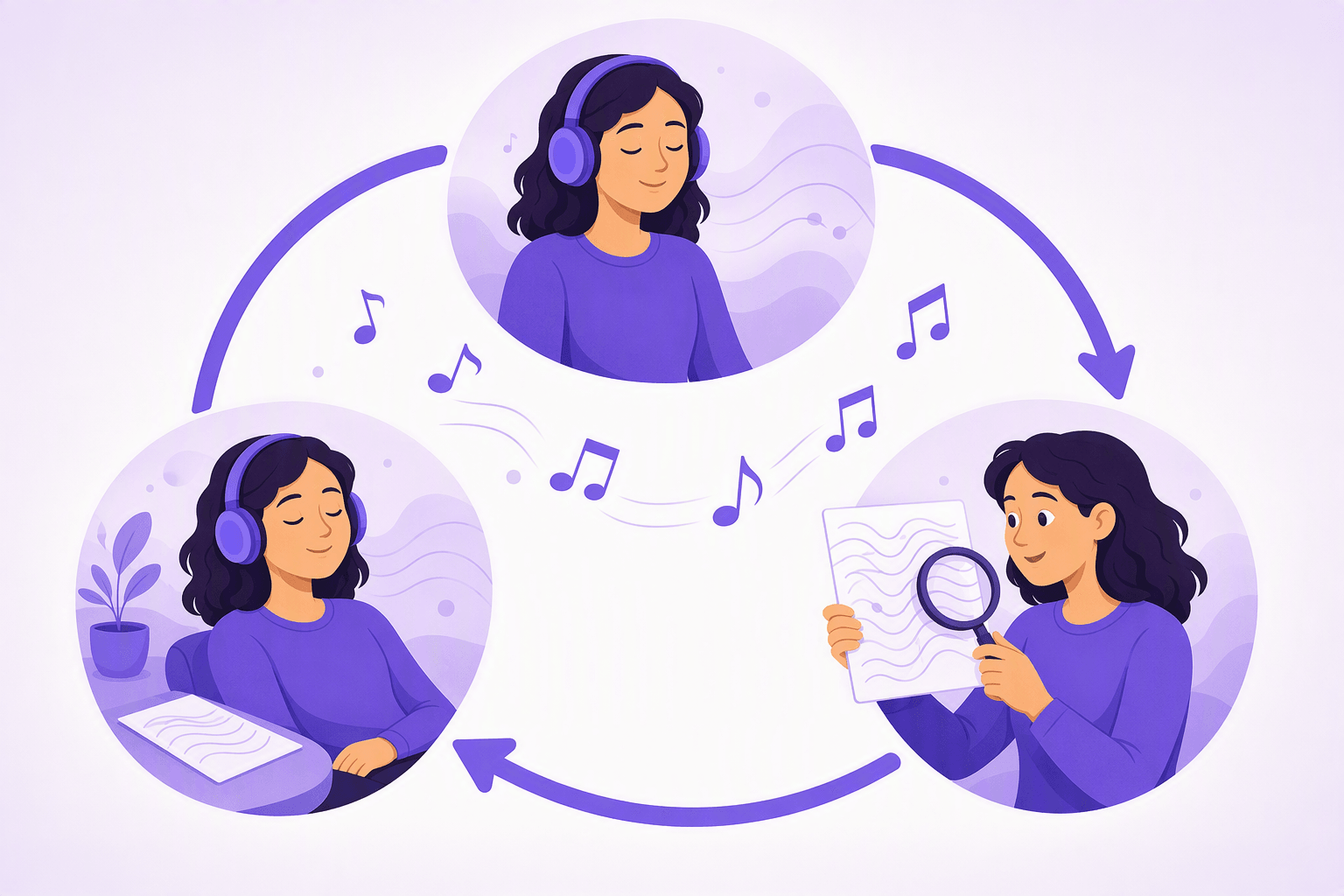
Pass 1: Blind listen (no lyrics)
Listen once and do not pause. Your job is to catch the topic and a few anchor words.
After the listen, write 3 to 5 words or phrases you think you heard. Even if you are wrong, you are training attention.
Pass 2: Lyric check and meaning
Now open the lyrics and confirm what was said. Look up key words, but do not translate every line.
Aim for the "story meaning" first. If you cannot explain the verse in simple English, you are not ready to memorize it.
Use a learner dictionary when possible. Cambridge Dictionary’s usage labels can help you notice when something is slang, informal, or offensive (Cambridge Dictionary, accessed 2026).
Pass 3: No-lyrics re-listen
Hide the lyrics and listen again. Your goal is to hear the same words you just confirmed.
If you lose the line, rewind 5 to 10 seconds, not the whole song. Train the exact spot where your ear breaks.
Step 3: Shadow the singer (pronunciation that actually transfers)
Shadowing means speaking along with the audio, slightly behind the singer. You are copying timing, stress, and reductions.
This is where music becomes a pronunciation tool, not just entertainment.
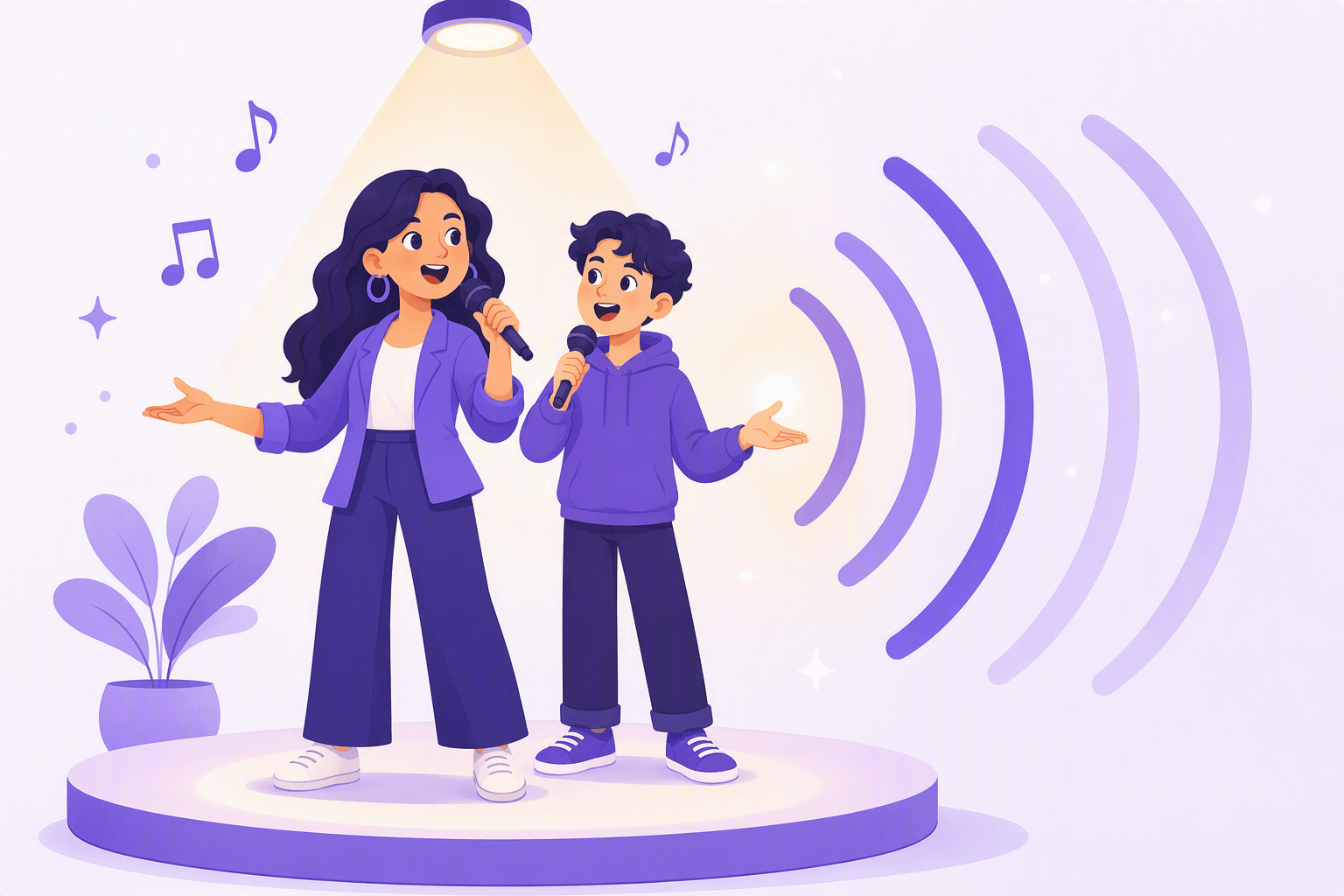
How to shadow without turning it into karaoke
Start with one chorus only. Shadow it 5 times in a row.
Do not aim for singing quality. Aim for consonants, stress, and smooth linking.
Record yourself once. Compare your rhythm to the singer’s rhythm, not your accent to theirs.
What to copy in English
Copy stress, not every vowel. English listeners understand you mainly through stress patterns and consonant clarity.
Copy reductions that are normal in speech, like "gonna" and "wanna". Do not force reductions in formal settings.
David Crystal’s work on English pronunciation and rhythm is useful here, because it frames English as rhythm-driven rather than tone-driven, which is exactly what songs make obvious.
Step 4: Mine lyrics for "chunks", not single words
A major difference between intermediate and advanced learners is chunk knowledge. You stop building sentences from scratch and start using ready-made patterns.
Songs are full of chunks.
What counts as a chunk
A chunk is a phrase you can reuse, like "I can’t help it" or "It’s not worth it."
A chunk is also a frame with a slot, like "I’m tired of ___" or "I’m looking forward to ___."
How to save chunks for review
Write the chunk, then write one new sentence about your life using it. This is how you prevent lyric-only knowledge.
If you use flashcards, keep them short. One chunk per card, plus one example sentence you created.
If you want a broader base of high-frequency words to support your listening, combine this with a core list like 100 most common English words.
Step 5: Build a "review loop" playlist
Most learners only add new material. They do not review, so their listening never stabilizes.
A review loop fixes that.
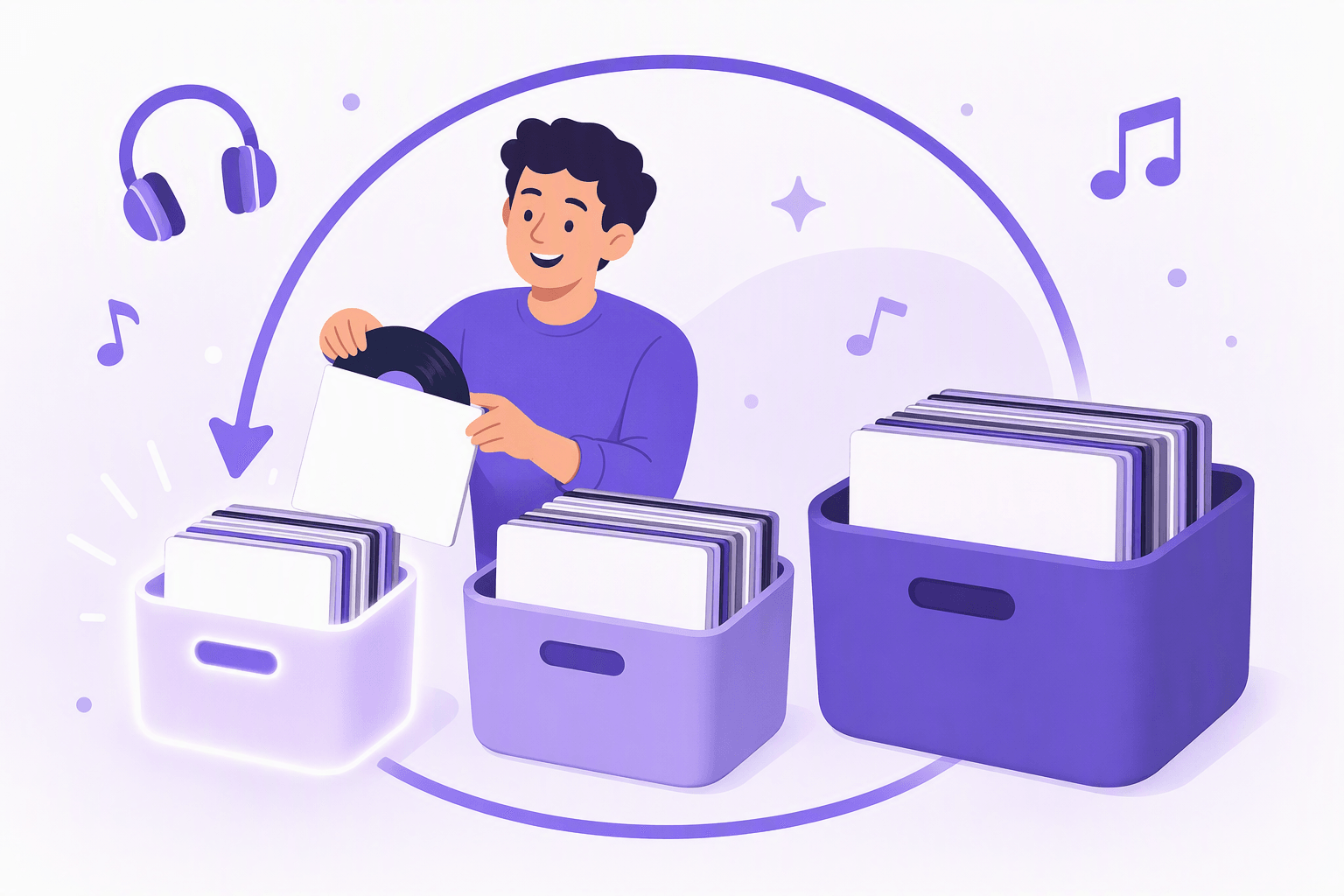
The 3-bucket playlist system
Bucket A: current focus songs (3 to 5 tracks). You study these actively.
Bucket B: review songs (10 to 20 tracks). You listen while walking, commuting, cleaning.
Bucket C: retired songs. You still like them, but they are not doing much learning work anymore.
Move songs from A to B when you can follow the chorus and at least one verse without lyrics.
Step 6: Use music to fix specific listening problems
If you know what to target, songs become a diagnostic tool.
The U.S. NIDCD has accessible explanations of how the brain processes sound, and it is a helpful reminder that listening is not only vocabulary, it is perception and attention (NIDCD, accessed 2026).
Problem: You cannot hear word boundaries
English links words, so learners hear a blur. Pick a slow song and mark where words connect.
Example targets: final consonant plus vowel, like "take it" sounding like "TAY-kit."
Shadow those joins, not the whole line.
Problem: You know the word but cannot recognize it
This is usually reduction. "Did you" becomes "DIH-juh" in fast speech.
Songs exaggerate rhythm, which can make reductions easier to notice. Once you notice them in music, you start hearing them in dialogue.
Problem: Your pronunciation is clear but "robotic"
That is stress timing. Use a chorus to practice strong-weak patterns.
Clap on stressed syllables only. Then shadow while keeping that stress pattern.
Step 7: Add spoken clips so your English becomes usable
Music trains your ear and mouth, but conversation is still conversation.
A practical pairing is music plus short dialogue clips. You get rhythm from songs and realism from speech.
If you like learning through scenes, Wordy focuses on short movie and TV clips with interactive subtitles and review tools. Keep it as a supplement, not a replacement for your playlist.
For more listening-first strategy, see how to learn a language with movies.
Lyrics are culture: learn what the song is really doing
Songs are not only language, they are identity. If you copy lyrics blindly, you can sound strange, rude, or dramatically emotional in the wrong setting.
Claire Kramsch’s work on language and culture is relevant here, because it treats language as social meaning, not only grammar.
Slang, taboo, and "performance language"
Many lyrics use performance language: words people say on stage, but not in the office.
If a song uses heavy insults or sexual language, treat it like a movie rating. You can understand it without repeating it.
If you want to learn these words for comprehension, do it deliberately and label them clearly. Our English slang guide is a safer starting point than copying a random chorus.
Regional accents and identity
Music can expose you to accents you rarely hear in textbooks. That is a benefit, but it can also confuse you early.
If you are a beginner, stick to one accent cluster for a month. Then branch out.
If you are curious about differences, our American vs British English guide helps you notice vocabulary and pronunciation patterns without overthinking.
A realistic 14-day plan (20 minutes a day)
This plan is short on purpose. Consistency beats intensity.
Days 1 to 3: Set up and pick one anchor song
Pick 5 songs total, but choose one anchor song to study first.
Do the 3-pass routine on the chorus only. Shadow the chorus 5 times.
Write down 5 chunks from the chorus. Create 1 new sentence for each chunk.
Days 4 to 7: Add one verse, keep the chorus
Study one verse in small slices, 2 to 4 lines at a time.
Keep shadowing the chorus daily. This is your repetition engine.
On day 7, record yourself shadowing the chorus. Compare rhythm and clarity.
Days 8 to 10: Add a second song, lighter study
Keep the anchor song in Bucket A. Add a second song, but only study its chorus.
This prevents burnout and keeps motivation high.
Days 11 to 14: Switch to "no-lyrics" listening tests
For both songs, do a no-lyrics listen and summarize the meaning out loud in simple English.
If you cannot summarize, you do not understand yet. Go back to meaning, not memorization.
Common mistakes (and quick fixes)
Treating music as passive exposure
Passive listening is fine for enjoyment, but it is slow for learning.
Fix: one focused chorus, one focused routine, every day.
Translating every line
Line-by-line translation turns music into homework and kills momentum.
Fix: get the story meaning first, then pick only the most reusable chunks.
Learning rare words instead of high-frequency language
Lyrics can be poetic. You might learn "eternity" before you can order coffee.
Fix: keep a separate list of "daily English" and build it with practical resources, like English numbers if you still hesitate with dates and prices.
Singing perfectly instead of speaking clearly
Singing can hide pronunciation problems. You can hold a note and still be unclear.
Fix: shadow in a speaking voice sometimes, with the same rhythm but less melody.
💡 A simple rule for vocabulary from songs
If you cannot imagine saying it to a friend in a normal conversation, learn it for comprehension, but do not make it part of your active speaking toolkit yet.
How to know it is working (measurable signals)
You start hearing the chorus without reading. That is the first big milestone.
You start predicting the next word. Prediction is a sign your brain is processing language, not decoding noise.
You start noticing the same chunk in other places, in movies, podcasts, or real conversation. That is transfer, and transfer is the goal.
Using music with other media (the fastest combo)
Music gives you repetition and rhythm. Movies and TV give you realistic speech and context.
A strong weekly mix is: 4 days music, 3 days dialogue clips. Keep sessions short and consistent.
If you want a ready-made dialogue tracklist, start with our best movies to learn English, then reuse the same scene the way you reuse a chorus.
Closing: make your playlist do the work
Learning a language with music works when you treat songs like repeatable training material: short sections, clear goals, and lots of re-listening without lyrics. Build a small playlist, shadow daily, and save chunks you can reuse in real life.
When you are ready to add more natural dialogue, combine your playlist with short movie and TV clips, and keep your review loop running so your listening stays stable. For more learning methods and resources, browse the Wordy blog and pick one routine you can keep for a month.
Frequently Asked Questions
Can you really learn a language with music?
What kind of songs are best for language learners?
How do I use lyrics without becoming dependent on reading?
Do songs teach real grammar and natural speech?
How long should I study one song?
Sources & References
- Ethnologue, Ethnologue 27th edition, 2024
- British Council, The English Effect, accessed 2026
- U.S. National Institutes of Health (NIDCD), Auditory Processing and Hearing, accessed 2026
- Cambridge Dictionary, entries for 'slang' and usage labels, accessed 2026
Start learning with Wordy
Watch real movie clips and build your vocabulary as you go. Free to download.


