German Modal Verbs: dürfen, können, mögen, müssen, sollen, wollen (With Real Examples)
Quick Answer
German modal verbs are the six helper verbs that express ability, permission, obligation, advice, desire, and preference: dürfen, können, mögen, müssen, sollen, wollen. They typically take a second verb in the infinitive at the end of the clause, and they have distinctive present tense forms that you should memorize early.
German modal verbs are the six core helper verbs, dürfen, können, mögen, müssen, sollen, wollen, that let you say what you can, may, must, should, or want to do, and they usually push the main verb into the infinitive at the end of the sentence. If you learn their present tense forms and the word order pattern once, you can instantly build hundreds of everyday German sentences.

| English | German | Pronunciation | Formality |
|---|---|---|---|
| may / allowed to | dürfen | DEWR-fen | polite |
| can / able to | können | KER-nen | polite |
| like (to) / may (rare) | mögen | MER-gen | polite |
| must / have to | müssen | MEW-sen | polite |
| should / supposed to | sollen | ZOLL-en | polite |
| want (to) | wollen | VOLL-en | polite |
Why modal verbs matter in real German (and why learners notice them fast)
Modal verbs are the fastest way to sound functional in German because they map to daily needs: permission, ability, obligation, advice, and intention. They also appear constantly in spoken German, especially in short exchanges like planning, ordering, and negotiating rules.
German is spoken by tens of millions of people across Europe, and it is an official language in multiple countries. Ethnologue (27th ed., 2024) lists German as one of the world’s most widely spoken languages by native speakers, and it is used across Germany, Austria, Switzerland, Liechtenstein, Luxembourg, Belgium, and Italy (South Tyrol) in official or co-official roles.
A practical point: modal verbs are also where German word order starts to feel different from English. That difference is not “advanced grammar”, it is day-one survival grammar.
"Grammar is not a set of prohibitions, but a set of resources for making meaning precisely in context."
David Crystal, linguist (Cambridge Encyclopedia of the English Language)
Crystal is talking about language broadly, but it applies perfectly here: German modal verbs are a resource. Once you control them, you can be precise about what is required vs recommended, or allowed vs possible.
💡 Movie and TV listening shortcut
When you watch German clips, listen for the pattern "modal in position 2, action at the end". Your brain starts predicting the final verb, which improves comprehension. If you are learning through scenes, pair this with a greetings clip like how to say hello in German so you practice modal verbs in realistic small talk.
The core sentence pattern: the 'verb bracket'
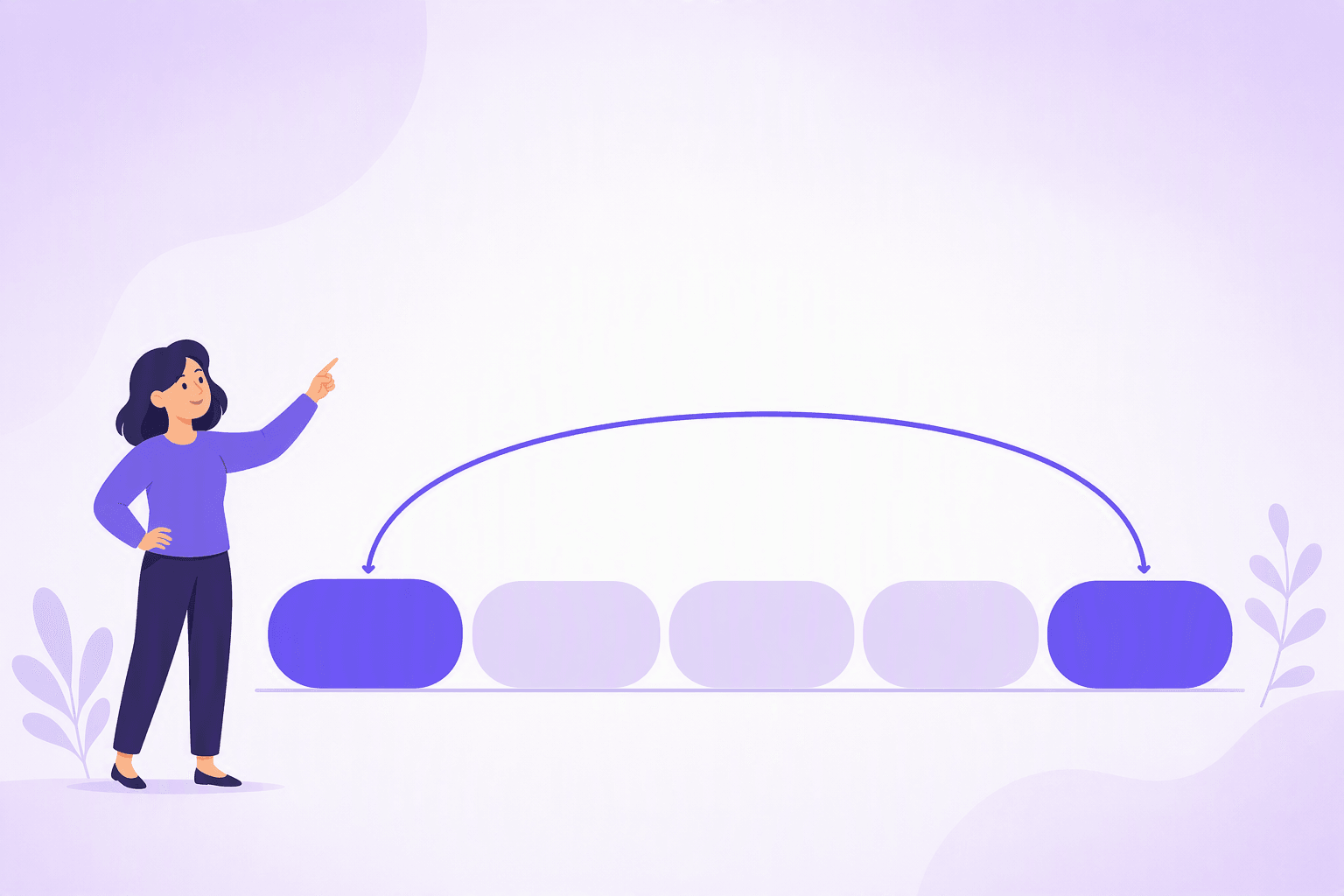
In a simple main clause, German puts the finite verb (the conjugated verb) in position 2. With modal verbs, the modal becomes the finite verb, and the main action stays as an infinitive at the end.
Formula (main clause):
Subject + modal (conjugated) + middle field + main verb (infinitive)
Example:
- Ich kann heute nicht kommen. (ikh kahn HOY-tuh nikht KOH-men)
The “middle field” can include time words, objects, negation, and adverbs. This is why modal sentences can get long, but they are still predictable.
Word order with questions
Yes-no question:
- Kann ich kurz rein? (kahn ikh koorts rine)
W-question:
- Warum musst du so früh gehen? (vah-ROOM moost doo zoh froo GEH-en)
Word order with separable verbs
If the main verb is separable, it stays together as an infinitive at the end:
- Ich muss morgen früh aufstehen. (ikh mooss MOR-gen froo OUF-shtay-en)
Word order in subordinate clauses
In subordinate clauses, German often sends the finite verb to the end. With modals, you can see “verb clusters” at the end.
- ..., weil ich heute nicht kommen kann. (vile ikh HOY-tuh nikht KOH-men kahn)
Don’t overthink the labels. Notice the practical rule: in subordinate clauses, the modal often appears at the very end, after the infinitive.
⚠️ Common learner mistake
Do not put the infinitive right after the modal like English. "Ich kann kommen heute" is not natural. Keep the action verb at the end: "Ich kann heute kommen."
Conjugation patterns you actually need (present tense first)
Most modal verbs have irregular present tense forms, especially in ich and du and er/sie/es. The good news is that wir and sie/Sie are usually the infinitive form.
Here are the present tense forms you should memorize early:
| Modal | ich | du | er/sie/es | wir | ihr | sie/Sie |
|---|---|---|---|---|---|---|
| dürfen | darf | darfst | darf | dürfen | dürft | dürfen |
| können | kann | kannst | kann | können | könnt | können |
| mögen | mag | magst | mag | mögen | mögt | mögen |
| müssen | muss | musst | muss | müssen | müsst | müssen |
| sollen | soll | sollst | soll | sollen | sollt | sollen |
| wollen | will | willst | will | wollen | wollt | wollen |
Pronunciation reminders (English approximations):
- dürfen: DEWR-fen (ü is like “ew” with rounded lips)
- können: KER-nen (ö like “uh” but rounded)
- mögen: MER-gen
- müssen: MEW-sen
- sollen: ZOLL-en
- wollen: VOLL-en
If you want a broader foundation for what “regular” looks like, pair this with the bigger system in our German verb conjugation guide.
dürfen
dürfen (DEWR-fen) is about permission and “being allowed to”. In real life it is common in shops, offices, and any situation with rules.
Permission: allowed to
- Darf ich hier sitzen? (darf ikh heer ZIT-sen)
- Du darfst das nicht machen. (doo darfst das nikht MAH-khen)
A cultural detail: in German-speaking countries, asking permission directly is normal and often appreciated, especially in shared spaces (empty seat on a train, opening a window, bringing a dog inside). Darf ich... ? is a polite, low-friction opener.
Negative permission: not allowed to
Negation is usually nicht:
- Du darfst hier nicht rauchen. (doo darfst heer nikht ROW-khen)
If you are learning “softening” strategies, you will hear dürfen paired with small politeness markers:
- Darf ich kurz...? (briefly)
- Darf ich mal...? (casual “just”)
können
können (KER-nen) covers ability, possibility, and often practical availability.
Ability: can, know how to
- Ich kann gut kochen. (ikh kahn goot KOH-khen)
- Kannst du schwimmen? (kahnst doo SHVIM-men)
Possibility: can, it’s possible
- Das kann stimmen. (das kahn SHTIM-men)
This often means “that could be true”.
Requests: can you (polite enough in many contexts)
- Kannst du mir helfen? (kahnst doo meer HEL-fen)
In customer service, Germans often prefer a slightly more indirect request with könnten (subjunctive):
- Könnten Sie mir bitte helfen? (KERNT-en zee meer BIT-uh HEL-fen)
That one change, kannst to könnten, is a major politeness upgrade.
mögen
mögen (MER-gen) is tricky because learners meet it early, but native usage splits into two common lanes.
Liking: to like
- Ich mag Kaffee. (ikh mahk KAH-fay)
- Magst du Sushi? (mahkst doo SOO-shee)
This is straightforward and common.
Polite preference: möchten
For “would like”, German usually uses möchten (MERKH-ten). It is the subjunctive form of mögen, and it is the standard for ordering and polite wants.
- Ich möchte einen Kaffee. (ikh MERKH-tuh EYE-nen KAH-fay)
- Möchten Sie noch etwas? (MERKH-ten zee nokh ET-vas)
If you only learn one restaurant sentence, make it Ich möchte.... It is polite without sounding stiff.
🌍 A small but real politeness difference
In many German-speaking contexts, "Ich will..." can sound blunt when ordering, like a demand. "Ich möchte..." is the default polite choice. You will hear it constantly in cafes, bakeries, and pharmacies.
müssen
müssen (MEW-sen) expresses necessity. It is stronger than “should” and often closer to “have to”.
Strong necessity: must, have to
- Ich muss arbeiten. (ikh mooss AR-bye-ten)
- Wir müssen jetzt los. (veer MEW-sen yetst lohs)
Logical conclusion: must be
German also uses müssen for inference:
- Er muss krank sein. (air mooss krahngk zine)
Meaning: “He must be sick” (speaker’s conclusion).
This is common in detective-style dialogue, news commentary, and everyday guessing.
💡 Fast contrast: müssen vs dürfen
müssen is about necessity, dürfen is about permission. "Ich muss gehen" is obligation. "Ich darf gehen" is permission. In English both can translate to "can" or "have to" depending on context, so train yourself to ask: rules or ability, permission or necessity?
sollen
sollen (ZOLL-en) is one of the most useful modals because it covers advice, expectations, and reported information.
Advice and expectation: should, supposed to
- Du sollst mehr schlafen. (doo zollst mare SHLAH-fen)
- Ich soll morgen anrufen. (ikh zoll MOR-gen AHN-roo-fen)
Often implies “someone expects me to”.
Hearsay: is said to
German uses sollen to distance the speaker from the claim:
- Er soll sehr reich sein. (air zoll zair rike zine)
Meaning: “He is said to be very rich.”
You will see this in journalism and gossip, and it is a subtle credibility marker. If you want to sound natural when repeating information, sollen is a clean tool.
If you enjoy how German encodes social meaning, you might also like the contrast between direct and indirect tone in our German slang guide.
wollen
wollen (VOLL-en) is about intention and wanting.
Wanting: want to
- Ich will nach Hause. (ikh vil nahkh HOW-zuh)
- Willst du mitkommen? (vilst doo MIT-koh-men)
Plans and intentions
- Wir wollen am Wochenende wandern gehen. (veer VOLL-en ahm VEH-khen-en-duh VAHN-dern GEH-en)
A cultural note: German can sound “direct” to English speakers because wollen is often used plainly among friends and family. In service situations, though, möchte is usually the smoother choice.
For emotional language, you will also hear wollen in relationship talk, often near phrases like those in how to say I love you in German, where intention matters as much as vocabulary.
Negation, particles, and what makes modal sentences sound native
Modal verbs are easy to form, but sounding natural comes from the small words in the middle field.
nicht vs kein
- Ich kann nicht kommen. (not coming, verb negation)
- Ich kann kein Auto fahren. (no car, noun negation)
Common particles with modals
These add tone more than meaning:
- mal: softens, casual
Kannst du mal schauen? (kahnst doo mahl SHOW-en) - doch: gentle pushback or reminder
Du kannst doch mitkommen. (doo kahnst dokh MIT-koh-men) - schon: reassurance or “eventually”
Das wird schon gehen. (das veert shohn GEH-en)
You will hear these constantly in everyday speech and in TV dialogue because they make lines feel human, not textbook.
Past and perfect forms (what you need for real conversations)
In spoken German, the past of modal verbs appears in two common ways: Präteritum (simple past) for the modal itself, and Perfekt in some regions and contexts.
Simple past is very common for modals
- Ich musste gestern arbeiten. (ikh MOOS-tuh GES-tern AR-bye-ten)
- Ich konnte nicht schlafen. (ikh KON-tuh nikht SHLAH-fen)
This is one reason German learners meet Präteritum early, even if they mostly use Perfekt for other verbs.
The double infinitive in Perfekt
With modals, Perfekt often uses a “double infinitive”:
- Ich habe arbeiten müssen. (ikh HAH-buh AR-bye-ten MEW-sen)
- Er hat nicht kommen können. (air haht nikht KOH-men KER-nen)
This looks advanced, but it is extremely common. Treat it as a chunk: haben + infinitive + modal infinitive.
⚠️ Do not force Perfekt everywhere
Many learners try to say "Ich habe gemusst" or "Ich habe gekonnt" as a default. Those forms exist, but in everyday German the double infinitive pattern is often the natural choice when another verb is involved: "Ich habe gehen müssen."
Mini practice: build 12 useful sentences fast
Use these as templates. Swap the infinitive at the end and keep the modal form.
- Darf ich kurz reinkommen? (darf ikh koorts RINE-koh-men)
- Ich darf heute nicht länger bleiben. (ikh darf HOY-tuh nikht LENG-er BLYE-ben)
- Kannst du mir das erklären? (kahnst doo meer das air-KLEH-ren)
- Ich kann leider nicht. (ikh kahn LYE-der nikht)
- Ich mag das Lied. (ikh mahk das leed)
- Ich möchte bitte zahlen. (ikh MERKH-tuh BIT-uh TSAH-len)
- Ich muss jetzt los. (ikh mooss yetst lohs)
- Wir müssen noch einkaufen. (veer MEW-sen nokh EINE-kow-fen)
- Du sollst dich ausruhen. (doo zollst dikh OWS-roo-en)
- Er soll sehr nett sein. (air zoll zair net zine)
- Ich will das versuchen. (ikh vil das fair-ZOO-khen)
- Wollen wir später telefonieren? (VOLL-en veer SHPAY-ter tay-leh-foh-NEE-ren)
If you want to hear these in realistic pacing, learn them through short scenes. Wordy-style clip learning works well here because modals are high-frequency and the word order is audible once you know to listen for it.
How modal verbs show up in real-life German etiquette
Modal verbs are not just grammar, they encode social expectations.
In German-speaking cultures, rules are often stated plainly in public spaces (signs, announcements, workplace policies). That makes dürfen and müssen especially visible, and it also makes the “permission vs necessity” contrast more important than in some English contexts.
At the same time, German has many built-in softeners, especially möchte, könnten, and particles like mal and bitte. The result is a style that can be direct about facts, but still polite in interaction.
You can see the same directness vs warmth contrast in everyday openers and closers. Compare your modal requests with the tone of how to say goodbye in German, where formality and distance matter in a different way.
A quick roadmap for what to learn next
- Memorize present tense forms for ich, du, er/sie/es.
- Automate the pattern: modal in position 2, infinitive at the end.
- Add one politeness upgrade: könnten and möchte.
- Then learn the past chunks: musste, konnte, and the double infinitive Perfekt.
For broader listening and vocabulary growth, use authentic input. If you are building a daily routine, start at the German learning page, and keep a lightweight grammar reference open while you watch.
As a side note, once you understand modals, you will also understand why certain “strong language” lines in films land the way they do, because obligation and permission are often part of the punch. If you are curious, see our guide to German swear words for context and register, not for everyday use.
Frequently Asked Questions
What are the 6 German modal verbs?
Why does the infinitive go to the end with modal verbs?
What is the difference between müssen and sollen?
How do I say 'can' in German: kann or können?
Is mögen the same as möchten?
Sources & References
- Duden, Die Grammatik (Band 4), 9. Auflage
- Institut für Deutsche Sprache (IDS), Grammatik und Sprachgebrauch Ressourcen, 2024
- Goethe-Institut, Deutsch lernen: Grammatik, Modalverben, 2024
- Ethnologue, Languages of the World (27th edition), 2024
Start learning with Wordy
Watch real movie clips and build your vocabulary as you go. Free to download.


