Quick Answer
The most difficult French sounds for many learners are the French R, the vowel U, nasal vowels (an/en, in, on), and the rhythm changes caused by liaison and silent letters. You can fix them by training mouth position first, then using minimal pairs, then copying short native clips until your tongue and airflow match real speech.
French learners most often struggle with the French R, the vowel U, nasal vowels, and the way French links words through liaison and silent letters. The fix is not more “speaking practice” in general, it is targeted mouth-position training plus short, repeatable listening loops until your airflow and timing match real French.
French is spoken across dozens of countries and territories, and there are hundreds of millions of French speakers worldwide (OIF; Ethnologue, 27th ed., 2024). That means you will hear accent variation, but the core sound contrasts below are stable enough that mastering them pays off everywhere.
If you want quick wins first, start with greetings because they contain several of the hardest sounds. See how to say hello in French and how to say goodbye in French, then come back and tune the specific sounds that feel “impossible”.
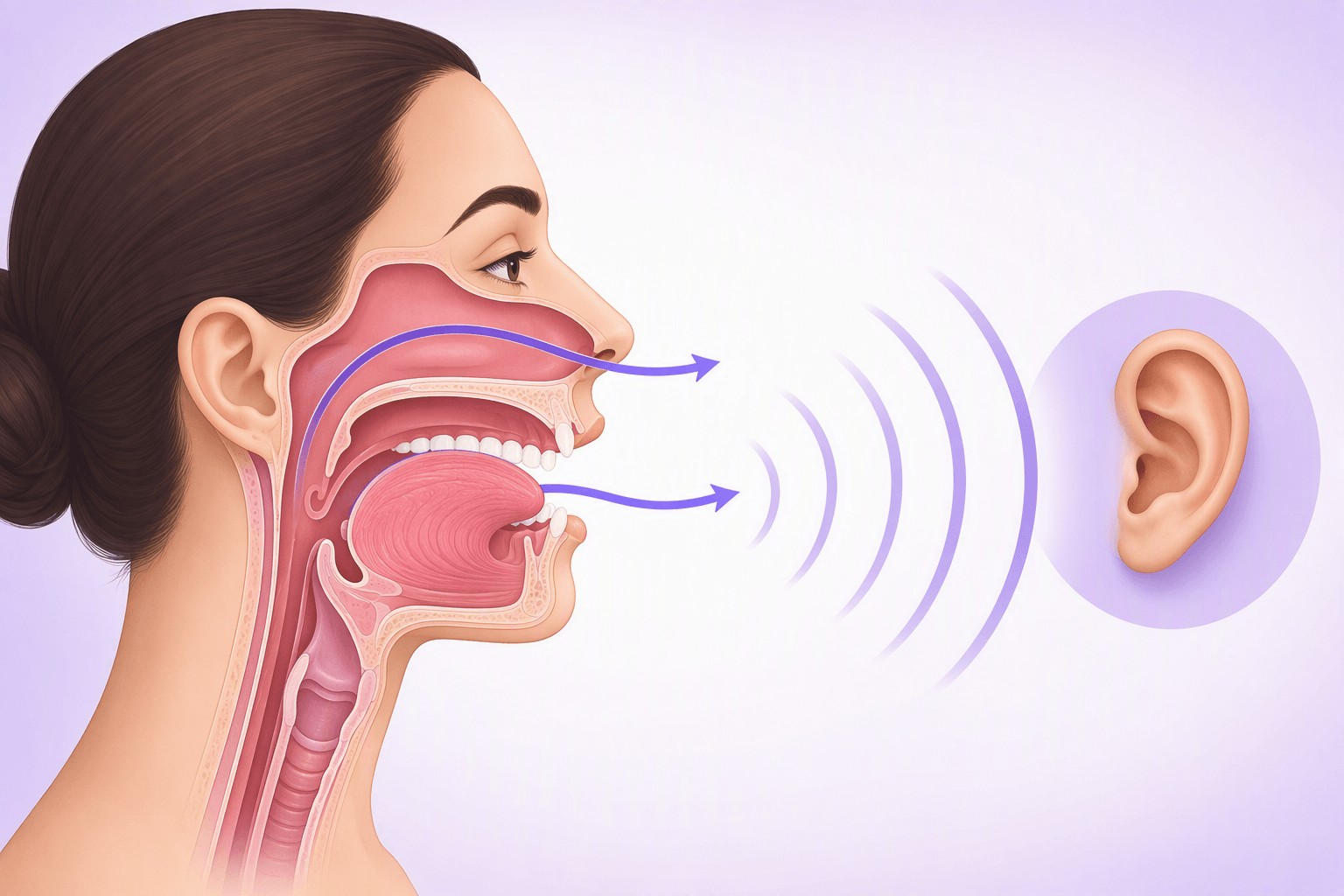
How to use this guide (so it actually changes your accent)
Pronunciation improves fastest when you separate three skills: hearing the contrast, placing the mouth correctly, then keeping the sound while speaking at speed.
Phoneticians like Peter Ladefoged (in his work on phonetic description) emphasize that speech sounds are physical gestures. Treat each sound below as a gesture you can learn, not a vibe you either have or do not have.
A simple 3-step practice loop
-
Isolate the sound in one syllable, then one word.
-
Contrast it with a near neighbor (minimal pairs).
-
Connect it inside a short phrase, then a full sentence.
💡 The '10-second clip' rule
Pick a short line from a movie or show, under 10 seconds, and repeat it 10 times. You are training timing and linking, not just individual letters. This is also why clip-based practice works well for liaison and rhythm.
The 12 most difficult French sounds (and how to fix them)
The French R (uvular fricative)
The French R is not the English R. In many standard accents, it is produced in the back of the mouth, with friction near the uvula.
What it feels like: a gentle “raspy” airflow at the back, not a rolled tongue.
Common mistake: pushing too much air and turning it into a harsh gargle.
Fix:
- Keep the tongue relaxed in front, raise the back of the tongue slightly.
- Start voiceless first (like a soft “kh”), then add voicing.
- Practice in short words: rue, rare, Paris.
Minimal pair idea: roue vs loue (R vs L contrast helps you feel the back-of-mouth action).
🌍 Why the French R feels 'dramatic' in films
In close-mic cinema dialogue, the French R can sound stronger than in everyday life because microphones pick up throat friction. If you copy film lines, aim for clarity, but keep the airflow gentle so you do not overdo it in normal conversation.
U (u) vs OU (ou)
French has a vowel contrast that English does not: u vs ou. Learners often collapse both into “oo”.
- u as in tu: (TOO) is a common English approximation, but the real target is a front rounded vowel.
- ou as in vous: (VOO) is a back rounded vowel.
What to do physically:
- For u, smile slightly (lips rounded but forward), tongue high and forward.
- For ou, lips rounded, tongue high but further back.
Minimal pairs to drill:
- tu vs tout
- lune vs loup (not perfect spelling symmetry, but useful contrast)
- vu vs vous (VOO is canonical for vous)
⚠️ Do not 'English-ify' tu and vous
If tu and vous sound identical, you will confuse pronouns in fast speech. That is a comprehension problem, not just an accent issue.
É (é) vs È (è) vs E muet (e)
French “e” is a whole system, not one sound.
- é is a clear, tense vowel (think café).
- è is more open (think très).
- e muet often disappears in casual speech, especially in fast conversation.
Common mistake: pronouncing every written “e” equally.
Fix:
- Learn frequent words as chunks: je (zhuh), merci (mehr-SEE), c’est (SEH).
- Listen for when the “e” drops: petite can sound like “ptit” in rapid speech in some contexts.
In French phonology discussions, Tranel’s work on French sound patterns is often used to show how “schwa” behaves differently depending on rhythm and surrounding consonants. You do not need the theory to improve, but you do need the habit of learning words in phrases.
Nasal vowel: AN/EN (an, en)
This is the nasal vowel you hear in sans, enfant, France.
English approximation: “ahn” with nasal airflow, but do not add an extra N at the end.
Common mistake: saying “an” plus a clear N, like fran-nce.
Fix:
- Say the vowel, then lower the soft palate slightly so air exits through the nose.
- Keep the mouth open enough, do not pinch it into an “in” sound.
Practice words: enfant, sans, dans.
Nasal vowel: ON (on)
This is the nasal vowel in bonjour (bohn-ZHOOR) and nom.
Common mistake: turning it into “own” or adding a final N.
Fix:
- Round the lips more than for AN/EN.
- Keep it one vowel, no consonant release.
Practice words: bon, nom, long.
Nasal vowel: IN/UN (in, un)
This is the nasal vowel in vin, pain, un.
Common mistake: making it too close to AN/EN, or pronouncing a clear “n”.
Fix:
- Keep the tongue higher and more forward than for AN/EN.
- Maintain nasal airflow, but keep the vowel quality distinct.
Practice words: vin, un, matin.
💡 A listening trick for nasal vowels
Do not only listen for nasal airflow. Listen for lip rounding and tongue height differences. ON is rounder, IN/UN is higher and more forward, AN/EN is more open.
The French J sound (j, soft g): /ʒ/
This is the sound in je (zhuh) and bonjour (bohn-ZHOOR). English has it in “measure”, but many learners still replace it with “sh” or “z”.
Fix:
- Put the tongue close to the roof behind the teeth, like “sh”.
- Add voicing, so it vibrates like “z”.
Practice words: je, jour, bonjour.
This sound matters socially because it is extremely frequent in function words: je, j’ai, jamais. If it is off, your French can sound “foreign” even when your vocabulary is strong.
The French CH (ch): /ʃ/
French ch is usually “sh”, as in chat.
Common mistake: pronouncing it as “ch” like English “chair”.
Fix:
- Aim for a clean “sh” with no stop at the start.
- Keep it short and crisp.
Practice words: chat, chaud, chercher.
The French GN (gn): /ɲ/
This is the “ny” sound in champagne and mignon.
Common mistake: pronouncing a hard G plus N, like “mig-non”.
Fix:
- Say “n” while the middle of your tongue touches the palate, similar to Spanish ñ.
- Keep it one smooth sound.
Practice words: mignon, champagne, ligne.
The French L (clear L)
French L is typically “clearer” than many English Ls, especially the dark L at the end of English words like “full”.
Common mistake: using a dark, back-of-tongue English L.
Fix:
- Touch the tip of the tongue to the ridge behind the upper teeth.
- Keep the back of the tongue relaxed.
Practice words: elle, là, ville.
Final consonants that are silent (until they are not)
French spelling preserves history, and final consonants are often silent: petit, grand, parler.
But they can reappear:
- in liaison: les amis (lay zah-MEE)
- in related forms: petit vs petite
- in careful speech: some speakers articulate more consonants in formal contexts
CNRTL is a practical reference when you want to check pronunciation patterns for specific words (CNRTL, accessed 2026). Use it to confirm whether a final consonant is typically pronounced.
Fix:
- Learn “word plus neighbor” as your unit: petit ami, grand homme, les enfants.
- Memorize common liaison triggers (determiners, pronouns, some prepositions).
Liaison (linking) and enchaînement (resyllabification)
Liaison is not just “pronounce the last letter”. It changes the rhythm and syllable boundaries.
Example: les amis becomes something like “lay-za-mee”, not “lez… amis” with a pause.
Common mistake: reading word-by-word and inserting micro-pauses.
Fix:
- Practice with short, high-frequency chunks: vous avez, ils ont, un ami.
- Copy native clips, because liaison is style-sensitive.
🌍 Liaison is also a social signal
In some settings, heavy liaison can sound formal, careful, or even theatrical. In casual speech, many optional liaisons drop. If you want to sound natural, copy the level of linking you hear in the specific show, region, and character type.
French rhythm: stress on groups, not on every word
English is stress-timed, French is often described as syllable-timed with phrase-final prominence. Practically, French tends to stress the end of a phrase group, not each content word the way English often does.
David Abercrombie’s classic discussions of rhythm are often referenced in phonetics courses to explain why learners “sound wrong” even when individual sounds are correct. Your goal is to keep syllables even, then slightly lean on the final syllable of a group.
Fix:
- Mark thought groups with slashes: Je ne sais pas / ce que tu veux.
- Keep earlier syllables lighter, do not punch every noun.
Mini practice plan: 15 minutes a day for 14 days
This plan is short on purpose. Consistency beats marathon sessions.

Days 1 to 4: U vs OU and J (/ʒ/)
Spend 5 minutes on tu vs tout and vous.
Spend 5 minutes on je, j’ai, bonjour.
Spend 5 minutes copying one short clip with those words.
If you need more everyday phrases to anchor the sounds, use how to say I love you in French because it forces you into French rhythm and vowel clarity.
Days 5 to 9: Nasal vowels (AN/EN, ON, IN/UN)
Pick 3 words per vowel and rotate them.
Record yourself and check one thing only: are you adding a final N?
Days 10 to 14: R, liaison, and connected speech
Do not practice R in isolation forever.
Practice R inside phrases that force linking: très heureux, pour un ami, bonjour, merci.
💡 A realistic target
You do not need a perfect Paris accent. You need stable contrasts: u vs ou, nasal vowels not turning into vowel-plus-N, and smooth linking. Those three changes make you easier to understand fast.
Common learner traps (and what to do instead)
Trap 1: Over-trusting spelling
French spelling is informative, but not a direct pronunciation map.
Instead, build a “spoken dictionary” in your head: store words with a short audio memory, ideally inside a phrase.
Trap 2: Practicing sounds without perception
If you cannot hear u vs ou, you will not produce it reliably.
Do short listening tests: play tu and tout in random order and point to the correct word before you speak.
Trap 3: Avoiding embarrassing sounds
Learners often avoid the French R or nasal vowels by rephrasing.
That works for survival, but it slows improvement. Pick one sound per week and face it.
If you want a fun, high-emotion context that forces real pronunciation, even taboo words show how natives compress and link sounds. Our French swear words guide is useful as a listening reference, even if you choose not to use the expressions yourself.
⚠️ Responsible use
Swear words are socially risky and context-dependent. If you study them for pronunciation, treat them as comprehension practice, not default speaking material.
Why movie and TV dialogue helps French pronunciation
Textbook audio is clean, but real French is fast, linked, and full of reductions.
Movie dialogue gives you:
- realistic liaison choices
- real vowel reduction patterns
- rhythm that matches emotion and intent
If you want a method, not just a list of sounds, read how to learn a language with movies. The same approach applies to French: short clips, repeated imitation, then reuse in your own sentences.
A quick self-check: are you improving?
You are improving if:
- natives stop asking you to repeat tu and tout
- your bonjour sounds like one smooth unit (bohn-ZHOOR)
- your nasal vowels stop ending with a clear N
- your French feels “faster” without you speaking faster, because you are linking
Pick one sentence, record it on day 1 and day 14, and compare. The change is usually obvious.
One practical next step
Choose three phrases you already use and rebuild them with correct sounds and linking. Greetings are perfect for this, so start with how to say hello in French and how to say goodbye in French, then practice them as short clips until they feel automatic.
If you learn French with real dialogue, Wordy’s clip loop makes it easy to repeat the same line until your mouth matches what you hear, then move on only when it does.
Frequently Asked Questions
What is the hardest sound in French?
How do I pronounce the French R without sounding harsh?
Why do French nasal vowels sound the same to me?
Do I need to pronounce every silent letter in French?
Is liaison mandatory in French?
Sources & References
- Organisation internationale de la Francophonie (OIF), La langue française dans le monde
- Ethnologue, 27th edition, 2024
- CNRTL (Centre National de Ressources Textuelles et Lexicales), French phonetics and lexicon resources, accessed 2026
- Collins Dictionary, French pronunciation and phonetics help, accessed 2026
Start learning with Wordy
Watch real movie clips and build your vocabulary as you go. Free to download.


