French Language Overview: Where It’s Spoken, How It Works, and How to Learn It
Quick Answer
French is a global language spoken across Europe, Africa, the Americas, and the Pacific, with hundreds of millions of speakers and strong international status. This overview explains where French is used, what makes its pronunciation and grammar distinctive, and how to learn it efficiently with real listening practice.
French is a global language with hundreds of millions of speakers, official status across multiple continents, and a distinctive sound system that rewards strong listening practice early. If you want a practical French language overview, focus on three things: where French is used (so you can choose the right accent), the core pronunciation and grammar patterns, and a learning plan built around real spoken French.
| English | French | Pronunciation | Formality |
|---|---|---|---|
| Hello | Bonjour | bohn-ZHOOR | polite |
| Hi | Salut | sah-LOO | casual |
| Goodbye | Au revoir | oh ruh-VWAHR | polite |
| See you later | À tout à l'heure | ah too tah-LUHR | casual |
| Please | S'il vous plaît | seel voo PLEH | polite |
| Thank you | Merci | mehr-SEE | polite |
| Excuse me | Excusez-moi | ex-kyoo-ZEH mwah | polite |
| I love you | Je t'aime | zhuh TEM | casual |
Why French matters in 2026
French is not just "the language of France." It is a working language of major international institutions, a key language of education in parts of Africa, and a daily home language for communities in Europe and North America.
The Organisation internationale de la Francophonie reports about 321 million French speakers worldwide (2022), including native speakers and people who use French as a second language. Ethnologue (2024) also lists French among the world’s most significant languages by global reach and institutional use.
French is also one of the most learnable major languages for English speakers. The U.S. Foreign Service Institute classifies French as Category I, meaning it typically takes fewer classroom hours than languages with very different writing systems or grammar.
💡 Pick your 'target French' early
If you are learning for France, aim for media from France. If you are learning for Quebec, add Quebec TV and podcasts early. Grammar stays largely the same, but your listening comfort depends on accent exposure.
Where French is spoken (and what that means for learners)
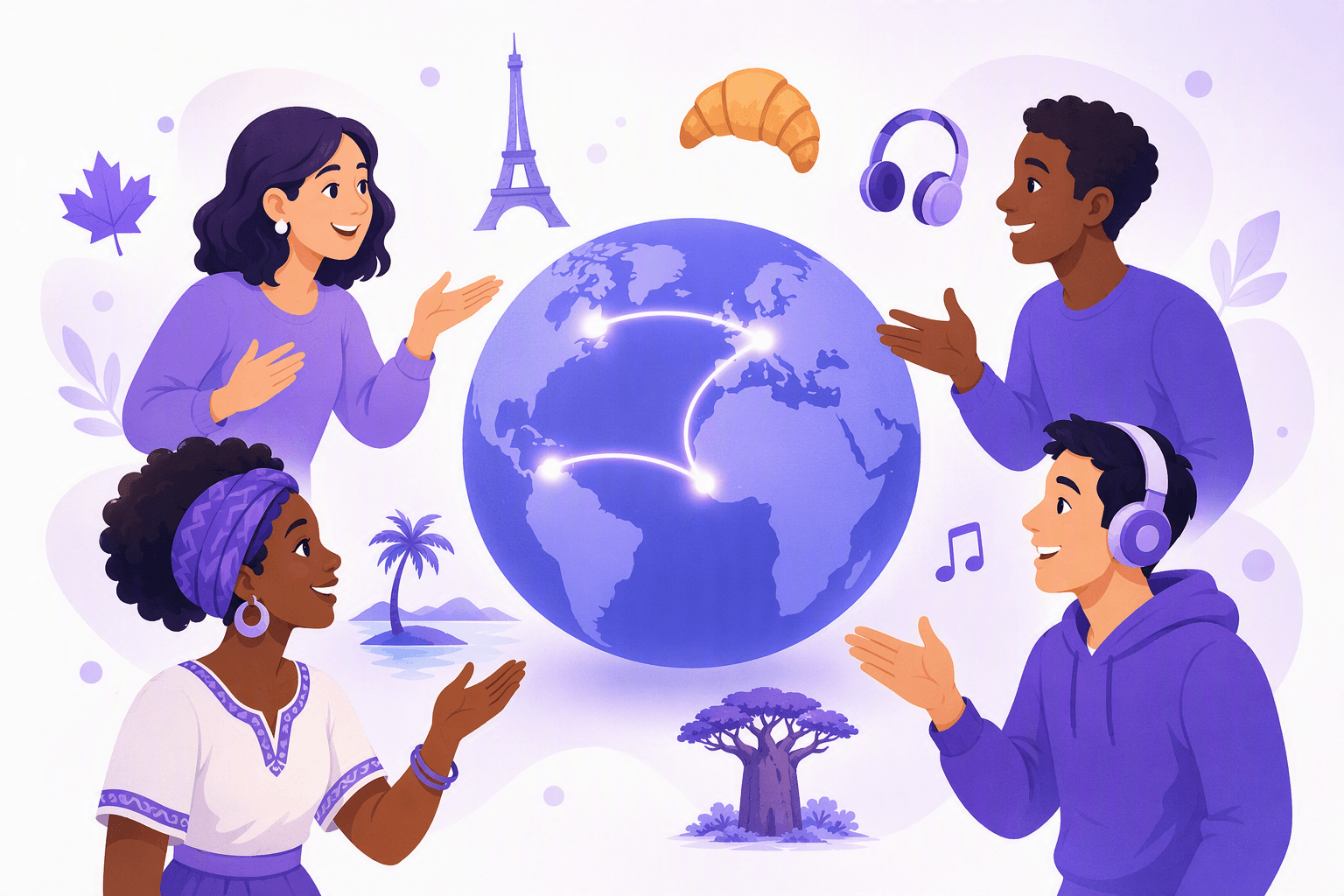
French is spoken across Europe, Africa, the Americas, and the Pacific. That geographic spread is exactly why learners sometimes feel confused: "Which French am I learning?"
France, Belgium, Switzerland, Luxembourg
In Europe, French is central in France and widely used in francophone Belgium (Wallonia and Brussels) and francophone Switzerland (Romandie). Luxembourg uses French alongside Luxembourgish and German in public life.
For learners, this cluster is helpful because media is abundant and pronunciation norms are relatively close, especially in formal contexts like news broadcasts.
Canada (especially Quebec)
Canada is a major French-speaking country, with Quebec as the largest francophone province. Quebec French can sound faster and more "musical" to learners, and it has its own everyday vocabulary.
If you plan to live, work, or study in Canada, prioritize Canadian input early. Your ear adjusts faster than you think, but only if you actually hear it daily.
Africa: the center of French growth
A large share of French speakers live in Africa, where French often functions as an official language and a language of schooling across multilingual societies. This matters for learners because African French accents are diverse, and you will encounter French used as a practical lingua franca, not just as a "prestige" language.
If your French will be used in international work, adding African francophone media gives you a more realistic listening range.
French in the Caribbean and beyond
French and French-based creoles are part of daily life in several Caribbean contexts. French is also present in overseas regions and territories connected to France.
From a learning perspective, this is a reminder that "French culture" is not one culture. Your vocabulary and cultural references will expand dramatically if you include music, film, and interviews from multiple regions.
🌍 French is a 'pluricentric' language
French has multiple centers of usage, not a single global standard in practice. Institutions like the Académie française influence norms, but everyday French is shaped by local history, schooling, and media ecosystems.
What French sounds like: the pronunciation features that change everything
French pronunciation is systematic, but it is not spelled the way English learners expect. Your biggest win is learning the sound rules early, then training your ear with real speech.
Stress and rhythm
French is often described as syllable-timed, meaning syllables feel more evenly paced than in English. Stress is weaker and tends to fall toward the end of a phrase, not strongly on one word.
This is why French can sound "smooth" but also hard to segment. You are not missing vocabulary, you are missing boundaries.
Silent letters (and when they are not silent)
Many word-final consonants are silent in isolation, but they can reappear when the next word begins with a vowel sound. This is liaison, and it is one reason subtitles help so much.
Example pattern:
- "petit" often sounds like "puh-TEE"
- "petit ami" can sound like "puh-TEE tah-MEE" (the final "t" links)
Nasal vowels
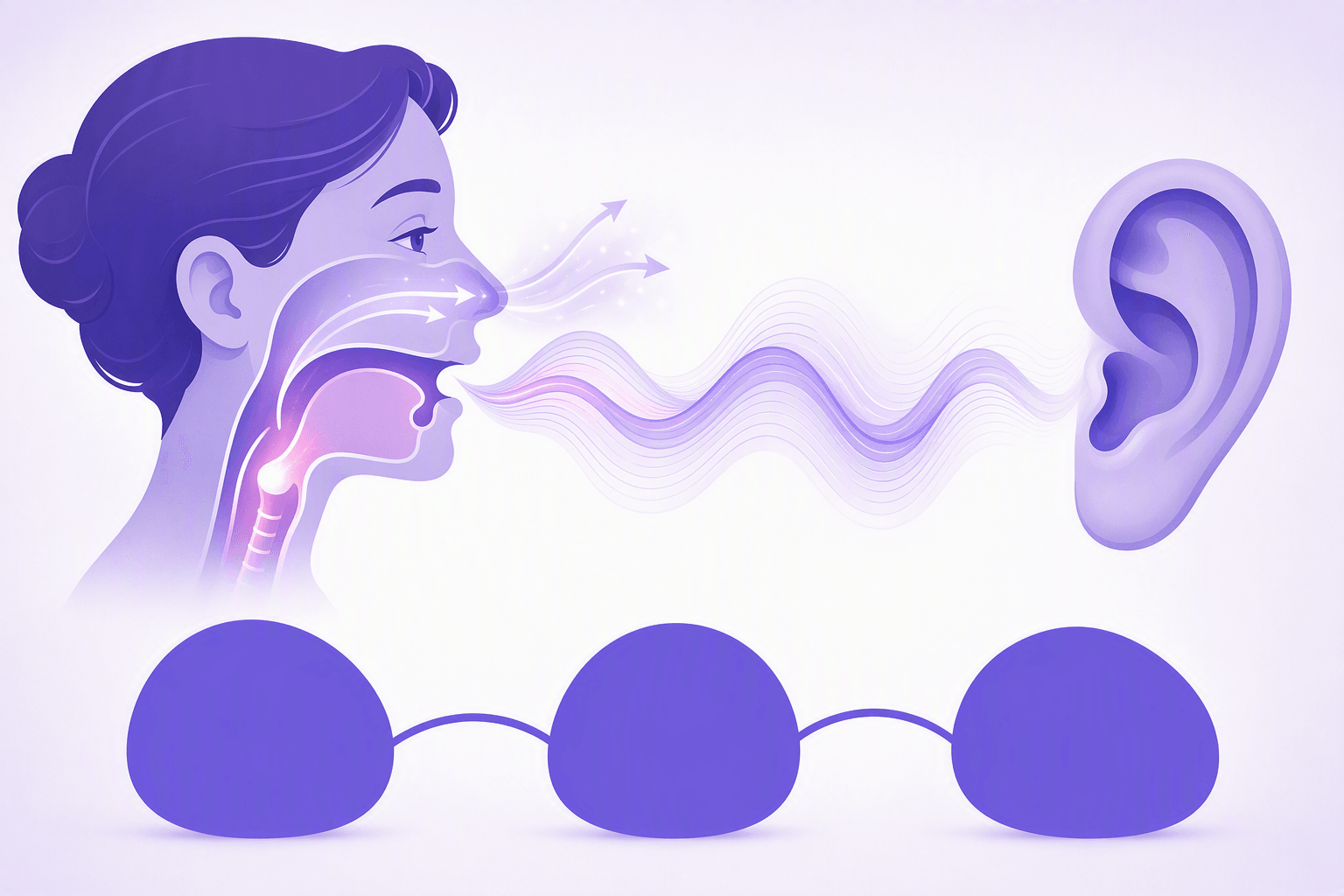
French nasal vowels are a major hurdle for English speakers because they are not just "a vowel plus n." They are a different vowel quality produced with airflow through the nose.
Common spellings and approximations:
- "an/en" as in "sans" (sahn)
- "on" as in "bon" (bohn)
- "in/ain" as in "pain" (pehn)
Approximations help you start, but the real fix is listening and imitation.
The French "r"
The French "r" is typically produced in the back of the throat. A useful approximation is a light gargling sound, but softer.
Do not overdo it. Many learners make it too harsh, which can reduce clarity.
"The sounds of a language are not just decoration. They are part of the system that carries meaning, and learners need focused listening to build new categories."
Professor John C. Wells, phonetician (principle summarized from his work on English phonetics and pronunciation teaching)
⚠️ Avoid the 'read it like English' trap
If you learn French mainly through reading, your brain will invent English-based pronunciations. Use audio from day one, even for basic phrases, so spelling does not mislead you.
How French works: the grammar you actually need first
French grammar has a reputation, but the core is manageable if you learn it in the order you will use it.
Gender and agreement (the real rule)
French nouns are masculine or feminine, and articles and adjectives often agree. This is not "logical," so treat gender as part of the noun.
Learn nouns with their article:
- "le" (luh) for many masculine nouns
- "la" (lah) for many feminine nouns
- "l'" (l) before vowels
- "les" (lay) plural
The payoff is huge: correct articles make your French sound immediately more natural.
Verb basics: present tense and high-frequency verbs
French verbs look complex because there are many endings, but everyday speech relies heavily on a small set of verbs:
- "être" (EH-truh)
- "avoir" (ah-VWAHR)
- "aller" (ah-LAY)
- "faire" (FEHR)
If you master these early, you can build real sentences fast.
Negation: "ne ... pas" in real life
Textbook French teaches "ne ... pas," but in casual speech, "ne" is often dropped:
- Formal or careful: "Je ne sais pas" (zhuh nuh SEH pah)
- Casual: "Je sais pas" (zhuh SEH pah)
You should understand both. Use the fuller form in formal writing and careful speaking, and recognize the shorter form in everyday dialogue.
Politeness: "tu" vs "vous"
French has a strong T-V distinction. "tu" is informal singular, "vous" is formal singular or plural.
If you are unsure, "vous" is the safe default with strangers, older people, and professional contexts. For a deeper dive into polite vs casual language choices, Wordy’s phrase guides like how to say hello in French show what natives actually say in different situations.
French vocabulary: what’s familiar, what’s misleading
English speakers get a head start because English contains a large number of words of French origin. That helps reading, but it can create false confidence in listening.
Cognates that help
Words like "important," "possible," and "restaurant" often map cleanly. You will recognize a lot of written French earlier than you can understand spoken French.
That is normal. Listening lags behind reading in French more than many learners expect.
False friends to watch
A few classic traps:
- "actuellement" means "currently" (ak-tyoo-EL-mahn), not "actually"
- "éventuellement" means "possibly" (ay-vahn-tyoo-EL-mahn), not "eventually"
- "librairie" means "bookstore" (lee-breh-REE), not "library"
Learn these early and you will avoid awkward misunderstandings.
French in real life: register, slang, and cultural signals
French changes noticeably depending on setting. The same person may speak one way at work and another way with friends.
The role of formality
In many francophone contexts, politeness is signaled through:
- choosing "vous"
- using greetings like "Bonjour" before requests
- softening requests with "s'il vous plaît" (seel voo PLEH)
Skipping these can sound abrupt, even if your grammar is correct.
Slang and taboo language
French has plenty of slang, and it varies by region and age group. If you are curious about taboo language, learn it responsibly and for comprehension first. Wordy’s guide to French swear words is designed for understanding what you hear in movies, not for picking fights.
⚠️ Swearing is not 'advanced French'
Knowing taboo words can improve comprehension, but using them without social context can damage relationships fast. Prioritize neutral, high-utility phrases first, then learn slang as listening practice.
A practical learning plan that works (especially for listening)
French rewards a specific approach: high-frequency vocabulary, pronunciation awareness, and daily exposure to real speech.
Step 1: Build a survival base (week 1 to 2)
Start with greetings, polite phrases, and basic verbs. Use short, repeatable sentences.
Good starting points:
Keep your practice spoken, not just written.
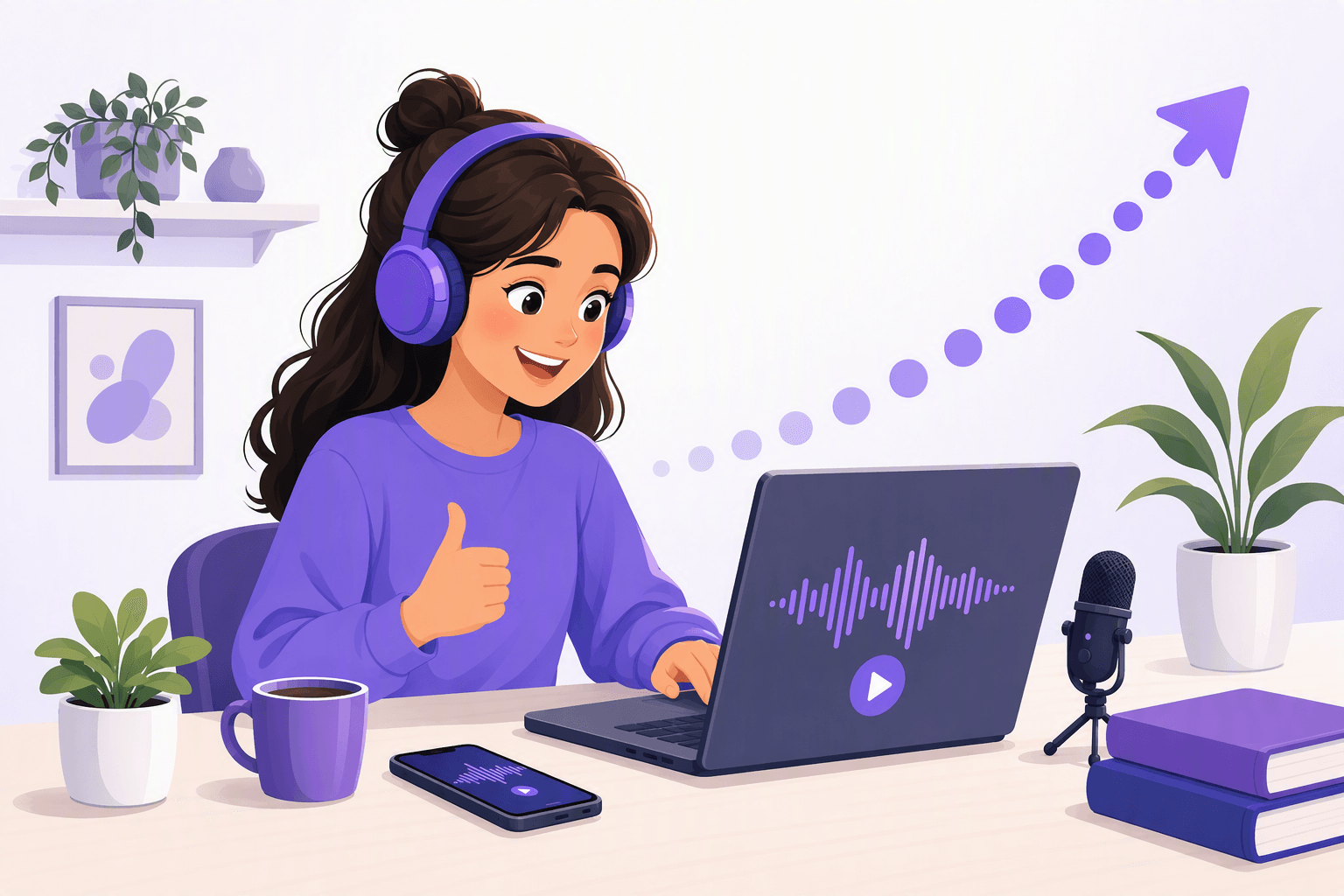
Step 2: Train your ear with short clips (week 2 to 8)
French words connect in speech. Short clips with subtitles let you replay the same sentence until your brain stops hearing a blur.
This is where movie and TV dialogue shines: you get real speed, real emotion, and real turn-taking. If you want a structured way to do this, start from the blog index and pick one topic you care about, then build a small media routine around it.
Notice what happens in these clips: the textbook "ne" disappears, and the whole phrase compresses into a single flowing chunk. That is the gap between written French and spoken French, and short clips are the fastest way to close it.
Step 3: Add speaking, but keep it simple (month 2 onward)
Speaking improves faster when your sentences are short and correct. Aim for:
- 5 to 10 minutes daily
- one topic per week (work, food, plans, opinions)
- record yourself, then compare to native audio
You do not need perfect accent. You need consistent intelligibility.
Step 4: Expand into relationships and emotion language
French has many set phrases for affection, warmth, and social bonding. Learning these makes your French feel human, not robotic.
A good example is how to say I love you in French, which includes context and alternatives that fit different relationships.
🌍 The 'bonjour' rule in shops
In France especially, saying "Bonjour" when entering a shop is a social norm. Skipping it can be interpreted as rude, even if you immediately say "Excusez-moi." This small ritual is a high-impact cultural detail that learners can adopt on day one.
Common mistakes English speakers make (and how to fix them)
Mistake 1: Overpronouncing final consonants
Learners often pronounce every letter, especially at the end of words. Fix it by learning common silent endings and listening for liaison patterns.
Practice with minimal pairs in audio, not just spelling rules.
Mistake 2: Treating "e" like English "uh" everywhere
French has multiple "e" sounds, including the muted "e" (schwa) that may disappear in fast speech. Do not try to force it into one English sound.
Listen for how "je" becomes almost "zh" in casual speech.
Mistake 3: Using "tu" too early
In English, "you" is neutral. In French, "tu" can be too familiar with strangers.
Default to "vous" until someone invites "tu," especially in service situations, workplaces, and first meetings.
Mistake 4: Learning only from written materials
French spelling hides a lot of pronunciation. If you want comprehension, you need daily listening.
If you like structured learning tools, compare approaches in the best language learning apps, then choose one method you will actually do every day.
What to watch and listen for: the “movie French” reality check
Movie dialogue is not identical to everyday conversation, but it is closer than textbook dialogues. You will hear:
- contractions and dropped sounds
- interruptions and fillers
- emotional intonation
- informal negation ("Je sais pas")
That is exactly why it works for learners. It teaches you the French people actually process in real time.
If you are building a media habit, pick one genre you enjoy and stick to it for a month. Familiar story patterns reduce cognitive load, so you can focus on language.
Key takeaways
French is a high-impact global language with strong institutional presence and diverse regional realities. Your fastest progress comes from pairing pronunciation awareness with daily exposure to real spoken French, then adding grammar in the order you need it.
If you want a simple next step: master greetings, then move to short subtitle-based listening practice, and keep your speaking short and consistent. For more targeted phrase practice, revisit how to say hello in French and how to say goodbye in French as your daily warm-ups.
Frequently Asked Questions
How many people speak French worldwide?
In how many countries is French an official language?
Is Canadian French very different from France French?
What is the hardest part of French for English speakers?
How long does it take to learn French to a conversational level?
Sources & References
- Organisation internationale de la Francophonie (OIF), La langue française dans le monde, 2022
- Ethnologue, French (fra) language entry, 27th edition, 2024
- U.S. Foreign Service Institute (FSI), Language Learning Difficulty for English Speakers, updated resource
- Académie française, Resources on the French language and usage, official site
- Crystal, David, The Cambridge Encyclopedia of the English Language (for comparative linguistics context), 3rd ed.
Start learning with Wordy
Watch real movie clips and build your vocabulary as you go. Free to download.


