Quick Answer
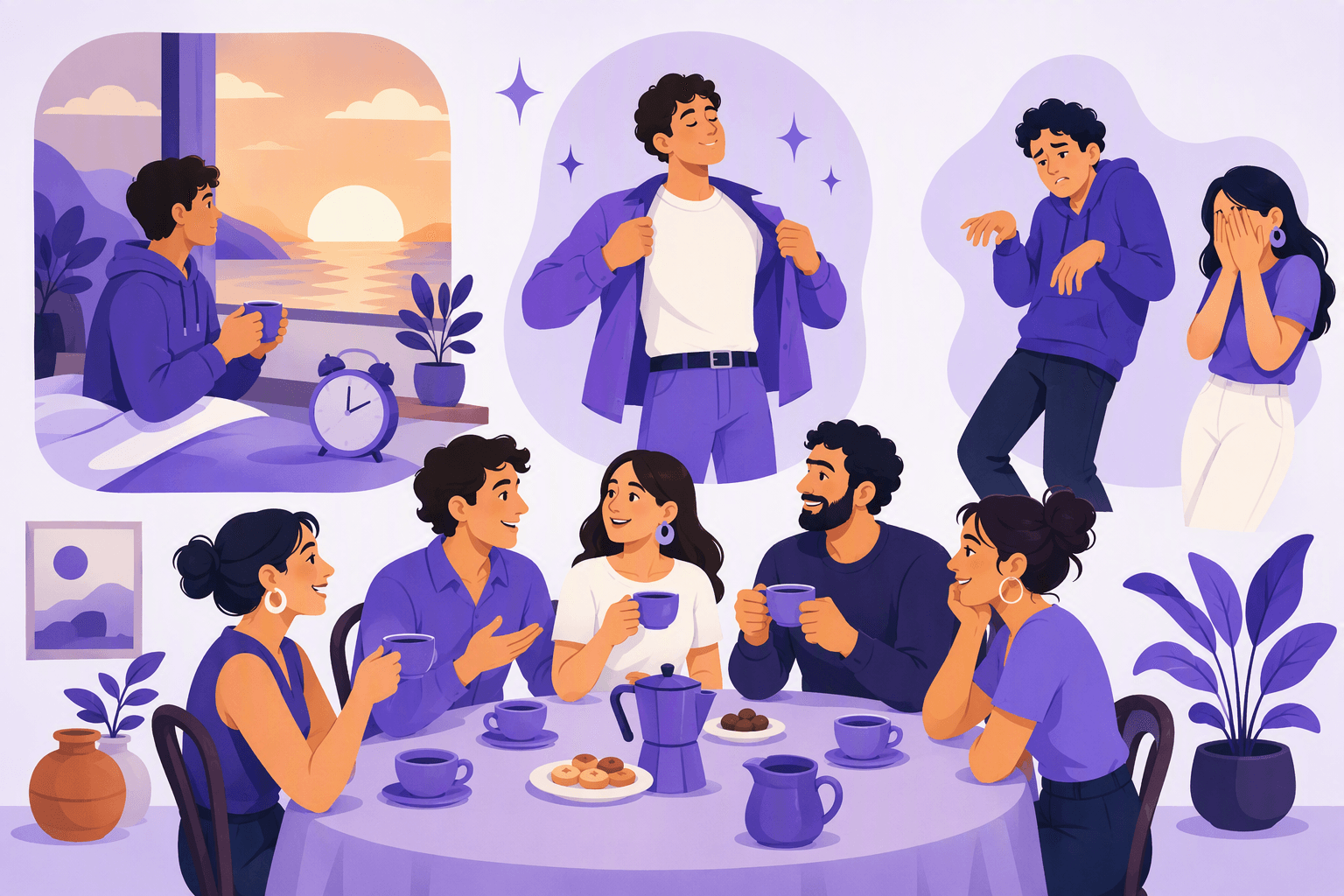
Spanish has several words whose meaning takes a full English phrase to explain, including sobremesa, estrenar, madrugar, and vergüenza ajena. They are not literally impossible to translate, but each packages a cultural habit, emotion, or social situation into one memorable word.
Spanish has no magical set of words that English speakers can never understand, but it does have words such as sobremesa /so.βɾeˈme.sa/, estrenar /es.tɾeˈnaɾ/, and vergüenza ajena /beɾˈɣwen.sa aˈxe.na/ that need a whole English phrase to capture properly. These Spanish untranslatable words matter because they package familiar experiences with a distinctly Spanish-speaking cultural angle: lingering after a meal, using something for the first time, waking unusually early, or feeling embarrassed for somebody else.
Spanish is one of the world’s largest languages, with more than 500 million native speakers, according to Instituto Cervantes. It is official in 20 countries, and its vocabulary naturally reflects many regional histories, family customs, food rituals, and ways of handling social relationships.
The words below are not secret codes or proof that one culture feels something no other culture can feel. Instead, they are useful shortcuts for experiences English usually describes less efficiently. Learning them will also make everyday dialogue easier to follow, whether you are watching Spanish films, speaking with friends, or working through Spanish greetings for real situations.
| English | Spanish | Pronunciation | Note |
|---|---|---|---|
| Conversation and lingering after a meal | sobremesa | /so.βɾeˈme.sa/ | A social custom as well as a word. |
| To use or wear something for the first time | estrenar | /es.tɾeˈnaɾ/ | Often used for clothes, cars, homes, and films. |
| To wake up very early | madrugar | /ma.ðɾuˈɣaɾ/ | Usually suggests effort or an unusually early start. |
| Embarrassment for someone else | vergüenza ajena | /beɾˈɣwen.sa aˈxe.na/ | Close to secondhand embarrassment. |
| A long weekend created by a holiday | puente | /ˈpwen.te/ | Literally means 'bridge'. |
| A place or person one feels drawn back to | querencia | /keˈɾen.sja/ | Can imply attachment, comfort, and belonging. |
| Affectionate warmth or fondness | cariño | /kaˈɾi.ɲo/ | Also used as a tender form of address. |
| A charm or spirit that makes art deeply moving | duende | /ˈdwen.de/ | Especially associated with flamenco and performance. |
| Overly sweet or emotionally cloying | empalagoso | /em.pa.laˈɣo.so/ | Used for food, romance, and sentimentality. |
| The feeling or atmosphere of a place | ambiente | /amˈbjen.te/ | Can mean mood, setting, or social scene. |
| A person who has just become a parent | primerizo | /pɾi.meˈɾi.so/ | Often used for new parents or inexperienced people. |
| The bittersweet pleasure of remembering | añoranza | /a.ɲoˈɾan.sa/ | Close to longing, nostalgia, or homesickness. |
Why these words resist one-word translation
A word is not truly untranslatable just because a bilingual dictionary gives several options. Translation is possible. The challenge is that the English options may leave out tone, habitual context, or cultural expectations.
Translation scholar Mona Baker, in In Other Words: A Coursebook on Translation, treats this as a common practical issue: languages divide up meaning differently. One language may create one compact everyday label where another uses a phrase, changes grammar, or relies on context.
Spanish also has major internal variation. Francisco Moreno Fernández’s Variedades de la lengua española documents why vocabulary cannot be treated as identical from one Spanish-speaking region to another. A word may be standard across the Spanish-speaking world but feel especially common, old-fashioned, formal, or emotionally loaded in a particular country.
That is why these are best learned as cultural concepts, not as rigid dictionary equations.
Everyday Spanish words with big cultural meaning
Sobremesa
Sobremesa /so.βɾeˈme.sa/ literally refers to the time spent at the table after eating. In practice, it means the conversation, coffee, jokes, family news, political debate, or relaxed silence that follows a shared meal.
English has phrases such as “after-dinner conversation,” but those do not always imply that lingering is expected and enjoyable. Sobremesa /so.βɾeˈme.sa/ can last ten minutes or several hours, especially during weekend lunches and holiday gatherings.
You might hear:
Nos quedamos de sobremesa hasta las seis. /nos keˈða.mos de so.βɾeˈme.sa ˈas.ta las sejs/
We stayed talking at the table after lunch until six.
🌍 Meals are often social time
In many Spanish-speaking households, leaving immediately after eating can feel abrupt if people are still talking. The expectation varies by family, region, work schedule, and occasion, but sobremesa /so.βɾeˈme.sa/ names the value placed on staying present after the food is gone.
Estrenar
Estrenar /es.tɾeˈnaɾ/ means to use, wear, watch, or enjoy something for the first time. English has “to debut,” “to break in,” “to premiere,” and “to wear for the first time,” but none works as broadly.
You can estrenar /es.tɾeˈnaɾ/ new shoes, a new apartment, a new car, or a movie. A film can estrenarse /es.tɾeˈnaɾ.se/, meaning it premieres.
Hoy estreno chaqueta nueva. /oj esˈtɾe.no tʃaˈke.ta ˈnwe.βa/
I’m wearing my new jacket for the first time today.
The noun estreno /esˈtɾe.no/ is also common for a premiere or first showing. When checking cinema listings, you may see estrenos /esˈtɾe.nos/ for newly released films.
Madrugar
Madrugar /ma.ðɾuˈɣaɾ/ means getting up early, usually early enough that it feels notable. It is more expressive than simply saying “wake up at 6:00 a.m.”
No me gusta madrugar. /no me ˈɣus.ta ma.ðɾuˈɣaɾ/
I do not like getting up early.
The phrase often carries a small complaint, admiration, or acknowledgment of effort. A person who rises before sunrise to catch a train, open a shop, study, or exercise is madrugando /ma.ðɾuˈɣan.do/.
If morning conversation is part of your study plan, pair this word with the phrases in our guide to saying good morning in Spanish.
Vergüenza ajena
Vergüenza ajena /beɾˈɣwen.sa aˈxe.na/ is embarrassment you feel because of somebody else’s behavior. It may arise when a person tells an awkward joke, speaks too loudly, overshares, or behaves with painful confidence.
English “secondhand embarrassment” is a close match. Internet English also uses “cringe,” but vergüenza ajena /beɾˈɣwen.sa aˈxe.na/ can be more emotionally specific. It focuses on the discomfort you feel while watching someone else create an embarrassing situation.
Me dio mucha vergüenza ajena verlo. /me ðjo ˈmu.tʃa beɾˈɣwen.sa aˈxe.na beɾ.lo/
Watching him made me feel so embarrassed for him.
Do not confuse it with vergüenza /beɾˈɣwen.sa/ alone, which can mean embarrassment, shame, or shyness depending on context.
Puente
A puente /ˈpwen.te/ literally means a bridge. In Spain, it commonly refers to a work or school day between a public holiday and a weekend, or more broadly the long weekend created by taking that day off.
If a holiday falls on Tuesday, people may take Monday off to make a puente /ˈpwen.te/. If it falls on Thursday, Friday can become the connecting day.
El viernes hago puente. /el ˈβjeɾ.nes ˈa.ɣo ˈpwen.te/
I’m taking Friday off to make a long weekend.
This word reveals a practical cultural pattern: public holidays, school calendars, travel, and family visits often shape conversation well before the dates arrive.
💡 Do not translate every bridge literally
If someone says hacer puente /aˈseɾ ˈpwen.te/, they are not building anything. In workplace conversation, it almost always refers to extending a holiday break.
Cariño
Cariño /kaˈɾi.ɲo/ can mean affection, fondness, tenderness, or care. It is also a warm form of address, similar to “dear,” “love,” “honey,” or “sweetheart,” though no one English word fits every relationship.
A parent may say cariño /kaˈɾi.ɲo/ to a child, a partner may use it romantically, and a friendly older shopkeeper may say it politely to a regular customer. The situation and tone determine whether it feels intimate, familial, or simply warm.
Te tengo mucho cariño. /te ˈteŋ.ɡo ˈmu.tʃo kaˈɾi.ɲo/
I’m very fond of you.
This phrase is emotionally meaningful but is not necessarily romantic. For declarations that are clearly romantic, see the distinctions in how to say I love you in Spanish.
Words for attachment, art, and emotion
Querencia
Querencia /keˈɾen.sja/ is a pull toward a place, person, habit, or environment where someone feels secure and naturally inclined to return. It is related to querer /keˈɾeɾ/, meaning to love or want, but it is not simply “love.”
A person’s querencia /keˈɾen.sja/ might be their hometown, a favorite chair, a neighborhood café, or a familiar landscape. In bullfighting vocabulary, it also describes the part of the ring a bull repeatedly seeks, which adds an idea of instinctive return.
El mar es mi querencia. /el maɾ es mi keˈɾen.sja/
The sea is the place I always feel drawn back to.
English phrases such as “happy place” can work in casual speech, but querencia /keˈɾen.sja/ suggests rooted attachment rather than a temporary mood boost.
Duende
Duende /ˈdwen.de/ originally refers to a goblin-like spirit in Spanish folklore. In artistic discussion, especially around flamenco, it refers to an intense, hard-to-explain power in a performance that deeply affects the audience.
The poet Federico García Lorca explored duende /ˈdwen.de/ in his lecture Theory and Play of the Duende. His concept is not just charisma or technical skill. It involves vulnerability, struggle, risk, emotional truth, and an electric connection between performer and listener.
Aquel cantaor tenía duende. /aˈkel kan.taˈoɾ teˈni.a ˈdwen.de/
That flamenco singer had duende.
Outside flamenco, people may use it loosely for an artist, place, or performance with unusual soul. Still, it is best not to apply it to every pleasant song or stylish café. The word is strongest when the experience feels raw and moving.
Añoranza
Añoranza /a.ɲoˈɾan.sa/ means a tender, sometimes painful longing for something absent. It can concern home, childhood, a person, a former life, or a place one may never see again.
English “nostalgia,” “longing,” and “homesickness” all overlap. Añoranza /a.ɲoˈɾan.sa/ is wider because it can hold warmth and loss at the same time.
Siento añoranza por mi ciudad. /ˈsjen.to a.ɲoˈɾan.sa poɾ mi sjuˈðað/
I feel a deep longing for my city.
This is more literary than many everyday alternatives, such as echar de menos /eˈtʃaɾ ðe ˈme.nos/, meaning “to miss.” It appears often in songs, novels, and reflective conversation.
Words that sharpen everyday descriptions
Empalagoso
Empalagoso /em.pa.laˈɣo.so/ describes something so sweet, rich, sentimental, or affectionate that it becomes too much. It may describe a dessert, a romantic message, a film scene, or a couple acting excessively cute in public.
Este pastel está empalagoso. /ˈes.te pasˈtel es.ta em.pa.laˈɣo.so/
This cake is overly sweet and rich.
La película fue un poco empalagosa. /la peˈli.ku.la fwe un ˈpo.ko em.pa.laˈɣo.sa/
The movie was a little too sentimental.
The word is useful because it links physical sweetness and emotional excess. English can say “sickly sweet,” “cloying,” or “cheesy,” but each has a narrower range.
Ambiente
Ambiente /amˈbjen.te/ can mean atmosphere, environment, setting, vibe, or social scene. Its meaning depends on the noun around it and the setting.
Aquí hay buen ambiente. /aˈki aj bwem amˈbjen.te/
There is a good atmosphere here.
A restaurant may have ambiente familiar /amˈbjen.te fa.miˈljaɾ/, a friendly family-oriented atmosphere. A neighborhood may have mucho ambiente /ˈmu.tʃo amˈbjen.te/, meaning it is lively, busy, and full of social activity.
English “vibe” is often a good informal translation, but ambiente /amˈbjen.te/ works in more settings, from nightlife to offices to classrooms.
Primerizo
Primerizo /pɾi.meˈɾi.so/ describes a person experiencing something for the first time, especially a new parent. A padre primerizo /ˈpa.ðɾe pɾi.meˈɾi.so/ is a first-time father, while a madre primeriza /ˈma.ðɾe pɾi.meˈɾi.sa/ is a first-time mother.
It can also refer to someone inexperienced in another situation, although context matters. English can say “first-time” or “new,” but Spanish makes this a compact adjective.
Son padres primerizos y tienen muchas preguntas. /son ˈpa.ðɾes pɾi.meˈɾi.sos i ˈtje.nen ˈmu.tʃas pɾeˈɣun.tas/
They are first-time parents and have many questions.
How to learn these words without forcing them
Do not memorize these words as exotic trivia. Attach each one to a specific scene, person, or experience. Think of a meal where nobody wanted to leave for sobremesa /so.βɾeˈme.sa/, an exhausting early airport trip for madrugar /ma.ðɾuˈɣaɾ/, or a painfully awkward video for vergüenza ajena /beɾˈɣwen.sa aˈxe.na/.
Film and television are especially useful because tone does much of the work. You may hear someone say qué vergüenza /ke beɾˈɣwen.sa/ with genuine shame, playful exaggeration, or amused disbelief. Rewatching a short scene helps you connect words to facial expressions, timing, and relationships rather than only dictionary definitions.
Spanish also offers many emotionally direct ways to begin and end interactions. Once you have these cultural words in mind, build them into real exchanges with phrases from how to say goodbye in Spanish.
The point is not perfection
Spanish untranslatable words are useful because they expose what ordinary vocabulary lessons can miss: language carries habits of attention. A society that has a common word for lingering after a meal does not necessarily value conversation more than every other society, but it has given that moment a familiar, shareable label.
Use sobremesa /so.βɾeˈme.sa/, estrenar /es.tɾeˈnaɾ/, madrugar /ma.ðɾuˈɣaɾ/, and vergüenza ajena /beɾˈɣwen.sa aˈxe.na/ when the situation fits. The goal is not to sound unusually sophisticated. It is to recognize the compact words Spanish speakers use for experiences you already know.
Frequently Asked Questions
What are Spanish untranslatable words?
Is sobremesa really untranslatable in English?
What does vergüenza ajena mean in Spanish?
Which Spanish words are useful for travelers?
Do all Spanish-speaking countries use these words?
Sources & References
- Real Academia Española, Diccionario de la lengua española, accessed 2026
- Instituto Cervantes, El español: una lengua viva, 2024
- Moreno Fernández, Variedades de la lengua española, Routledge
- Mona Baker, In Other Words: A Coursebook on Translation, Routledge
- Ethnologue, 27th edition, 2024
Start learning with Wordy
Watch real movie clips and build your vocabulary as you go. Free to download.


