Quick Answer
Spanish shopping vocabulary includes tienda for store, precio for price, talla for size, and caja for checkout. Learn the practical words and polite phrases you need to browse, try on clothes, ask about costs, and pay naturally in Spanish-speaking shops.
Spanish shopping vocabulary gives you the words to ask for a size, understand a price, find the fitting room, and pay politely. Start with tienda /ˈtjenda/ for store, precio /ˈpɾesjo/ for price, talla /ˈtaʎa/ for size, and caja /ˈkaxa/ for checkout. With the phrases below, you can shop confidently in Spain and across Latin America without relying on English.
Spanish has more than 600 million speakers worldwide when native speakers, second-language speakers, and learners are counted, according to the Instituto Cervantes. It is an official language in 20 sovereign countries, so shopping vocabulary travels remarkably well, even though certain product names change by region.
If you need a quick foundation before speaking to staff, review Spanish greetings for every situation. A simple hola /ˈola/ and buenos días /ˈbwenos ˈdias/ make a noticeably better opening than jumping straight to a question.
| English | Spanish | Pronunciation | Note |
|---|---|---|---|
| Store / shop | tienda | /ˈtjenda/ | A general store or shop. |
| Shopping mall | centro comercial | /ˈsentɾo komeɾˈsjal/ | Common in Spain and Latin America. |
| Market | mercado | /meɾˈkaðo/ | Can mean a food market or marketplace. |
| Price | precio | /ˈpɾesjo/ | Use with ¿Cuánto cuesta? |
| Money | dinero | /diˈneɾo/ | General word for money. |
| Cash | efectivo | /efekˈtiβo/ | Cash, not money in general. |
| Card | tarjeta | /taɾˈxeta/ | Usually a debit or credit card. |
| Checkout / cash register | caja | /ˈkaxa/ | Also means box. |
| Receipt | recibo | /reˈsiβo/ | Ticket is also widely used. |
| Discount | descuento | /desˈkwento/ | A reduction in price. |
| Sale | rebajas | /reˈβaxas/ | Especially common for seasonal sales in Spain. |
| Offer / deal | oferta | /oˈfeɾta/ | Common on signs and advertisements. |
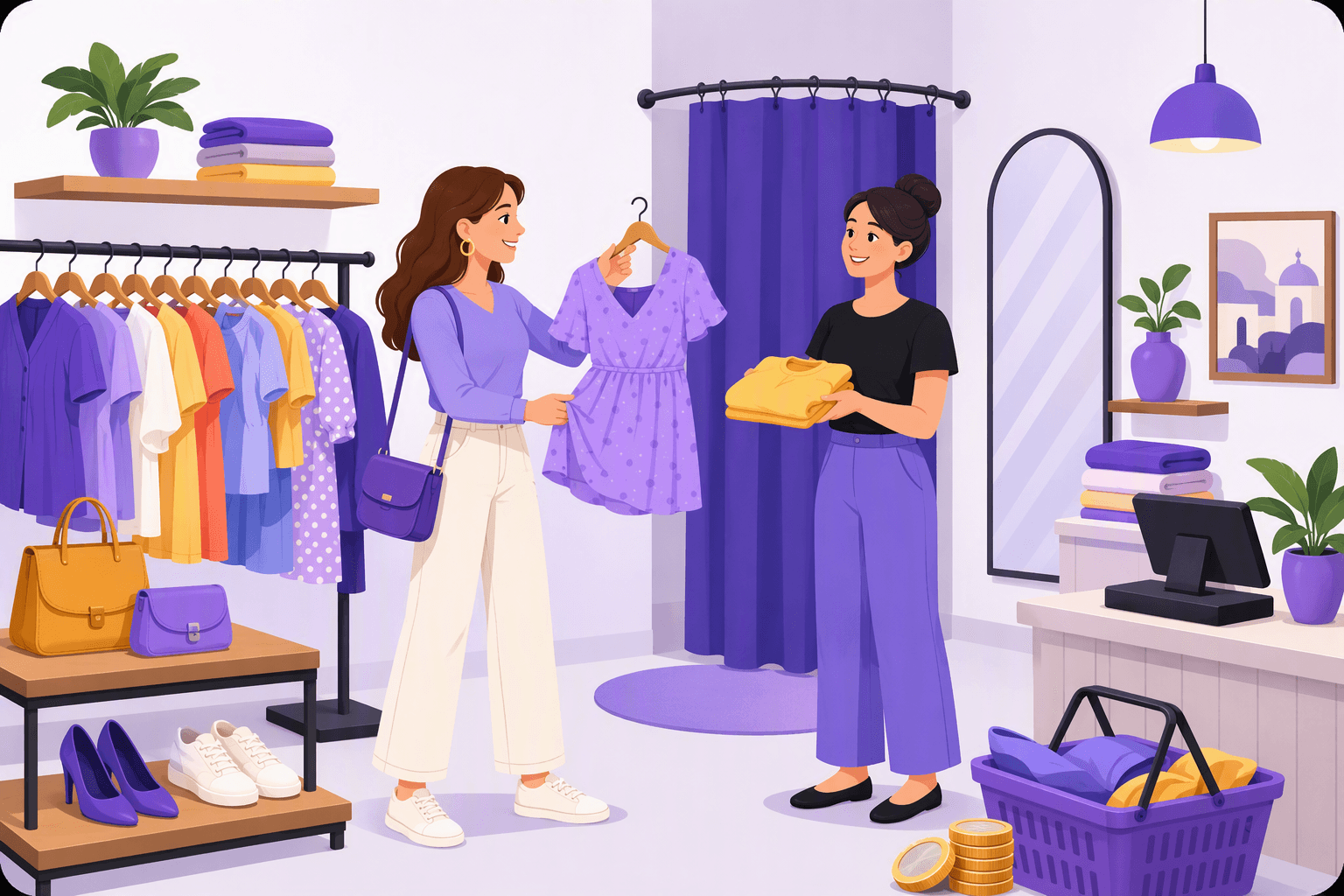
The essential words for any shop
The first thing to recognize is the type of place you are in. A tienda /ˈtjenda/ is a shop, while a mercado /meɾˈkaðo/ may be a traditional market, a neighborhood food market, or simply a marketplace.
A centro comercial /ˈsentɾo komeɾˈsjal/ is a shopping mall. In parts of Latin America, people may also say mall /mal/, especially in Chile, Peru, and Colombia, but centro comercial works everywhere.
When you see oferta /oˈfeɾta/, the item has a special offer. Descuento /desˈkwento/ means discount, while rebajas /reˈβaxas/ refers particularly to sales periods in Spain, often after Christmas and in summer.
The Real Academia Española lists both recibo /reˈsiβo/ and ticket /ˈtiket/ in modern Spanish usage. In practice, recibo is broadly understood, but a cashier may ask ¿Quiere el ticket? /ˈkjeɾe el ˈtiket/, meaning do you want the receipt?
Precio
Precio /ˈpɾesjo/ is one of the first words to listen for. To ask the cost of an item, say ¿Cuánto cuesta? /ˈkwanto ˈkwesta/. This literally asks how much it costs.
You can also say ¿Cuánto vale? /ˈkwanto ˈβale/, especially in Spain. Both questions are natural, though cuánto cuesta is the safest universal choice.
Caja
In stores, caja /ˈkaxa/ means the checkout, cashier station, or register. If you are ready to pay, ask ¿Dónde está la caja? /ˈdonde esˈta la ˈkaxa/, meaning where is the checkout?
Do not confuse this with cajero /kaˈxeɾo/. A cajero can be a cashier, while cajero automático /kaˈxeɾo awtoˈmatiko/ means an ATM.
Clothing and fitting-room vocabulary
Shopping for clothes requires more specific vocabulary because Spanish nouns have grammatical gender. Pantalón /pantaˈlon/ is masculine, so you say este pantalón /ˈeste pantaˈlon/. Camisa /kaˈmisa/ is feminine, so you say esta camisa /ˈesta kaˈmisa/.
That grammar matters when you ask to try something on. A short phrase such as ¿Me lo puedo probar? /me lo ˈpweðo pɾoˈβaɾ/ changes depending on the item.
| English | Spanish | Pronunciation | Note |
|---|---|---|---|
| Clothes | ropa | /ˈropa/ | A collective noun, normally singular. |
| Shirt | camisa | /kaˈmisa/ | Often a button-up shirt. |
| T-shirt | camiseta | /kamiˈseta/ | A casual short-sleeved top. |
| Pants / trousers | pantalones | /pantaloˈnes/ | Plural in most everyday use. |
| Dress | vestido | /besˈtiðo/ | Also means suit in some contexts. |
| Skirt | falda | /ˈfalda/ | Feminine noun. |
| Shoes | zapatos | /saˈpatos/ | In much of Latin America, initial z sounds like /s/. |
| Size | talla | /ˈtaʎa/ | Used for clothing and shoes. |
| Fitting room | probador | /pɾoβaˈðoɾ/ | Also vestidor in some regions. |
| Color | color | /koˈloɾ/ | Masculine noun. |
| Small | pequeño | /peˈkeɲo/ | Use pequeña with feminine nouns. |
| Large | grande | /ˈɡɾande/ | Same form for masculine and feminine nouns. |
Asking for the right size
Talla /ˈtaʎa/ means size. You may see international letter sizes such as S, M, and L, numerical European sizing, or locally familiar systems. Ask ¿Qué talla es? /ke ˈtaʎa es/ when you need to know an item's size.
For a different size, use these practical patterns:
- ¿Tiene una talla más grande? /ˈtjɛne una ˈtaʎa mas ˈɡɾande/, do you have a larger size?
- ¿Tiene una talla más pequeña? /ˈtjɛne una ˈtaʎa mas peˈkeɲa/, do you have a smaller size?
- Busco una talla mediana. /ˈbusko una ˈtaʎa meˈðjana/, I am looking for a medium size.
- ¿Hay otra talla? /ai ˈotɾa ˈtaʎa/, is there another size?
In many Spanish-speaking shops, staff will ask ¿Qué talla busca? /ke ˈtaʎa ˈbuska/, meaning what size are you looking for? The verb buscar /busˈkaɾ/, to look for, appears constantly in shopping conversations.
Probador
A probador /pɾoβaˈðoɾ/ is a fitting room. In some places, particularly in Latin America, you may also hear vestidor /bestiˈðoɾ/. Both refer to the private area where you try on clothes.
Ask ¿Dónde están los probadores? /ˈdonde esˈtan los pɾoβaˈðoɾes/ to find them. If you want to try on one item, say ¿Me lo puedo probar? /me lo ˈpweðo pɾoˈβaɾ/ for masculine nouns, and ¿Me la puedo probar? /me la ˈpweðo pɾoˈβaɾ/ for feminine nouns.
💡 Use the item gender
Say ¿Me lo puedo probar? /me lo ˈpweðo pɾoˈβaɾ/ for el pantalón /el pantaˈlon/ or el vestido /el besˈtiðo/. Say ¿Me la puedo probar? /me la ˈpweðo pɾoˈβaɾ/ for la camisa /la kaˈmisa/ or la falda /la ˈfalda/.
Useful phrases for browsing and buying
Spanish-speaking retail interactions often begin with a greeting and an offer of help. An employee may say ¿Le puedo ayudar? /le ˈpweðo aʝuˈðaɾ/, literally can I help you?
A natural reply is Solo estoy mirando, gracias. /ˈsolo esˈtoj miˈɾando ˈɡɾasjas/, meaning I am just looking, thanks. This phrase is polite and useful when you want space to browse.
| English | Spanish | Pronunciation | Note |
|---|---|---|---|
| How much does it cost? | ¿Cuánto cuesta? | /ˈkwanto ˈkwesta/ | The most useful price question. |
| I am just looking, thanks. | Solo estoy mirando, gracias. | /ˈsolo esˈtoj miˈɾando ˈɡɾasjas/ | A polite response to staff. |
| I am looking for... | Busco... | /ˈbusko/ | Add the item you need. |
| Do you have this in another color? | ¿Lo tiene en otro color? | /lo ˈtjɛne en ˈotɾo koˈloɾ/ | Use la for a feminine item. |
| Can I try it on? | ¿Me lo puedo probar? | /me lo ˈpweðo pɾoˈβaɾ/ | Use la for feminine singular nouns. |
| I will take it. | Me lo llevo. | /me lo ˈʎeβo/ | Use la for feminine singular nouns. |
| Can I pay by card? | ¿Puedo pagar con tarjeta? | /ˈpweðo paˈɣaɾ kon taɾˈxeta/ | Useful before reaching the checkout. |
| Do you accept cash? | ¿Aceptan efectivo? | /aˈseptan efekˈtiβo/ | Use when payment options are unclear. |
| I need a receipt. | Necesito un recibo. | /neseˈsito un reˈsiβo/ | Ticket is also common. |
| Can I return it? | ¿Puedo devolverlo? | /ˈpweðo deβolˈβeɾlo/ | Ask about return policies first. |
Paying, returns, and polite interaction
To pay by card, ask ¿Puedo pagar con tarjeta? /ˈpweðo paˈɣaɾ kon taɾˈxeta/. In everyday speech, tarjeta /taɾˈxeta/ may mean either a debit or credit card, depending on local banking habits.
If you have cash, use efectivo /efekˈtiβo/. A sign saying solo efectivo /ˈsolo efekˈtiβo/ means cash only. In Mexico, you may also hear ¿Aceptan pago en efectivo? /aˈseptan ˈpaɣo en efekˈtiβo/.
For returns, the key verb is devolver /deβolˈβeɾ/, to return something. Ask ¿Puedo devolverlo? /ˈpweðo deβolˈβeɾlo/ for a masculine item, or ¿Puedo devolverla? /ˈpweðo deβolˈβeɾla/ for a feminine one.
Keep your recibo /reˈsiβo/ or ticket /ˈtiket/. Many shops require proof of purchase even when they offer exchanges.
🌍 Shopping politeness differs by place
In Spain, a quick hola /ˈola/, por favor /poɾ faˈβoɾ/, and gracias /ˈɡɾasjas/ are expected basics. In much of Latin America, shop staff may use warmer address terms such as señora /seˈɲoɾa/, señor /seˈɲoɾ/, or joven /ˈxoβen/. These are usually courteous forms of address, not comments about your age.
Regional shopping words worth recognizing
The core words in this article work throughout the Spanish-speaking world, but regional variation is normal. Francisco Moreno Fernández, in Variedades de la lengua española, documents how vocabulary shifts across national and regional varieties without making one variety less valid than another.
For a plastic shopping bag, Spain commonly uses bolsa /ˈbolsa/, while several Latin American countries may use bolsa too. In Mexico, bolsa remains standard, but shoppers may also hear bolsita /bolˈsita/, a diminutive that often sounds friendly rather than literally small.
A sweater is jersey /ˈxeɾsej/ in Spain, suéter /ˈsweteɾ/ in many Latin American countries, and sometimes pulóver /puˈloβeɾ/ in the Caribbean and parts of South America. If you know the item’s color, material, or purpose, you can still make yourself understood.
The word pantalones /pantaloˈnes/ is broadly understood, but jeans /ʝins/ and vaqueros /baˈkeɾos/ have regional preferences. In Spain, vaqueros often means jeans, while jeans is very common across Latin America.
For language learners, variation is useful evidence that vocabulary belongs to communities, not just textbooks. Claire Kramsch’s Language and Culture treats language use as inseparable from social context, and shopping is a clear example: the same polite request can be grammatically correct everywhere while sounding more local with a regional product word.
A realistic mini-dialogue
Here is a short exchange you might hear in a clothing shop:
Empleado: Hola, ¿le puedo ayudar? /ˈola le ˈpweðo aʝuˈðaɾ/
Hello, can I help you?
Cliente: Sí, busco una camiseta negra. /si ˈbusko una kamiˈseta ˈneɣɾa/
Yes, I am looking for a black T-shirt.
Empleado: ¿Qué talla busca? /ke ˈtaʎa ˈbuska/
What size are you looking for?
Cliente: Una mediana. ¿Me la puedo probar? /una meˈðjana me la ˈpweðo pɾoˈβaɾ/
A medium. Can I try it on?
Empleado: Claro, los probadores están al fondo. /ˈklaɾo los pɾoβaˈðoɾes esˈtan al ˈfondo/
Of course, the fitting rooms are at the back.
Cliente: Me la llevo. ¿Puedo pagar con tarjeta? /me la ˈʎeβo ˈpweðo paˈɣaɾ kon taɾˈxeta/
I will take it. Can I pay by card?
This pattern uses a greeting, busco /ˈbusko/, a size request, a fitting-room question, and a payment question. Learn it as a whole interaction rather than as isolated vocabulary.
How to remember shopping vocabulary
Group words by the moment you need them: entering the shop, looking for an item, trying it on, paying, and returning it. This makes recall faster because your brain connects words to a real situation.
Watch Spanish-language scenes set in markets, fashion stores, pharmacies, and supermarkets. Listen for repeated functional verbs such as buscar /busˈkaɾ/, probar /pɾoˈβaɾ/, pagar /paˈɣaɾ/, and devolver /deβolˈβeɾ/. Film and TV clips are especially useful because gestures, products, and context help clarify the meaning.
Brown and Levinson’s Politeness: Some Universals in Language Usage identifies face-saving as central to social interaction. In a shop, a brief por favor /poɾ faˈβoɾ/ before a request and gracias /ˈɡɾasjas/ after it make your Spanish sound considerate, even when your vocabulary is still basic.
For related everyday language, build on Spanish clothing vocabulary, practice Spanish travel phrases, and learn how to say goodbye in Spanish for a natural exit from the shop.
The practical goal is simple: greet the staff, ask ¿Cuánto cuesta? /ˈkwanto ˈkwesta/, request the right talla /ˈtaʎa/, find the probador /pɾoβaˈðoɾ/, and pay at the caja /ˈkaxa/. Those few steps cover most real shopping conversations in Spanish.
Frequently Asked Questions
What are the most important Spanish shopping words to learn first?
How do I ask how much something costs in Spanish?
What does talla mean in Spanish?
Can I use efectivo and dinero interchangeably?
How do I ask to try on clothes in Spanish?
Sources & References
- Instituto Cervantes, El español en el mundo 2025
- Real Academia Española, Diccionario de la lengua española, accessed 2026
- FundéuRAE, recommendations on language of commerce and consumption, accessed 2026
- Francisco Moreno Fernández, Variedades de la lengua española, Routledge
- Penelope Brown and Stephen C. Levinson, Politeness: Some Universals in Language Usage, Cambridge University Press
Start learning with Wordy
Watch real movie clips and build your vocabulary as you go. Free to download.


