Quick Answer
Spanish has two main passive patterns: the true passive with ser + past participle (La puerta fue abierta) and the much more common se passive (Se abrió la puerta). Use ser-passive when the agent is important or the style is formal, and use se when the agent is unknown, irrelevant, or you want natural everyday Spanish.
Spanish passive voice is mainly expressed in two ways: the true passive with ser + past participle (La puerta fue abierta) and the far more common se passive (Se abrió la puerta). If you want Spanish that sounds natural, learn the ser passive for formal, agent-focused sentences, but default to se when the doer is unknown, irrelevant, or intentionally left vague.
Spanish is spoken by roughly 560 million total speakers worldwide (native plus L2) and is an official language in 20 countries, plus Puerto Rico and Equatorial Guinea as a Spanish-speaking state, depending on how you count political status (Instituto Cervantes, accessed 2026; Ethnologue, 27th ed., 2024). That range of regions matters because passive choices are shaped by style and register more than by country.
If you are building your everyday Spanish base, pair this with core vocabulary from our 100 most common Spanish words, then come back to passive patterns once you can recognize common verbs quickly.
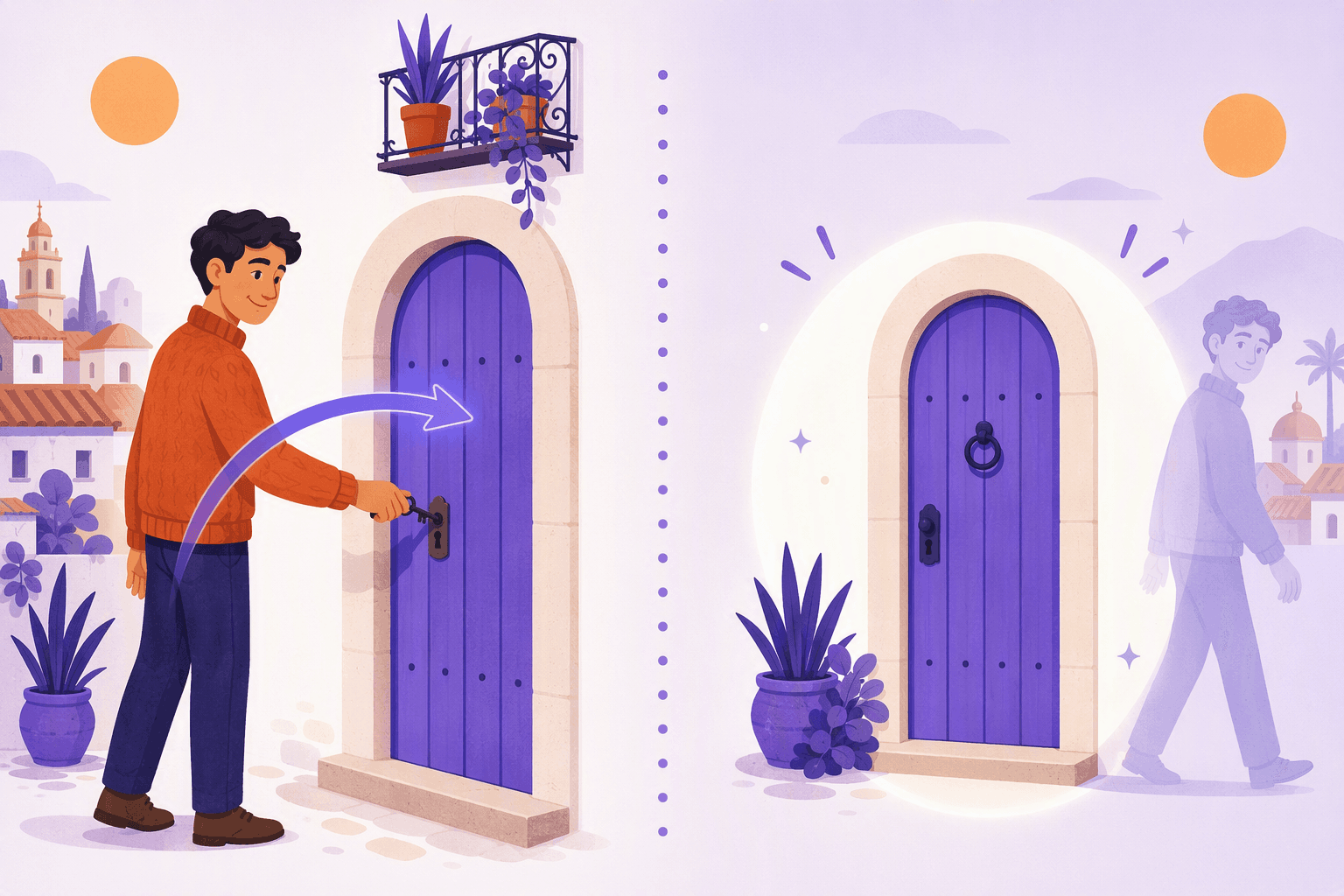
What “passive voice” means in Spanish (and what it does not)
Passive voice is about information focus: you put the receiver of the action in the spotlight. In English, passive is often formed with “be” plus a past participle, like “The door was opened.”
Spanish can do that too, but Spanish also has a second, very Spanish solution: se.
Active vs passive focus
Compare these:
- Active: Alguien abrió la puerta.
- Passive (ser): La puerta fue abierta (por alguien).
- Passive (se): Se abrió la puerta.
All three can be grammatical, but they do not feel equally natural in daily speech. The RAE’s guidance in the Diccionario panhispánico de dudas treats the pasiva refleja (se passive) as a standard passive strategy in modern Spanish (RAE DPD, accessed 2026).
Passive voice vs “impersonal” sentences
Learners often call anything with se “passive,” but Spanish separates two ideas:
- Passive se: there is a real grammatical subject (Se vendieron entradas).
- Impersonal se: there is no real subject, and the verb stays singular (Se vive bien aquí).
That difference is the key to avoiding agreement mistakes.
The true passive: ser + past participle
The classic passive is:
ser (conjugated) + past participle (+ por + agent optional)
Example:
- La puerta fue abierta (por el guardia).
When ser passive sounds natural
Use ser + participle when one of these is true:
- The agent matters (you want to name who did it).
- Responsibility matters (formal tone, accountability).
- The style is institutional (news reports, academic writing, legal language).
Butt & Benjamin’s reference grammar treats this passive as fully standard, while also noting that Spanish often prefers alternatives when the agent is not central (Butt & Benjamin, A New Reference Grammar of Modern Spanish, Routledge).
Past participle agreement (the rule learners miss)
In the ser passive, the participle behaves like an adjective, so it agrees in gender and number:
- El libro fue publicado.
- La carta fue enviada.
- Los libros fueron publicados.
- Las cartas fueron enviadas.
Pronunciation reminders:
- publicado = poo-blee-KAH-doh
- enviadas = en-VYAH-dahs
Common ser-passive tenses you will actually see
You can conjugate ser in any tense:
- Present: La casa es vendida. (formal, descriptive)
- Preterite: La casa fue vendida. (completed event)
- Imperfect: La casa era vendida. (background, repeated)
- Future: La casa será vendida. (planned/expected)
In conversation, the preterite and present are the most common for “reporting” style.
Agent phrase with por
If you include the agent, you almost always use por:
- El proyecto fue aprobado por el comité. (koh-MEE-teh)
If you do not care about the agent, Spanish often prefers se, which is why ser passive can sound heavy when overused.
⚠️ Avoid the 'English mirror' habit
If you translate English passive into Spanish word-for-word, you will overuse ser + participle. Spanish readers will understand you, but it can sound bureaucratic or stiff. When the agent is unknown or irrelevant, try a se passive first.
The everyday passive: se + verb (pasiva refleja)
The se passive is formed like this:
se + verb (3rd person) + subject
Examples:
- Se abrió la puerta. (seh ah-BRYOH lah PWEHR-tah)
- Se venden casas. (seh BEN-den KAH-sahs)
The verb agrees with the subject:
- puerta (singular) → abrió
- casas (plural) → venden
The RAE’s Nueva gramática de la lengua española treats this as a core passive pattern, not slang or “shortcut Spanish” (RAE, Nueva gramática, Espasa).
Why Spanish prefers se passive
The se passive is popular because it is:
- Neutral: it avoids blaming someone directly.
- Efficient: it is short and headline-friendly.
- Natural: it matches how Spanish packages information.
You will see it in signs, menus, ads, and news:
- Se busca camarero. (seh BOOS-kah kah-mah-REH-roh)
- Se alquila piso. (seh ahl-KEE-lah PEE-soh)
- Se prohíbe fumar. (seh proh-EE-beh foo-MAHR)
Se passive with objects and word order
Spanish often places the subject after the verb:
- Se vendieron las entradas.
- Se publicó el informe.
But you can also front the subject for emphasis:
- Las entradas se vendieron en una hora.
Both are correct. The post-verb subject is extremely common in announcements and reporting.
Se passive in different tenses
You can use se passive in many tenses:
- Se abre la puerta a las 9. (routine)
- Se abrió la puerta a las 9. (one event)
- Se ha abierto la puerta. (present perfect)
- Se abrirá la puerta. (future)
If you are still building tense control, review the patterns in our Spanish past tense guide and then come back to passive transformations.
Passive se vs impersonal se (the fast diagnostic)
This is the question that decides everything: Does the verb agree with a subject?
Passive se: agreement exists
- Se vendieron entradas. (plural verb, plural subject implied or explicit)
- Se publicaron los resultados. (plural verb, plural subject)
You can usually rephrase with ser passive:
- Los resultados fueron publicados.
Impersonal se: always singular
- Se vive bien aquí. (no subject, general statement)
- Se dice que va a llover. (general “people say”)
You cannot naturally rephrase these with a ser passive because there is no “thing” receiving the action as a subject.
A practical test with “who?”
Try asking “who?”:
- Se vendieron entradas. Who was sold? That question is wrong, because entradas is the subject.
- Se vive bien aquí. Who lives? It is “people in general,” not a named subject.
But do not rely only on meaning. Agreement is the safer test.
The third option: estar + past participle (not passive, but related)
Learners often mix up:
- ser + participle (passive event or formal description)
- estar + participle (resulting state)
Compare:
- La puerta fue abierta. (someone opened it, event)
- La puerta está abierta. (it is open now, state)
This distinction is part of the broader ser vs estar system. If that still feels shaky, our ser vs estar guide will make passive sentences much easier to interpret.
When Spanish uses passive for politeness and “face-saving”
Passive choices are not only grammar, they are social strategy. Research on politeness in interaction (Brown & Levinson, Politeness: Some Universals in Language Usage, Cambridge University Press) is useful here because Spanish often uses passive-like structures to soften responsibility.
Softening blame with se
In real life, you will hear:
- Se me olvidó. (seh meh ol-bee-DOH)
- Se rompió. (seh rohm-PYOH)
These are not always “passive se” in the strict grammar sense, but they serve a similar function: the event is foregrounded, the agent is backgrounded. In many Spanish-speaking cultures, this can sound less accusatory than direct active blame.
🌍 Why 'se' shows up in apologies and excuses
In everyday Spanish, speakers often prefer event-focused phrasing when the doer is obvious or sensitive. That is why you hear Se me cayó el vaso more than Yo tiré el vaso in casual situations. It is not about avoiding truth, it is about managing tone and social friction.
Real examples: how the same idea changes with ser vs se
Here are pairs you can model.
Contracts and official actions
- Se firmó el contrato. (neutral, common)
- El contrato fue firmado por la directora. (agent highlighted, formal)
Pronunciation:
- firmó = feer-MOH
- contrato = kohn-TRAH-toh
- directora = dee-rehk-TOH-rah
News reporting
- Se encontraron restos. (headline style)
- Los restos fueron encontrados por la policía. (agent explicit)
Products and services
- Se venden coches usados. (ad)
- Los coches usados son vendidos por el concesionario. (possible, but stiff)
Everyday household events
- Se rompió el plato. (event-focused, common)
- El plato fue roto por mi hermano. (blame-focused, explicit)
The second sentence is not wrong. It just changes the social meaning.
Common mistakes (and how to fix them fast)
Mistake 1: forgetting agreement in passive se
Wrong:
- Se vendió entradas.
Right:
- Se vendieron entradas.
Because entradas is plural, the verb must be plural.
Mistake 2: using ser passive when Spanish wants se
Overly stiff:
- La cena fue preparada.
More natural in many contexts:
- Se preparó la cena.
If you need to mention who cooked, ser passive becomes more justified:
- La cena fue preparada por mi abuela.
Mistake 3: confusing impersonal se with passive se
Wrong idea:
- Se vive bien aquí, therefore “bien aquí” is the subject.
Fix:
- There is no subject. It is a general statement: “People live well here.”
Mistake 4: mixing up ser passive with estar state
Wrong meaning:
- La puerta es abierta. (sounds like a formal description, not “it is open now”)
Right for state:
- La puerta está abierta.
Right for event:
- La puerta fue abierta.
A simple decision tree you can use while speaking
When you want to express a passive idea, ask:
- Do I want to say who did it?
- Yes: use ser + participle + por.
- No: go to 2.
- Is there a clear “thing” that receives the action (subject)?
- Yes: use se passive with agreement.
- No: use impersonal se (singular) or another structure.
This keeps you from overthinking and keeps your Spanish natural.
Mini practice: convert active to natural Spanish passive
Try these transformations.
Example A
Active: Alguien robó el coche.
Natural: Se robó el coche.
Formal with agent: El coche fue robado por un ladrón.
Pronunciation:
- robó = roh-BOH
- ladrón = lah-DRON
Example B
Active: La empresa publicó los resultados.
Natural: Se publicaron los resultados.
Formal with agent: Los resultados fueron publicados por la empresa.
Example C
Active: La gente habla español aquí.
Natural: Se habla español aquí. (impersonal se, singular)
Notice how Spanish chooses different se types depending on whether there is a real subject.
💡 Use movie dialogue to train your instinct
Passive se is easier to learn by ear than by rule. News scenes, police scenes, and workplace scenes are full of Se busca, Se prohíbe, Se dice, Se encontró. If you learn Spanish with clips, pause and ask: is this passive se (agreement) or impersonal se (always singular)?
Regional and register notes you will actually notice
Across the Spanish-speaking world, the grammar is shared, but preferences shift by register.
Signs and public language
Public notices strongly favor se:
- Se prohíbe estacionar. (seh proh-EE-beh ess-tah-syoh-NAHR)
- Se ruega no fumar. (seh RWEH-gah noh foo-MAHR)
This is not “Spain Spanish” or “Latin American Spanish,” it is institutional Spanish.
Legal and academic writing
Legal and academic texts use more ser passive because they often need:
- explicit agents (por la parte demandante)
- clear responsibility
- a formal tone
If you read contracts, you will see both, but ser passive is more visible than in conversation.
Conversation and storytelling
In everyday speech, speakers often choose:
- se passive
- active with an indefinite subject (Alguien, la gente)
- third-person plural with no subject (Dicen que..., Me dijeron que...)
Those are all ways to keep the agent backgrounded.
How this connects to other “real Spanish” skills
Passive voice is not isolated. It interacts with:
- ser vs estar (event vs state)
- past tenses (fue vs era vs se abrió vs se abría)
- pronouns and se (reflexive, accidental se, impersonal)
If you want to build a daily routine around natural input, start with greetings and high-frequency verbs, then add grammar patterns like passive once the basics are automatic. For quick everyday openers, see how to say hello in Spanish and how to say goodbye in Spanish. For emotional language that often avoids directness, how to say I love you in Spanish is a good complement.
And if you are curious how Spanish handles strong language and social boundaries, our Spanish swear words guide shows another side of register and responsibility, where who said what matters a lot.
A realistic takeaway
If you remember one rule: Spanish usually prefers se for passive meaning, and uses ser passive when the agent or formality matters. Master agreement in se passive, and you will immediately sound more natural in signs, headlines, and daily conversation.
If you want to train this with real dialogue, use short scenes and shadow them, then rewrite one line three ways: active, se passive, and ser passive. That single exercise builds grammar, listening, and style at the same time.
Frequently Asked Questions
What is the passive voice in Spanish?
Is 'se' always passive in Spanish?
When should I use ser + participle instead of se?
How do I know if something is 'passive se' or 'impersonal se'?
Do native speakers use the passive voice a lot in Spanish?
Sources & References
- Real Academia Española, Diccionario panhispánico de dudas, 'pasiva' and 'se', accessed 2026
- Real Academia Española, Nueva gramática de la lengua española, Espasa
- Instituto Cervantes, El español: una lengua viva (annual report), accessed 2026
- Ethnologue, 27th edition, 2024
- Butt, J. & Benjamin, C., A New Reference Grammar of Modern Spanish, Routledge
Start learning with Wordy
Watch real movie clips and build your vocabulary as you go. Free to download.


