Quick Answer
Spanish country names are capitalized, while nationalities are usually lowercase and change to match gender and number. Learn the most useful country and nationality pairs, their IPA pronunciation, and the grammar you need to introduce yourself naturally.
To say countries and nationalities in Spanish, learn the country name with a capital letter, then use a lowercase nationality adjective that agrees with gender and number: Soy español /soj espaˈɲol/ for a man, Soy española /soj espaˈɲola/ for a woman, and Somos españoles /ˈsomos espaˈɲoles/ for a mixed or masculine group. These words are essential for introductions, travel, school, and understanding where characters are from in Spanish-language films and series.
Spanish is spoken officially in 20 sovereign countries, plus Puerto Rico, where it is an official language alongside English. Instituto Cervantes reported roughly 496 million native Spanish speakers and more than 600 million potential Spanish users worldwide in its 2024 language report. That global reach means country names and nationality words are practical vocabulary, not just geography.
If you are still building your first introductions, start with how to say hello in Spanish. Then add a country and nationality to introduce yourself with more confidence.
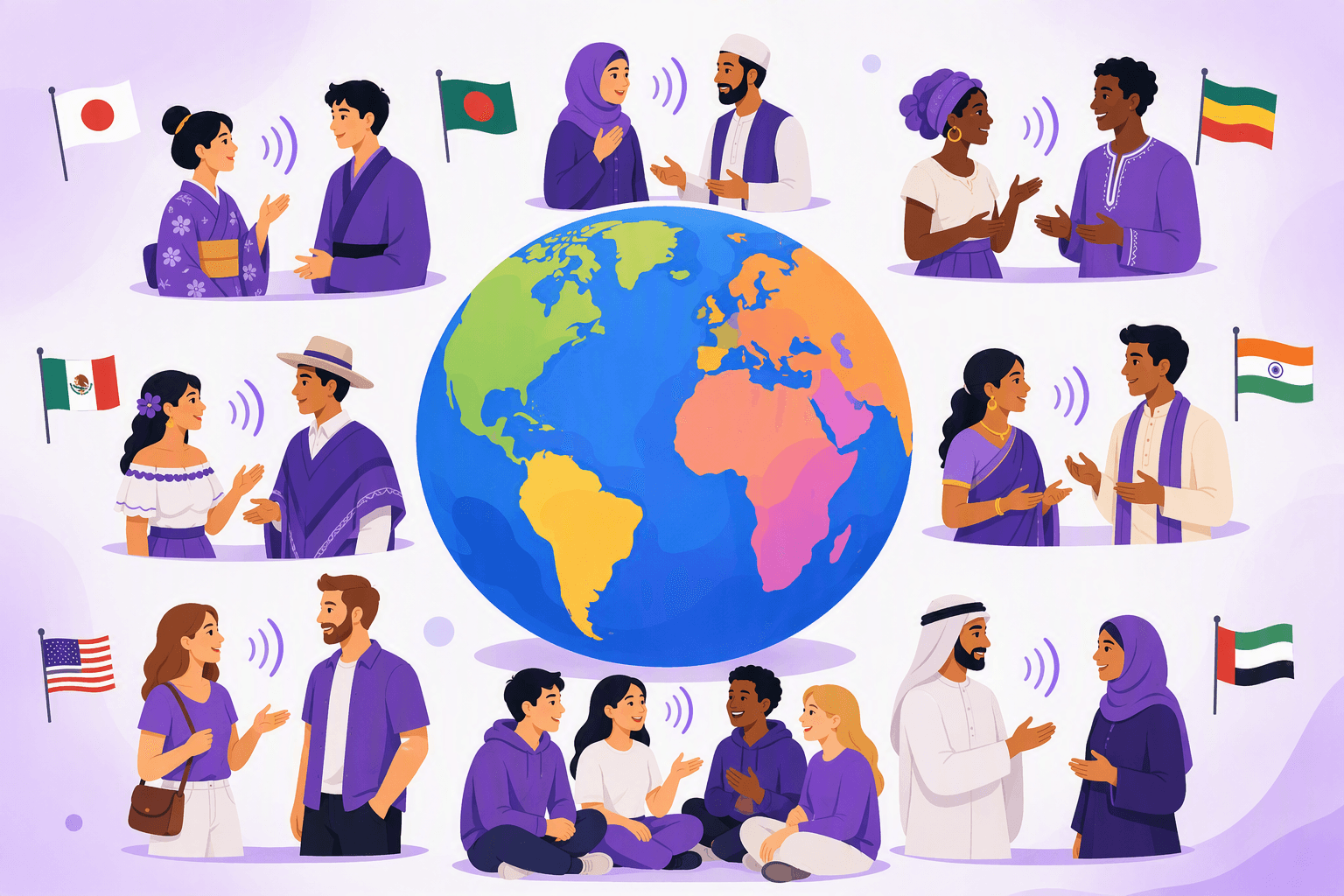
The core grammar rule
A country name is a proper noun, so it is capitalized: México /ˈmexiko/, Colombia /koˈlombja/, and Japón /xaˈpon/. A nationality is usually an adjective, so it is lowercase: mexicano /mexiˈkano/, colombiana /kolomˈbjana/, and japonés /xapoˈnes/.
Most nationality adjectives change to match the gender of the person:
| Person | Spanish sentence | Meaning |
|---|---|---|
| A man from Chile | Él es chileno /el es tʃiˈleno/ | He is Chilean |
| A woman from Chile | Ella es chilena /ˈeʝa es tʃiˈlena/ | She is Chilean |
| Two women from Chile | Ellas son chilenas /ˈeʝas son tʃiˈlenas/ | They are Chilean |
| A mixed group from Chile | Ellos son chilenos /ˈeʝos son tʃiˈlenos/ | They are Chilean |
The verb you need is ser /seɾ/, meaning “to be” for identity, origin, nationality, and profession. Use soy /soj/ for “I am,” eres /ˈeɾes/ for “you are,” and es /es/ for “he, she, or it is.”
| Subject | Form of ser /seɾ/ | Example |
|---|---|---|
| yo | soy /soj/ | Soy peruana /soj peɾuˈana/ |
| tú | eres /ˈeɾes/ | Eres francés /ˈeɾes fɾanˈses/ |
| él, ella, usted | es /es/ | Ella es coreana /ˈeʝa es koɾeˈana/ |
| nosotros, nosotras | somos /ˈsomos/ | Somos brasileños /ˈsomos bɾasiˈleɲos/ |
| ellos, ellas, ustedes | son /son/ | Son alemanes /son aleˈmanes/ |
Spanish-speaking countries and nationalities
The following 20 sovereign countries use Spanish as an official language. Their nationality words are among the highest-value vocabulary for Spanish learners.
| Country | Nationality, masculine / feminine | IPA pronunciation |
|---|---|---|
| Argentina | argentino / argentina | /aɾxenˈtino/, /aɾxenˈtina/ |
| Bolivia | boliviano / boliviana | /boliˈbjano/, /boliˈbjana/ |
| Chile | chileno / chilena | /tʃiˈleno/, /tʃiˈlena/ |
| Colombia | colombiano / colombiana | /kolomˈbjano/, /kolomˈbjana/ |
| Costa Rica | costarricense | /kosta riˈsense/ |
| Cuba | cubano / cubana | /kuˈbano/, /kuˈbana/ |
| República Dominicana | dominicano / dominicana | /dominiˈkano/, /dominiˈkana/ |
| Ecuador | ecuatoriano / ecuatoriana | /ekwa.toˈɾjano/, /ekwa.toˈɾjana/ |
| El Salvador | salvadoreño / salvadoreña | /salβadoˈɾeɲo/, /salβadoˈɾeɲa/ |
| España | español / española | /espaˈɲol/, /espaˈɲola/ |
| Guatemala | guatemalteco / guatemalteca | /gwateˈmalteko/, /gwateˈmalteka/ |
| Guinea Ecuatorial | ecuatoguineano / ecuatoguineana | /ekwa.toɣi.neˈano/, /ekwa.toɣi.neˈana/ |
| Honduras | hondureño / hondureña | /onduˈɾeɲo/, /onduˈɾeɲa/ |
| México | mexicano / mexicana | /mexiˈkano/, /mexiˈkana/ |
| Nicaragua | nicaragüense | /nikaɾaˈɣwense/ |
| Panamá | panameño / panameña | /panaˈmeɲo/, /panaˈmeɲa/ |
| Paraguay | paraguayo / paraguaya | /paɾaˈɣwaʝo/, /paɾaˈɣwaʝa/ |
| Perú | peruano / peruana | /peɾuˈano/, /peɾuˈana/ |
| Uruguay | uruguayo / uruguaya | /uɾuˈɣwaʝo/, /uɾuˈɣwaʝa/ |
| Venezuela | venezolano / venezolana | /bene.soˈlano/, /bene.soˈlana/ |
Important country-name details
Some countries contain an article. In everyday conversation, speakers commonly say El Salvador /el salβaˈðoɾ/ and la República Dominicana /la reˈpuβlika dominiˈkana/. The article belongs to the country name, but it does not appear in the nationality: salvadoreño /salβadoˈɾeɲo/ and dominicana /dominiˈkana/.
The country name México /ˈmexiko/ is pronounced with the sound /x/, similar to a strong Spanish j /x/. In much of Latin America, the letter x can have other sounds in different words, but México /ˈmexiko/ and mexicano /mexiˈkano/ are fixed forms worth learning as a pair.
Francisco Moreno Fernández’s work on varieties of Spanish emphasizes that Spanish is not one uniform national standard. Vocabulary, pronunciation, and local identity vary across the Spanish-speaking world, but these nationality forms are broadly recognized and appropriate in formal international Spanish.
Countries and nationalities beyond the Spanish-speaking world
You will also regularly need to describe people from countries where Spanish is not the main language. The forms below are especially useful in travel, news, sports, work, and film dialogue.
| Country | Nationality, masculine / feminine | IPA pronunciation |
|---|---|---|
| Alemania | alemán / alemana | /aleˈman/, /aleˈmana/ |
| Australia | australiano / australiana | /austɾaˈljano/, /austɾaˈljana/ |
| Brasil | brasileño / brasileña | /bɾasiˈleɲo/, /bɾasiˈleɲa/ |
| Canadá | canadiense | /kanaˈðjense/ |
| China | chino / china | /ˈtʃino/, /ˈtʃina/ |
| Corea del Sur | surcoreano / surcoreana | /suɾkoɾeˈano/, /suɾkoɾeˈana/ |
| Egipto | egipcio / egipcia | /eˈxipsjo/, /eˈxipsja/ |
| Estados Unidos | estadounidense | /estadouniˈðense/ |
| Filipinas | filipino / filipina | /filiˈpino/, /filiˈpina/ |
| Francia | francés / francesa | /fɾanˈses/, /fɾanˈsesa/ |
| India | indio / india | /ˈindjo/, /ˈindja/ |
| Italia | italiano / italiana | /itaˈljano/, /itaˈljana/ |
| Japón | japonés / japonesa | /xapoˈnes/, /xapoˈnesa/ |
| Marruecos | marroquí | /maroˈki/ |
| Portugal | portugués / portuguesa | /poɾtuˈɣes/, /poɾtuˈɣesa/ |
| Reino Unido | británico / británica | /bɾiˈtaniko/, /bɾiˈtanika/ |
| Rusia | ruso / rusa | /ˈruso/, /ˈrusa/ |
| Suiza | suizo / suiza | /ˈswiso/, /ˈswisa/ |
| Turquía | turco / turca | /ˈtuɾko/, /ˈtuɾka/ |
Nationality endings you can predict
Spanish nationality words have patterns, although there are exceptions. Learning endings helps you recognize new forms faster when you hear them in a movie or read them in subtitles.
The -o and -a pattern
Many nationalities ending in -o /o/ form the feminine by changing to -a /a/. This is the most familiar pattern:
- mexicano /mexiˈkano/ becomes mexicana /mexiˈkana/
- italiano /itaˈljano/ becomes italiana /itaˈljana/
- argentino /aɾxenˈtino/ becomes argentina /aɾxenˈtina/
- chileno /tʃiˈleno/ becomes chilena /tʃiˈlena/
For plural forms, add -s /s/: mexicanos /mexiˈkanos/ and mexicanas /mexiˈkanas/.
The -és and -esa pattern
A masculine nationality ending in -és /es/ usually has a feminine form ending in -esa /esa/:
- francés /fɾanˈses/, francesa /fɾanˈsesa/
- japonés /xapoˈnes/, japonesa /xapoˈnesa/
- portugués /poɾtuˈɣes/, portuguesa /poɾtuˈɣesa/
The written accent disappears in many plural masculine forms: franceses /fɾanˈseses/ and japoneses /xapoˈneses/. This follows normal Spanish stress rules.
The -ense pattern
Words ending in -ense /ense/ do not change for gender. This makes them especially convenient:
- canadiense /kanaˈðjense/
- costarricense /kosta riˈsense/
- nicaragüense /nikaɾaˈɣwense/
- estadounidense /estadouniˈðense/
A man and a woman can both say Soy canadiense /soj kanaˈðjense/. For plural, add -s /s/: canadienses /kanaˈðjenses/.
The -í pattern
Nationality adjectives ending in -í /i/ also stay the same for men and women:
- marroquí /maroˈki/
- iraní /iɾaˈni/
- israelí /isɾa.eˈli/
The plural adds -es /es/: marroquíes /maroˈkjes/. The spelling changes slightly to preserve the sound.
The difference between estadounidense and americano
For a person from the United States, estadounidense /estadouniˈðense/ is the most precise and broadly neutral term. It refers directly to the United States, Estados Unidos /esˈtaðos uˈniðos/.
The word americano /ameɾiˈkano/ can mean a person from the Americas as a whole. In some regions, people use it for a person from the United States, but that can feel imprecise in an international setting because North, Central, and South America are all part of América /aˈmeɾika/ in Spanish.
Use these sentences as safe models:
- Mi profesora es estadounidense /mi pɾofeˈsoɾa es estadouniˈðense/.
- Somos americanos, pero no somos del mismo país /ˈsomos ameɾiˈkanos ˈpeɾo no ˈsomos del ˈmismo paˈis/.
- Él es canadiense y ella es mexicana /el es kanaˈðjense i ˈeʝa es mexiˈkana/.
The Real Academia Española /reˈal akaˈðemja espaˈɲola/ identifies estadounidense /estadouniˈðense/ as the recommended nationality adjective for the United States in careful usage. It avoids treating one country as the entire American continent.
🌍 Identity is more specific than a passport
In Spanish-speaking communities, people often identify with a city, region, or family background as well as a nationality. A character may call herself porteña /poɾˈteɲa/ from Buenos Aires, paisano /paiˈsano/ from the same hometown, or boricua /boˈɾikwa/ from Puerto Rico. These labels can carry real cultural meaning, so use them after hearing how people describe themselves.
Common mistakes to avoid
Do not capitalize nationality adjectives
English writes “Spanish,” “Mexican,” and “Japanese” with capital letters. Spanish normally does not. Write Soy japonesa /soj xapoˈnesa/, not a capitalized nationality adjective.
This is one of the easiest writing differences to notice when comparing Spanish and English. For more high-frequency vocabulary patterns, see our list of the 100 most common Spanish words.
Do not use estar for nationality
Say Soy colombiano /soj kolomˈbjano/, not Estoy colombiano /esˈtoj kolomˈbjano/. Nationality is treated as an identifying characteristic, so Spanish uses ser /seɾ/.
The same rule applies to origin: Ella es de Perú /ˈeʝa es de peˈɾu/ means “She is from Peru.” You can use either the nationality or de /de/ plus a country name.
Match gender and number
If you are speaking about one woman, use alemana /aleˈmana/, not alemán /aleˈman/. If you are describing several people, use plural forms: Los turistas son franceses /los tuˈɾistas son fɾanˈseses/.
A mixed group normally takes the masculine plural in standard grammar: Carlos y Ana son argentinos /ˈkaɾlos i ˈana son aɾxenˈtinos/. A group made up entirely of women takes the feminine plural: Ellas son argentinas /ˈeʝas son aɾxenˈtinas/.
💡 Learn country words in full sentences
Instead of memorizing isolated lists, practice one identity sentence per country: Ella es colombiana /ˈeʝa es kolomˈbjana/ or Mis vecinos son coreanos /mis beˈsinos son koɾeˈanos/. Listening for these patterns in scenes makes the grammar easier to retain.
Natural introduction examples
These examples sound natural in everyday Spanish and give you reusable models.
- Hola, soy Daniela. Soy de Costa Rica y soy costarricense /ˈola soj daˈnjela soj de ˈkosta ˈrika i soj kosta riˈsense/.
- Mucho gusto, soy brasileño, pero vivo en España /ˈmutʃo ˈɣusto soj bɾasiˈleɲo ˈpeɾo ˈbiβo en esˈpaɲa/.
- ¿De dónde eres? Soy peruana, de Lima /de ˈðonde ˈeɾes soj peɾuˈana de ˈlima/.
- Ellos son japoneses y hablan español muy bien /ˈeʝos son xapoˈneses i ˈaβlan espaˈɲol muj ˈbjen/.
- Mi familia es mexicana, pero yo nací en Canadá /mi faˈmilja es mexiˈkana ˈpeɾo ʝo naˈsi en kanaˈða/.
John M. Lipski’s research on Spanish in the United States shows why these identity sentences matter beyond textbook grammar. Spanish speakers may have transnational families, bilingual lives, and regional identities that do not fit a simple one-country label. Ask respectfully, listen to the answer, and use the identity term a person chooses.
Country and nationality vocabulary also makes small talk easier. You can follow an introduction with Encantado /enkaˈntado/ or Encantada /enkaˈntada/, then use a polite farewell from our guide to saying goodbye in Spanish.
A practical way to remember them
Learn nationality words in pairs, not as isolated labels. Write one sentence with the masculine and feminine form, then say both aloud.
For example:
- Él es italiano /el es itaˈljano/.
- Ella es italiana /ˈeʝa es itaˈljana/.
- Ellos son italianos /ˈeʝos son itaˈljanos/.
- Ellas son italianas /ˈeʝas son itaˈljanas/.
Then watch for the same pattern in Spanish clips, interviews, sports commentary, and travel shows. You will hear de /de/ plus a place name, ser /seɾ/ plus a nationality, and regional labels used in real conversations.
When you can comfortably say where people are from, you can move beyond basic greetings into more personal conversations. If you are practicing warm conversations with someone close to you, our guide to saying I love you in Spanish shows how tone and regional preference shape even familiar phrases.
Frequently Asked Questions
Are nationalities capitalized in Spanish?
How do I say my nationality in Spanish?
Why do Spanish nationalities have masculine and feminine forms?
Is estadounidense the same as americano in Spanish?
How many countries have Spanish as an official language?
Sources & References
- Instituto Cervantes, El español: una lengua viva, 2024
- Real Academia Española, Diccionario panhispánico de dudas, accessed 2026
- Real Academia Española and ASALE, Diccionario de la lengua española, accessed 2026
- United Nations, UNTERM Multilingual Terminology Database, accessed 2026
- Francisco Moreno Fernández, Variedades de la lengua española, Routledge
Start learning with Wordy
Watch real movie clips and build your vocabulary as you go. Free to download.


