Quick Answer
Advanced Spanish colors go far beyond rojo, azul, and verde. Learn precise shades such as turquesa, granate, beige, and borgoña, plus the grammar and cultural context that help you describe colors naturally in Spanish.
Advanced Spanish colors include precise shade words such as turquesa /tuɾˈkesa/, granate /ɡɾaˈnate/, borgoña /boɾˈɣoɲa/, and verde oliva /ˈbeɾðe oˈliβa/, along with modifiers like claro /ˈklaɾo/ and oscuro /osˈkuɾo/. To use them naturally, learn the shade itself, whether it changes for gender and number, and the situations where Spanish speakers prefer one label over another.
Spanish is spoken by more than 500 million native speakers and is official at the national level in 20 countries. That scale means color vocabulary changes subtly by region: a pale blue shirt may be celeste /seˈleste/ in Argentina or Mexico, while azul claro /aˈsul ˈklaɾo/ may be the first choice elsewhere.
Start with the core colors if you need a refresher, then use this guide to sound more precise when talking about clothing, décor, art, makeup, food, and film. You can also build everyday conversation skills with our Spanish greetings guide.
| English | Spanish | Pronunciation | Note |
|---|---|---|---|
| Navy blue | azul marino | ah-SOOL mah-REE-noh | Dark blue, common for clothing and uniforms. |
| Sky blue | celeste | seh-LES-teh | Especially common in Latin America. |
| Turquoise | turquesa | toor-KEH-sah | Usually unchanged for masculine and feminine nouns. |
| Teal | verde azulado | BEHR-deh ah-soo-LAH-doh | Literally blue-green. |
| Olive green | verde oliva | BEHR-deh oh-LEE-bah | Common in fashion and military contexts. |
| Mint green | verde menta | BEHR-deh MEN-tah | A fresh, pale green. |
| Emerald green | verde esmeralda | BEHR-deh ess-meh-RAHL-dah | Used for rich jewel-toned green. |
| Lime green | verde lima | BEHR-deh LEE-mah | Bright yellow-green. |
| Burgundy | borgoña | bor-GOH-nyah | A deep wine-red shade. |
| Maroon | granate | grah-NAH-teh | Deep red, also the color of a pomegranate seed. |
| Crimson | carmesí | kar-meh-SEE | Intense red, often literary or formal. |
| Coral | coral | koh-RAHL | Usually unchanged for gender. |
| Salmon pink | salmón | sahl-MOHN | Used as a color adjective. |
| Peach | melocotón | meh-loh-koh-TOHN | Common in Spain; durazno is used in much of Latin America. |
| Lavender | lavanda | lah-BAHN-dah | A pale purple shade. |
| Lilac | lila | LEE-lah | Usually unchanged for masculine and feminine nouns. |
| Violet | violeta | byoh-LEH-tah | A purple shade associated with the violet flower. |
| Beige | beige | BEH-heh | Often unchanged, though usage varies in writing. |
| Cream | crema | KREH-mah | Warm off-white. |
| Ivory | marfil | mar-FEEL | Literally ivory, often used for formal clothing. |
| Silver | plateado | plah-teh-AH-doh | Changes to plateada, plateados, plateadas. |
| Gold | dorado | doh-RAH-doh | Changes to dorada, dorados, doradas. |
| Copper | cobrizo | koh-BREE-soh | Used for metallic colors and reddish hair. |
| Charcoal gray | gris carbón | grees kar-BOHN | Dark gray, useful for clothes and interiors. |
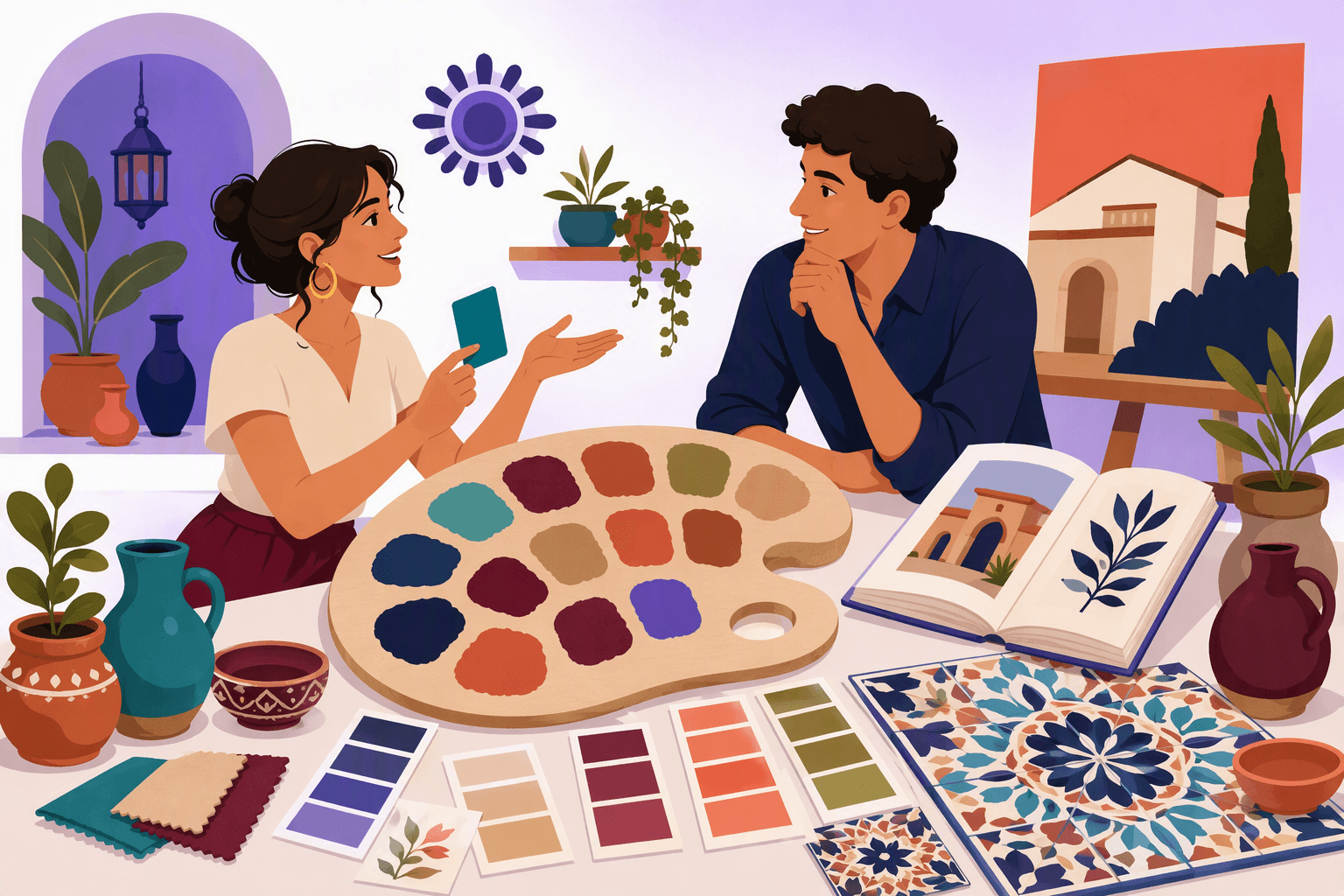
How advanced colors work in Spanish
A color can be a simple adjective, a noun used as an adjective, or a multiword expression. That difference explains why some forms change and others remain stable.
The Real Academia Española records both traditional color adjectives and newer color labels that come from objects, materials, flowers, and foods. Rojo /ˈroxo/ behaves like a typical adjective, but beige /ˈbexe/ and lila /ˈlila/ are commonly treated as invariable in everyday use.
Tonos
A tono /ˈtono/ is a broad variation within a color family. You can make almost any ordinary color more specific with claro /ˈklaɾo/ or oscuro /osˈkuɾo/.
- azul claro /aˈsul ˈklaɾo/, light blue
- azul oscuro /aˈsul osˈkuɾo/, dark blue
- verde claro /ˈbeɾðe ˈklaɾo/, light green
- gris oscuro /ɡɾis osˈkuɾo/, dark gray
- rosa claro /ˈrosa ˈklaɾo/, light pink
These modifiers normally follow the base color. Say un vestido azul oscuro /un βesˈtiðo aˈsul osˈkuɾo/ for “a dark blue dress,” not the reverse.
For a softer or less intense effect, Spanish speakers also use pálido /ˈpaliðo/, apagado /apaˈɣaðo/, and pastel /pasˈtel/. A verde pálido /ˈbeɾðe ˈpaliðo/ is pale green, while colores pastel /koˈloɾes pasˈtel/ refers to soft, powdery colors.
Matices
A matiz /maˈtis/ is a subtle nuance in color. It is especially useful in art, photography, cosmetics, and interior design, where a broad word such as marrón /maˈron/ may not be precise enough.
For example, a brown object could be marrón chocolate /maˈron tʃokolaˈte/, marrón claro /maˈron ˈklaɾo/, or cobrizo /koˈbɾiso/. A hairdresser may describe hair as castaño ceniza /kasˈtaɲo seˈnisa/, ash brown, or rubio dorado /ˈruβjo ðoˈɾaðo/, golden blond.
Berlin and Kay’s Basic Color Terms distinguishes basic color categories from more specific labels. That distinction is useful for learners: azul /aˈsul/ is a basic everyday category, while azul marino /aˈsul maˈɾino/ and turquesa /tuɾˈkesa/ identify narrower shades.
Brillo
A brillo /ˈbɾiʎo/ is shine or gloss. Spanish color descriptions often include surface quality because a metallic, matte, or glossy finish changes what the viewer sees.
Use brillante /bɾiˈʎante/ for shiny, mate /ˈmate/ for matte, metálico /meˈtaliko/ for metallic, and nacarado /nakaˈɾaðo/ for pearlescent. These words are particularly useful when shopping for makeup, cars, nail polish, paint, or furniture.
Compare these natural phrases:
- un labial rojo mate /un laˈβjal ˈroxo ˈmate/, a matte red lipstick
- un coche gris metálico /un ˈkotʃe ɡɾis meˈtaliko/, a metallic gray car
- una pared blanca brillante /ˈuna paˈɾeð ˈblaŋka bɾiˈʎante/, a glossy white wall
- una tela azul nacarada /ˈuna ˈtela aˈsul nakaˈɾaða/, a pearly blue fabric
Agreement: when color words change
Most familiar Spanish color adjectives agree with the noun in gender and number. If a color ends in -o, it usually has four forms.
| Noun | Masculine singular | Feminine singular | Masculine plural | Feminine plural |
|---|---|---|---|---|
| rojo /ˈroxo/ | rojo | roja | rojos | rojas |
| dorado /doˈɾaðo/ | dorado | dorada | dorados | doradas |
| plateado /plateˈaðo/ | plateado | plateada | plateados | plateadas |
| azulado /asulˈaðo/ | azulado | azulada | azulados | azuladas |
Examples make the pattern clearer:
- un bolso dorado /um ˈbolso doˈɾaðo/, a gold bag
- una falda dorada /ˈuna ˈfalða doˈɾaða/, a gold skirt
- unos zapatos plateados /ˈunos saˈpatos plateˈaðos/, silver shoes
- unas paredes azuladas /ˈunas paˈɾeðes asuˈlaðas/, bluish walls
Colors ending in -e, such as verde /ˈbeɾðe/, generally do not change for masculine versus feminine, but they do take a plural -s: verde, verdes. The same applies to gris /ɡɾis/, which becomes grises /ˈɡɾises/ in the plural.
Some color terms based on nouns are often invariable, especially when they appear after a noun. You may hear camisas beige /kaˈmisas ˈbexe/, vestidos lila /besˈtiðos ˈlila/, and zapatos coral /saˈpatos koˈɾal/. Formal edited writing can vary, so consistency matters more than forcing an unfamiliar plural.
💡 A practical agreement shortcut
When a color is a standard adjective such as rojo, negro, blanco, dorado, or cobrizo, make it agree. When it is a borrowed word or comes from a noun, such as beige, lila, coral, or naranja, many speakers leave it unchanged.
Regional color vocabulary that matters
Spanish color vocabulary is not identical across the Spanish-speaking world. Francisco Moreno Fernández’s work on Spanish varieties highlights how vocabulary shifts across regions even when speakers fully understand one another.
Celeste
Celeste /seˈleste/ is one of the most useful regional words to learn. It means light blue or sky blue and is common throughout Latin America, especially in Argentina, Uruguay, Mexico, and parts of the Andes.
In Argentina, la camiseta celeste y blanca /la kamiˈseta seˈleste i ˈblaŋka/ strongly evokes the national football team. The phrase refers to the country’s iconic sky-blue and white colors, making celeste more culturally charged than a generic paint-chart label.
Marrón
Marrón /maˈron/ is the standard word for brown in Spain and much of Latin America. In some contexts, however, café /kaˈfe/ is also widely used for brown, especially in Mexico, Central America, and the Caribbean.
Both pantalones marrones /pantaloˈnes maˈrones/ and pantalones café /pantaloˈnes kaˈfe/ can mean brown pants. Because café is also coffee, context does the work. On a clothing website, the color meaning is immediately clear.
Morado
Morado /moˈɾaðo/ and violeta /bjoˈleta/ overlap, but their associations differ. Morado is often the everyday choice for purple, while violeta can sound more botanical, artistic, or technical.
In Spain, morado also appears in political and cultural symbolism because purple has been associated with feminist movements and historical republican imagery. Color words can therefore carry social references that are invisible in a dictionary definition.
🌍 Color symbolism is context-dependent
Do not assume color symbolism works the same way in every Spanish-speaking place. Red may signal romance, celebration, danger, or a football club. White can suggest formality, purity, summer clothing, or mourning in particular religious settings. Ask what a color means in the local context rather than relying on a universal rule.
Color expressions you will hear in real life
Colors are not just labels. They help Spanish speakers create vivid comparisons, describe personality, and talk about physical reactions.
Ponerse rojo /poˈneɾse ˈroxo/ means to blush or turn red from embarrassment. Estar verde /esˈtaɾ ˈbeɾðe/ can mean to be inexperienced, unripe, or even to feel nauseated, depending on context.
Verlo todo negro /ˈbeɾlo ˈtoðo ˈneɣɾo/ means to see everything pessimistically. Dar luz verde /daɾ lus ˈbeɾðe/ means to give the green light or approve something.
You will also hear prensa rosa /ˈpɾensa ˈrosa/ for celebrity and gossip media, and sangre azul /ˈsaŋɡɾe aˈsul/ for aristocratic ancestry. These expressions are worth recognizing in films and television because literal translation will not explain the intended meaning.
If you are learning through media, notice how costume designers use color to establish mood and character before dialogue begins. Practice repeating short lines aloud, then connect the color word to the scene rather than memorizing an isolated translation. Our guide to Spanish movies for learners can help you find material with visual context.
Useful color combinations for clothes and design
When describing combinations, use con /kon/, “with,” or y /i/, “and.” For contrast, combina con /komˈbina kon/ means “goes with” or “matches.”
-
El beige combina con casi todo. /el ˈbexe komˈbina kon ˈkasi ˈtoðo/
Beige goes with almost everything. -
Prefiero el azul marino con blanco. /pɾeˈfjeɾo el aˈsul maˈɾino kom ˈblaŋko/
I prefer navy blue with white. -
Ese tono verde oliva es muy elegante. /ˈese ˈtono ˈbeɾðe oˈliβa es muj eleˈɣante/
That olive-green shade is very elegant. -
La habitación tiene paredes color crema. /la aβitˈasjon ˈtjɛne paˈɾeðes koˈloɾ ˈkɾema/
The room has cream-colored walls.
The pattern color + noun is common in Spanish: color crema /koˈloɾ ˈkɾema/, color vino /koˈloɾ ˈbino/, and color arena /koˈloɾ aˈɾena/. It is a useful workaround when you are unsure whether a noun-based shade should agree.
A fast way to remember advanced Spanish colors
Group colors by image, not alphabetically. Learn verde oliva /ˈbeɾðe oˈliβa/ with olives, borgoña /boɾˈɣoɲa/ with red wine, lavanda /laˈβanda/ with lavender flowers, and marfil /maɾˈfil/ with ivory.
Then create short descriptions of objects you actually own: mi abrigo gris carbón /mi aˈbɾiɣo ɡɾis kaɾˈbon/, mis zapatillas coral /mis sapatˈiʎas koˈɾal/, or una taza turquesa /ˈuna ˈtasa tuɾˈkesa/. This makes the vocabulary easier to retrieve when you need it.
For more everyday Spanish that fits naturally around these descriptions, learn how to say goodbye in Spanish, then add a warm closing such as un abrazo /un aˈbɾaso/. For romantic descriptions, our guide to saying I love you in Spanish includes expressions that pair naturally with compliments about clothes, flowers, and gifts.
The goal is not to memorize every paint-catalog label. Learn the shades you are likely to see, notice how they agree with nouns, and listen for regional favorites such as celeste /seˈleste/ and café /kaˈfe/. That gives you color vocabulary that works beyond the beginner list.
Frequently Asked Questions
Do Spanish color words change for gender and number?
What is the difference between morado and violeta in Spanish?
How do you say light blue and dark blue in Spanish?
Is celeste the same as azul in Spanish?
What Spanish color words are most useful for shopping?
Sources & References
- Real Academia Española, Diccionario de la lengua española, accessed 2026
- FundéuRAE, recommendations on color names and adjective agreement, accessed 2026
- Instituto Cervantes, El español: una lengua viva, 2024
- Brent Berlin and Paul Kay, Basic Color Terms: Their Universality and Evolution, University of California Press
- Francisco Moreno Fernández, Variedades de la lengua española, Routledge
Start learning with Wordy
Watch real movie clips and build your vocabulary as you go. Free to download.


