Quick Answer
Spanish adjectives usually agree with the noun in gender and number (niño alto, niña alta, niños altos, niñas altas), and they often come after the noun. The main exceptions are common descriptive adjectives that can go before the noun to add emphasis or change meaning (un gran hombre vs un hombre grande). This guide gives the core rules, the irregular patterns, and the placement choices native speakers actually use.
Spanish adjectives follow two big rules: they usually agree with the noun in gender and number, and they usually come after the noun, with a small set of common exceptions where position changes emphasis or meaning (RAE/ASALE, Nueva gramática).
Spanish is also a truly global language, which is why these rules matter in real life. Ethnologue estimates about 559 million total Spanish speakers worldwide, and Instituto Cervantes reports Spanish is spoken across 21 countries where it is an official language, plus large communities in the US and beyond (Ethnologue 2024; Instituto Cervantes, accessed 2026).
If you want everyday Spanish openings to practice these patterns immediately, pair this guide with how to say hello in Spanish and how to say goodbye in Spanish, then swap in different adjectives as you talk.
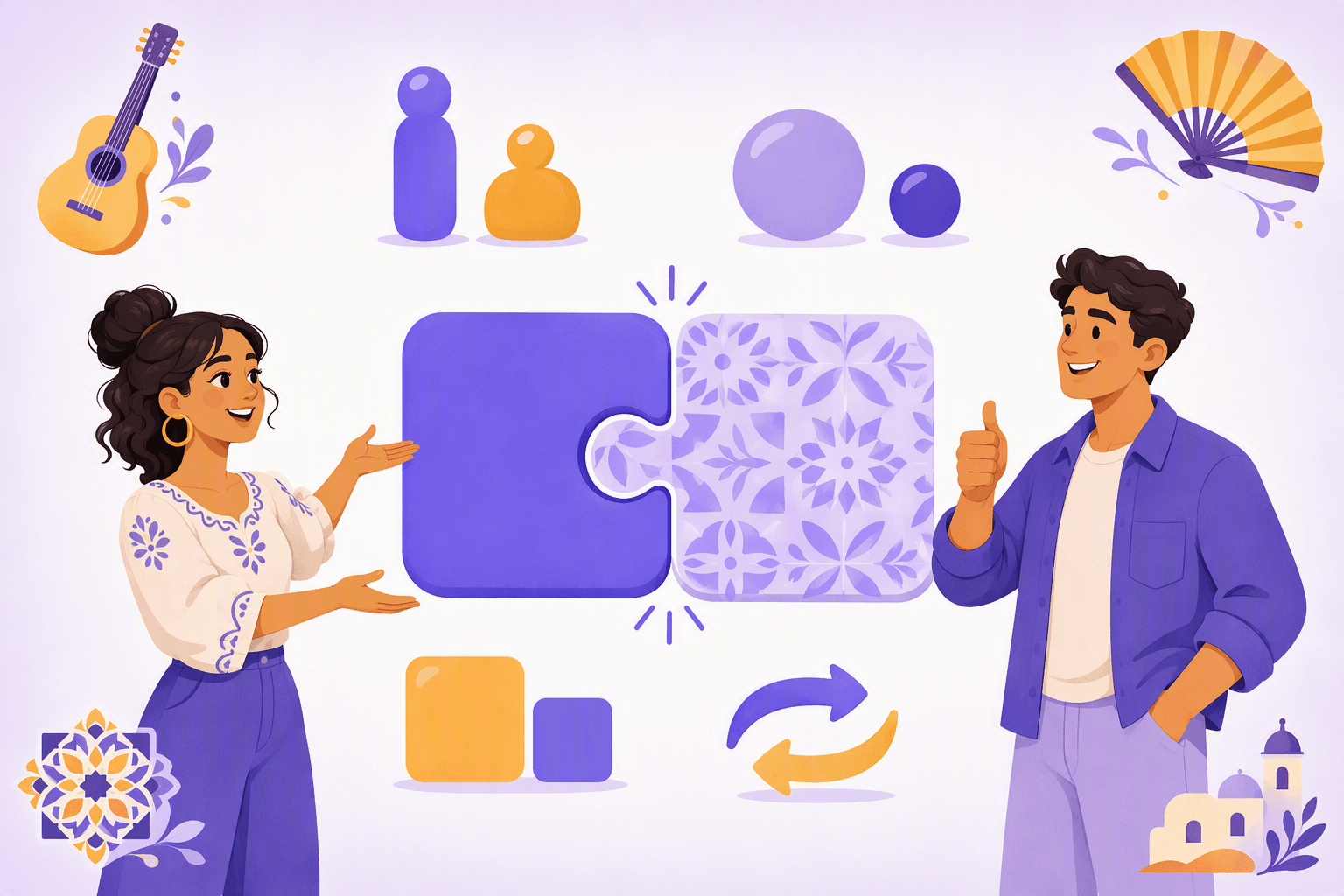
The core idea: adjectives "match" the noun
In Spanish, an adjective is a describing word like alto (AHL-toh, tall) or interesante (een-teh-reh-SAHN-teh, interesting). The key difference from English is that Spanish often shows the match on the adjective itself.
This is called agreement: the adjective changes form to match the noun's gender (masculine or feminine) and number (singular or plural). Reference grammars like Butt and Benjamin’s A New Reference Grammar of Modern Spanish treat agreement as one of the most consistent, high-value patterns for learners because it affects almost every sentence you say.
Gender agreement: the patterns you actually need
Most learners start with the -o/-a pattern, but Spanish has several common endings. Learn them as families, not as isolated words.
Adjectives ending in -o
These are the easiest: masculine ends in -o, feminine ends in -a.
- un chico alto (AHL-toh)
- una chica alta (AHL-tah)
Plural adds -s:
- chicos altos
- chicas altas
Adjectives ending in -a
Many adjectives end in -a and do not change for gender.
- un problema difícil (dee-FEE-seel, difficult)
- una situación difícil
Plural adds -es because difícil ends in a consonant sound in spelling:
- problemas difíciles (dee-FEE-see-lehs)
Adjectives ending in -e
Adjectives ending in -e usually do not change for gender.
- un hombre inteligente (een-teh-lee-HEHN-teh)
- una mujer inteligente
Plural adds -s:
- hombres inteligentes
- mujeres inteligentes
Adjectives ending in a consonant
Many consonant-ending adjectives do not change for gender, but they do change for number.
- un examen fácil (FAH-seel, easy)
- una pregunta fácil
- exámenes fáciles
A big exception group is below.
Adjectives ending in -or, -án, -ón, -ín
These often add -a for feminine, then form plurals normally. The RAE’s guidance on agreement patterns is especially helpful here because learners tend to overgeneralize.
- trabajador / trabajadora (trah-bah-hah-DOR / trah-bah-hah-DOH-rah, hardworking)
- hablador / habladora (ah-blah-DOR / ah-blah-DOH-rah, talkative)
- holgazán / holgazana (ohl-gah-SAHN / ohl-gah-SAH-nah, lazy)
- juguetón / juguetona (hoo-geh-TOHN / hoo-geh-TOH-nah, playful)
Plural examples:
- trabajadores / trabajadoras
- holgazanes / holgazanas
💡 A fast accuracy check
If the adjective can describe a person and ends in -or, -án, -ón, or -ín, test whether native usage allows a feminine -a form. If yes, use it. If you are unsure, look it up in the RAE’s Diccionario panhispánico de dudas (accessed 2026).
Number agreement: making adjectives plural without guessing
Plural agreement is mostly spelling-based. Once you know the last letter, you can usually predict the plural.
Vowel + -s
If the adjective ends in a vowel, add -s.
- bonito (boh-NEE-toh, pretty) to bonitos
- bonita to bonitas
- grande (GRAHN-deh, big) to grandes
Consonant + -es
If it ends in a consonant, add -es.
- popular (poh-poo-LAHR) to populares
- fácil to fáciles
-z changes to -ces
This is a high-frequency spelling change.
- feliz (feh-LEES, happy) to felices (feh-LEE-sehs)
- capaz (kah-PAHS, capable) to capaces (kah-PAH-sehs)
Invariable adjectives (rare, but real)
Some adjectives, often borrowed or used as labels, can be invariable in everyday speech. You will hear this in fashion, tech, and brand-like uses.
For learners, the safest approach is: if you see it used as an adjective in Spanish writing, check whether it pluralizes in that context. When in doubt, choose a more standard synonym that clearly agrees.
Where adjectives go: after the noun is default, but not always best
In Spanish, the most neutral placement is after the noun:
- una casa blanca (BLAHN-kah, a white house)
- un coche nuevo (NWEH-boh, a new car)
This is the pattern you can use safely in almost every situation.
But Spanish also uses pre-noun adjectives for emphasis, style, and meaning shifts. The Nueva gramática treats placement as a meaning-bearing choice, not just a stylistic one.
Descriptive vs "evaluative" feel
Post-noun often feels like a straightforward description. Pre-noun often feels like an evaluation, a known characteristic, or a rhetorical framing.
- una película buena (a movie that is good)
- una buena película (a good movie, more like a recommendation)
Both are grammatical. The second is more natural when you are giving an opinion.
Meaning changes: the classic pairs
Some adjectives change meaning depending on position. These are worth memorizing because they show up constantly in movies and daily speech.
grande
Grande (GRAHN-deh) means big, but before a singular noun it often becomes gran (GRAHN).
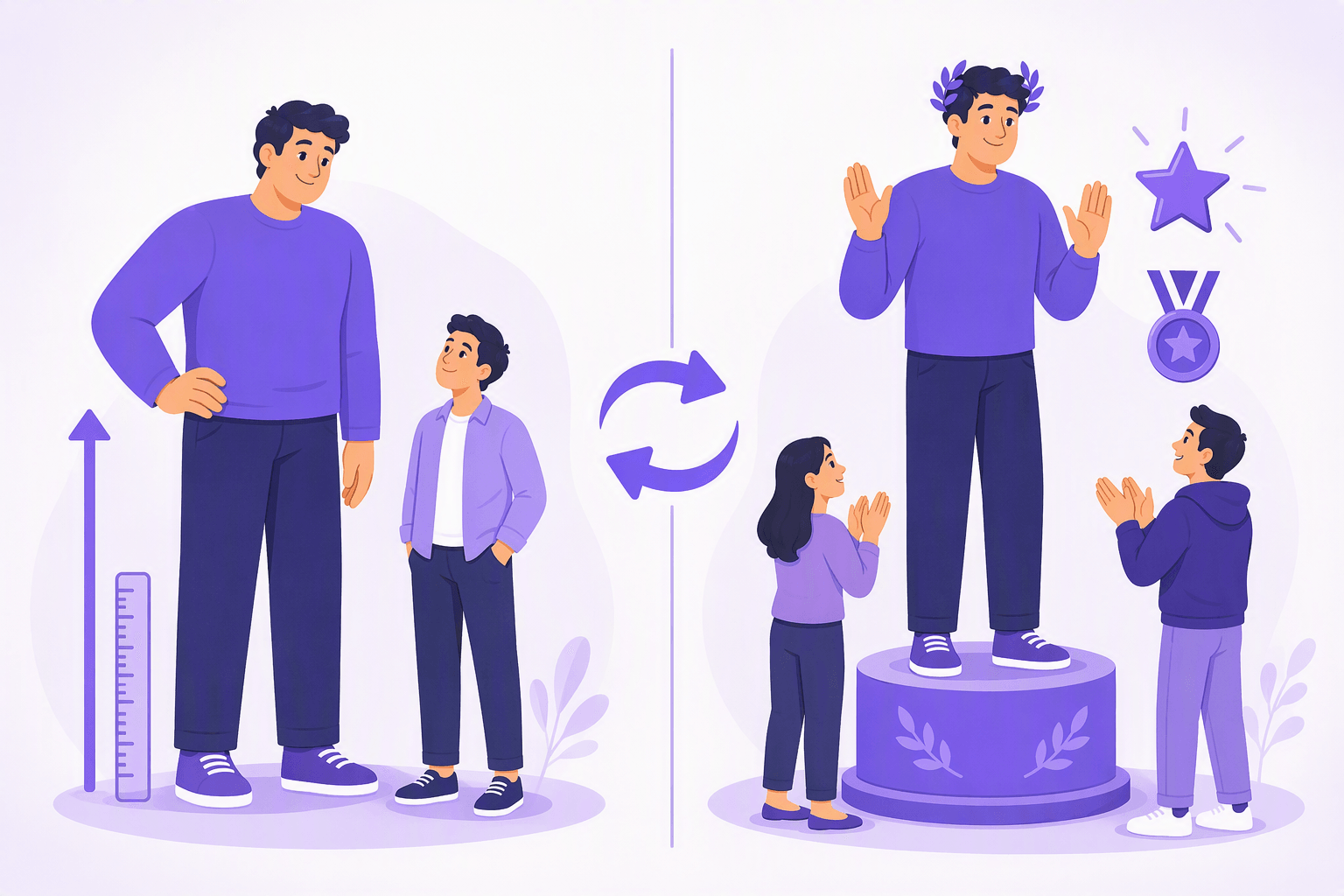
- un hombre grande = a big man (size)
- un gran hombre = a great man (character, importance)
viejo
Viejo (BYEH-hoh, old) shifts between age and familiarity.
- un amigo viejo = a friend who is old
- un viejo amigo = an old friend (longtime friend)
pobre
Pobre (POH-breh) shifts between money and sympathy.
- un hombre pobre = a poor man (not much money)
- un pobre hombre = a pitiful man (sympathy)
cierto
Cierto (SYEHR-toh, certain) shifts between "some" and "true".
- una historia cierta = a true story
- cierta historia = a certain story (some specific one)
⚠️ Avoid the literal English transfer
English learners often put opinion adjectives after the noun every time. It is correct, but it can sound flat. In Spanish conversation, una buena idea, un gran día, and un mal momento are extremely common because they package your evaluation upfront.
Shortened forms before nouns: gran, buen, mal, primer, tercer
Spanish has apócope, shortening of certain adjectives before nouns. The RAE treats these as standard, not slang.
gran and grande
- gran before singular nouns: un gran problema
- grande elsewhere: un problema grande
buen and bueno
- buen before masculine singular nouns: un buen plan
- bueno after nouns or standalone: El plan es bueno.
Feminine does not shorten:
- una buena idea
mal and malo
- un mal día
- un día malo (possible, but often sounds more literal or contrastive)
primer and primero, tercer and tercero
- el primer día (not primero día)
- el tercer piso (not tercero piso)
Feminine stays full:
- la primera vez
- la tercera vez
Adjectives with ser and estar: why the same adjective can feel different
Adjectives often appear after ser (to be) or estar (to be). This is not just grammar trivia, it changes what you communicate.
A useful framing, used in many teaching grammars, is that ser tends to describe identity, classification, or more stable traits, while estar tends to describe states or conditions. That said, context is king.
Examples:
-
Es aburrido. (ah-boo-RREE-doh, He is boring.)
-
Está aburrido. (He is bored.)
-
Es listo. (LEES-toh, He is clever.)
-
Está listo. (He is ready.)
Movies and TV love these contrasts because they create quick character judgments. If you are learning through clips, you will hear these pairs constantly, especially in arguments, flirting, and sarcasm. For romantic contexts, you can also see how adjectives behave inside set phrases in how to say I love you in Spanish.
Comparatives and superlatives: more, less, the most
Spanish comparison is refreshingly regular.
más and menos
- más (MAHS) = more
- menos (MEH-nohs) = less
Patterns:
- más + adjective: más rápido (RRAH-pee-doh, faster)
- menos + adjective: menos caro (KAH-roh, less expensive)
tan ... como
This is the core equality comparison.
- tan alto como tú (as tall as you)
el/la más, el/la menos
This forms "the most" and "the least".
- la más importante (eem-por-TAHN-teh, the most important)
- el menos interesante (een-teh-reh-SAHN-teh, the least interesting)
Irregular comparatives you will actually hear
A few are irregular and very common:
- mejor (meh-HOR) = better
- peor (peh-OR) = worse
- mayor (mah-YOR) = older, greater
- menor (meh-NOR) = younger, smaller
Examples:
- Este es mejor. (This one is better.)
- Mi hermana mayor. (My older sister.)
Adjectives as nouns: lo + adjective
Spanish can turn adjectives into abstract ideas with lo.
- lo bueno (the good part, what is good)
- lo malo (the bad part)
- lo importante (what matters)
This is extremely common in reflective dialogue. You will hear it in advice scenes, breakups, and pep talks.
Example:
- Lo importante es intentarlo. (What matters is trying.)
Common adjective mistakes (and how to fix them fast)
These are the errors that keep otherwise strong learners sounding non-native.
Forgetting agreement when the noun is far away
In longer sentences, the noun and adjective can be separated.
- Las ideas que me diste fueron muy buenas. (BWEH-nahs)
A practical trick: when you learn a new noun, learn it with an adjective that forces agreement. For example, learn idea with buena so your brain tags it as feminine.
Using masculine singular as a default
Spanish does use masculine plural as a mixed-group default, but not as a universal default for all adjectives. If the noun is feminine singular, the adjective should be feminine singular.
- Correct: una conversación larga (LAHR-gah)
- Not: una conversación largo
Confusing -ísimo with "always natural"
Spanish has an intensifier suffix -ísimo/-ísima (very). It is real, but it can sound dramatic depending on the adjective and context.
- buenísimo (bweh-NEE-see-moh) is common for food and plans
- importantísimo exists, but can feel rhetorical
In everyday speech, muy is often the safer choice.
Overusing literal translations for "funny"
English "funny" splits in Spanish.
- divertido (dee-behr-TEE-doh) = fun, entertaining
- gracioso (grah-SYOH-soh) = funny, amusing
- raro (RRAH-roh) = weird
If you say Es muy raro when you mean "very funny", you will get a different reaction.
Cultural usage: why adjectives can feel more "judgy" in Spanish
Spanish conversation often uses adjectives as quick social signals. In many regions, calling someone simpático (seem-PAH-tee-koh, nice) is a safe compliment, but calling someone guapo (GWAH-poh, handsome) can feel flirtier than English "good-looking" depending on relationship and tone.
Also, in some workplaces in Spain and Latin America, direct negative adjectives about a person can be softened by shifting the target to the situation. Compare:
- Eres desorganizado. (You are disorganized.)
- Está un poco desorganizado. (It is a bit disorganized.)
This aligns with broader politeness strategies described in Brown and Levinson’s Politeness: Some Universals in Language Usage, where speakers protect "face" by reducing directness. You do not need to memorize theory to use the trick, just notice how often Spanish speakers move criticism from the person to the context.
🌍 A real-world listening cue
In arguments on Spanish-language TV, listen for adjective placement and intensifiers: muy, súper, re (in parts of the Southern Cone), and suffixes like -ísimo. These choices often carry more emotional weight than the adjective itself.
If you are curious about how Spanish speakers push emotional intensity further, including taboo vocabulary, see Spanish swear words. Even if you never use them, recognizing them improves comprehension.
A practical mini-drill: build sentences that sound native
Use this template to practice agreement and placement without overthinking:
- Noun + adjective (neutral description)
- Tengo una casa pequeña. (peh-KEH-nyah, I have a small house.)
- Evaluative adjective before noun (opinion)
- Tengo una buena idea. (I have a good idea.)
- Meaning-shift pair
- Es un viejo amigo. (longtime friend)
- Es un amigo viejo. (friend who is old)
- Ser vs estar contrast
- Es aburrido. (boring)
- Está aburrido. (bored)
Do this with 5 adjectives you hear in clips, then recycle them in greetings and farewells from how to say hello in Spanish and how to say goodbye in Spanish. The repetition makes agreement automatic.
How to learn adjectives from movies and TV without memorizing lists
Adjectives stick best when you attach them to a noun you can picture and a scene you can replay.
Step 1: Collect adjective-noun pairs, not single words
Instead of learning triste (TREES-teh, sad), learn:
- una historia triste
- un final triste
This forces agreement and gives you a natural collocation.
Step 2: Save both placements when meaning changes
When you meet gran/grande, save both with context:
- un gran día (great day)
- un día grande (a big day, often literal or poetic)
Step 3: Track your top 20 adjectives by frequency
In most daily conversations, a small set dominates: bueno, malo, grande, pequeño, nuevo, viejo, bonito, feo, fácil, difícil, importante. Once those are automatic, everything else feels easier.
For a broader base, combine this guide with the 100 most common Spanish words, then add adjectives as your next layer.
💡 A realistic goal
If you can use 30 adjectives with correct agreement and natural placement, you will sound more fluent than someone who knows 300 adjectives but freezes on gender and plural endings.
Wrap-up: the rules to remember in one pass
Spanish adjectives are predictable when you focus on three decisions: agreement (gender and number), placement (after by default, before for emphasis or meaning shifts), and a short list of irregular patterns (gran, buen, mal, primer, tercer, and the -or/-án/-ón/-ín feminine forms).
Once these are stable, you can express personality, opinions, and emotion with much more precision, which is exactly what real dialogue demands. For more ways to turn adjectives into natural conversation, browse the Wordy blog and practice with clips that repeat the same patterns in different scenes.
Frequently Asked Questions
Do Spanish adjectives always go after the noun?
What is adjective agreement in Spanish?
How do you make Spanish adjectives plural?
How do adjectives work with ser and estar?
What are the most common irregular Spanish adjectives?
Sources & References
- Real Academia Española (RAE), Diccionario panhispánico de dudas, accessed 2026
- Real Academia Española (RAE) and Asociación de Academias de la Lengua Española (ASALE), Nueva gramática de la lengua española
- Instituto Cervantes, El español: una lengua viva, accessed 2026
- Ethnologue, 27th edition, 2024
- Butt, J. & Benjamin, C., A New Reference Grammar of Modern Spanish, Routledge
Start learning with Wordy
Watch real movie clips and build your vocabulary as you go. Free to download.


