Quick Answer
Pimsleur is worth it if you want a structured, low-friction way to build speaking confidence and pronunciation through audio-only lessons, especially as a daily habit. It is not enough for real-world fluency on its own because it provides limited vocabulary breadth, weak reading practice, and little exposure to natural fast speech, so it works best when paired with authentic listening and conversation.
Pimsleur is worth it if you want a simple, audio-first routine that gets you speaking in complete sentences fast, but it is not a stand-alone path to fluency, because it does not give enough vocabulary range, reading practice, or exposure to natural, messy real-world speech.
What Pimsleur is (and what it is not)
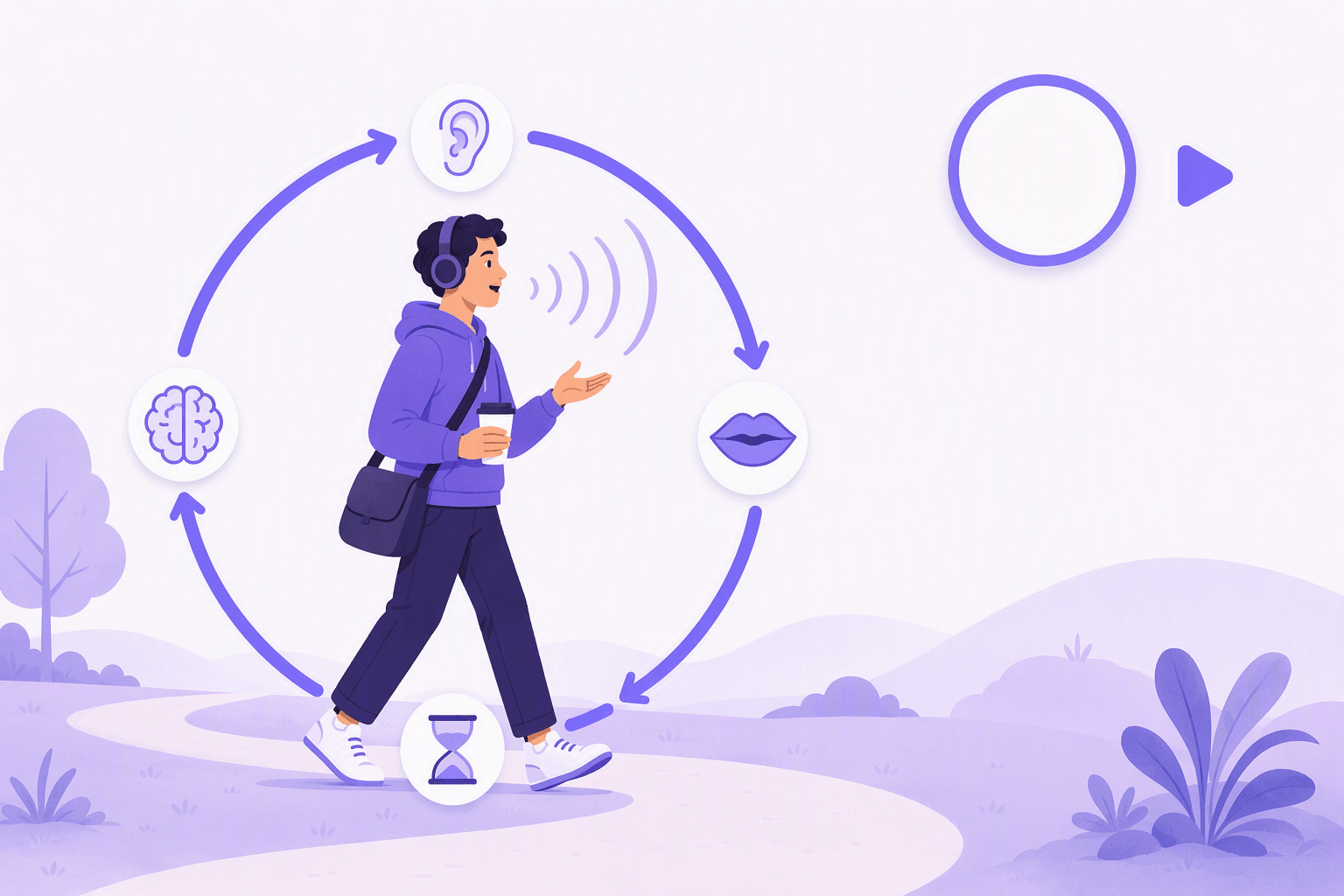
Pimsleur is an audio-based course built around short daily lessons, typically about 30 minutes. You listen, respond out loud, and repeat, with carefully timed prompts that push you to recall words and build sentences.
It is not a conversation class, and it is not an immersion replacement. You will not get the variety of accents, speeds, interruptions, and slang you hear in real life, especially in English.
The core idea: guided recall on a schedule
Pimsleur lessons are designed to make you retrieve a word or structure right before you would forget it. That retrieval practice is the point, not passive listening.
This lines up with what cognitive psychologists like Alan Baddeley describe in work on working memory: you can only hold and manipulate a small amount of language at once. Pimsleur keeps the load low and repeats patterns until they become automatic.
Who Pimsleur is best for
Pimsleur works best for learners who struggle with consistency, feel shy about speaking, or spend a lot of time commuting. If you can reliably do 30 minutes a day, the method rewards you.
It is also strong for people who want “phone-ready” phrases, meaning you can produce a sentence without reading it first. That matters in real life, where you rarely get time to compose.
💡 A realistic best-case outcome
If you complete a full Pimsleur level and also do real listening, you can reach a point where basic conversations feel less scary. If you do only Pimsleur, you usually end up with a narrow set of polished phrases that do not transfer well to fast, unpredictable speech.
Who should skip it (or use it differently)
If you learn best through reading, charts, and explicit grammar explanations, Pimsleur can feel slow. You will hear patterns, but you may not know why they work.
If your main goal is understanding movies, YouTube, or workplace meetings, Pimsleur alone will not train your ear for real speed. For that, you need lots of authentic input, ideally with replay and transcripts.
If you are studying English specifically, keep in mind how global and diverse English is. Ethnologue estimates about 1.5 billion total English speakers worldwide (Ethnologue, 27th ed., 2024), spread across many countries and accents. Any single course voice set is only a tiny slice of that reality.
What Pimsleur teaches well
Speaking momentum and sentence building
Pimsleur is good at getting you to produce complete sentences early. That matters because many learners can recognize words but freeze when they need to speak.
The course constantly makes you switch pieces around, which builds flexibility. You are not only repeating, you are assembling.
Pronunciation and rhythm, within limits
Because you must respond out loud, you get more mouth-time than most app lessons. For beginners, that can be a big advantage.
Still, pronunciation is more than repeating. English, for example, relies heavily on stress and rhythm, and learners often need targeted feedback on sounds and stress placement. If English pronunciation is your main pain point, pair Pimsleur with a focused resource like an English pronunciation guide.
Confidence through low-stakes repetition
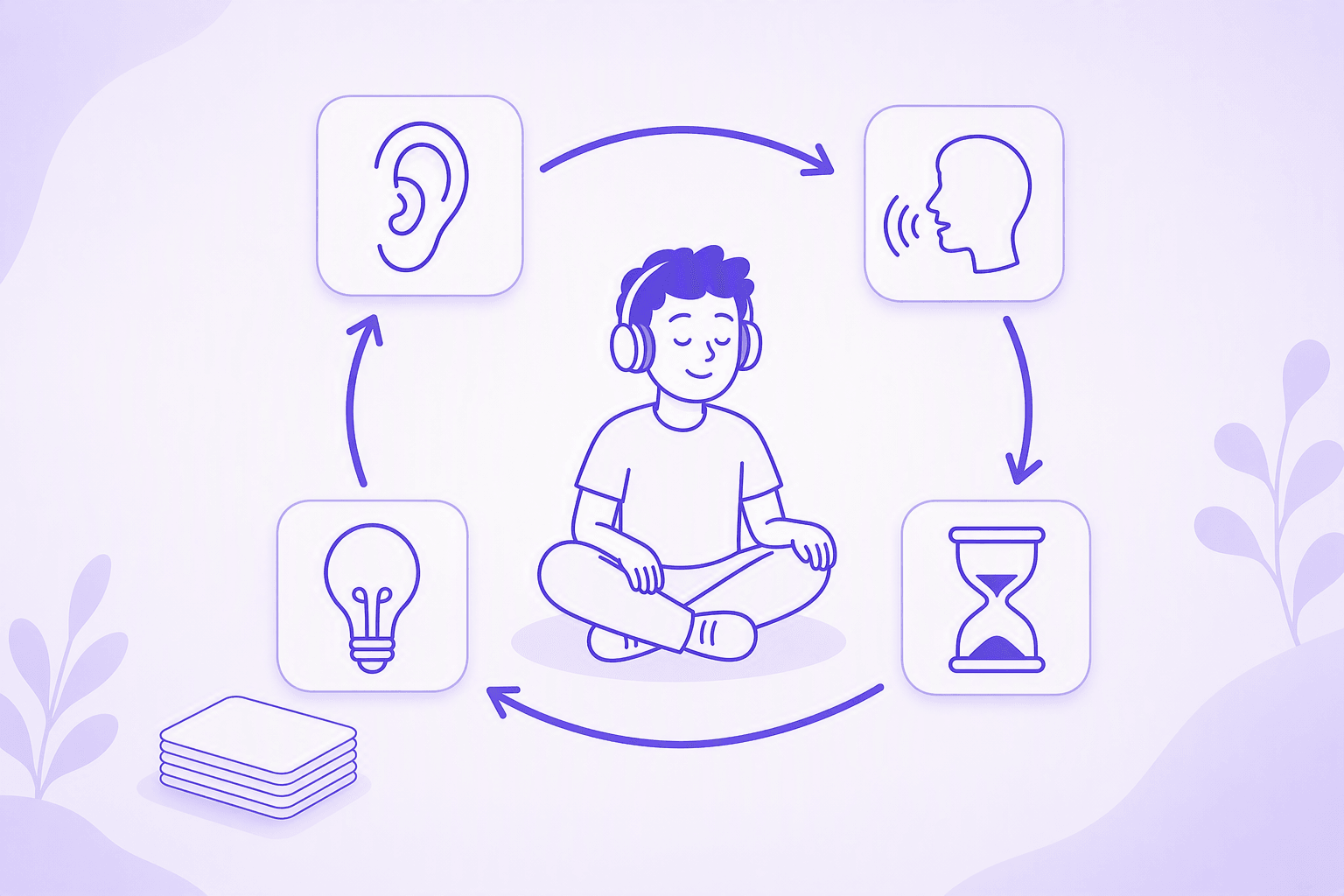
Pimsleur creates a safe loop: hear, repeat, recall, correct, repeat. That loop reduces anxiety, which is not trivial.
In applied linguistics, Stephen Krashen’s work on affect and input is often discussed for how anxiety can block learning. Pimsleur’s controlled environment can lower that barrier, even if it is not “real conversation.”
What Pimsleur does poorly
Vocabulary breadth
You learn a functional set of words, but it is limited. Real comprehension requires far more vocabulary than most learners expect.
Paul Nation’s research on vocabulary size and coverage argues that you need a large base to understand unsimplified texts comfortably. The exact threshold depends on the material, but the key point is simple: a narrow course cannot cover enough.
Listening to natural speech
Pimsleur audio is clean, paced, and designed for learners. Real English is full of reductions, overlaps, and cultural references.
If your goal is to understand what people actually say, you need exposure to authentic dialogue. Movie and TV clips are useful because they contain turn-taking, emotion, and interruptions. A practical starting point is best movies to learn English.
Reading and spelling
Audio-first is a strength, but it becomes a weakness if you never add reading. English spelling is irregular, and without reading practice, learners often “know” a word but cannot recognize it on a screen.
If you are learning English, you also need to see common functional words constantly. A list like 100 most common English words can help you notice the glue words that Pimsleur may not emphasize explicitly.
Pimsleur for English learners: a special case
Many people use Pimsleur to learn Spanish, French, or Japanese, but English learners are a huge audience too. English is the most widely learned second language globally, and it is used as a working language in many international contexts.
English is also unusually diverse in daily exposure. You might learn “standard” phrases, then land in a workplace where colleagues speak Indian English, Nigerian English, or Singapore English, each with its own rhythm and vocabulary preferences.
🌍 English is not one accent
If your English goal is international communication, do not over-optimize for one “perfect” accent. Aim for clarity: stress, vowel length, and consonant endings. Then train your ear on multiple accents over time, because global English is a reality, not a niche.
How Pimsleur compares to other common options
Pimsleur vs Duolingo-style apps
Gamified apps are good for quick repetition, basic vocabulary, and motivation loops. Pimsleur is better at forcing you to speak full sentences without reading.
If your problem is “I can do exercises but I cannot talk,” Pimsleur is often the stronger tool. If your problem is “I forget words constantly,” a spaced-repetition vocabulary system may help more.
For a broader look at app tradeoffs, see Duolingo review and can Duolingo make you fluent.
Pimsleur vs tutoring
A tutor gives you feedback, personalization, and real interaction. Pimsleur gives you consistency, structure, and low pressure.
If you can afford tutoring, a strong combination is: Pimsleur for daily speaking habit, tutor once a week for correction and real conversation. This is especially effective for fossilized mistakes, like English third-person -s or article usage.
Pimsleur vs learning through media
Media-based learning gives you real speech, cultural context, and modern vocabulary. It also overwhelms beginners if you do not control difficulty.
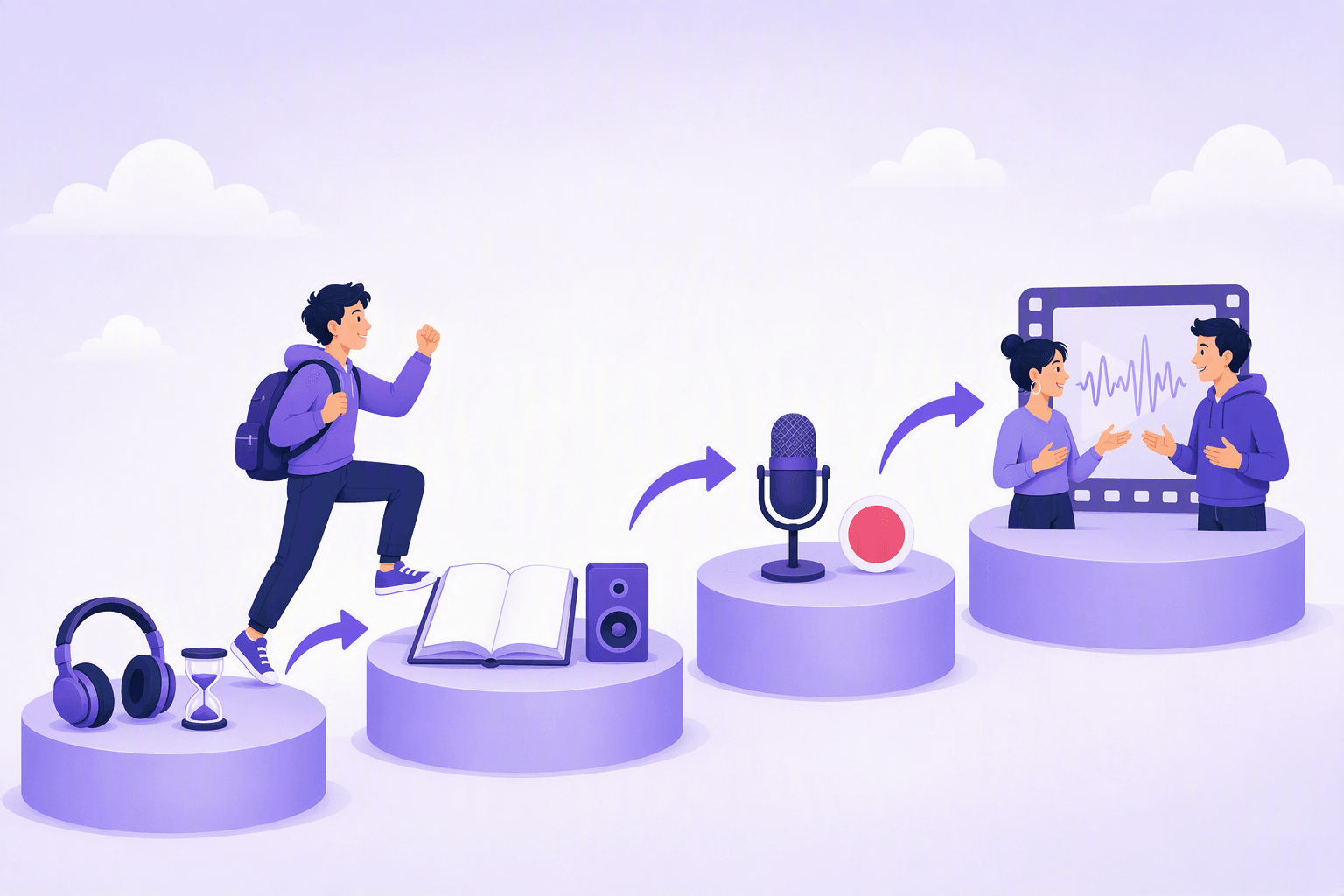
Pimsleur can be the “training wheels” that get you producing language, while media becomes the long-term engine for listening and vocabulary. If you want a media-first approach, start with short, replayable clips rather than full episodes.
A practical 30-day plan that actually works
This plan assumes you want results, not just completion.
Week 1: Build the daily habit
Do one Pimsleur lesson per day. Do not binge, because the spacing is part of the method.
Add 5 to 10 minutes of easy listening in the same language, something you can tolerate repeating. For English learners, short scenes with subtitles are ideal.
💡 The commute trick
If you commute, reserve Pimsleur for the commute and reserve “real listening” for a fixed time at home. Mixing them in the same context can blur what you can do with support vs what you can do in the wild.
Week 2: Add reading and spelling
Keep Pimsleur daily. Add 10 minutes of reading, ideally with audio support.
For English, focus on high-frequency words and basic sentence patterns. If numbers trip you up in real life, add targeted practice with English numbers, because numbers are a common “I understood everything except the important part” failure.
Week 3: Add output that is not scripted
Keep Pimsleur daily. Add 3 short speaking tasks per week, 2 to 5 minutes each:
- Describe your day out loud.
- Retell a short clip you watched.
- Explain a simple opinion.
Record yourself. The goal is not perfection, it is noticing gaps.
Week 4: Stress-test with authentic speech
Keep Pimsleur, but now add a daily “real speech” segment. Use a clip and replay it until you can catch the reductions.
For English, this is where you start hearing things like “gonna,” “kinda,” and “outta,” plus slang. If you want a safe, learner-focused overview of modern informal English, use English slang as a map, not as a script.
Common mistakes that make Pimsleur feel ineffective
Treating it as passive listening
If you do not answer out loud, you lose most of the benefit. The discomfort of speaking is part of the training.
If you cannot speak out loud, whisper or mouth the words, but try to produce, not just recognize.
Bingeing lessons
Doing three lessons in a row feels productive, but it breaks the spacing design. You may finish faster, but retention tends to drop.
A better approach is one lesson per day, plus a brief review of trouble spots.
Never leaving the “course voice” bubble
Pimsleur voices are clear and consistent. Real life is not.
If you only train on clean audio, your listening skill will not generalize well. Add messy input early, even if you understand only parts.
How to combine Pimsleur with movie and TV clips (without burning out)
Pimsleur gives you controlled production practice. Clips give you perception practice, meaning you learn to hear what native speakers actually do.
A simple clip routine:
- Watch a 10 to 20 second clip with subtitles.
- Replay it 3 times, focusing on rhythm and reductions.
- Shadow one line, copying timing.
- Save 2 to 3 new words, not 20.
If you want curated clip-based practice, Wordy’s approach is built around short scenes with interactive subtitles and review, but you can do a lighter version yourself with any replayable clip.
Cultural reality check: “textbook polite” vs real English
Pimsleur tends to teach polite, neutral phrases. That is good for safety, but it can make real English feel confusing when people speak casually.
For example, learners may know “I am sorry” but hear “my bad,” “sorry about that,” or “I didn’t mean to.” They may know “thank you” but hear “cheers” or “appreciate it.”
Also, real English includes taboo language. You do not need to use it, but recognizing it prevents misunderstandings. If you want a responsible, contextual guide, see English swear words.
⚠️ Do not copy slang blindly
Slang is high-risk because it is age-coded, region-coded, and context-coded. Use it after you have heard it used naturally by people similar to you in age and setting. Recognition comes first, production comes later.
Verdict: should you buy Pimsleur?
Choose Pimsleur if you want a reliable daily speaking habit, you like audio learning, and you need a structured push to produce sentences. It is especially helpful for beginners and lower-intermediate learners who feel stuck in “I understand but I cannot speak.”
Skip it, or treat it as optional, if your main goal is understanding real speech quickly, building large vocabulary fast, or learning through reading and explicit grammar. In that case, invest more time in authentic listening, reading, and conversation practice.
If you do use it, the highest-return strategy is pairing it with real input. Start with best movies to learn English, keep your daily Pimsleur lesson, and measure progress by what you can understand and say outside the lesson, not by how many units you completed.
Frequently Asked Questions
Is Pimsleur worth it in 2026?
Can Pimsleur make you fluent by itself?
How long does one Pimsleur lesson take, and how often should I do it?
Is Pimsleur good for pronunciation?
What should I use with Pimsleur to improve listening to real speech?
Sources & References
- Pimsleur, 'Pimsleur Method' overview, accessed 2026
- U.S. Foreign Service Institute, Language Difficulty Ranking, accessed 2026
- Ethnologue, 27th edition, 2024
- Nation, P., *Learning Vocabulary in Another Language*, Cambridge University Press
- Baddeley, A., *Working Memory*, Oxford University Press
Start learning with Wordy
Watch real movie clips and build your vocabulary as you go. Free to download.


