Quick Answer
Adults can learn a new language successfully, but the winning approach is different from school: short daily practice, lots of understandable listening, targeted vocabulary, and real-world speaking. A realistic adult plan prioritizes consistency over intensity, uses spaced repetition for memory, and trains listening with authentic media so you can actually understand native speech.
Adults can learn a new language effectively, and the most reliable path is a simple one: build a small daily routine, prioritize listening you can mostly understand, review vocabulary with spaced repetition, and start speaking early in low-pressure ways.
If you are learning English specifically, pair this plan with real listening from day one, for example clips from our best movies to learn English, because adult learners usually need the fastest possible improvement in comprehension, not more worksheets.
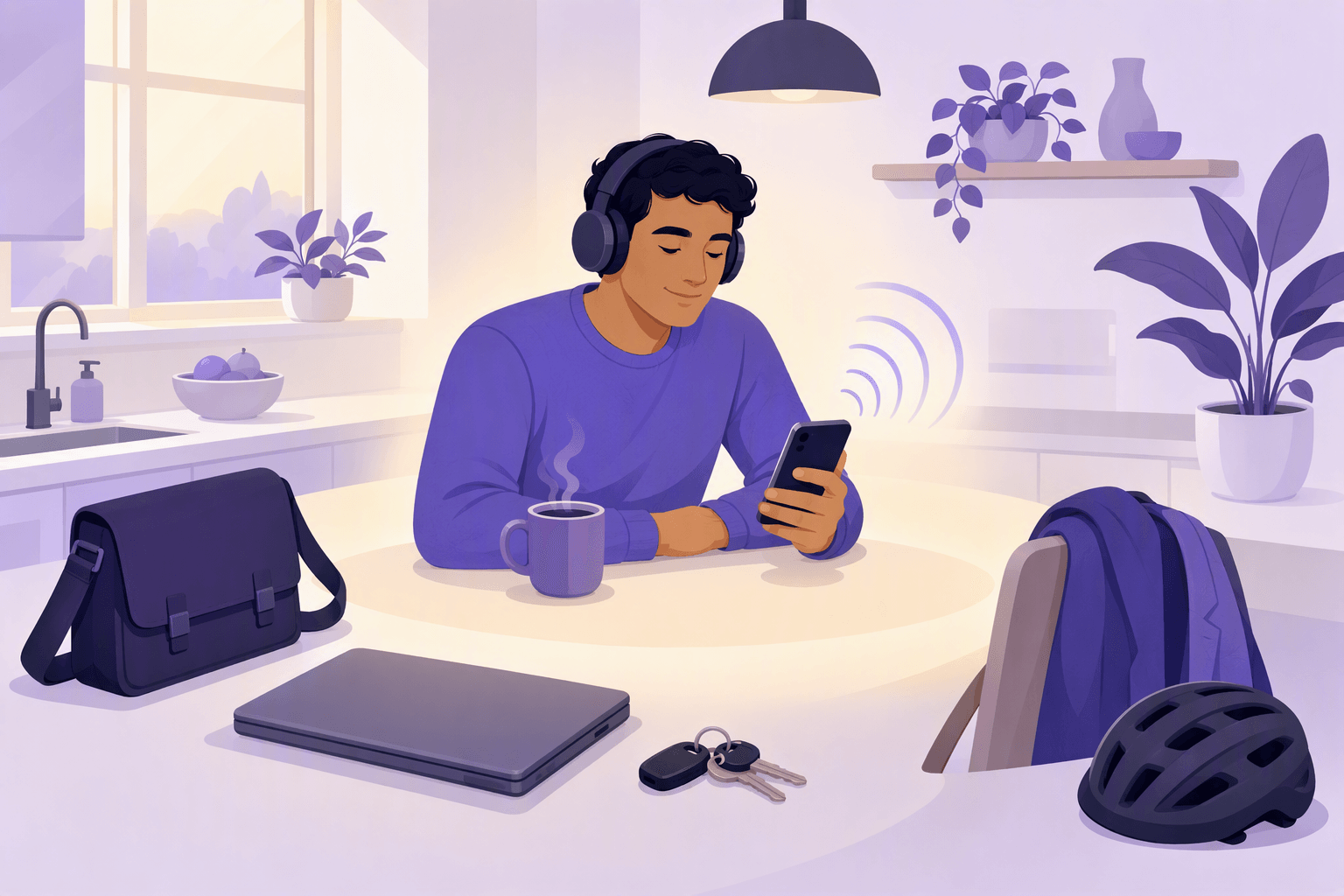
Why adult language learning feels hard (and why it still works)
Adults usually blame age, but the bigger obstacles are time, stress, and expectations.
A child can spend thousands of hours surrounded by language. An adult often squeezes learning into 20 minutes between work and family.
Adults have advantages children do not
Adults can set goals, choose resources, and notice patterns.
Psycholinguist Ellen Bialystok’s work on bilingualism is often discussed in terms of cognitive control, but the practical takeaway for learners is simpler: adults can use attention and strategy. You can decide what to practice, and you can measure progress.
The real bottleneck is hours, not talent
The U.S. Foreign Service Institute publishes estimates of classroom hours needed for English speakers to reach professional working proficiency in different languages (FSI, accessed 2026). The numbers are not destiny, but they show a truth adults need to hear: progress is mostly time on task.
If you can average 30 to 45 minutes a day, you can accumulate 180 to 270 hours a year. That is enough to make visible changes in comprehension and speaking comfort.
Set expectations with real numbers (so you do not quit)
Adult learners quit when they expect linear progress.
Language progress is lumpy: you feel stuck, then suddenly a podcast episode becomes easier, then you plateau again.
English is huge, but you do not need all of it
English is the most widely learned second language globally, and it is used across many countries and industries. Ethnologue’s global counts show English has hundreds of millions of native speakers and far more total speakers when second-language users are included (Ethnologue, 27th edition, 2024).
The encouraging part is that real conversation relies on a smaller core than people think. High-frequency words and common patterns carry most everyday speech. If you want a concrete starting point, use the 100 most common English words as your first listening and reading target.
“Fluent” needs a definition
For adults, “fluent” usually means one of these:
- You can handle daily life without switching languages.
- You can work in the language without constant translation.
- You can watch shows with subtitles and follow most of it.
Pick one. Otherwise you will chase an undefined finish line.
💡 A realistic adult target
Aim for “comfortable B1”: you can speak in sentences, understand the main idea in normal speech, and recover when you miss something. That level unlocks real-life practice, which is where adults accelerate.
The adult method that works: input, memory, output
Most adult plans fail because they over-focus on one pillar.
You need all three, but not in equal amounts.
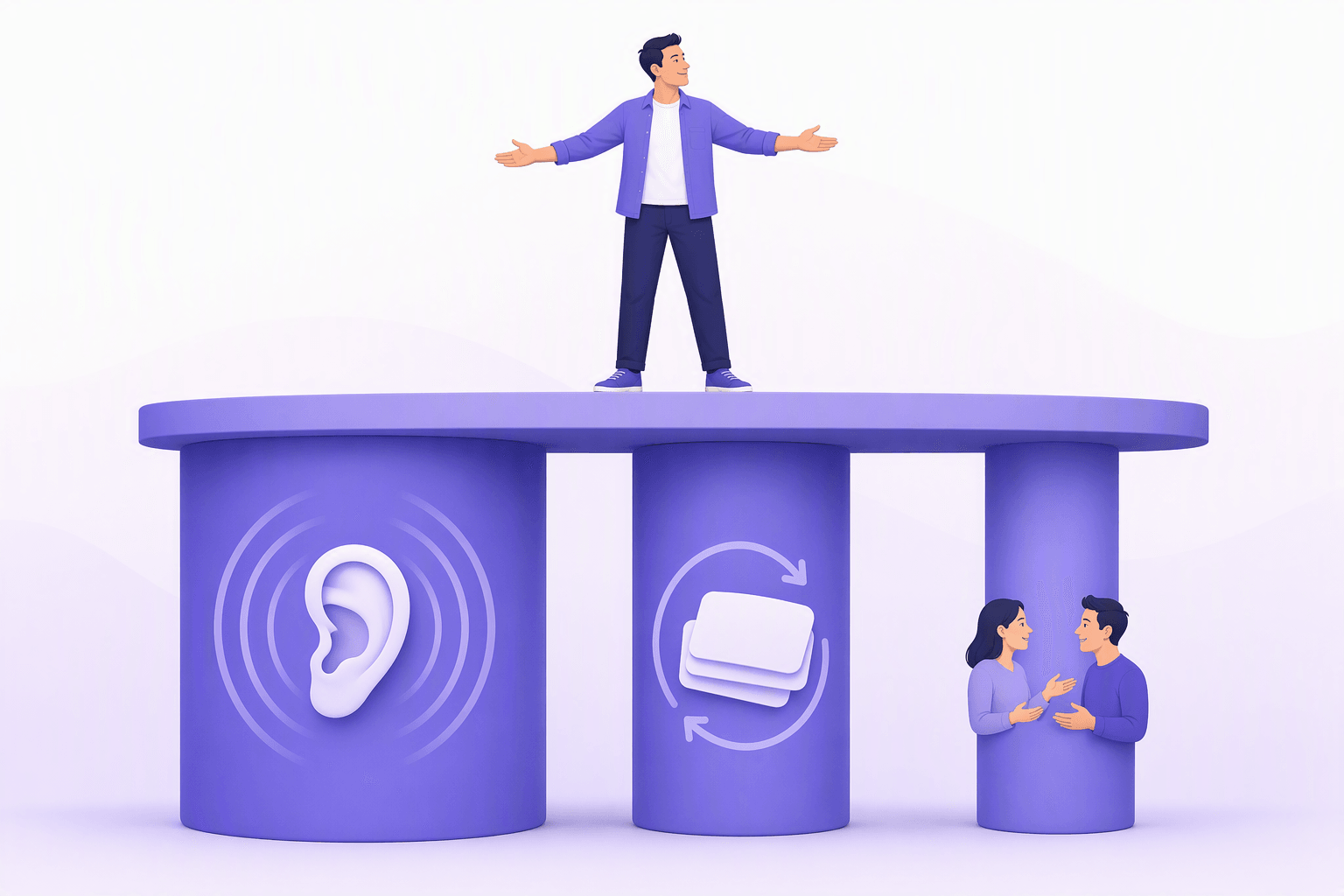
Input: train your ear first
If you cannot understand, you cannot respond.
Stephen Krashen’s work on comprehensible input is widely used in language teaching, and the practical application for adults is straightforward: listen to things that are slightly challenging but still mostly understandable, then repeat.
Start with short clips, not full movies. Short clips let you replay, notice pronunciation, and connect words to emotion and context.
Memory: spaced repetition beats willpower
Adults forget fast because life is full.
Spaced repetition is a scheduling solution, not a motivation hack. It puts reviews right before you would forget, which is why it is used in many modern learning systems.
If you want a deeper explanation of how to structure reviews, see our guide to spaced repetition for language learning.
Output: speaking early reduces fear
Adults often “save speaking for later” and then later never comes.
Start speaking with tiny tasks: read a line out loud, shadow a clip, record a 30-second summary, or do a short tutoring session. Output is not only for grammar, it is for confidence and speed.
Build a routine adults can actually keep
A good adult routine is boring in the best way.
It should survive busy weeks, travel, and low motivation.
The 45-minute adult routine (and the 20-minute fallback)
Use this as a default week plan:
Normal day (45 minutes total)
- 12 minutes: spaced repetition review
- 20 minutes: listening with transcript or subtitles
- 8 minutes: shadowing or read-aloud
- 5 minutes: quick writing or voice note
Busy day (20 minutes total)
- 8 minutes: spaced repetition
- 12 minutes: one clip, replayed 2 to 3 times
Consistency beats intensity. OECD reporting on adult learning participation highlights a common pattern: adults engage when learning fits around work and family, not when it demands a new lifestyle (OECD, accessed 2026).
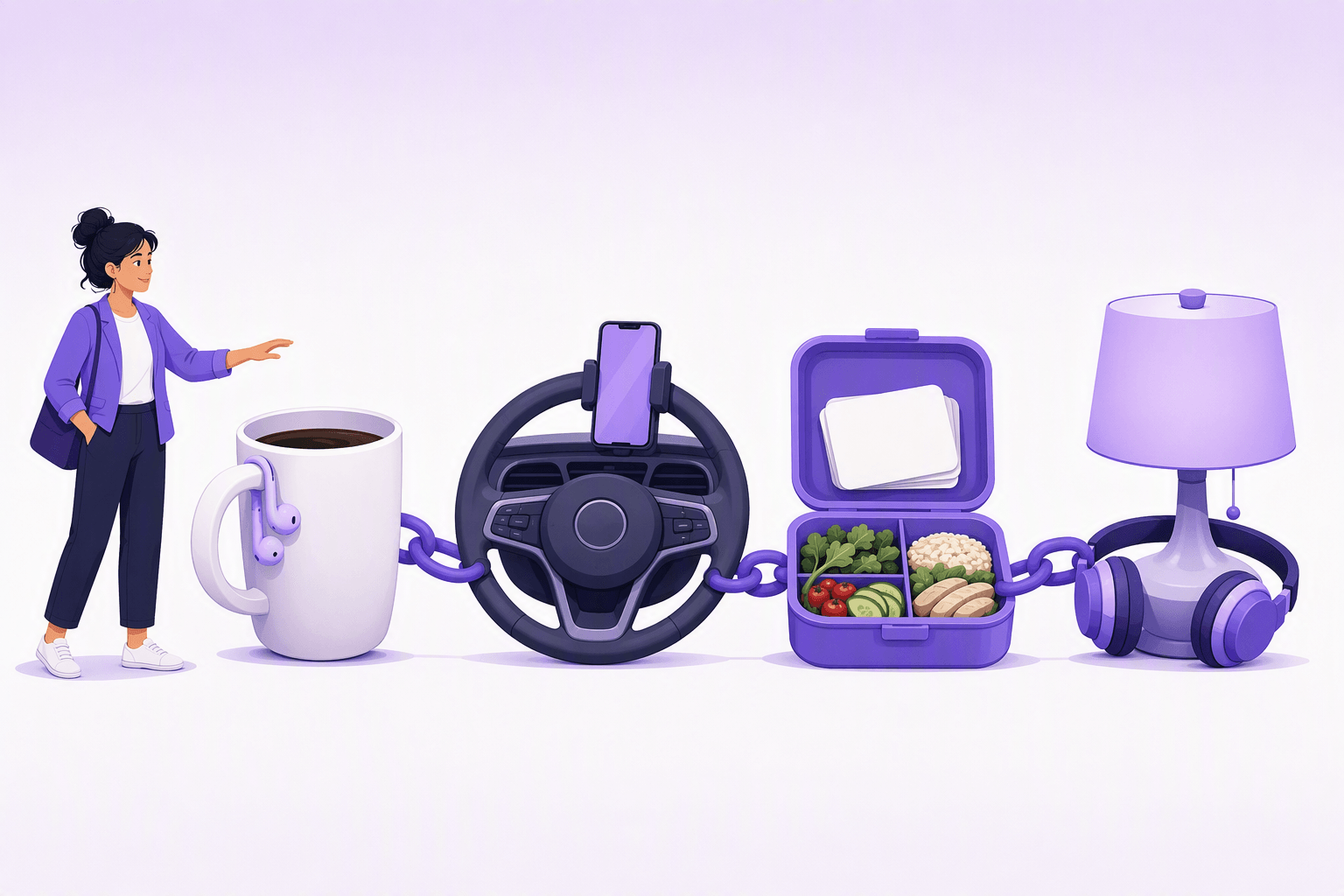
Attach language to an existing habit
Adults do not need more discipline, they need fewer decisions.
Examples that work:
- Coffee: one clip before your first sip
- Commute: one podcast segment, same episode repeated
- Lunch: review cards, then read one short text
Learn with real media without getting overwhelmed
Movies and TV are powerful because they are emotional, repetitive, and contextual.
They are also fast, slangy, and full of reduced pronunciation.
Use “clip looping” instead of passive watching
Passive watching feels productive but often is not.
Clip looping is deliberate:
- Watch once with subtitles.
- Watch again, pausing to repeat lines.
- Watch a third time with subtitles off.
- Save 5 to 10 useful words or phrases.
This is the same logic as deliberate practice in skill learning, a concept popularized by K. Anders Ericsson’s research on expertise. The key is focused repetition with feedback, not endless exposure.
Choose content that matches your life
Adults learn faster when the language matches their identity.
If you work in healthcare, watch medical dramas. If you love cooking, watch food shows. Your brain tags relevant language as higher priority.
For English learners, start with our best movies to learn English list, then branch into genres you already enjoy.
🌍 Why adult learners often struggle with 'real English'
Many adults learn textbook English, then feel shocked by real speech: contractions, reduced sounds, and slang. This is normal. Native speakers compress predictable words, especially in casual settings. Training your ear with short, replayable clips is the fastest fix.
Vocabulary for adults: what to learn first (and what to ignore)
Adults often waste time memorizing rare words.
You want words that appear everywhere, plus words that appear in your life.
The “three buckets” system
Bucket 1: high-frequency core
Bucket 2: your personal life and work
Bucket 3: fun language (slang, humor, culture)
Bucket 1 builds comprehension quickly. Bucket 2 keeps you motivated. Bucket 3 makes you sound human.
If you want a safe, structured start, combine the 100 most common English words with practical sets like English numbers, because numbers show up in appointments, shopping, work, and travel.
Slang is optional, but it helps you understand people
Adults often avoid slang because it feels childish or risky.
Understanding slang is not the same as using it. If you want to decode modern speech, start with our English slang guide and treat it as listening vocabulary.
⚠️ A quick safety rule for slang and swearing
If you are not sure about tone, do not use it. Learn it for comprehension first. For English, our English swear words guide is designed to help you recognize severity and context, not to encourage casual use.
Pronunciation: the adult shortcut is rhythm, not perfection
Adults often chase perfect sounds and get stuck.
Clear speech comes more from stress and rhythm than from individual consonants.
David Abercrombie’s classic work on rhythm and stress is often cited in phonetics for a reason: English is stress-timed, so the beat matters. If you place stress well, you become easier to understand even with an accent.
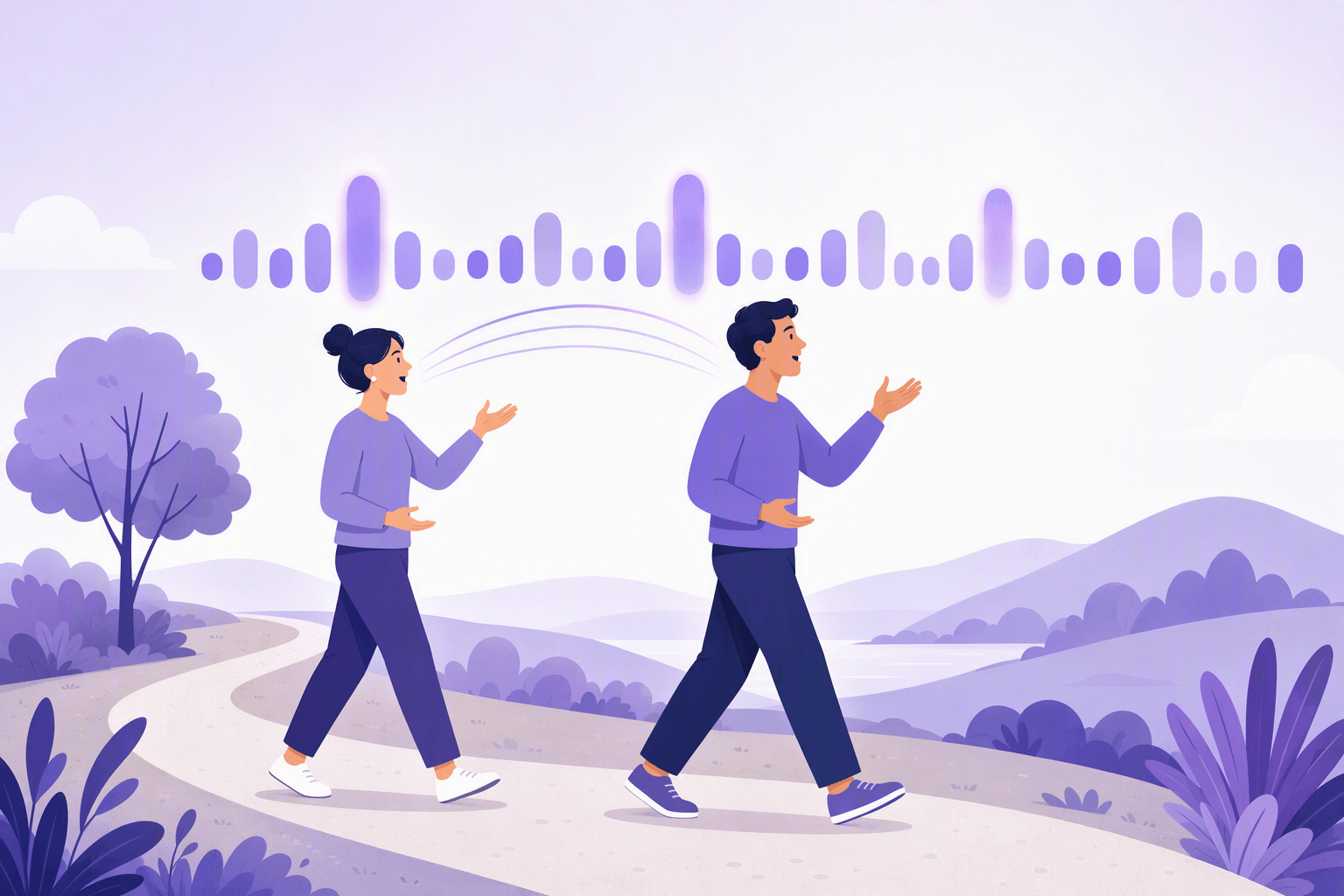
Use shadowing, but do it correctly
Shadowing means speaking along with audio, slightly behind.
Do it in short bursts:
- 10 to 20 seconds at a time
- Repeat the same segment 3 times
- Focus on stress and linking, not speed
If you need help with the mechanics, see our English pronunciation guide.
Record yourself once a week
Adults improve faster with feedback.
A weekly 60-second recording is enough. Talk about your week, your work, or summarize a clip you watched. Compare week to week, not to native speakers.
Grammar for adults: use it as a map, not a prison
Adults often swing between two extremes: grammar-only or no-grammar.
A better approach is “just enough grammar” to notice patterns in input.
Learn grammar when it solves a real problem
If you keep misunderstanding time, learn the tense that fixes it.
For English learners, common pain points are articles and verb tenses. Use focused resources like our English articles guide and then immediately look for those patterns in real listening.
Do not overcorrect while speaking
Adults self-monitor too much.
In conversation, prioritize meaning and rhythm. Save accuracy work for writing, corrections, and targeted drills after the conversation.
Speaking as an adult: low-pressure ways to start
Speaking is the fastest way to expose gaps.
It is also the fastest way to trigger embarrassment, especially for adults with professional identities.
Start with “controlled speaking”
Controlled speaking reduces cognitive load:
- Read a transcript out loud
- Retell a clip in your own words
- Answer predictable questions about your day
Then move to open conversation.
Use short tutoring sessions for efficiency
Adults often do not have time for long classes.
Two 30-minute sessions a week can outperform one 2-hour session because you get more starts, more feedback, and more spaced repetition.
UNESCO’s adult education indicators emphasize access and continuity as key factors in adult learning participation (UNESCO Institute for Statistics, accessed 2026). Short, repeatable sessions fit that reality.
Motivation for adults: design the environment
Adults do not need inspirational quotes.
They need systems that reduce friction.
Make progress visible
Use a simple tracker:
- minutes listened
- clips completed
- words reviewed
- speaking sessions done
This avoids the common adult trap of “I studied but I do not feel better.” Listening minutes correlate with comprehension improvements more reliably than page counts.
Expect plateaus and plan for them
Plateaus are not failure, they are consolidation.
When you plateau, change one variable:
- new content, same routine
- same content, more repetition
- add one speaking session per week
If you want more on avoiding common traps, read common language learning mistakes.
A 30-day adult plan you can start today
This plan assumes you have a job and a life.
It uses a default of 30 to 45 minutes a day with a fallback.
Days 1 to 7: build the habit and the ear
- Pick one show or channel and stick with it.
- Do 1 clip loop per day.
- Save 5 words per day into spaced repetition.
Goal: understand the gist without panic.
Days 8 to 14: add controlled speaking
- Shadow 30 seconds per day.
- Record one 60-second voice note on day 14.
Goal: reduce fear and increase speed.
Days 15 to 21: add real conversation
- One tutoring session or language exchange.
- Prepare topics in advance: work, family, hobbies.
Goal: learn to recover when you do not know a word.
Days 22 to 30: consolidate and specialize
- Keep the routine.
- Add vocabulary from your life: meetings, errands, health, travel.
- Replace one clip with a longer segment once a week.
Goal: move from “practice English” to “use English.”
💡 If you are learning English, pick a practical domain
Adults often need English for travel, work, or exams. Choose one domain and build vocabulary around it. For daily-life competence, numbers are a fast win, see English numbers.
What success looks like for adult learners
Adult success is not sounding like a native speaker.
It is being able to live your life with less friction.
You will know it is working when:
- you recognize phrases before translating
- you can follow the main idea in normal speech
- you can speak for 2 minutes without freezing
- you can repair misunderstandings calmly
If you want a method built around real listening from movie and TV clips, Wordy is designed for that style of practice. The key is not the app, it is the loop: listen, replay, notice, review, and use.
Frequently Asked Questions
Is it harder to learn a language as an adult?
How long does it take an adult to become fluent?
What is the best daily routine for adult language learners?
Do adults need grammar study, or only immersion?
What should adults avoid when learning a language?
Sources & References
- U.S. Foreign Service Institute, Language Learning Difficulty for English Speakers (accessed 2026)
- OECD, Education at a Glance (accessed 2026)
- UNESCO Institute for Statistics, Adult learning and education indicators (accessed 2026)
- Ethnologue, 27th edition, 2024
- Baddeley, A., Working Memory, Thought, and Action, Oxford University Press
Start learning with Wordy
Watch real movie clips and build your vocabulary as you go. Free to download.


