Quick Answer
The Korean alphabet, Hangul, is a featural writing system where letters represent how sounds are made, and they combine into syllable blocks. If you learn the 24 basic letters and a few key sound rules, you can start reading Korean words in a weekend, even before you know much vocabulary.
The Korean alphabet is called Hangul (한글, pronounced "HAHN-geul"), and it is one of the fastest writing systems to learn because its letters are designed to match how sounds are produced and they snap together into neat syllable blocks. Learn the 24 basic letters, how blocks are built, and a few core sound rules, and you can reliably read many Korean words within a weekend.
| English | Korean | Pronunciation | Formality |
|---|---|---|---|
| Hangul (Korean alphabet) | 한글 | HAHN-geul | casual |
| Korean language | 한국어 | HAHN-goo-geo | polite |
| Consonant | 자음 | JAH-eum | formal |
| Vowel | 모음 | MO-eum | formal |
| Syllable block | 음절 | EUM-jeol | formal |
| Final consonant (batchim) | 받침 | BAHT-chim | formal |
If you are learning Korean for real-world listening, Hangul is the gateway skill that makes everything else easier: subtitles, menus, street signs, and name tags. It also helps you hear word boundaries in fast speech, which is why apps built around authentic clips can accelerate progress once you can decode the script.
For next steps after you can read, you will get more mileage from practical phrases like greetings and goodbyes. Start with how to say hello in Korean, then add how to say goodbye in Korean and how to say I love you in Korean.

What Hangul is, and why it is different
Hangul is the standard writing system of Korean, created in the 15th century under King Sejong and introduced in the document Hunminjeongeum (훈민정음). UNESCO recognizes Hunminjeongeum on the Memory of the World Register, reflecting its historical and cultural significance (UNESCO).
Korean is also a major world language. Ethnologue (27th ed., 2024) estimates about 82 million native speakers of Korean worldwide, with significant communities outside Korea as well.
Hangul is often described as a "featural" alphabet. That means many letter shapes are tied to articulatory features, especially for consonants, rather than being arbitrary symbols.
"Hangul is unique among the world's writing systems in that the shapes of its letters systematically reflect the phonological features of the sounds they represent."
Professor Young-Key Kim-Renaud, linguist and Korean language scholar
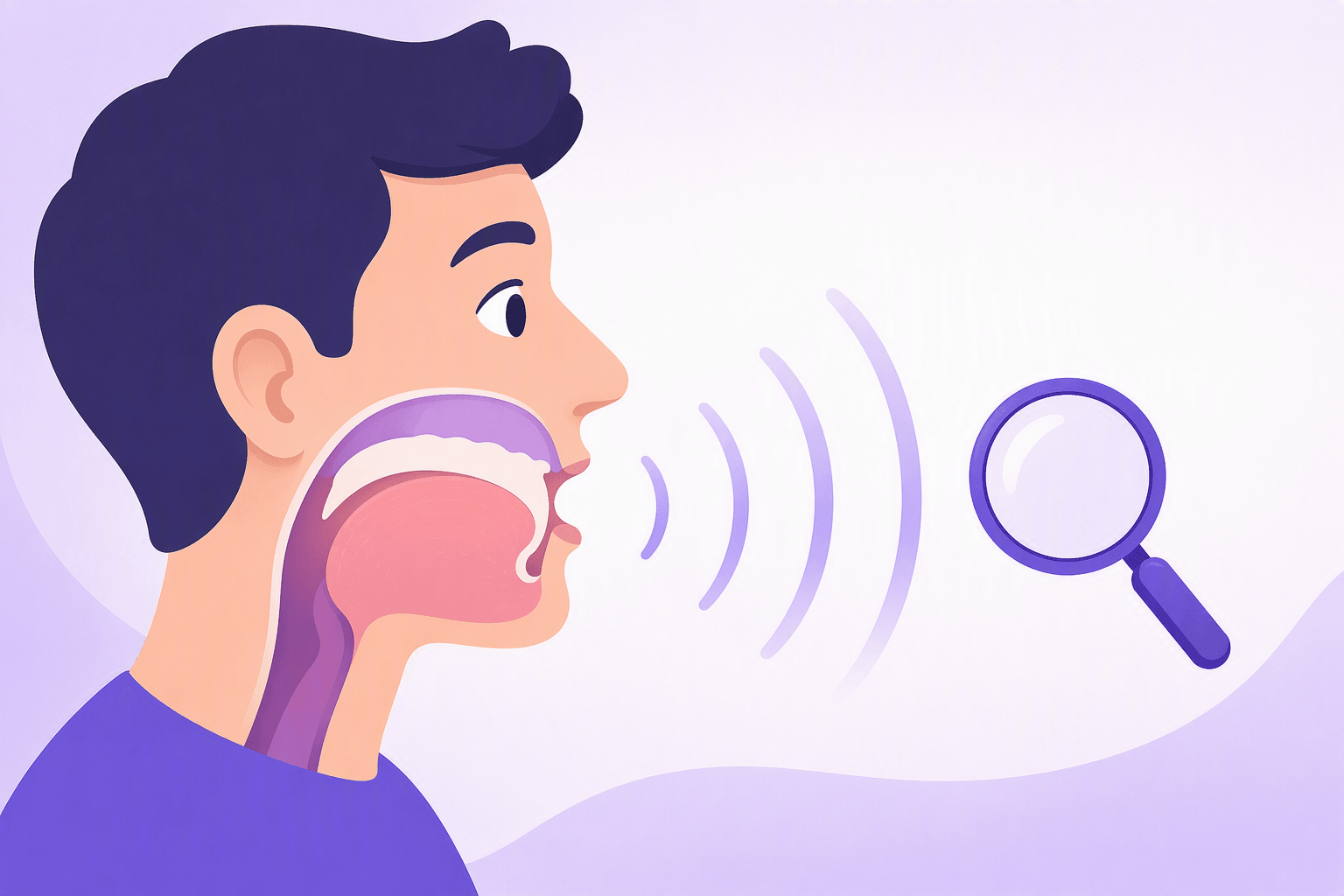
The building blocks: consonants and vowels
Hangul is learned fastest when you separate it into two jobs: consonants (자음, "JAH-eum") and vowels (모음, "MO-eum"). Then you learn how they combine into syllable blocks (음절, "EUM-jeol").
How many letters are there?
Modern Hangul is typically taught as:
- 14 basic consonants
- 10 basic vowels
- plus doubled consonants and compound vowels used constantly in everyday words
You do not need to memorize everything at once. You need enough to start reading, then you refine pronunciation with exposure.
💡 A realistic goal for a weekend
Day 1: memorize the basic consonants and vowels, then read syllable blocks slowly. Day 2: learn the most common compound vowels and the batchim basics. After that, reading speed improves mainly through volume: lots of short, easy words.
How syllable blocks work (the core skill)
Hangul is written in blocks that represent one syllable. Each block is built from letters, usually in this pattern:
- Consonant + vowel: 가, 나, 다
- Consonant + vowel + consonant (batchim): 강, 한, 글
- Sometimes consonant + vowel + consonant + consonant: 읽, 앉 (advanced, but common)
A key point: you read left to right within the block, but the layout depends on the vowel shape.
Block layouts you will see constantly
Here are the three layouts to recognize:
| Vowel type | Layout idea | Example | How to read |
|---|---|---|---|
| Vertical vowel (ㅏ, ㅓ, ㅣ) | consonant on left, vowel on right | 나 | n + a = "nah" |
| Horizontal vowel (ㅗ, ㅜ, ㅡ) | consonant on top, vowel below | 노 | n + o = "noh" |
| Mixed/compound (ㅘ, ㅝ, ㅢ) | can take a 2-part vowel | 과 | g + wa = "gwa" |
You will also see ㅇ a lot. At the start of a syllable, ㅇ is silent and acts like a placeholder for a vowel, as in 아 ("ah"). At the end of a syllable, ㅇ is the ng sound, as in 강 ("kahng").
The consonants (자음) with practical pronunciation
Hangul consonants are easiest if you learn them in families: plain, aspirated, and tense (doubled). English does not match these categories perfectly, so treat the pronunciations below as approximations.
Basic consonants you must know
Here is a learner-friendly map. The romanization is not the goal, but it helps you get started reading.
| Hangul | Approx sound | English-style cue |
|---|---|---|
| ㄱ | g/k | between "g" and "k" |
| ㄴ | n | "n" |
| ㄷ | d/t | between "d" and "t" |
| ㄹ | r/l | flap like Spanish "r" between vowels |
| ㅁ | m | "m" |
| ㅂ | b/p | between "b" and "p" |
| ㅅ | s | "s" (often "sh" before ㅣ) |
| ㅇ | silent/ng | silent at start, "ng" at end |
| ㅈ | j/ch | between "j" and "ch" |
| ㅊ | ch (aspirated) | stronger "ch" with air |
| ㅋ | k (aspirated) | strong "k" with air |
| ㅌ | t (aspirated) | strong "t" with air |
| ㅍ | p (aspirated) | strong "p" with air |
| ㅎ | h | "h" |
The aspirated row (ㅋ, ㅌ, ㅍ, ㅊ) is the easiest family to train your ear on, because the extra puff of air survives even in fast, casual speech. Listen for it in ordinary words like 커피, 토요일 and 축하.
Tense consonants (the doubled ones)
These are common in real Korean, not rare extras. They sound "tighter" and are not simply "louder".
| Hangul | Approx sound | Cue |
|---|---|---|
| ㄲ | kk | tense version of ㄱ |
| ㄸ | tt | tense version of ㄷ |
| ㅃ | pp | tense version of ㅂ |
| ㅆ | ss | tense version of ㅅ |
| ㅉ | jj | tense version of ㅈ |
If you want a quick listening test, compare 사 ("sah") vs 싸 ("ssah"). The difference is in tension and timing, not volume.
🌍 Why Koreans care about spelling even when sounds change
Korean spelling is standardized by orthography rules (국립국어원). In daily life, people often pronounce words with sound changes, but still expect correct Hangul spelling in texts, school, and work. This is why learning batchim rules early prevents "I can say it, but I cannot spell it" frustration.
The vowels (모음) with pronunciation shortcuts
Hangul vowels are built from simple strokes, and many come in pairs. For beginners, the fastest path is to learn the 10 basics, then add the most frequent combinations.
10 basic vowels
| Hangul | Pronunciation | English-style approximation |
|---|---|---|
| ㅏ | "ah" | "father" a |
| ㅓ | "uh" | like "sun" but more open |
| ㅗ | "oh" | "go" |
| ㅜ | "oo" | "food" |
| ㅡ | "eu" | like "uh" with lips relaxed, no English match |
| ㅣ | "ee" | "see" |
| ㅐ | "ae" | like "bed" for many speakers |
| ㅔ | "e" | similar to ㅐ in modern speech |
| ㅑ | "ya" | "yah" |
| ㅕ | "yeo" | "yuh" |
In modern Seoul Korean, ㅐ and ㅔ are often very close in pronunciation, especially for younger speakers. Still, spelling matters, so keep them distinct in writing.
Compound vowels you will see everywhere
| Hangul | Pronunciation | Example cue |
|---|---|---|
| ㅘ | "wa" | 과 "gwa" |
| ㅝ | "wo" | 워 "wo" |
| ㅚ | "we" or "oe" | 외 "we" (varies) |
| ㅟ | "wi" | 위 "wi" |
| ㅢ | "ui" | 의 "ui" (often reduces in speech) |
💡 A simple vowel trick
If a vowel contains ㅣ, it often adds a "y" or "i" flavor. Examples: ㅑ, ㅕ, ㅛ, ㅠ. For compounds, think of stacking sounds: ㅗ + ㅏ becomes ㅘ ("wa").
받침 (batchim): the final consonant system that confuses everyone
받침
받침 ("BAHT-chim") means the consonant at the bottom of a syllable block. This is where beginners feel like Hangul "stops being phonetic", but it is actually consistent once you know the allowed final sounds.
In final position, many consonants collapse into a smaller set of pronunciations. This is a standard feature of Korean phonology and is reflected in pronunciation guidance from Korean language authorities (NIKL orthography resources).
The most useful batchim rule set
At the end of a syllable, you usually hear one of these sounds:
| Spelling examples | Final sound you hear | Example |
|---|---|---|
| ㄱ, ㅋ, ㄲ | k | 백 "baek" often ends like "bek" |
| ㄴ | n | 한 "han" |
| ㄷ, ㅅ, ㅈ, ㅊ, ㅌ, ㅎ | t | 옷 "ot" |
| ㄹ | l | 물 "mul" |
| ㅁ | m | 밤 "bam" |
| ㅂ, ㅍ | p | 밥 "bap" |
| ㅇ | ng | 강 "kahng" |
This is why 듣다 is spelled with ㅅ but often sounds like "dut-tta" in connected speech: the final consonant behavior and the next consonant interact.
Linking: when the next syllable starts with ㅇ
If the next syllable begins with ㅇ (silent), the batchim can move forward into the next syllable as the initial sound.
Example pattern:
- 먹어 can be heard like "meo-geo" rather than "meok-eo"
This is one reason Korean sounds fast. Syllables connect smoothly, especially in casual speech.
Writing Hangul: stroke order and why it matters
Hangul handwriting is not just aesthetic. Consistent stroke order improves legibility and helps you recognize letters in different fonts.
General rules:
- Write top to bottom, left to right
- Horizontal strokes often come before vertical strokes (with some letter-specific exceptions)
- Build the block in order: initial consonant, vowel, then batchim
If you plan to type more than write, you still benefit from writing practice. It forces you to notice the internal structure of blocks, which improves reading speed.

Common beginner mistakes (and how to fix them)
Confusing ㅓ and ㅗ
ㅓ ("uh") is more open and often written like a vertical line with a short stroke to the right. ㅗ ("oh") is a horizontal line with a short stroke above.
Fix: drill minimal pairs like 서 ("seo") vs 소 ("so"), then hear the two vowels in unscripted speech, first apart and then side by side in the same sentence.
Treating ㄹ as a fixed "r" or "l"
ㄹ changes depending on position. Between vowels it often sounds like a quick flap (closer to "r"), and at the end of a syllable it is closer to "l".
Fix: listen to short phrases in context, not isolated letters.
Over-trusting romanization
Romanization is inconsistent across systems and hides Korean sound rules. It is useful for a day, then it becomes training wheels that slow you down.
Fix: switch your study materials to Hangul-only as soon as you can decode.
⚠️ Do not learn Hangul only from stylized fonts
K-pop logos and cafe signs often use decorative Hangul that bends strokes or merges shapes. Learn with standard textbook fonts first, then add exposure to handwriting and signage. Otherwise, you will know the alphabet but still struggle to read real streets and menus.
Hangul in real life: cultural context you will actually notice
Hangul is not just a script, it is a visible part of modern Korean identity. You will see it celebrated on Hangul Day (한글날, "HAHN-geul-nal"), and you will notice pride in clean typography on public signage, subway systems, and packaging.
You will also see playful spacing choices in texting. Korean spacing rules are real, but casual messages often compress spacing for speed or style, especially in group chats. That is normal, and it is one reason reading lots of authentic messages and subtitles helps.
If you want to understand how tone shifts in modern Korean, pairing Hangul reading with everyday expressions is ideal. After greetings, slang and taboo language are where spelling and sound changes show up strongly. If you are curious, read responsibly: Korean swear words explains severity and context.
A practical 3-step plan to learn Hangul fast
Step 1: Memorize letters with sound families, not a random list
Group consonants by plain vs aspirated vs tense. Group vowels by shape and sound pairs.
Aim for recognition, not perfection. You can refine pronunciation later with listening.
Step 2: Read 100 syllable blocks out loud
Make a simple drill:
- Pick 10 consonants and 10 vowels
- Combine them into CV blocks (가, 거, 고, 구, 그, 기)
- Read slowly, then faster
This is where Hangul becomes automatic.
Step 3: Add batchim and read real words
Start with short, high-frequency words:
- 한국 ("HAHN-guk")
- 한글 ("HAHN-geul")
- 사람 ("SAH-ram")
- 음식 ("EUM-shik")
Then move to phrases you will actually use. Wordy-style learning with short clips is effective here because you see the spelling, hear the pronunciation, and connect it to a situation.
For more structured phrase practice, continue with how to say hello in Korean and how to say goodbye in Korean, then add affection phrases from how to say I love you in Korean.
Mini reading practice (with pronunciation)
Try reading these out loud, focusing on block structure.
| Hangul | Pronunciation | Meaning |
|---|---|---|
| 안녕하세요 | "ahn-nyeong-ha-seh-yo" | common polite hello |
| 감사합니다 | "kam-sa-ham-ni-da" | thank you (formal) |
| 사랑해 | "sah-rang-hae" | I love you (casual) |
| 잘 자요 | "jal ja-yo" | sleep well (polite) |
If these feel slow, that is normal. Speed comes from repetition, not from learning more rules.
Why this matters for learning Korean through movies and TV
Once you can read Hangul, subtitles stop being a blur of symbols and become a tool. You can pause, sound out a word, and notice patterns like repeated endings, particles, and honorifics.
This is also where you start hearing Korean more accurately. Instead of guessing sounds, you map what you hear to letters and blocks, then your brain starts predicting common word shapes.
If you want a broader roadmap beyond Hangul, browse the Wordy blog and build a cluster: reading, greetings, and then everyday conversation phrases.
Frequently Asked Questions
How long does it take to learn Hangul?
Is Hangul easier than Japanese kana or Chinese characters?
What are the 24 basic Hangul letters?
Why does a Hangul consonant sound different at the end of a syllable?
Do Koreans still use Hanja (Chinese characters)?
Sources & References
- National Institute of Korean Language (국립국어원), 한글 맞춤법 (Korean Orthography), latest revision
- UNESCO, Memory of the World Register: Hunminjeongeum (훈민정음), 1997
- The Korean Language Society (한글학회), publications on Hangul and orthography
- Ethnologue, Korean (kor) language entry, 27th edition, 2024
Start learning with Wordy
Watch real movie clips and build your vocabulary as you go. Free to download.


