Quick Answer
The most direct way to say I am tired in Spanish is estoy cansado if you are male or estoy cansada if you are female. For feeling sleepy, say tengo sueño, and for real exhaustion, use estoy agotado or estoy agotada.
| English | Spanish | Pronunciation | Formality |
|---|---|---|---|
| I am tired | Estoy cansado/a | ehs-TOY kahn-SAH-doh/dah | casual |
| I am sleepy | Tengo sueño | TEHN-goh SWEH-nyoh | casual |
| I am exhausted | Estoy agotado/a | ehs-TOY ah-goh-TAH-doh/dah | casual |
| I am worn out | Estoy rendido/a | ehs-TOY rrehn-DEE-doh/dah | casual |
| I am tired of it | Estoy cansado/a de esto | ehs-TOY kahn-SAH-doh/dah deh EHS-toh | polite |
| I need to rest | Necesito descansar | neh-seh-SEE-toh dehs-kahn-SAR | polite |
The standard way to say I am tired in Spanish is estoy cansado /esˈtoj kanˈsaðo/ if you are male and estoy cansada /esˈtoj kanˈsaða/ if you are female. If you mean sleepy rather than generally tired, say tengo sueño /ˈteŋɡo ˈsweɲo/, literally “I have sleep.” These distinctions matter because Spanish speakers choose different expressions for fatigue, sleepiness, and being fed up.
Spanish is spoken by more than 600 million potential speakers worldwide and has official status in 20 countries, according to Instituto Cervantes data. That reach means you will hear regional differences, but estoy cansado /esˈtoj kanˈsaðo/ and estoy cansada /esˈtoj kanˈsaða/ work naturally from Madrid to Mexico City, Bogotá, Buenos Aires, and beyond.
If you are building practical conversation skills, start with this phrase, then connect it to Spanish greetings and everyday ways to end a conversation politely. Being able to explain how you feel makes small talk much more natural.
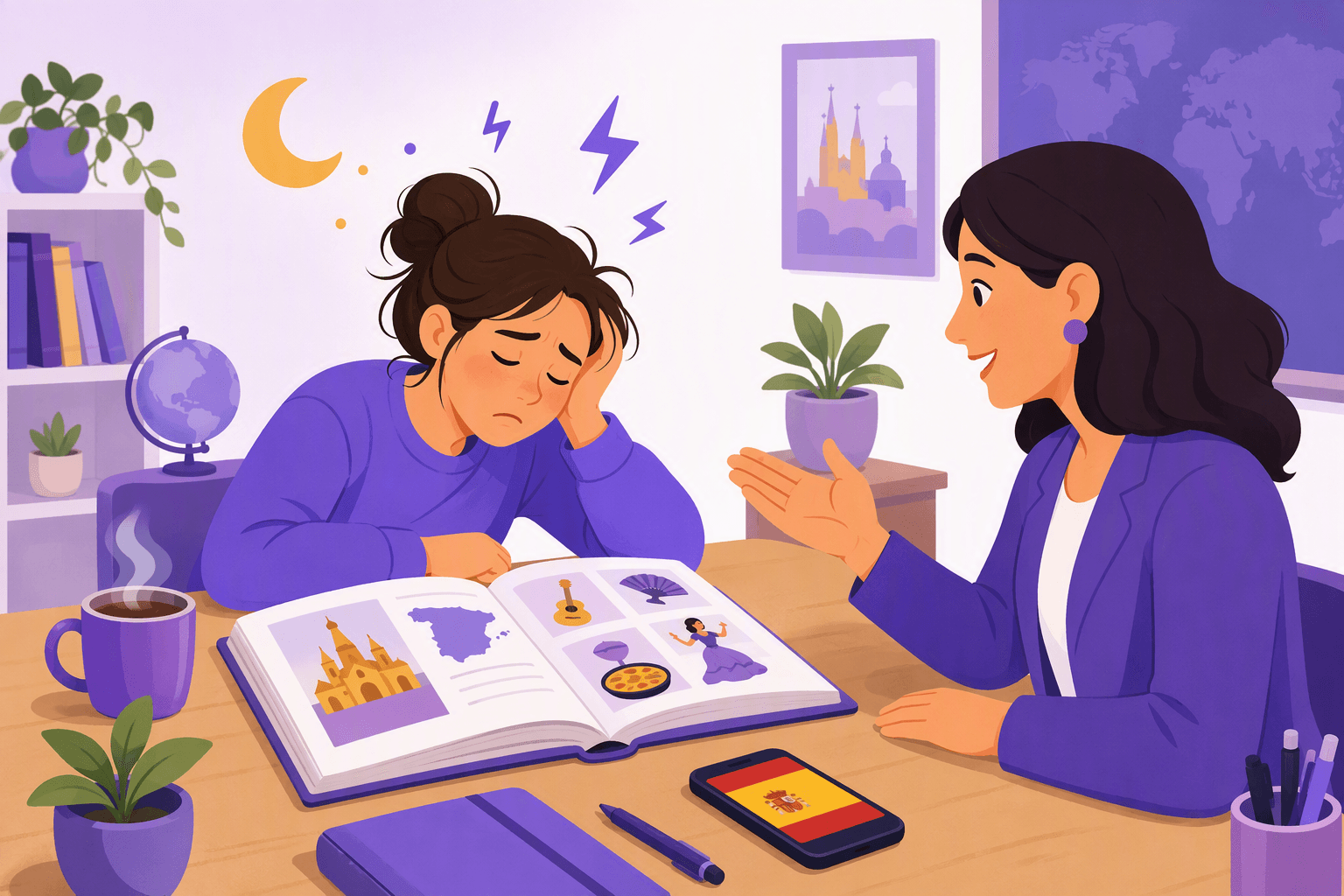
The key difference: tired vs sleepy
English uses tired for several feelings. You may be physically tired after work, mentally tired after studying, sleepy at midnight, or tired of hearing the same complaint. Spanish separates these meanings more clearly.
Estoy cansado /esˈtoj kanˈsaðo/ and estoy cansada /esˈtoj kanˈsaða/ describe fatigue. You have spent energy and do not feel fully rested.
Tengo sueño /ˈteŋɡo ˈsweɲo/ describes sleepiness. Your body is telling you that you could fall asleep.
The Real Academia Española defines sueño /ˈsweɲo/ as the physiological state of sleep as well as the desire to sleep. That is why the Spanish construction uses “have,” not “be”: you “have sleep” rather than “are sleepy.”
The most useful ways to say tired in Spanish
Cansado
Cansado /kanˈsaðo/ is the core masculine adjective for tired. A female speaker uses cansada /kanˈsaða/. Pair it with estoy /esˈtoj/, the temporary-state form of “I am.”
/ehs-TOY kahn-SAH-doh/dah/
Literal meaning: I am tired
“Estoy cansada después del trabajo.”
I am tired after work.
This is the neutral, everyday choice for physical or mental fatigue. Choose cansado or cansada to match your gender.
Use this phrase after a busy day, a workout, a long class, or a difficult trip.
- Estoy cansado hoy. /esˈtoj kanˈsaðo oj/ means “I am tired today.”
- Estoy muy cansada. /esˈtoj muj kanˈsaða/ means “I am very tired.”
- ¿Estás cansado? /esˈtas kanˈsaðo/ means “Are you tired?” when speaking to a man.
- ¿Estás cansada? /esˈtas kanˈsaða/ means “Are you tired?” when speaking to a woman.
Do not say soy cansado /soj kanˈsaðo/ for “I am tired.” Spanish uses ser /seɾ/ for more stable identity or characteristic descriptions and estar /esˈtaɾ/ for states and conditions. John Butt and Carmen Benjamin explain this contrast in A New Reference Grammar of Modern Spanish, where temporary physical states are a central use of estar /esˈtaɾ/.
Tengo sueño
Tengo sueño /ˈteŋɡo ˈsweɲo/ is what you say when you are sleepy. It is often the best phrase after a late night, early morning, or a boring meeting that is making your eyes heavy.
/TEHN-goh SWEH-nyoh/
Literal meaning: I have sleep
“Tengo mucho sueño, voy a dormir.”
I am very sleepy, I am going to sleep.
Use this for the need to sleep, not simply for low energy. It is common with family, friends, classmates, and colleagues.
To intensify it, add mucho /ˈmutʃo/, meaning “a lot.”
- Tengo mucho sueño. /ˈteŋɡo ˈmutʃo ˈsweɲo/ means “I am really sleepy.”
- Me da sueño. /me ða ˈsweɲo/ means “It makes me sleepy.”
- Esta película me da sueño. /ˈesta peˈlikula me ða ˈsweɲo/ means “This movie makes me sleepy.”
This last phrase is particularly useful for discussing films and television. When you learn through scenes, notice whether a character says tengo sueño /ˈteŋɡo ˈsweɲo/ because they need bed, or estoy cansado /esˈtoj kanˈsaðo/ because their day was draining. Listening for that contrast is a practical way to improve your Spanish listening practice.
Agotado
Agotado /aɣoˈtaðo/ and agotada /aɣoˈtaða/ mean exhausted. They are stronger than cansado /kanˈsaðo/ and cansada /kanˈsaða/.
/ehs-TOY ah-goh-TAH-doh/dah/
Literal meaning: I am exhausted
“Después del viaje, estoy agotado.”
After the trip, I am exhausted.
Use agotado or agotada when ordinary tired does not feel strong enough. It is suitable in both casual and professional conversation.
You can say estoy completamente agotada /esˈtoj kompletaˈmente aɣoˈtaða/ for “I am completely exhausted.” In a workplace context, it is honest but somewhat personal, so use it when the relationship permits that level of openness.
For a less dramatic professional version, try necesito descansar /neseˈsito deskanˈsaɾ/, “I need to rest,” or ha sido un día largo /a ˈsiðo uŋ ˈdi.a ˈlaɾɣo/, “it has been a long day.”
Rendido
Rendido /renˈdiðo/ and rendida /renˈdiða/ mean worn out or completely spent. This phrase suggests that your energy is gone after sustained effort.
- Estoy rendida después de entrenar. /esˈtoj renˈdiða desˈpwes de entɾeˈnaɾ/ means “I am worn out after training.”
- Llegué rendido. /ʎeˈɣe renˈdiðo/ means “I arrived exhausted.”
It is common and expressive without being rude. Use it with friends, family, teammates, or coworkers you know well.
Muerto
Muerto /ˈmweɾto/ and muerta /ˈmweɾta/ literally mean dead, but estoy muerto /esˈtoj ˈmweɾto/ or estoy muerta /esˈtoj ˈmweɾta/ is a familiar exaggeration for being extremely tired.
/ehs-TOY MWEHR-toh/tah/
Literal meaning: I am dead
“Caminamos todo el día, estoy muerta.”
We walked all day, I am dead tired.
This is a casual exaggeration, similar to saying dead tired in English. Avoid it in formal settings or when discussing an actual tragedy.
This is safe casual speech, but tone is everything. Do not use it at a funeral, in a serious medical conversation, or in a formal email.
Gender agreement: why the ending changes
Spanish adjectives commonly agree with the person they describe. A man generally says cansado /kanˈsaðo/, agotado /aɣoˈtaðo/, or rendido /renˈdiðo/. A woman generally says cansada /kanˈsaða/, agotada /aɣoˈtaða/, or rendida /renˈdiða/.
| Meaning | Masculine form | Feminine form |
|---|---|---|
| tired | cansado /kanˈsaðo/ | cansada /kanˈsaða/ |
| exhausted | agotado /aɣoˈtaðo/ | agotada /aɣoˈtaða/ |
| worn out | rendido /renˈdiðo/ | rendida /renˈdiða/ |
| dead tired | muerto /ˈmweɾto/ | muerta /ˈmweɾta/ |
The RAE and Asociación de Academias de la Lengua Española describe agreement as a core feature of Spanish adjective grammar. It is not optional, but do not panic about it: speakers will still understand you if you make an early mistake.
💡 A useful shortcut
If you do not want to state your gender while learning, use tengo sueño /ˈteŋɡo ˈsweɲo/ for sleepy or necesito descansar /neseˈsito deskanˈsaɾ/ for needing rest. Neither phrase changes according to the speaker's gender.
How to say tired of something in Spanish
“I am tired” and “I am tired of this” are not the same idea. To say you are fed up, bored, or frustrated, use estar cansado de /esˈtaɾ kanˈsaðo de/ or estar cansada de /esˈtaɾ kanˈsaða de/.
- Estoy cansado de esperar. /esˈtoj kanˈsaðo de espeˈɾaɾ/ means “I am tired of waiting.”
- Estoy cansada de este ruido. /esˈtoj kanˈsaða de ˈeste ˈrwiðo/ means “I am tired of this noise.”
- Estamos cansados de discutir. /esˈtamos kanˈsaðos de disk uˈtiɾ/ means “We are tired of arguing.”
You can also say me cansa /me ˈkansa/, “it tires me” or “it gets tiring for me.”
- Me cansa repetirlo. /me ˈkansa repeˈtiɾlo/ means “I am tired of repeating it.”
- Me cansé de esperar. /me kanˈse de espeˈɾaɾ/ means “I got tired of waiting.”
The second form uses the past tense and implies that your patience reached its limit. It can sound firmer than the present tense, especially in an argument.
🌍 Directness depends on the relationship
Saying estoy cansado de esto /esˈtoj kanˈsaðo de ˈesto/ can be direct and emotionally loaded. In many Spanish-speaking settings, a softer version such as ya me está cansando /ʝa me esˈta kanˈsando/, meaning “it is starting to wear me out,” can reduce confrontation. Brown and Levinson's work on politeness identifies this kind of softening as a way speakers protect social relationships while expressing criticism.
Natural replies when someone says they are tired
When someone tells you estoy cansado /esˈtoj kanˈsaðo/ or estoy cansada /esˈtoj kanˈsaða/, a response depends on the situation.
- Descansa. /desˈkansa/ means “Rest.”
- Descansa un poco. /desˈkansa um ˈpoko/ means “Get some rest.”
- Ojalá puedas dormir bien. /oxaˈla ˈpweðas doɾˈmiɾ βjen/ means “I hope you can sleep well.”
- Qué pena. /ke ˈpena/ means “That is a shame” or “I am sorry to hear that.”
- Ánimo. /ˈanimo/ means “Hang in there” or “You can do it.”
With a close friend, vete a dormir /ˈbete a doɾˈmiɾ/, “go to sleep,” can be caring and playful. With a boss, customer, or unfamiliar person, espero que pueda descansar /esˈpeɾo ke ˈpweða deskanˈsaɾ/ is more respectful.
Useful tiredness phrases for real conversations
Here are sentence patterns worth learning as whole chunks:
- Estoy cansado porque no dormí bien. /esˈtoj kanˈsaðo ˈpoɾke no doɾˈmi βjen/ means “I am tired because I did not sleep well.”
- Tengo sueño, me voy a acostar. /ˈteŋɡo ˈsweɲo me boj a akosˈtaɾ/ means “I am sleepy, I am going to bed.”
- Necesito un café. /neseˈsito uŋ kaˈfe/ means “I need a coffee.”
- Hoy fue un día muy largo. /oj fwe uŋ ˈdi.a muj ˈlaɾɣo/ means “Today was a very long day.”
- No tengo energía. /no ˈteŋɡo eneɾˈxi.a/ means “I have no energy.”
- Estoy sin fuerzas. /esˈtoj sim ˈfweɾsas/ means “I have no strength.”
You will often hear these phrases in dialogue, especially after a character arrives home, finishes work, or explains why they cannot go out. For more expressions that make conversation feel less textbook-like, explore Spanish phrases for travel and natural Spanish goodbyes.
Common mistakes to avoid
Using ser instead of estar
Say estoy cansado /esˈtoj kanˈsaðo/, not soy cansado /soj kanˈsaðo/. The first describes your present condition. The second can imply that you are a tiring person.
Translating sleepy word for word
Do not force a direct version of “I am sleepy.” Tengo sueño /ˈteŋɡo ˈsweɲo/ is the normal Spanish phrase. Native patterns are more useful than literal translation.
Forgetting the meaning of de
Estoy cansado de trabajar /esˈtoj kanˈsaðo de tɾabaˈxaɾ/ means “I am tired of working,” with an idea of frustration or repetition. Estoy cansado después de trabajar /esˈtoj kanˈsaðo desˈpwes de tɾabaˈxaɾ/ means “I am tired after working,” which describes fatigue.
Using dramatic language in formal settings
Estoy muerto /esˈtoj ˈmweɾto/ is fine with friends but too casual for a formal meeting. Choose estoy bastante cansado /esˈtoj basˈtante kanˈsaðo/ or necesito descansar /neseˈsito deskanˈsaɾ/ instead.
Practice the phrases in context
To remember these expressions, do more than repeat a list. Say what is true for you at different points in the day: tengo sueño /ˈteŋɡo ˈsweɲo/ in the morning, estoy cansado /esˈtoj kanˈsaðo/ after work, or estoy agotada /esˈtoj aɣoˈtaða/ after a demanding trip.
Watch for the phrase in Spanish films and series, then repeat the entire line with the speaker’s rhythm. Emotional states are especially memorable in dialogue because the situation makes the meaning clear. Once you can say you are tired naturally, you can also build more personal conversations with phrases such as I love you in Spanish.
Frequently Asked Questions
How do you say I am tired in Spanish if you are female?
What is the difference between estoy cansado and tengo sueño?
Can I say soy cansado in Spanish?
How do you say I am exhausted in Spanish?
How do Spanish speakers say they are tired of something?
Sources & References
- Instituto Cervantes, El español: una lengua viva, 2024
- Real Academia Española, Diccionario de la lengua española, accessed 2026
- Real Academia Española and Asociación de Academias de la Lengua Española, Nueva gramática de la lengua española
- John Butt and Carmen Benjamin, A New Reference Grammar of Modern Spanish, Routledge
- Penelope Brown and Stephen C. Levinson, Politeness: Some Universals in Language Usage, Cambridge University Press
Start learning with Wordy
Watch real movie clips and build your vocabulary as you go. Free to download.


