Quick Answer
Hangul is built from 14 basic consonants and 10 basic vowels that combine into syllable blocks, so you can learn to decode Korean quickly. This guide shows each letter with an English-friendly pronunciation, explains why sounds change in real speech, and gives a step-by-step method to read your first words confidently.
Hangul consonants and vowels are the building blocks of Korean reading: you learn the basic letters, then combine them into syllable blocks like 한, 글, and 안, and you can start decoding real Korean words quickly. The main challenge is not memorizing shapes, it is learning how sounds shift in natural speech, especially final consonants (받침) and consonant interactions.
If you are also learning greetings, pair this with how to say hello in Korean so you can read what you are saying, not just repeat it from romanization.

Why Hangul feels learnable (and what still trips learners up)
Hangul was designed to represent Korean sounds systematically, which is why it often feels more straightforward than English spelling. UNESCO recognizes Hunminjeongeum (the original document introducing Hangul) as part of the Memory of the World register, reflecting its cultural and historical importance.
Korean is spoken by roughly 80 million people worldwide, mainly in South Korea and North Korea, plus large diaspora communities. Ethnologue (27th edition, 2024) is a standard reference used for global speaker estimates and language classification.
Two realities can both be true:
- You can learn to decode Hangul fast.
- You can still mispronounce words if you ignore Korean sound rules.
Linguist Jaehoon Yeon, in The Korean Language, describes Korean phonology as highly regular once you learn the patterns, but those patterns are different from English instincts. In practice, you want “letter knowledge” and “sound-rule knowledge” to grow together.
The core idea: syllable blocks, not strings of letters
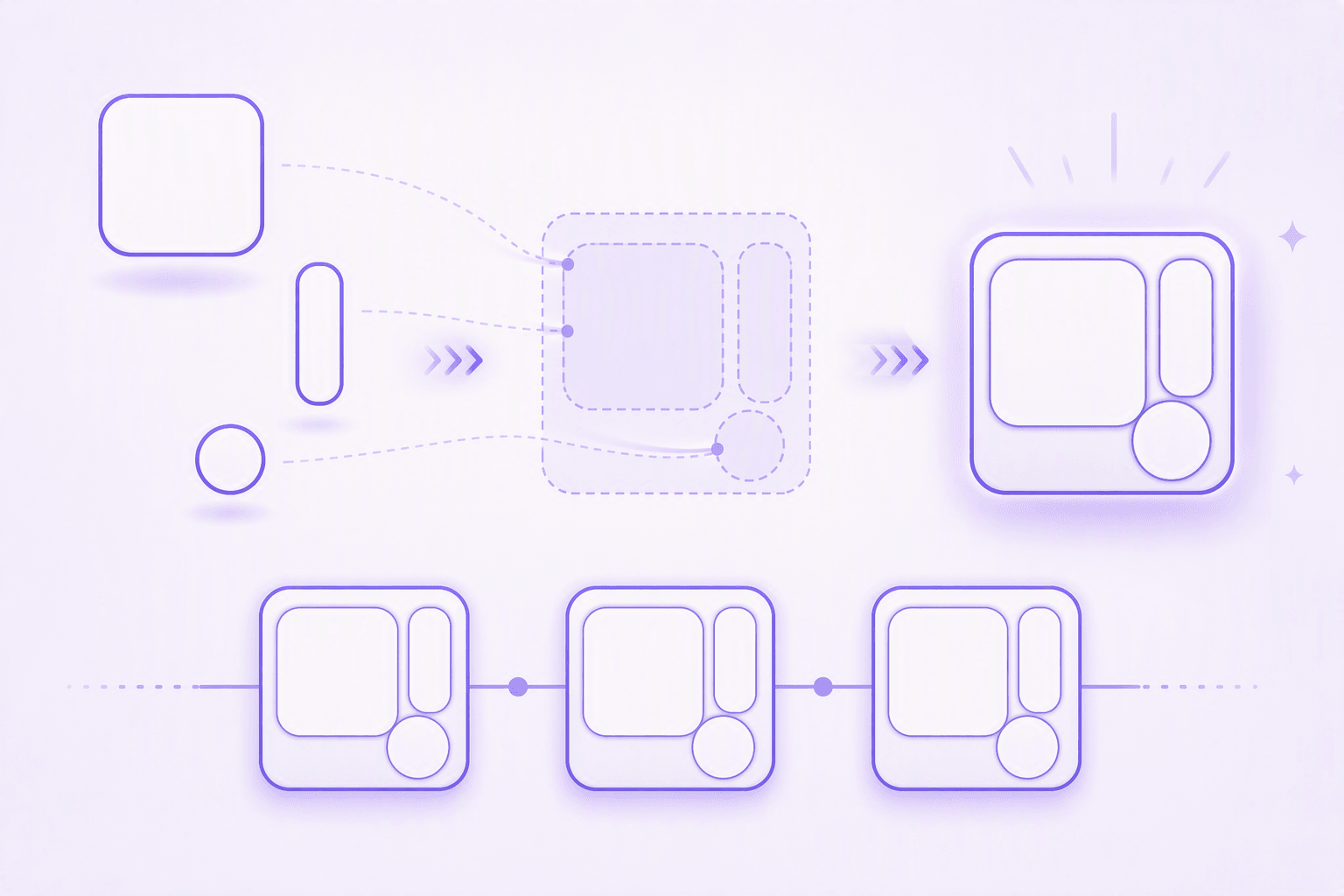
Hangul letters (자모, “jamo”) combine into square syllable blocks. Each block is one syllable, usually built from:
- an initial consonant (초성)
- a vowel (중성)
- sometimes a final consonant (종성), called 받침 (batchim)
Examples:
- 가 = ㄱ + ㅏ (consonant + vowel)
- 강 = ㄱ + ㅏ + ㅇ (consonant + vowel + final consonant)
💡 Reading mindset that works
Do not try to read Korean left-to-right as individual letters like English. Train yourself to see one block as one beat, then move to the next block.
Hangul vowels: the 10 basics you should learn first
Korean vowels are written as vertical or horizontal strokes. The “basic 10” show up everywhere, and compound vowels are mostly combinations of these.
Below, pronunciations are English-friendly approximations. Real Korean vowels can be slightly different by speaker and region, so use these as a starting point, then tune your ear with native audio.
| Korean | Pronunciation | Note |
|---|---|---|
| ㅏ | ah | Like 'a' in 'father'. |
| ㅓ | uh | Open 'uh'. Often the hardest early vowel. |
| ㅗ | oh | Rounded lips, like 'oh'. |
| ㅜ | oo | Like 'oo' in 'food'. |
| ㅡ | eu | Unrounded 'uh', like 'oo' with relaxed lips. |
| ㅣ | ee | Like 'ee' in 'see'. |
| ㅐ | eh | Often close to ㅔ in modern speech. |
| ㅔ | eh | Often close to ㅐ in modern speech. |
| ㅑ | yah | ㅏ with a Y glide. |
| ㅕ | yuh | ㅓ with a Y glide. |
ㅓ
Pronunciation: uh.
This vowel is the “why does this not match romanization?” moment for many learners. If you see “eo” in romanization, it is usually trying to represent ㅓ, not an English “ee-oh” sound.
ㅡ
Pronunciation: eu.
This is not “oo” and not “uh” exactly. A practical trick is to say “oo” and then relax your lips so they are not rounded, keeping the tongue position fairly stable.
🌍 Why romanization can slow you down
Korean signage often includes romanization for visitors, but locals read Hangul, not romanization. If you train your brain to depend on “eo, eu, ae,” you can end up reading the romanization system instead of reading Korean. Hangul-first practice usually improves listening faster because your spelling matches what Koreans actually see.
Hangul consonants: the 14 basics (plus what they sound like)
Hangul has 14 basic consonants. Several change sound depending on position, especially at the start of a syllable vs at the end (batchim).
| Korean | Pronunciation | Note |
|---|---|---|
| ㄱ | k/g | K-like at start, G-like between vowels, K-like in batchim. |
| ㄴ | n | N sound. Stable. |
| ㄷ | t/d | T-like at start, D-like between vowels, T-like in batchim. |
| ㄹ | r/l | Between vowels: light R. In batchim: L. Doubled ㄹㄹ: strong L. |
| ㅁ | m | M sound. Stable. |
| ㅂ | p/b | P-like at start, B-like between vowels, P-like in batchim. |
| ㅅ | s | Before ㅣ sounds closer to 'sh'. |
| ㅇ | silent/ng | Silent at start, 'ng' in batchim. |
| ㅈ | j | Like 'j' but lighter. In batchim becomes T-like. |
| ㅊ | ch | Aspirated 'ch'. In batchim becomes T-like. |
| ㅋ | k | Strongly aspirated K. |
| ㅌ | t | Strongly aspirated T. |
| ㅍ | p | Strongly aspirated P. |
| ㅎ | h | H sound, often weakens in fast speech. |
ㄹ
Pronunciation: r/l.
This is the consonant that makes Korean sound “Korean” to many learners. Between vowels it is a quick tap, closer to a light R, and at the end of a syllable it is an L-like sound.
ㅇ
Pronunciation: silent/ng.
At the start of a syllable, ㅇ is a placeholder so a vowel can appear in the initial position. At the end (batchim), it is “ng,” like in “sing.”
The doubled (tense) consonants: small change, big meaning
Korean also has five doubled consonants: ㄲ ㄸ ㅃ ㅆ ㅉ. These are “tense” sounds, not simply “double length,” and they can change meaning.
Examples you will eventually notice:
- 살다 vs 쌀다 are different words.
- 자다 vs 짜다 are different words.
⚠️ Do not force an English 'extra' sound
Tense consonants are not “k plus a little pause” the way some English speakers try to fake them. Aim for a tighter, more compressed start to the consonant, without adding a vowel.
If you want a listening-heavy way to internalize tense vs plain sounds, short clips from K-dramas are ideal because you hear the contrast in real emotion and speed. Wordy’s approach is built around that kind of input, but you can use any native audio as long as you replay and shadow.
Compound vowels: learn the patterns, not a second alphabet
After the basics, you will see combinations like ㅘ, ㅝ, ㅢ, ㅟ. These are mostly built from ㅗ or ㅜ plus another vowel, or from ㅣ adding a Y or W glide.
A practical order:
- Learn ㅘ (wa), ㅝ (wo), ㅚ (we), ㅟ (wi)
- Then learn ㅢ (ui), because it behaves differently by context
You do not need to memorize all compound vowels on day one. You need enough to read common words and names.
Batchim (final consonants): the rule that makes spelling match speech
Batchim (받침) is the final consonant position in a syllable block. It is where many consonants “neutralize,” meaning different letters can sound the same at the end.
In standard pronunciation, many final consonants collapse into a smaller set of ending sounds, commonly:
- ㄱ, ㅋ, ㄲ often end as K-like
- ㄷ, ㅅ, ㅈ, ㅊ, ㅌ, ㅎ often end as T-like
- ㅂ, ㅍ often end as P-like
- ㄴ ends as N
- ㅁ ends as M
- ㅇ ends as NG
- ㄹ ends as L
This is why Korean spelling can stay consistent even when speech is fast. The National Institute of Korean Language (국립국어원) provides standard pronunciation rules that formalize these patterns.
A concrete example: 읽다
You may see 읽다 and expect to pronounce every letter. In real speech, the consonants interact, and you get a pronunciation closer to “ik-tta” depending on the following sound.
The point is not to memorize every special case immediately. The point is to expect interaction at syllable boundaries.
Sound changes you will hear constantly (and how to handle them)
Korean has regular phonological processes that show up in everyday speech. If you learn them early, Hangul becomes more helpful, not more confusing.

Liaison: when a final consonant moves to the next syllable
If a syllable ends with a consonant and the next syllable starts with ㅇ (silent), the consonant often “moves” to be pronounced at the start of the next syllable.
You will hear this in many common words and grammar endings. It is one reason Korean sounds smoother than the block-by-block spelling suggests.
Assimilation: consonants influence each other
Some consonants change to match the place of articulation of the next consonant. This is common with ㄴ and ㅁ environments.
If you have studied any phonetics, this is the same kind of efficiency English uses in phrases like “input” vs “in Paris,” where the N can shift slightly. In Korean, it is more systematic and more noticeable.
ㅎ weakening: “H” that disappears or changes neighbors
ㅎ can soften, disappear, or change nearby consonants, especially in fast speech. You will still see it in spelling, and it still matters for understanding word families and grammar forms.
How to practice Hangul so it sticks in real life
Memorization alone is not the goal. You want fast decoding that survives real audio.
Step 1: Learn letters in minimal pairs
Do not learn ㅓ and ㅗ in isolation. Learn them as a pair with examples you can hear and repeat.
A good pattern:
- pick 2 confusing sounds
- find 5 short words for each
- read, listen, shadow, then read again
Step 2: Read what you already want to say
If you are learning greetings and relationship phrases, use Hangul versions immediately:
This keeps your practice emotionally meaningful, which improves recall.
Step 3: Use short native clips, not slow robot audio
Korean rhythm and consonant timing are hard to learn from overly clean TTS. Real clips teach you reductions, linking, and the “shape” of Korean syllables.
For a broader plan, see how to read Hangul, then come back to this guide when a specific letter keeps confusing you.
Step 4: Write a little, but do not turn it into calligraphy class
Writing helps you notice stroke order and letter structure, but you do not need perfect handwriting. Ten minutes a day of writing syllable blocks is enough for most learners.
The Unicode Standard’s documentation on Hangul syllables and jamo is also a useful reference if you are curious how blocks are encoded digitally, and why Korean typing feels so smooth once you learn it.
Common learner mistakes (and quick fixes)
Mistake 1: Treating ㄱ ㄷ ㅂ as purely G/D/B
These are not identical to English voiced stops. Korean “plain” stops are often described as somewhere between English voiced and voiceless depending on position.
Fix: listen for position. Word-initial vs between vowels vs batchim are three different habits.
Mistake 2: Ignoring tense consonants
If you skip ㄲ ㄸ ㅃ ㅆ ㅉ, you will still be understood sometimes, but you will also miss meaning and sound less clear.
Fix: learn them as contrasts with audio, not as “double letters.”
Mistake 3: Reading romanization instead of Hangul
Romanization systems are compromises. They cannot show everything Korean speakers hear, and they often mislead English intuition.
Fix: use romanization only for quick lookup, then return to Hangul immediately.
🌍 A practical Korea-specific detail: names and signage
In South Korea, you will often see both Hangul and romanization on subway signs, tourist maps, and passports, but the romanization can vary by system and personal preference. Learning Hangul helps you match what locals say to what locals read, especially for place names, food names, and family names.
A fast self-test: can you decode these blocks?
Try reading these as blocks, not letters:
- 한 (ㅎ + ㅏ + ㄴ)
- 글 (ㄱ + ㅡ + ㄹ)
- 안 (ㅇ + ㅏ + ㄴ)
- 녕 (ㄴ + ㅕ + ㅇ)
If you can decode those, you can read 안녕하세요, even if your pronunciation still needs tuning. For pronunciation and usage, use the canonical form from our greeting guide: 안녕하세요 is pronounced ahn-NYUHNG-hah-seh-yoh, and you will hear it constantly in real speech. See how to say hello in Korean for context and variations.
Where Hangul connects to culture (beyond the alphabet)
Hangul Day (한글날) is a real public holiday in South Korea, and it reflects how strongly Hangul is tied to identity and education. You will also see Hangul used creatively in branding, memes, and typography, especially in Seoul, where letter shapes are often stylized but still readable once you know the system.
There is also a social layer to “reading well.” Being able to read menus, warnings, and casual chat messages reduces dependence on others, which matters in a culture where group harmony is valued but self-sufficiency is respected.
If you want to expand from reading to “what people actually say,” keep your learning grounded in everyday speech, not only textbook sentences. Just be careful with taboo language, because Hangul makes it easy to read words you should not casually repeat. If you are curious, treat it as recognition practice, not a speaking target, in our guide to Korean swear words.
A simple 7-day plan (realistic and repeatable)
Day 1: Basic vowels + ㅇ as a placeholder
Learn the vowel shapes, then read vowel-only blocks like 아, 어, 오, 우, 으, 이.
Day 2: Add ㄴ ㅁ ㄹ
Build easy syllables: 나, 너, 노, 누, 느, 니, 마, 머, 라, 러.
Day 3: Add ㄱ ㄷ ㅂ
Practice position changes: 가, 아가, 바보, 다리. Read slowly, then listen and shadow.
Day 4: Add ㅅ ㅈ ㅎ
Focus on ㅅ before ㅣ sounding closer to “sh.” Practice 시, 샤, 셔, 쇼, 슈.
Day 5: Batchim basics
Learn the ending sounds set. Read short words with final consonants and listen for neutralization.
Day 6: Tense consonants
Learn ㄲ ㄸ ㅃ ㅆ ㅉ with audio contrasts.
Day 7: Compound vowels
Add the most common ones you keep seeing in your content, especially ㅘ and ㅝ.
Keep going: turn decoding into comprehension
Reading Hangul is the gateway skill. Once you can decode, you can build vocabulary faster, hear word boundaries more clearly, and start noticing grammar endings that used to blur together.
For structured vocabulary that matches real speech, you can also pair this with a core list like 100 most common Korean words, then reinforce them through short native clips so the spelling, sound, and meaning lock together.
Frequently Asked Questions
How many consonants and vowels are in Hangul?
Is Hangul really easy to learn compared to other writing systems?
Why does ㄱ sometimes sound like G and sometimes like K?
What is the difference between ㅓ and ㅗ, and why do learners mix them up?
Do I need to learn romanization to read Korean?
Sources & References
- National Institute of Korean Language (국립국어원), Hangul and Korean Orthography resources, accessed 2026
- King Sejong Institute Foundation, Korean language learning materials, accessed 2026
- UNESCO, Memory of the World: Hunminjeongeum, accessed 2026
- Ethnologue, 27th edition, 2024
- The Unicode Standard, Hangul Syllables and Jamo, accessed 2026
Start learning with Wordy
Watch real movie clips and build your vocabulary as you go. Free to download.


