Quick Answer
Advanced German food vocabulary includes practical menu words such as Feinkost, Beilage, Schmoren, and Hausmannskost, plus regional terms you will see at markets and restaurants. Learn these words with pronunciation, cultural context, and examples so you can order, shop, and talk about food naturally.
Advanced German food vocabulary helps you do far more than name bread and beer: it lets you read menus, recognize cooking methods, shop at a market, describe textures, and understand regional specialties. Learn words such as Beilage /ˈbaɪ̯ˌlaːɡə/, deftig /ˈdɛftɪç/, geschmort /ɡəˈʃmɔʁt/, and Feinkost /ˈfaɪ̯nˌkɔst/ to make informed choices when ordering in German-speaking places.
German is spoken by roughly 130 million people worldwide when first- and second-language speakers are counted, according to Ethnologue. It is an official language in six European countries: Germany, Austria, Switzerland, Liechtenstein, Belgium, and Luxembourg. That broad geography matters at the table because food vocabulary changes strongly by region.
If you are still learning core food names, start with our German food vocabulary guide. This article focuses on the specific words that appear on restaurant menus, bakery signs, delicatessen counters, cooking shows, and conversations about memorable meals.
| English | German | Pronunciation | Note |
|---|---|---|---|
| starter, appetizer | Vorspeise | FOR-shpy-zuh | IPA /ˈfoːɐ̯ˌʃpaɪ̯zə/. Served before the main course. |
| main course | Hauptgericht | HOWPT-guh-rikht | IPA /ˈhaʊ̯ptɡəˌʁɪçt/. Literally 'main dish'. |
| side dish | Beilage | BYE-lah-guh | IPA /ˈbaɪ̯ˌlaːɡə/. Common for potatoes, vegetables, or salad. |
| daily special | Tagesgericht | TAH-guhs-guh-rikht | IPA /ˈtaːɡəsɡəˌʁɪçt/. Often a good-value menu option. |
| set menu | Menü | meh-NUE | IPA /meˈnyː/. A multi-course meal offered at a fixed price. |
| delicacy, gourmet food | Feinkost | FYNE-kost | IPA /ˈfaɪ̯nˌkɔst/. Used for specialty foods and deli shops. |
| home-style cooking | Hausmannskost | HOWSS-mahns-kost | IPA /ˈhaʊ̯smanˌkɔst/. Hearty, traditional everyday food. |
| small bite with drinks | Häppchen | HEP-khen | IPA /ˈhɛpçən/. Small snack or canapé, often at receptions. |
| dessert | Nachspeise | NAHKH-shpy-zuh | IPA /ˈnaːxˌʃpaɪ̯zə/. A traditional German word for dessert. |
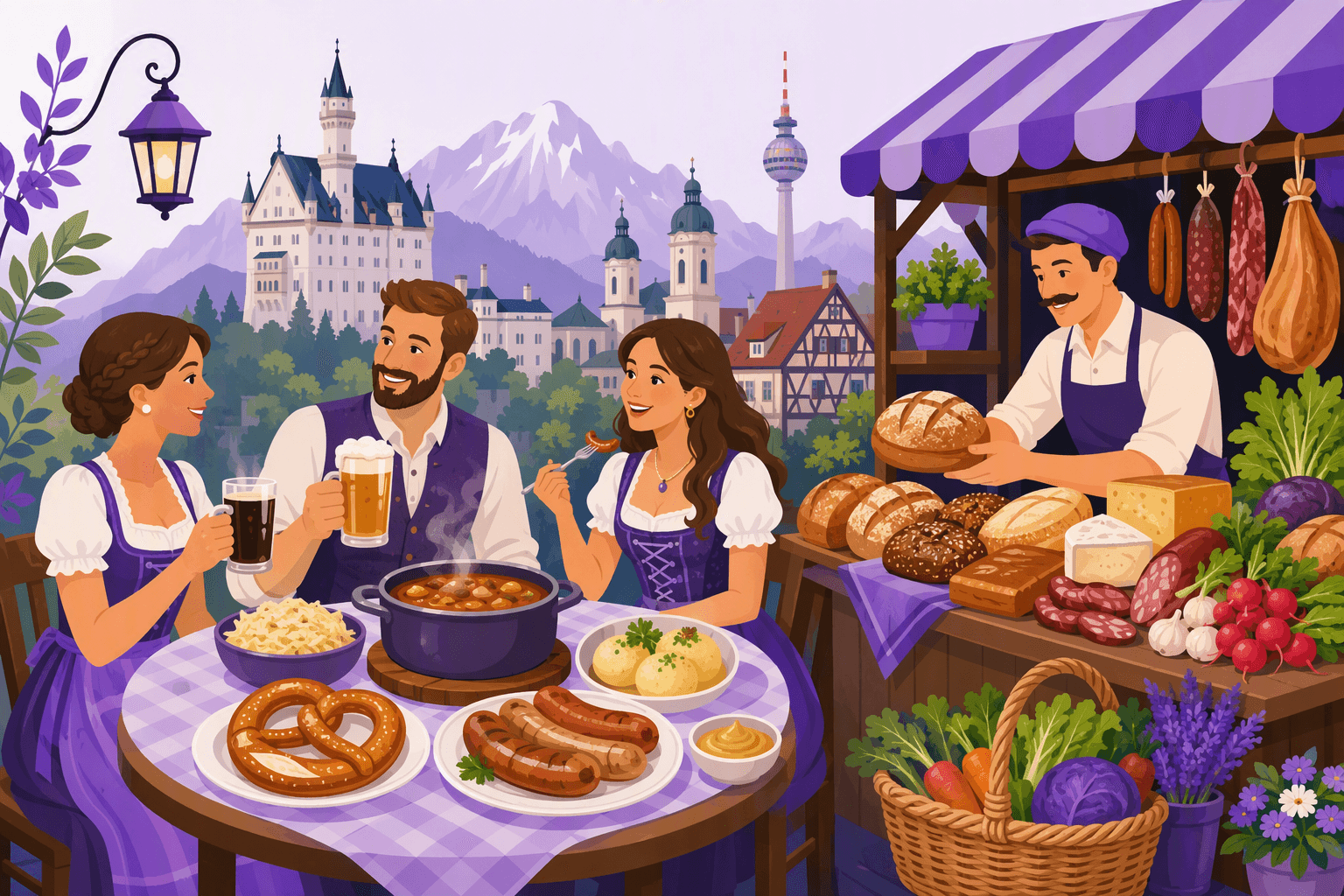
Reading a German menu with confidence
A typical menu separates a Vorspeise /ˈfoːɐ̯ˌʃpaɪ̯zə/, Hauptgericht /ˈhaʊ̯ptɡəˌʁɪçt/, and Nachspeise /ˈnaːxˌʃpaɪ̯zə/, although Dessert /deˈzɛʁ/ is also extremely common. A Tagesgericht /ˈtaːɡəsɡəˌʁɪçt/ is the daily special and may be seasonal, regional, or simply a dish the kitchen has prepared in larger quantity.
Do not assume that a Menü /meˈnyː/ means a printed list of choices. In restaurant usage, it commonly means a fixed multi-course meal. If you want to order one dish from the menu, you may see à la carte /a la kaʁt/, a French expression used widely in German dining.
A Beilage /ˈbaɪ̯ˌlaːɡə/ is a side dish. Restaurants often list side dishes separately, especially with meat or fish, and may offer potatoes, dumplings, vegetables, or salad as options.
💡 Useful ordering sentence
Say Ich hätte gern das Tagesgericht, bitte /ɪç ˈhɛtə ɡɛʁn das ˈtaːɡəsɡəˌʁɪçt ˈbɪtə/ when you would like the daily special. For more useful restaurant language, see our guide to ordering at a restaurant in German.
Cooking methods and menu descriptions
Cooking verbs are useful because menus often use their past-participle forms as adjectives. For example, geschmort /ɡəˈʃmɔʁt/ means braised, while gebraten /ɡəˈbʁaːtn̩/ can mean fried, pan-roasted, or roasted depending on the food.
The distinction matters. Gekocht /ɡəˈkɔxt/ is boiled or cooked in liquid, whereas gedünstet /ɡəˈdʏnstət/ describes a gentler cooking method using steam or a small amount of liquid.
| English | German | Pronunciation | Note |
|---|---|---|---|
| braised | geschmort | guh-SHMORT | IPA /ɡəˈʃmɔʁt/. Slowly cooked in a little liquid. |
| pan-fried, roasted | gebraten | guh-BRAH-ten | IPA /ɡəˈbʁaːtn̩/. Used for meat, fish, potatoes, and vegetables. |
| boiled | gekocht | guh-KOKHT | IPA /ɡəˈkɔxt/. Cooked in water or another liquid. |
| steamed, gently cooked | gedünstet | guh-DUENS-tet | IPA /ɡəˈdʏnstət/. Often used for vegetables and fish. |
| breaded | paniert | pah-NEERT | IPA /paˈniːɐ̯t/. Coated in breadcrumbs before frying. |
| grilled | gegrillt | guh-GRILT | IPA /ɡəˈɡʁɪlt/. Cooked on a grill. |
| pickled | eingelegt | EYN-guh-lehkt | IPA /ˈaɪ̯nɡəˌleːkt/. Preserved in vinegar, brine, oil, or alcohol. |
| smoked | geräuchert | guh-ROY-khert | IPA /ɡəˈʁɔʏçɐt/. Common for fish, meat, cheese, and sausages. |
| baked | überbacken | UE-ber-bah-ken | IPA /ˈyːbɐˌbakn̩/. Finished in the oven, often with cheese. |
Schmoren
The verb schmoren /ˈʃmoːʁən/ means to braise slowly. A menu description such as geschmorte Rinderbäckchen /ɡəˈʃmɔʁtə ˈʁɪndɐˌbɛkçən/ signals tender beef cheeks cooked slowly until soft.
This word often suggests a rich sauce and a long cooking time. It is common in traditional and modern German restaurant cooking.
Paniert
Paniert /paˈniːɐ̯t/ means breaded. A paniertes Schnitzel /paˈniːɐ̯təs ˈʃnɪtsl̩/ has a breadcrumb coating, while Wiener Schnitzel /ˈviːnɐ ˈʃnɪtsl̩/ has a protected culinary definition in Austria when made with veal.
Do not confuse paniert with merely fried. A fried dish may have no coating at all.
Texture, flavor, and portion words
Menu descriptions use sensory vocabulary to make dishes appealing. Learning these adjectives helps you choose between crisp, creamy, hearty, mild, tangy, and spicy food without relying on photographs.
Food historian Ursula Heinzelmann, in Beyond Bratwurst: A History of Food in Germany, emphasizes that German food is not one fixed national cuisine. Regional products, seasonal ingredients, migration, and local farming traditions all shape what people eat and the words they use for it.
| English | German | Pronunciation | Note |
|---|---|---|---|
| hearty, rich | deftig | DEF-tikh | IPA /ˈdɛftɪç/. Filling, savory food, often meat- or potato-based. |
| crispy | knusprig | KNOOS-prikh | IPA /ˈknʊspʁɪç/. Used for crusts, fried foods, and roast skin. |
| creamy | cremig | KRAY-mikh | IPA /ˈkʁeːmɪç/. Smooth and rich in texture. |
| tender | zart | tsahrt | IPA /tsaʁt/. Especially common for well-cooked meat. |
| juicy | saftig | ZAHF-tikh | IPA /ˈzaftɪç/. Used for meat, cake, fruit, and dumplings. |
| mild | mild | milt | IPA /mɪlt/. Not strong, hot, or sharply flavored. |
| tangy, pleasantly sour | würzig | WUER-tsikh | IPA /ˈvʏʁtsɪç/. Seasoned and flavorful, not necessarily spicy-hot. |
| spicy-hot | scharf | sharf | IPA /ʃaʁf/. Hot from chili, pepper, mustard, or horseradish. |
| portion | Portion | por-TSYOHN | IPA /pɔʁˈtsi̯oːn/. A serving size on a menu. |
Deftig
Deftig /ˈdɛftɪç/ describes food that is substantial, savory, and filling. It is often positive, especially when describing traditional dishes such as stews, roasted meat, dumplings, sausages, or potato meals.
A deftige Mahlzeit /ˈdɛftɪɡə ˈmaːltsaɪ̯t/ is not a light lunch. Expect a satisfying meal, often well suited to cold weather.
Würzig
Würzig /ˈvʏʁtsɪç/ means well-seasoned or full of savory flavor. It does not automatically mean hot, so a würzige Soße /ˈvʏʁtsɪɡə ˈzoːsə/ may contain herbs, spices, onions, or stock without chili heat.
If you need to know whether a dish burns, ask Ist das scharf? /ɪst das ʃaʁf/. The adjective scharf /ʃaʁf/ means spicy-hot.
🌍 German flavor language
The word würzig /ˈvʏʁtsɪç/ is often translated as spicy, but seasoned is usually closer. A restaurant may describe cheese, soup, sausage, or sauce as würzig without implying any chili heat.
Bakery, market, and specialty-shop vocabulary
Germany has a strong bakery and market culture. The German food and nutrition organization Bundeszentrum für Ernährung describes regional produce, seasonal eating, and practical food literacy as central topics in German food education.
At a bakery, Gebäck /ɡəˈbɛk/ is a broad category for baked goods, while Konditorei /kɔnditoˈʁaɪ̯/ refers to a pastry shop or the craft of making fine cakes and pastries. A Feinkostladen /ˈfaɪ̯nˌkɔstˌlaːdn̩/ specializes in delicacies and premium prepared foods.
| English | German | Pronunciation | Note |
|---|---|---|---|
| baked goods, pastries | Gebäck | guh-BEHK | IPA /ɡəˈbɛk/. A broad word for pastries and baked treats. |
| pastry shop | Konditorei | kon-dee-toh-RYE | IPA /kɔnditoˈʁaɪ̯/. A shop selling cakes, tortes, and fine pastries. |
| delicatessen shop | Feinkostladen | FYNE-kost-lah-den | IPA /ˈfaɪ̯nˌkɔstˌlaːdn̩/. Shop for specialty foods. |
| weekly market | Wochenmarkt | VOKH-en-markt | IPA /ˈvɔxn̩ˌmaʁkt/. Open-air or covered market with local vendors. |
| organic | Bio | BEE-oh | IPA /ˈbiːo/. Common label for certified organic products. |
| seasonal | saisonal | zay-zoh-NAHL | IPA /zɛzoˈnaːl/. Available in its natural growing season. |
| regional | regional | ray-gee-oh-NAHL | IPA /ʁeɡi̯oˈnaːl/. Produced in or associated with a local area. |
| specialty | Spezialität | shpeh-tsyah-lee-TAET | IPA /ʃpetsi̯aliˈtɛːt/. A local or house specialty. |
| counter service shop | Imbiss | IM-biss | IPA /ˈɪmbɪs/. Casual snack bar or takeaway counter. |
Regional dishes and food culture
Regional terms are often the hardest part of German food vocabulary. A Knödel /ˈknøːdl̩/ is a dumpling, particularly associated with southern Germany and Austria, while Klöße /ˈkløːsə/ is common in central and northern regions.
A Brotzeit /ˈbʁoːtˌtsaɪ̯t/ is a Bavarian-style cold meal or substantial snack, commonly based on bread, cheese, sausage, spreads, and pickles. It is both a food term and a social occasion.
| English | German | Pronunciation | Note |
|---|---|---|---|
| dumpling, southern term | Knödel | KNUER-del | IPA /ˈknøːdl̩/. Common in Bavaria and Austria. |
| dumplings, central and northern term | Klöße | KLUER-suh | IPA /ˈkløːsə/. Often made from potato or bread. |
| Bavarian cold meal | Brotzeit | BROHT-tsyte | IPA /ˈbʁoːtˌtsaɪ̯t/. Bread, cold cuts, cheese, and spreads. |
| snack bar curry sausage | Currywurst | KUR-ree-vurst | IPA /ˈkœʁiˌvʊʁst/. Sausage with curry ketchup, strongly associated with Berlin. |
| fish sandwich | Fischbrötchen | FISH-broet-khen | IPA /ˈfɪʃˌbʁøːtçən/. Popular in northern coastal areas. |
| green cabbage dish | Grünkohl | GRUEN-kohl | IPA /ˈɡʁyːnˌkoːl/. Northern winter specialty, often served with sausage. |
| potato pancake | Reibekuchen | RYE-buh-koo-khen | IPA /ˈʁaɪ̯bəˌkuːxən/. Also called Kartoffelpuffer in many regions. |
| black forest cake | Schwarzwälder Kirschtorte | SHVARTS-vel-der KIRSH-tor-tuh | IPA /ˈʃvaʁtsvɛldɐ ˈkɪʁʃˌtɔʁtə/. Famous cake with cherries, cream, and kirsch. |
| sour cream quark dish | Kräuterquark | KROY-ter-kwark | IPA /ˈkʁɔʏtɐˌkvaʁk/. Fresh quark mixed with herbs. |
🌍 Regional words are normal, not mistakes
A menu in Munich may use Knödel /ˈknøːdl̩/ and Brotzeit /ˈbʁoːtˌtsaɪ̯t/, while a northern menu may feature Fischbrötchen /ˈfɪʃˌbʁøːtçən/ or Grünkohl /ˈɡʁyːnˌkoːl/. Regional food vocabulary is part of the appeal, and restaurant staff are used to explaining unfamiliar terms.
Useful phrases for dietary needs and questions
Knowing nouns is helpful, but a clear question prevents mistakes. In German restaurants, direct but polite phrasing is normal.
Use Haben Sie etwas Vegetarisches? /ˈhaːbn̩ ziː ˈɛtvas veɡetaˈʁɪʃəs/ for asking whether there is something vegetarian. For vegan food, ask Haben Sie etwas Veganes? /ˈhaːbn̩ ziː ˈɛtvas veˈɡaːnəs/.
If you have an allergy, say Ich habe eine Allergie gegen Nüsse /ɪç ˈhaːbə ˈaɪ̯nə alɛʁˈɡiː ɡeːɡn̩ ˈnʏsə/, meaning that you have an allergy to nuts. For a specific ingredient, Ist da Milch drin? /ɪst da mɪlç dʁɪn/ asks whether it contains milk.
For broader travel language, keep our German travel phrases guide available before your trip. You can also learn more about meal customs and dining expectations in our guide to German food culture.
How to retain advanced food vocabulary
Learn words in menu-ready groups rather than as isolated translations. Pair geschmort /ɡəˈʃmɔʁt/ with a braised dish, knusprig /ˈknʊspʁɪç/ with a crisp crust, and Beilage /ˈbaɪ̯ˌlaːɡə/ with a photo of potatoes or vegetables.
German compound nouns are especially useful clues. Hauptgericht /ˈhaʊ̯ptɡəˌʁɪçt/ combines Haupt /haʊ̯pt/, meaning main, with Gericht /ɡəˈʁɪçt/, meaning dish. Once you notice these parts, long menu words become easier to decode.
Watch German cooking clips, restaurant scenes, or market videos and pause when you see menu descriptions. Hearing vocabulary attached to a dish, a speaker, and a situation makes it easier to recognize when you encounter it in real life.
Frequently Asked Questions
What German food vocabulary should I learn beyond basic foods?
What does Hausmannskost mean in German?
How do I ask for a vegetarian meal in German?
What is the difference between Beilage and Beigabe?
Do German menus use regional food vocabulary?
Sources & References
- Duden, Online Dictionary, accessed 2026
- Bundeszentrum für Ernährung, German Food and Nutrition Information, accessed 2026
- Ethnologue, German, 27th edition, 2024
- Ursula Heinzelmann, Beyond Bratwurst: A History of Food in Germany, Reaktion Books
- Alan Davidson, The Oxford Companion to Food, Oxford University Press
Start learning with Wordy
Watch real movie clips and build your vocabulary as you go. Free to download.